
Online/ Talk / Knitting
The Garment that Remembers: what our clothes know, and who tells their stories
Every garment carries a history: the hand that made it, the origin of its yarn, each repair and each new owner. For most of fashion's history that history has been lost the moment a piece leaves the maker. This live talk asks what changes when a garment is designed to remember.
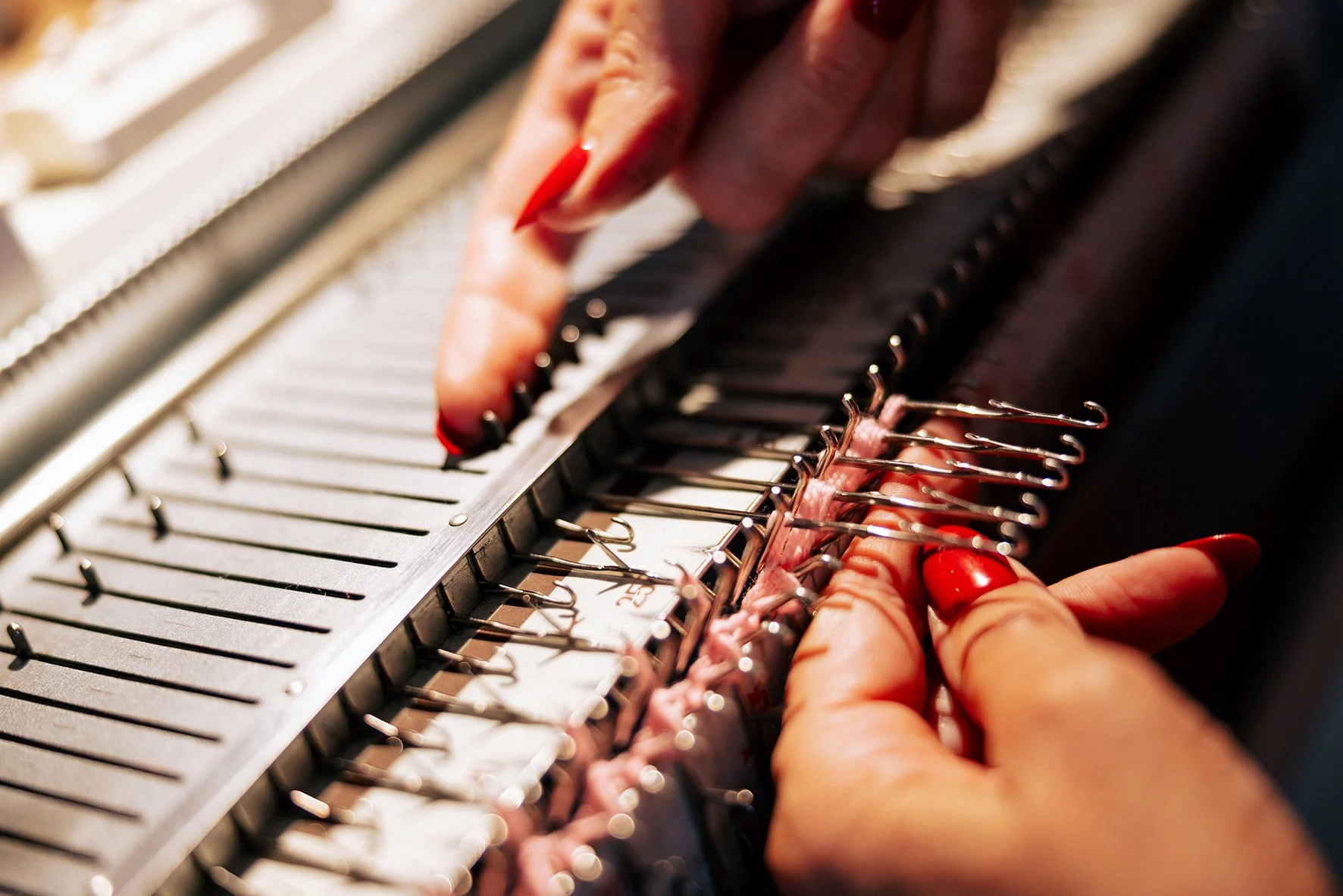
Working live from her studio on the Fleurieu Peninsula in South Australia, designer and researcher Angelina Russo builds a poncho from vintage and deadstock yarns on vintage knitting machines, in a practice rooted in Italian textile heritage from the Sannio region. Because each piece cannot be replicated exactly, you watch its record assemble, stage by stage, as the poncho comes together.
Alongside the making, you read a garment of your own. Using a card provided online, you sort its fibres into natural and synthetic, look for proof that the fibre is what the label claims, and set down what you expect of the piece, how long you will keep it and how often you will wear it. The card then stays with the garment and waits, in a pocket or a drawer, for the day a decision about its future is due. That small act, a record that travels with a garment, is the everyday form of what the emerging Digital Product Passport is reaching towards.
What you'll leave with:
A card to keep with one of your own garments, written now and answered later
A way of reading any piece you own for the record it carries, and the record it has lost
A route to follow when a forgotten garment asks to be kept, repaired, passed on or recovered
This is a live session, presented before dawn from the other side of the world, with time for questions.

Angelina Russo is a designer and researcher, and the founder of Fleurieu Made, a circular knitwear studio on the Fleurieu Peninsula in South Australia. Working from vintage and deadstock yarns on vintage knitting machines, in a practice rooted in her Italian textile heritage, she makes one-off pieces meant to be carried for years. Alongside the studio she develops the FM Circular Fashion IQ Index, which makes circular practice visible and verifiable. Angelina researches how garments might carry their own records of origin, repair and afterlife, returning fashion's memory to the makers and wearers it belongs to.