
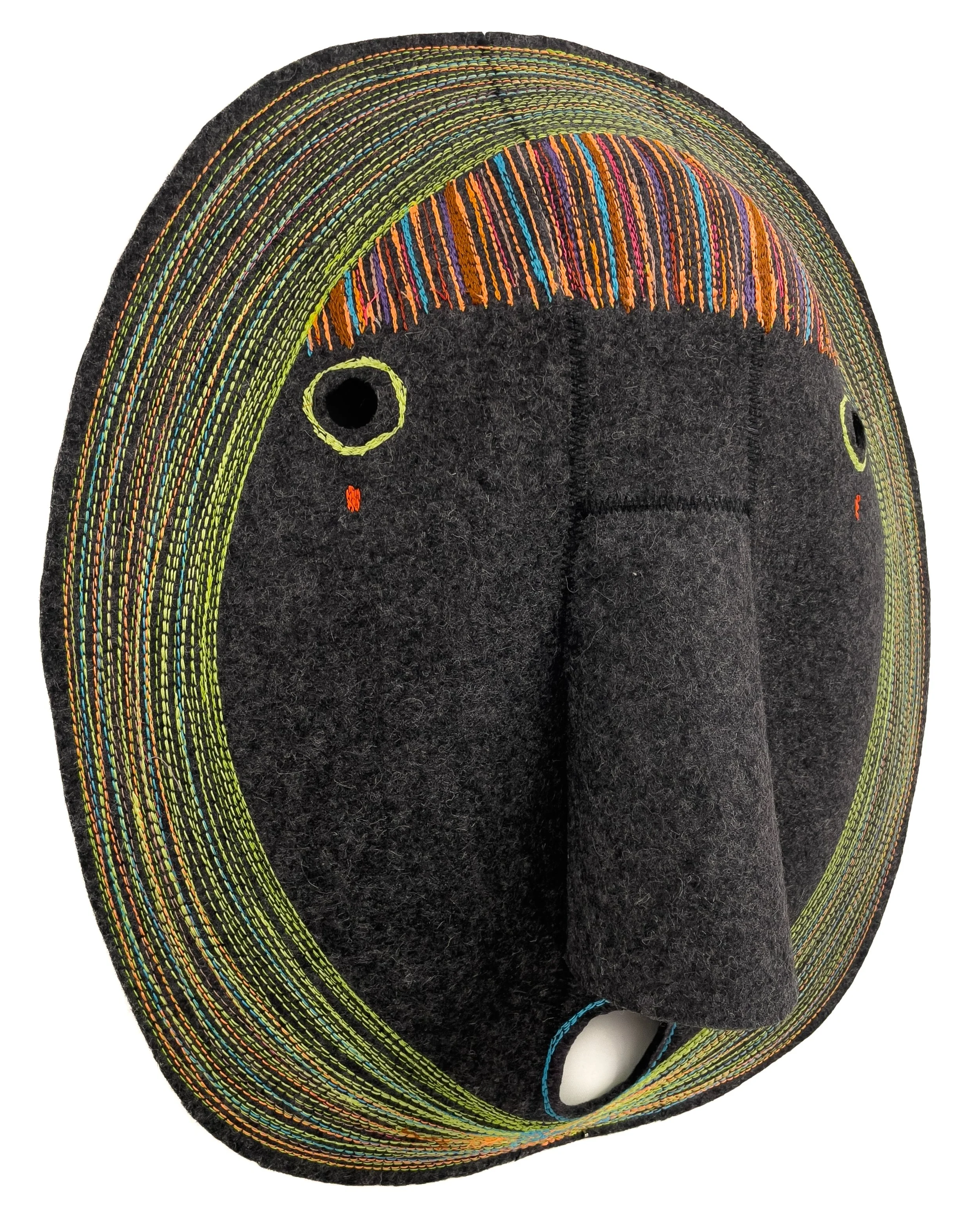
NYTM 2026 CALENDAR
work by Elodie Blanchard

Woven Together Exhibition
In person / Exhibition / Weaving
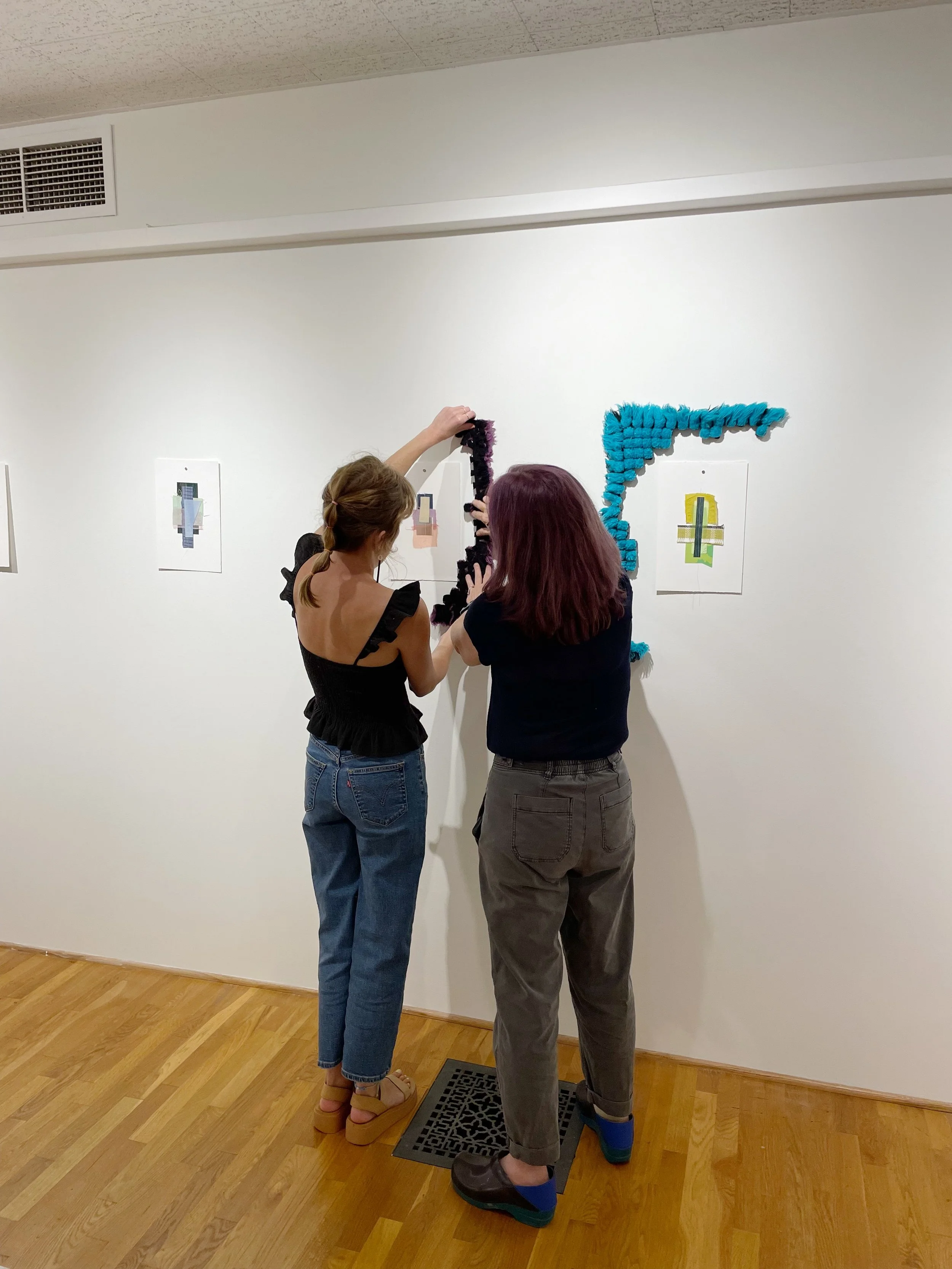
Every year, Intertwine Arts celebrates the artistry of disabled individuals with a major exhibition of fiber artworks created over the year in weekly weaving workshops. This year our theme is Touch, as the exhibition falls within both New York Textile Month and is in recognition of Blindness Awareness Month in October. These artworks are intended to be understood best by their tactile sensory qualities, and so yes, you will be able to touch the art! Taking place at the Positive Exposure Gallery, the exhibition opening will be 9/10 from 5pm-8pm, and the exhibition will run from September 1st through the 30th.
On View: September 1 to September 30
Opening September 10
5:00 PM - 8:00PM
No registration required!
There's more happening at this venue! Check other events:
Woven Together Fashion Show - textilemonth.nyc/calendar-2026/woven-together-fashion-show
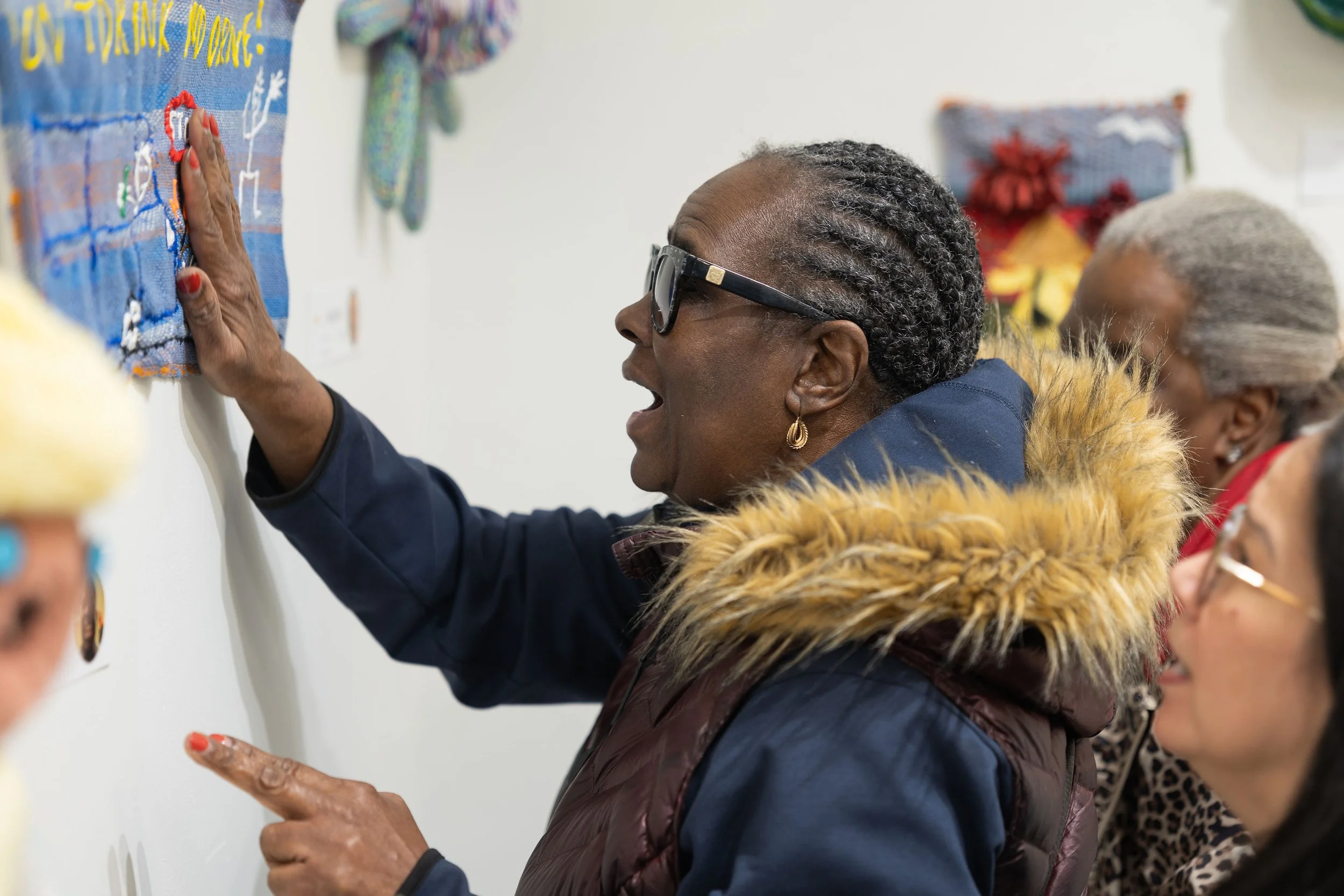
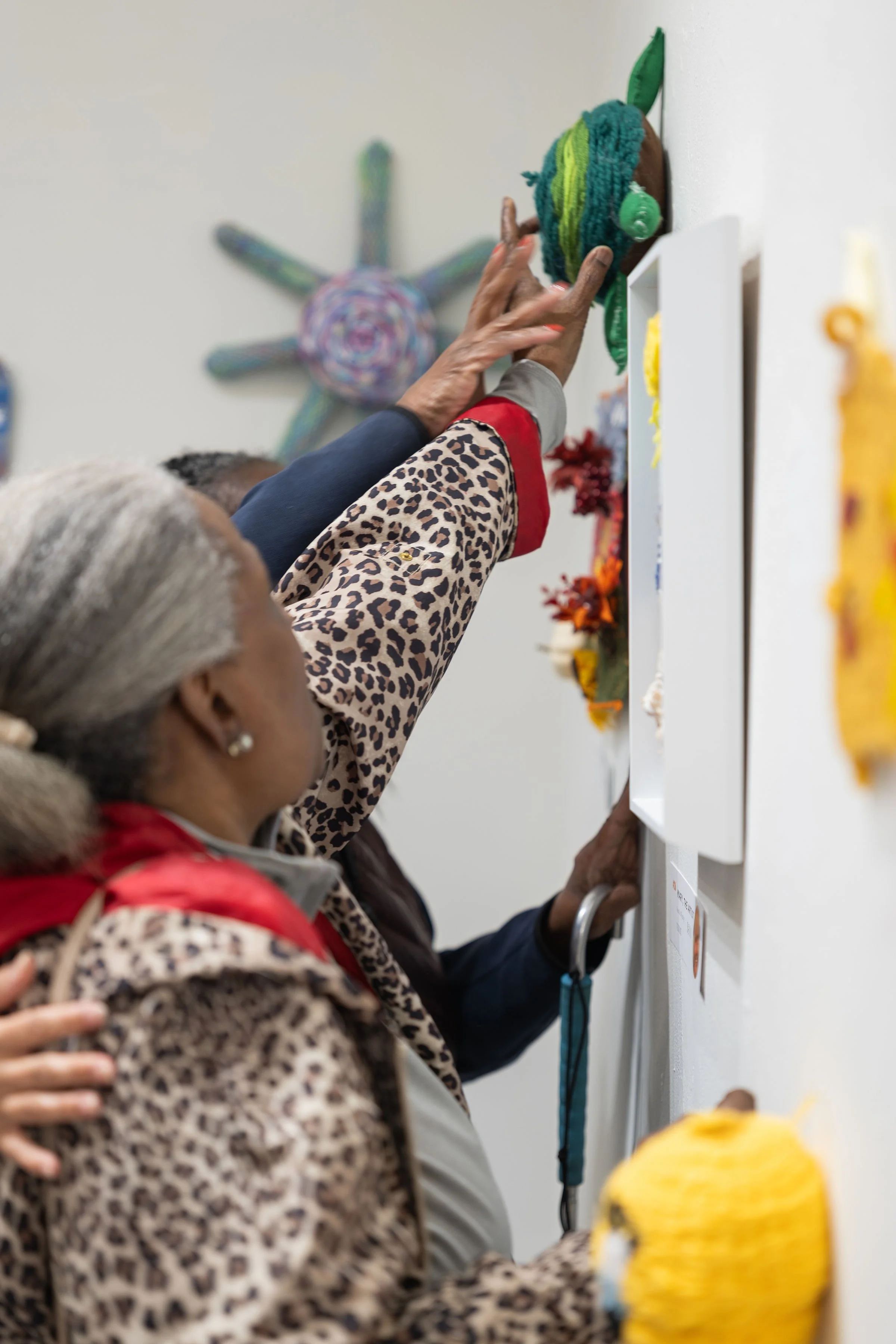

The artists represented are artists with disabilities from Intertwine Arts’ programs across four New York City boroughs of Queens, Brooklyn, Manhattan, and the Bronx. The disabilities experienced range from cognitive disabilities, to physical disabilities, to neurodivergence, to chronic illness, and more. All are burgeoning weavers and fiber artists, primarily exploring the woven medium. Their talents also extend into embroidery, crochet, sewing, and beyond.
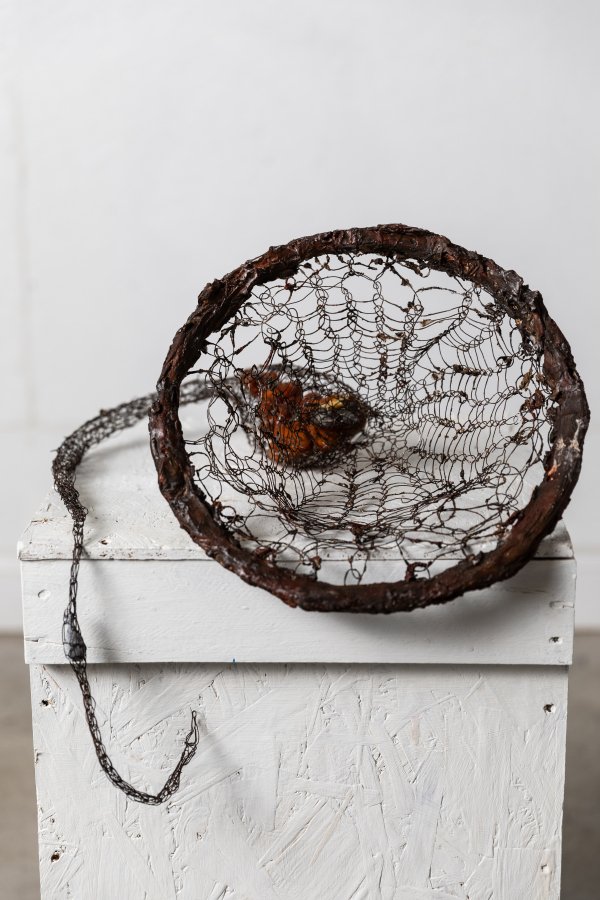
This Mortal Coil
In person / Exhibition / Multiple Techniques
This Mortal Coil is a group exhibition exploring the fragile relationship between the body, memory, cultural belonging, and the passage of time. Bringing together artists working across textiles, sculpture, installation, and mixed media, the exhibition considers how personal and collective histories are carried through material and embodied experience. Themes of nostalgia, homeland, diaspora, transformation, decay, and anemoia emerge throughout the works, reflecting on how we construct a sense of belonging through memories—both lived and imagined.
Curated by Ollie Hongji Li.
Artists:
Layla NK @violatemenace
Maria Elena Pombo @fragmentario_
MarisVanVlack @marisvanvlack
Natale Adgnot @natale_adgnot
Ollie Hongji Li @ollie_must_create
Ragna Froda @frodadottir
Rebecca McGee Tuck @rebeccabombshellart
Romilly Rinck @rffkowerr
Shradha Kochhar @shradhakochhar
Terumi Saito @saito
Jasmin Risk
Fanny Allié @fannyallie
Jing Li Bista @jinglibista
Yu Jei Yen @yujeiyen_textile
On View: September 1 – September 30
Monday - Thursday: 7:30 AM – 4:00 PM
Friday: 7:30 AM – 5:00 PM
Saturday and Sunday: 8:30 AM – 5:00 PM
Opening reception: Friday, September 4
6:00 PM – 9:00 PM
No registration required!
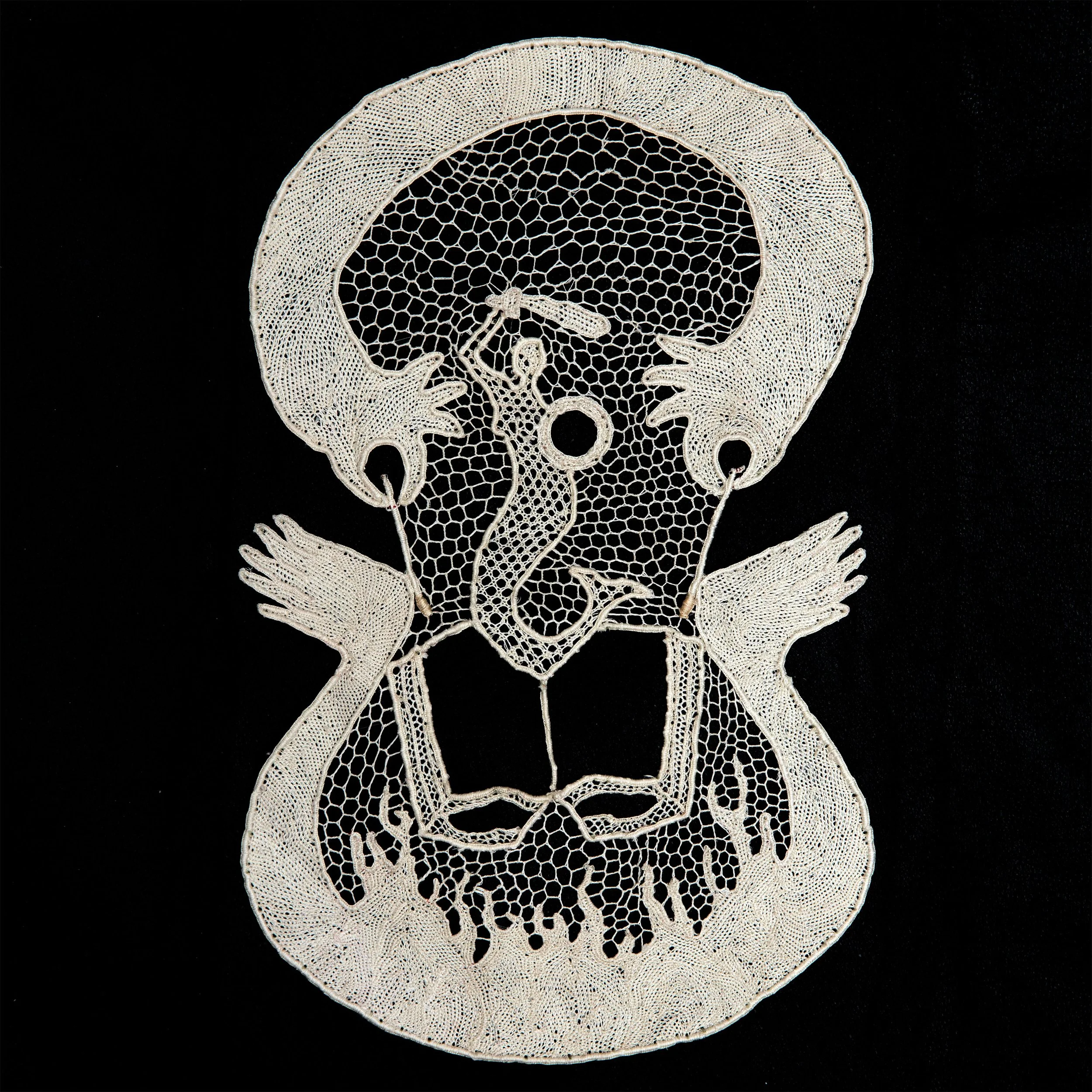
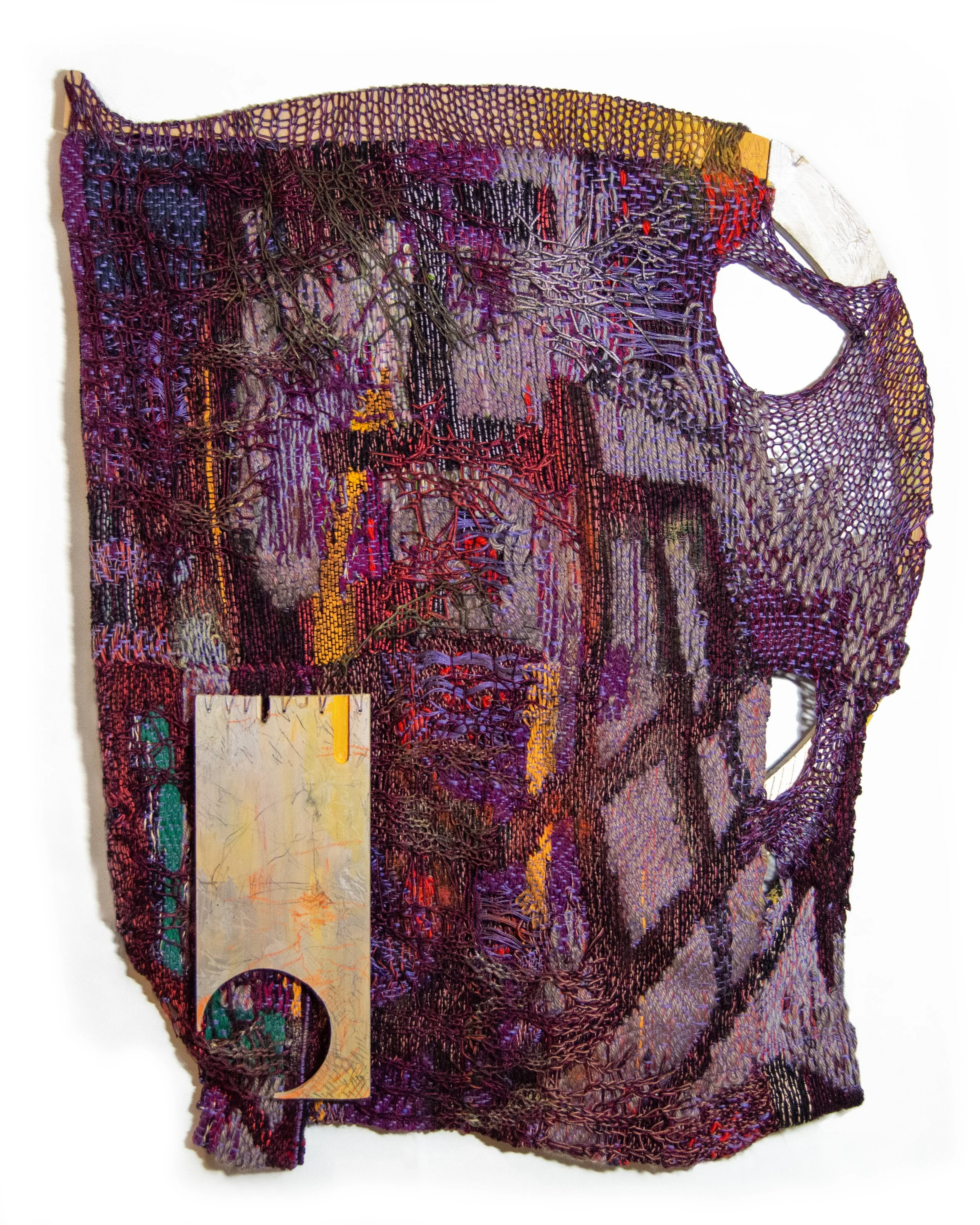
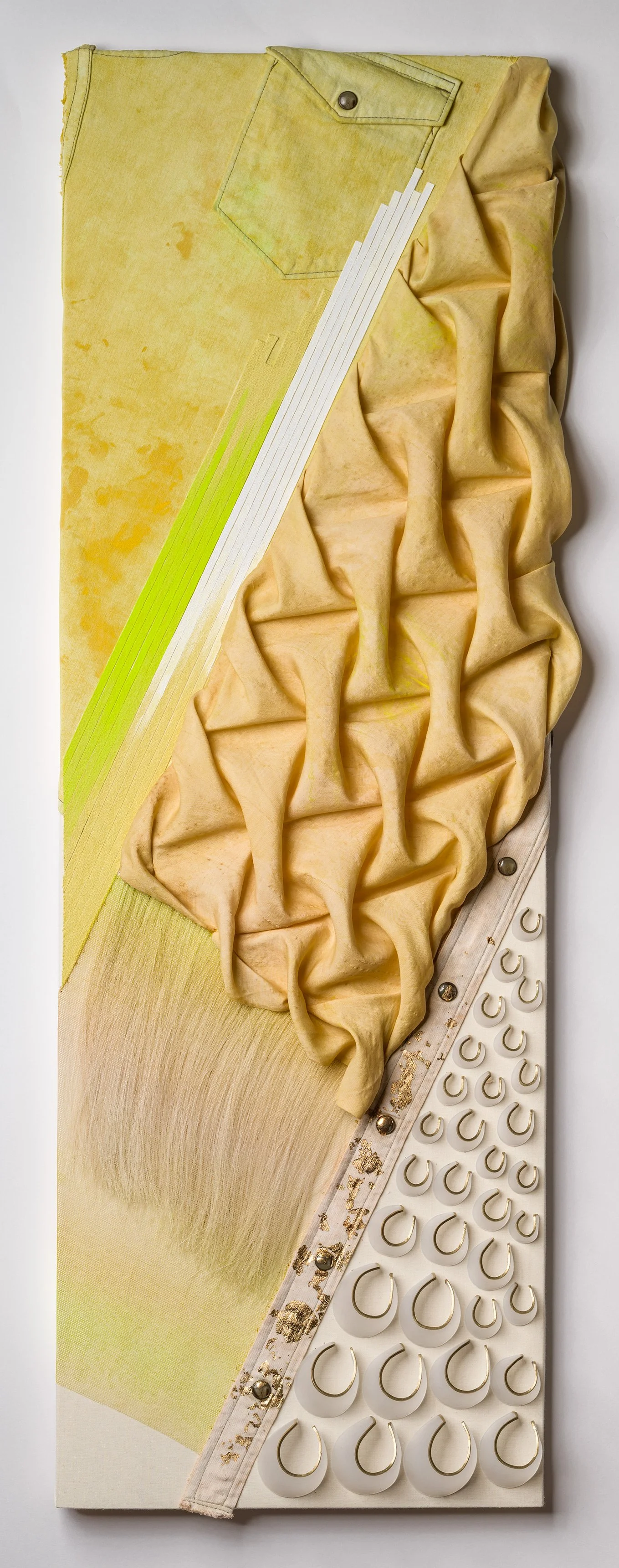

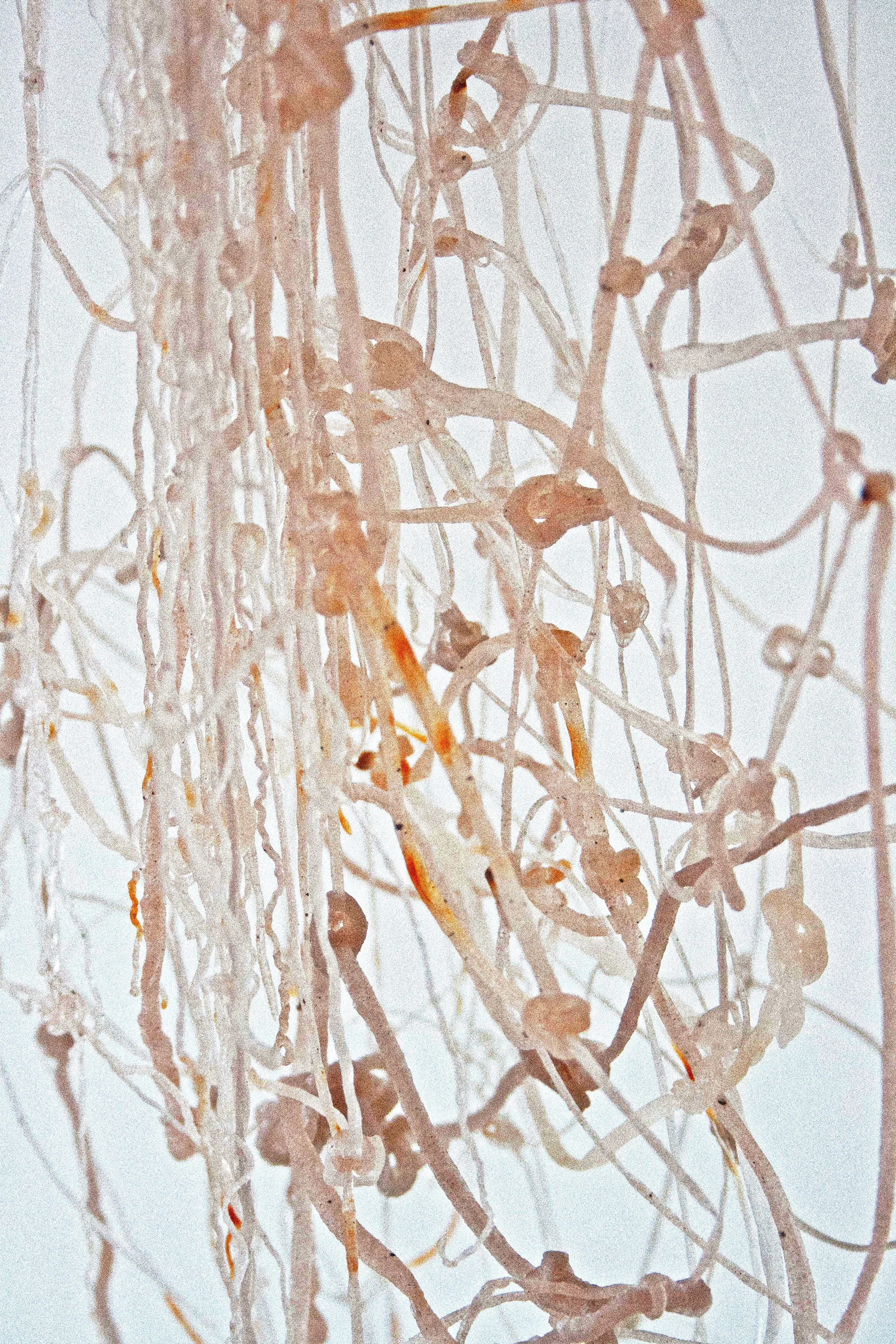
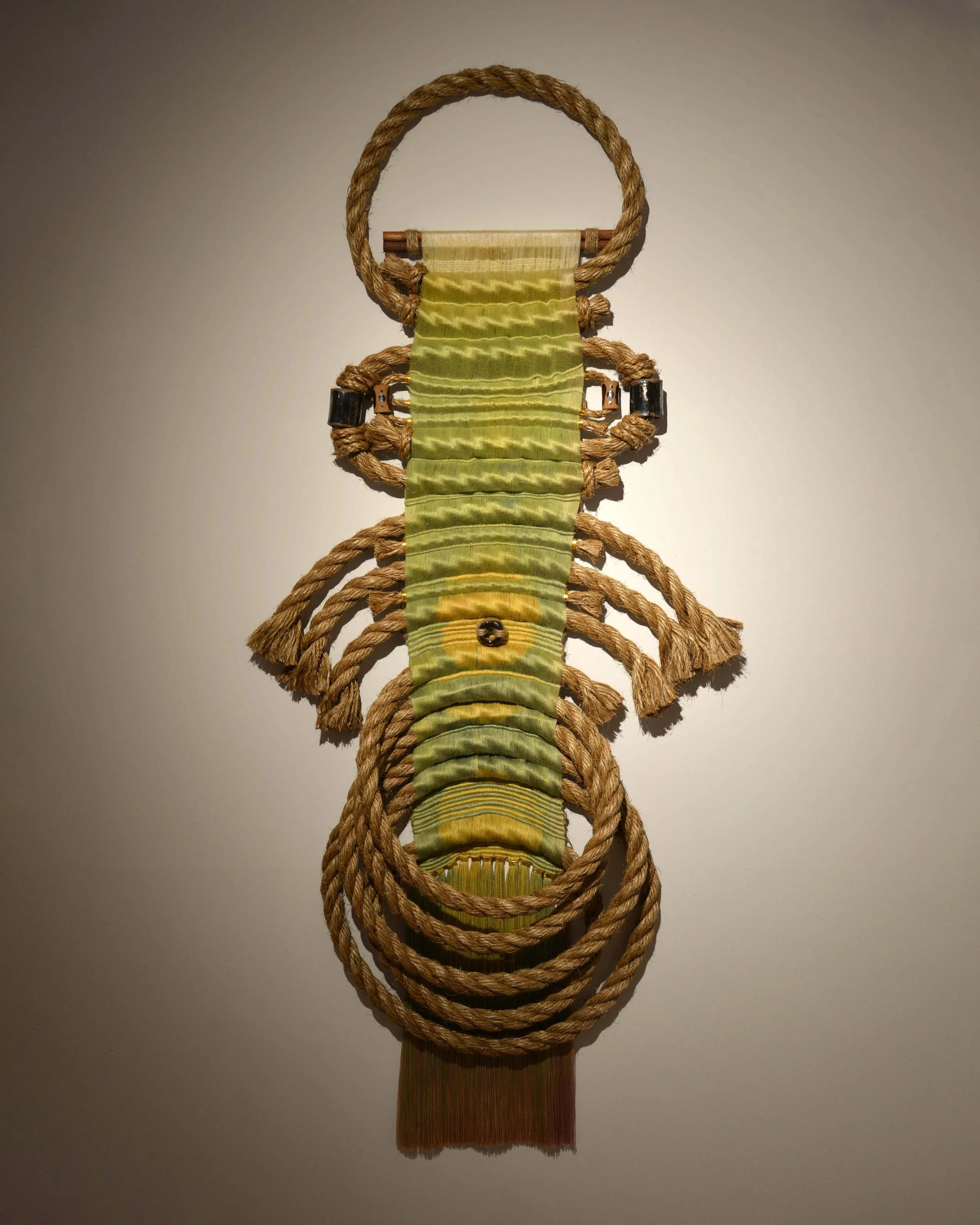
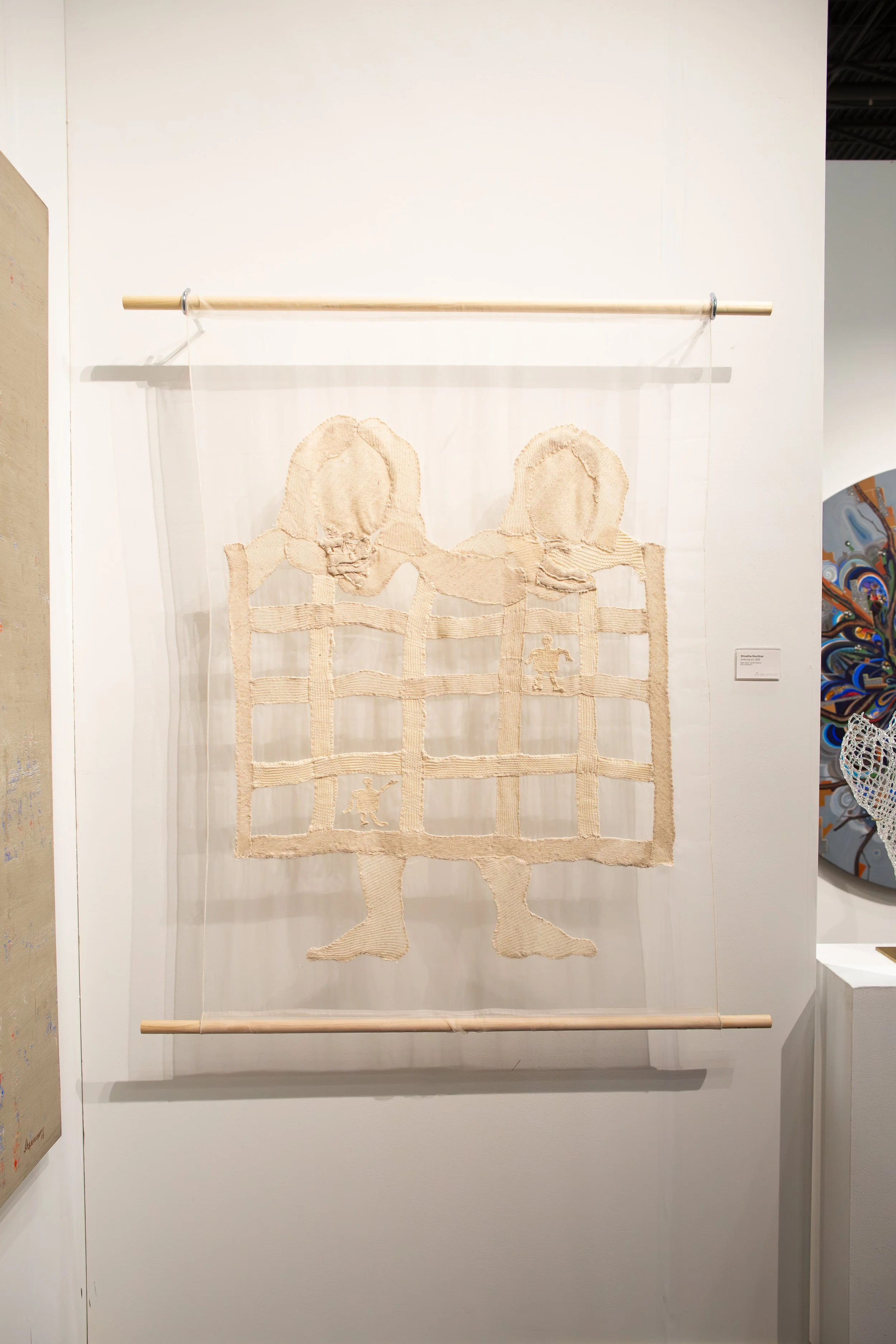

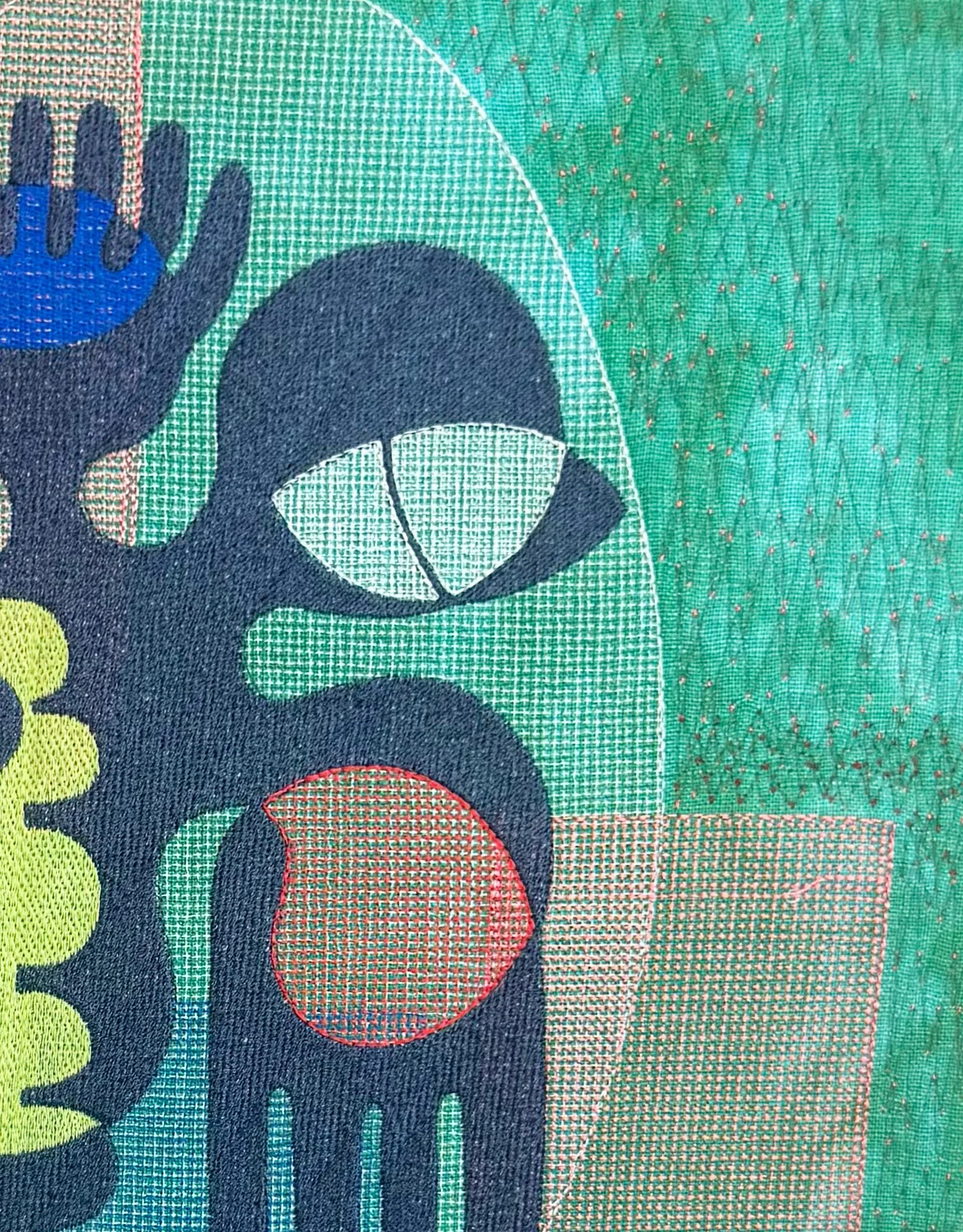
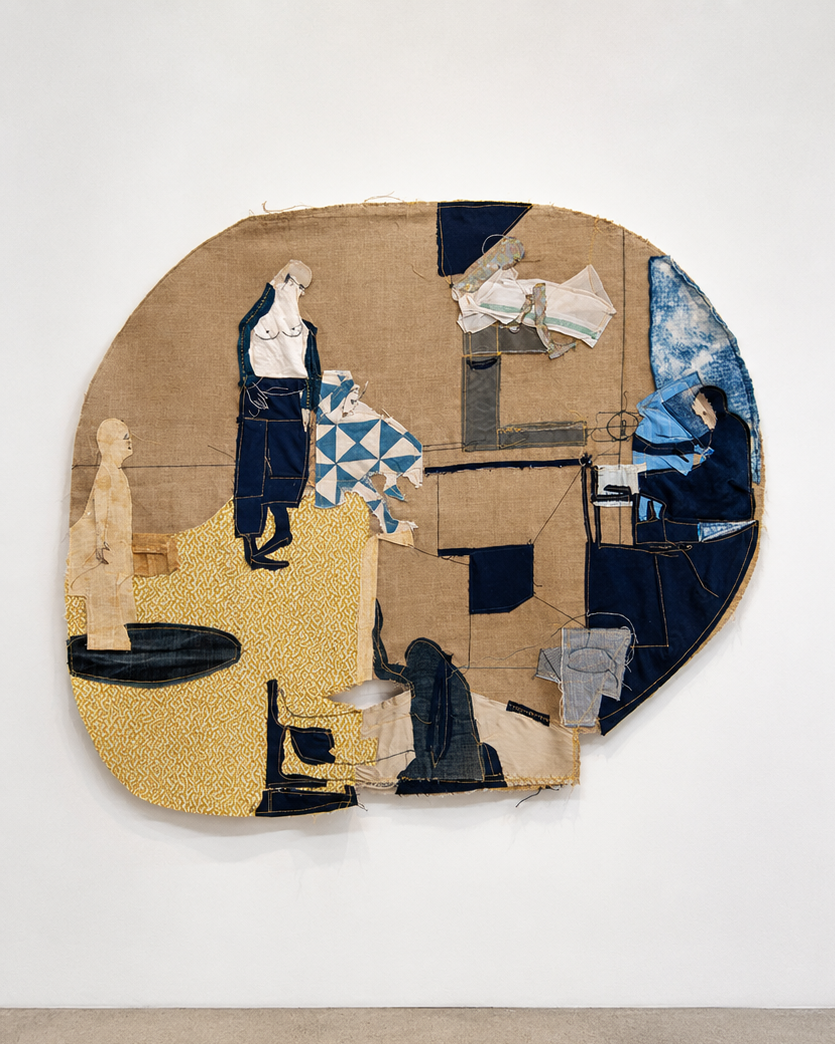
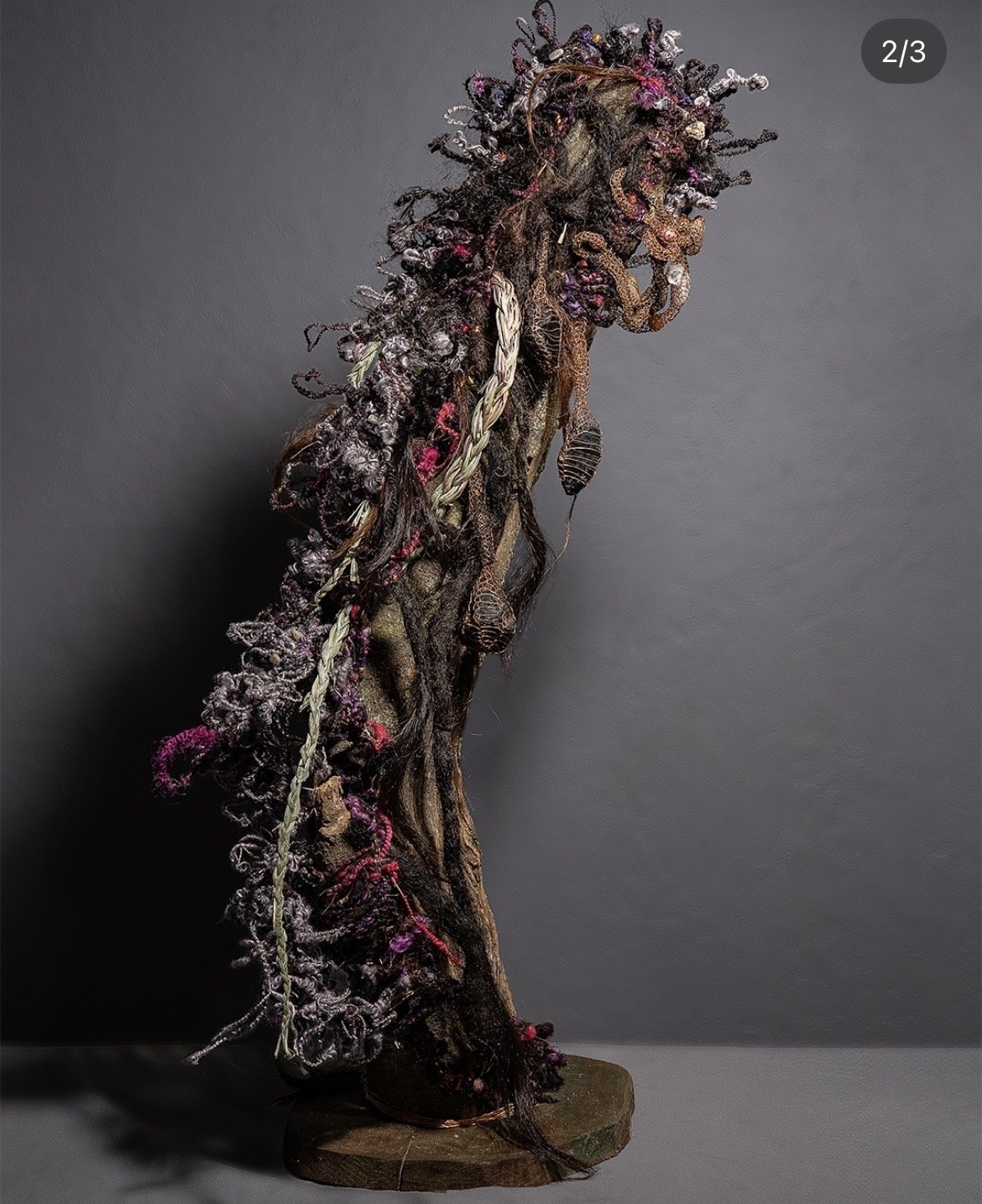
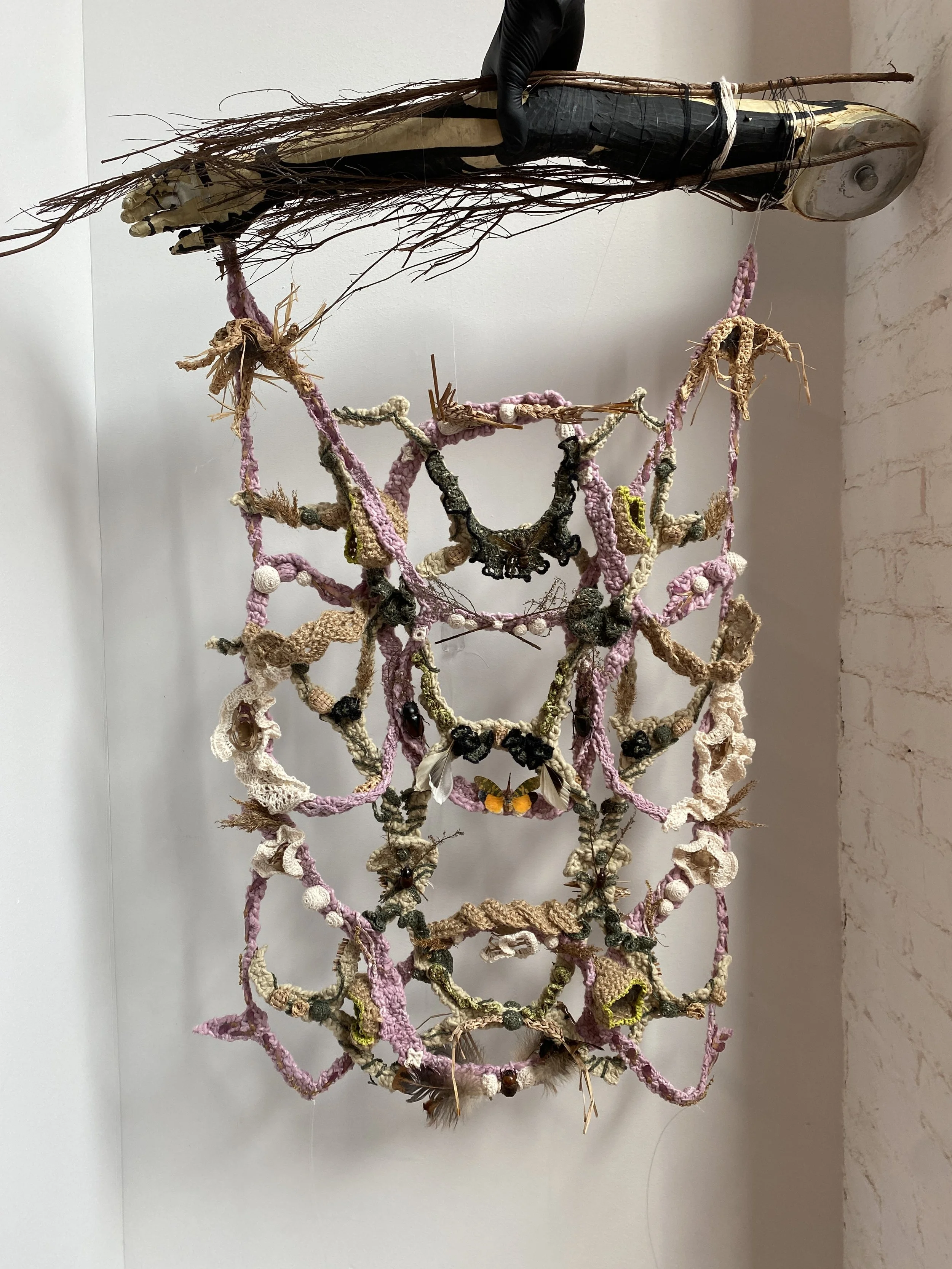
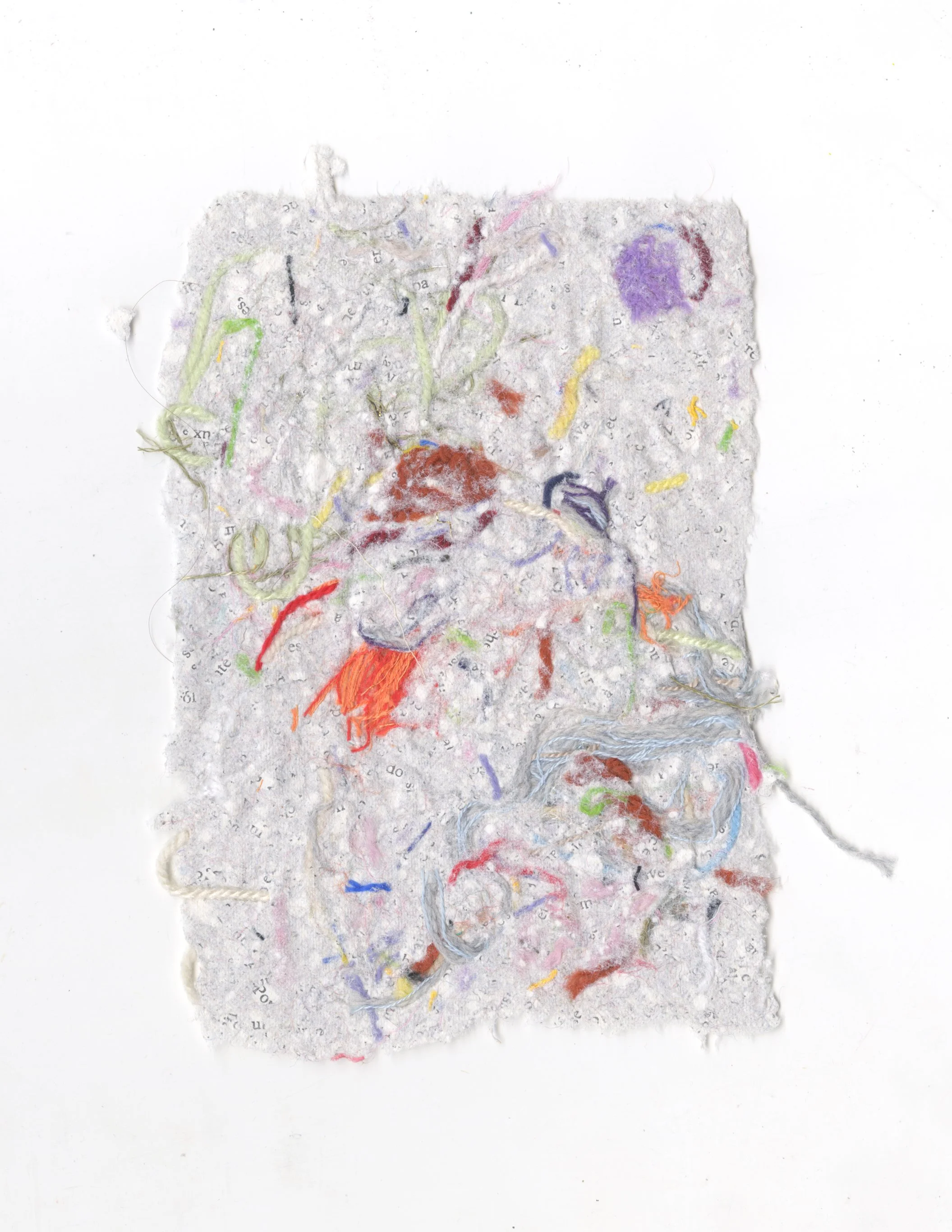
Drawing inspiration from nature, religion, and traditional craft, Ollie Hongji Li is a Brooklyn-based textile artist and designer whose practice explores gender, identity, cultural heritage, and belonging. Using Chinese knotting, knitting, crochet, weaving, spinning, and natural dyes, he reinterprets traditional techniques through a contemporary lens. Ollie holds an MFA in Textiles from Parsons School of Design and received the Surface Design Association’s Creative Promise Award in 2023. His practice bridges contemporary fiber art, design, and fashion, with work spanning international exhibitions, community-based Chinese knotting workshops, and collaborations with notable fashion brand such Miu Miu and Dr. Martin.
Young Talent from Sweden
In person / Exhibition / Textile Industry
Young Talent from Sweden Paving the Way for Sustainable Fashion at the United Nations Headquarters in New York
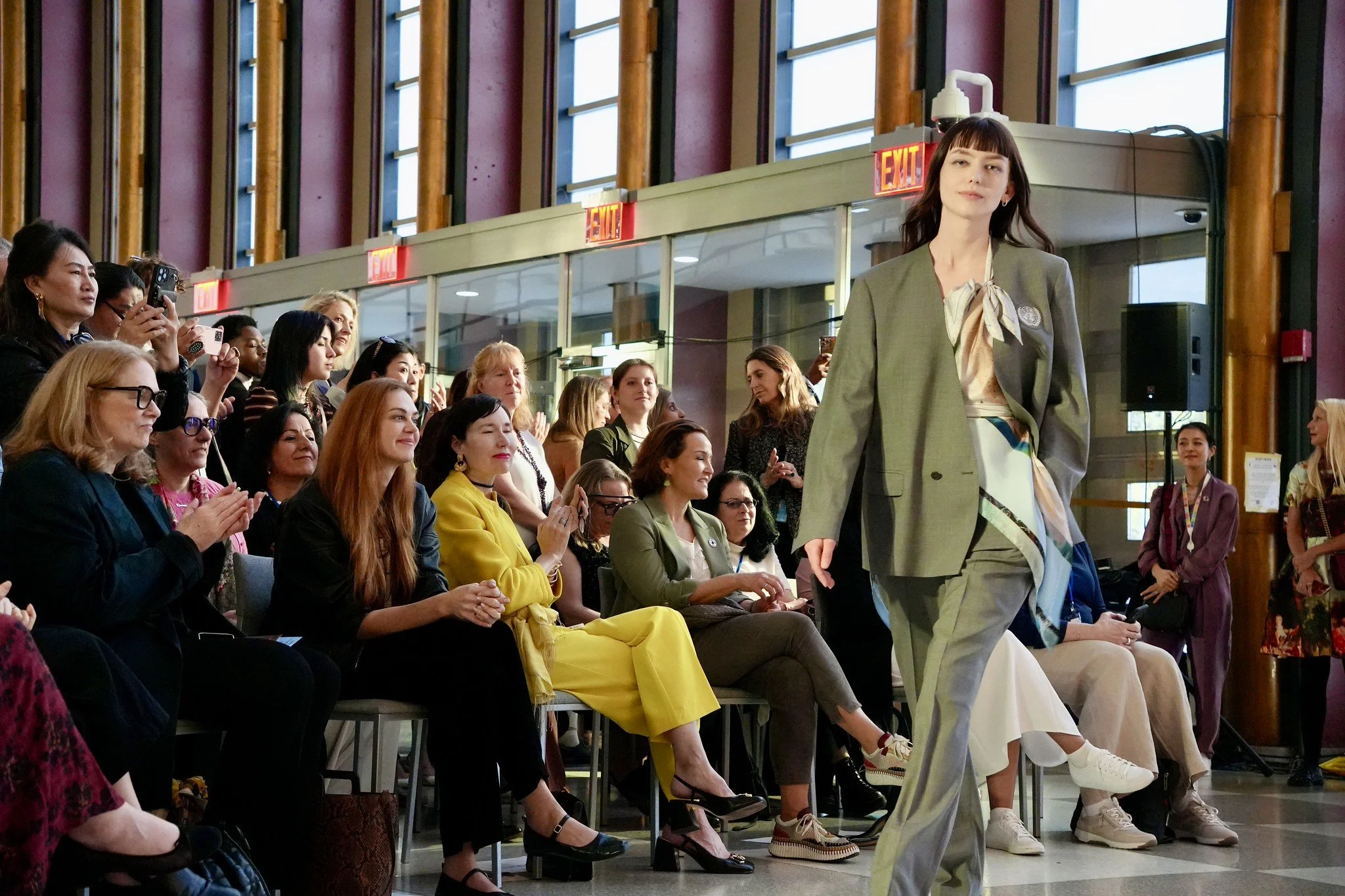
During New York Textile Month, Scandinavia House presents a selection of the new sustainable UN Tour Guide Uniforms, created by students from the Swedish School of Textiles at the University of Borås.
Unveiled at United Nations Headquarters on Earth Day 2025, the collection marks the first time a higher education institution has designed the uniforms worn by UN Tour Guides. Developed with sustainability at the heart of the design process, the collection explores innovative materials, responsible production, and new approaches to fashion.
Four looks from the collection will be displayed in the windows of Scandinavia House, accompanied by a video highlighting the next phase of the project: a collaboration between the Swedish School of Textiles and Central Saint Martins, University of the Arts London, in which students are developing a new generation of sustainable accessories for the UN Tour Guides.
The project is supported by the Paul Frankenius Foundation and developed in collaboration with the United Nations.
September 4 to September 17
10:00 AM - 6:00 PM
No registration required!
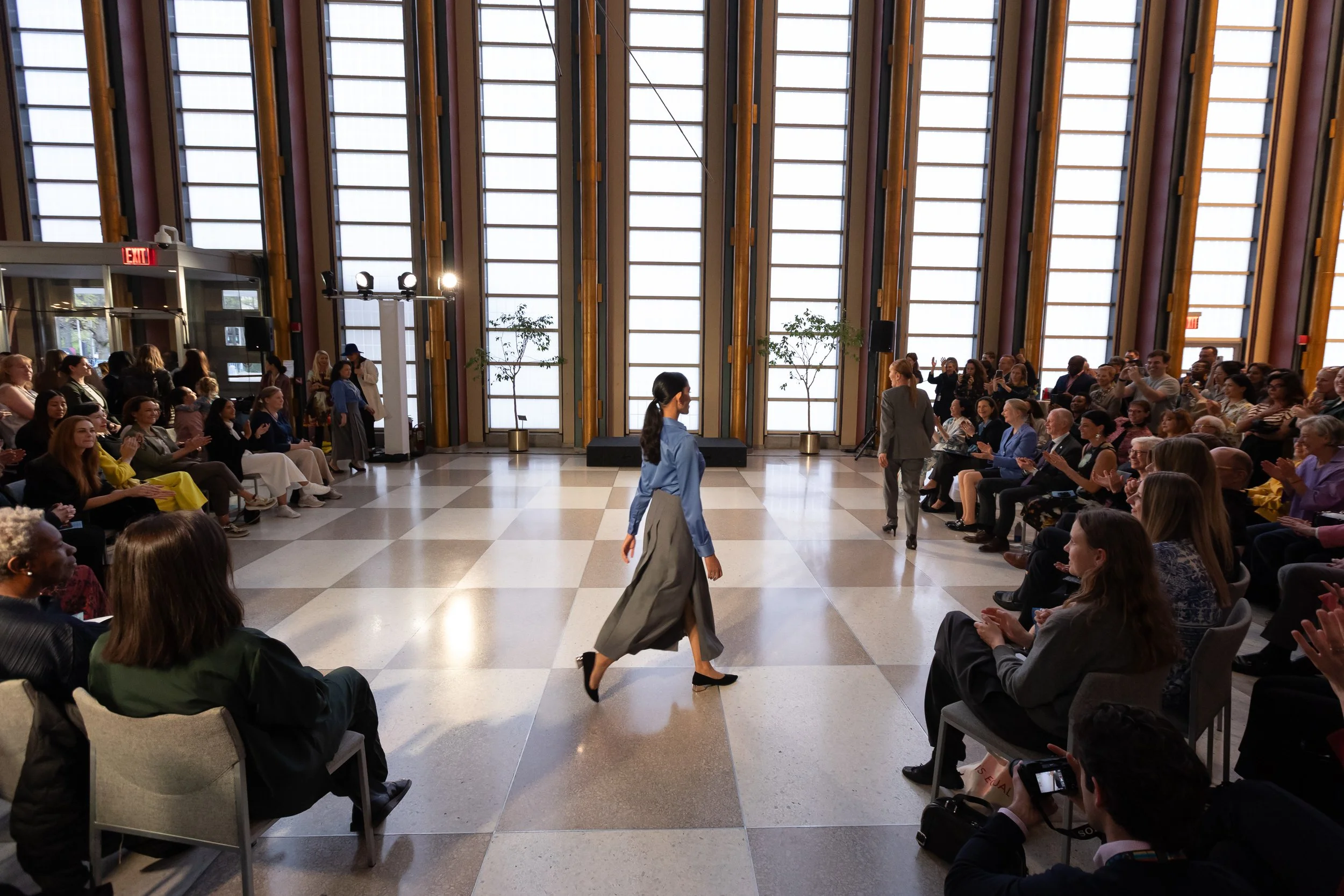
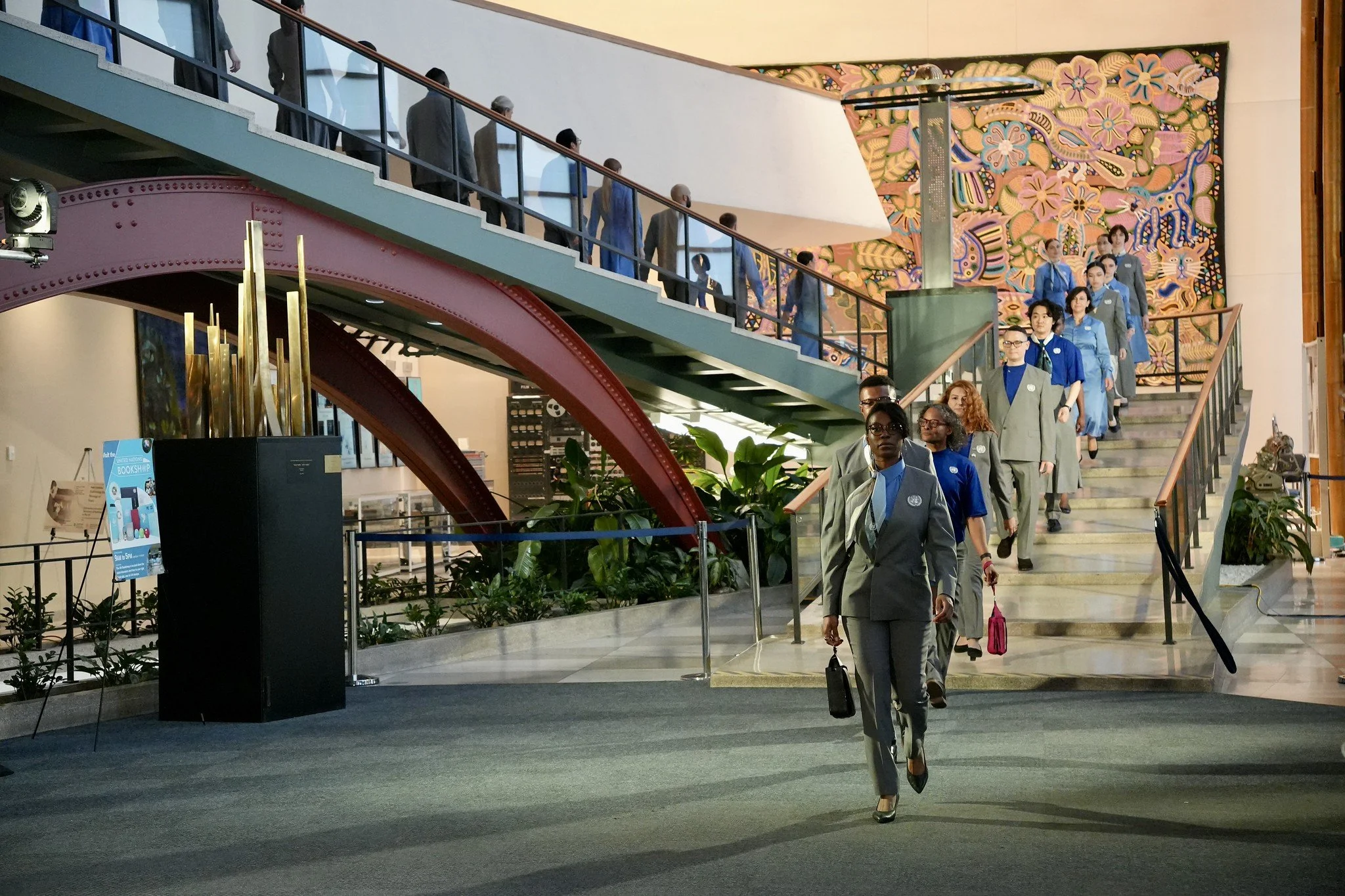
Young Talent from Sweden Paving the Way for Sustainable Fashion at the United Nations Headquarters in New York.
Swedish design students are making history by developing a new collection of tour guide uniforms for the United Nations, a prestigious assignment traditionally held by renowned fashion houses like Dior and Benetton. This collaboration between Sweden and the United Nations represents a significant moment for climate-friendly fashion.
Since 1952, tour guides leading visitors through the UN headquarters in New York City—from world leaders to school groups—have worn specially designed uniforms. Fashion houses have traditionally created these iconic designs, with the most recent collection launched in 2017 by the esteemed designer Elie Tahari. Now, Sweden and the Swedish School of Textiles are collaborating with the United Nations to redefine the future of sustainable fashion by developing the first collection of eco-friendly uniforms for UN tour guides.
On Earth Day, April 22, 2025, twenty BFA and MFA Textile and Fashion Design students unveiled a new collection of guide uniforms during a fashion show at the United Nations Headquarters in New York. This is the first time a higher education institution has designed and developed tour guide uniforms for the UN Headquarters and the first time there has been a focus on sustainability.
This collaboration was initiated by the United Nations and Sofia Hedström de Leo, an advisory board member of the UN's Fashion and Lifestyle Network and former Head of Sustainability at the Swedish Consulate in New York. The project is funded by the Paul Frankenius Foundation. The Swedish School of Textiles and the Paul Frankenius Foundation leads the project in partnership with the UN Office for Partnerships, the UN Department of Global Communications, and other collaborators.
7 WORDS OF HOPE - Talk
In person / Talk / Multiple Techniques
7 WORDS OF HOPE: Love Joy Peace Courage Empathy Compassion Happiness
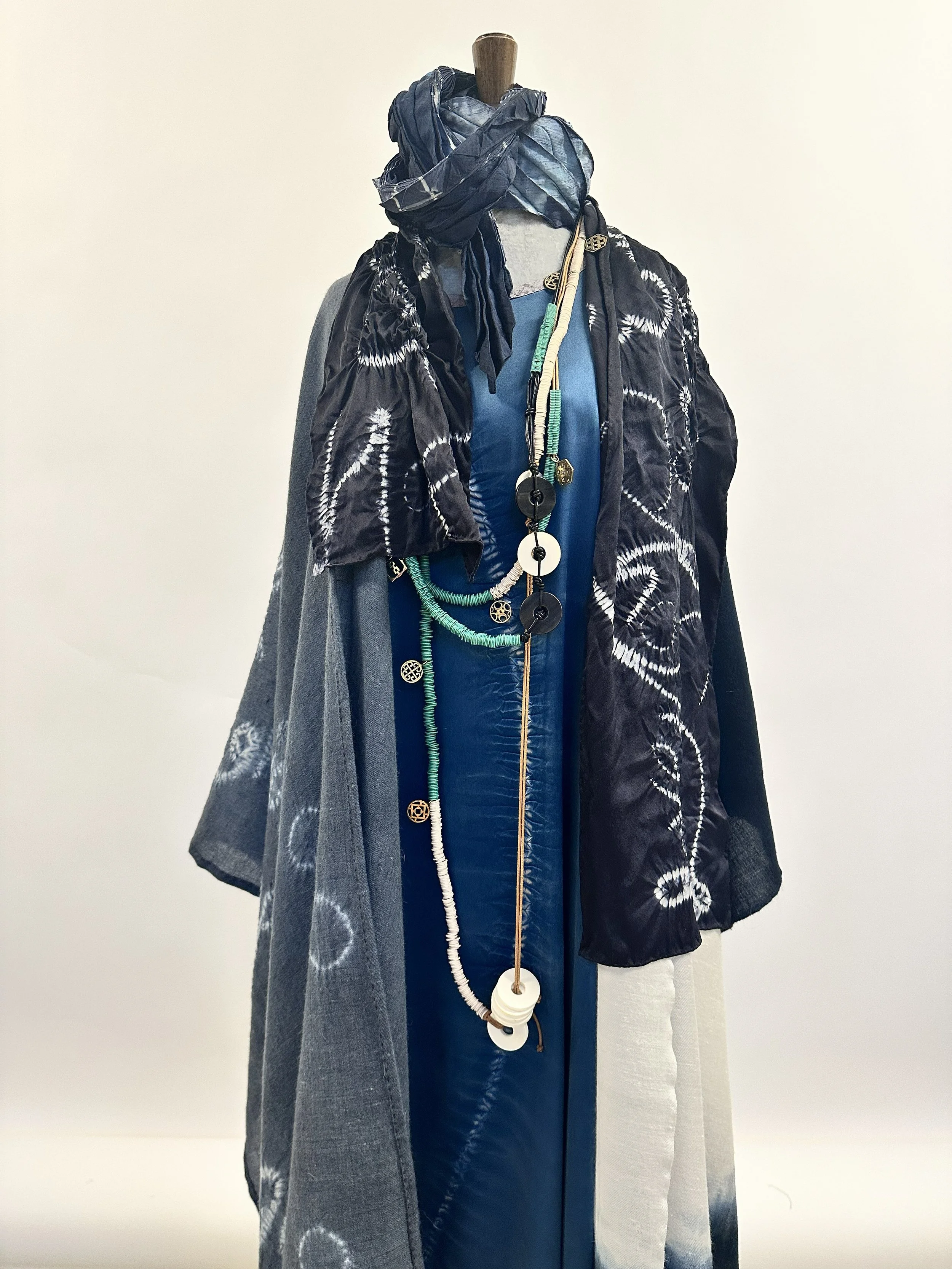
7 WORDS OF HOPE explores the profound, historically intertwined relationship between textile and text—both acting as potent systems of non-verbal communication that invite deep, individual interpretation.
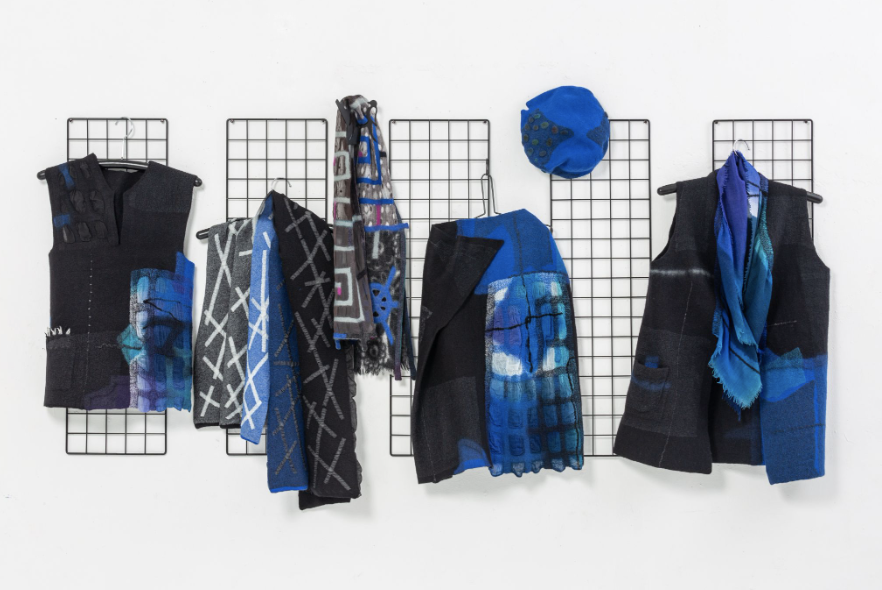
A decade ago, Mary Jaeger began hand-embroidering seven specific words of hope into her one-of-a-kind accessories. Originally executed as covert gesture, quietly stitched and camouflaged within architectural pleats, each word was an intimate message intended for the wearer to physically embody. In this landmark exhibition for New York Textile Month XI, Jaeger evolves this practice, presenting a wearable collection featuring these seven words inscribed in commanding, lyrical lines, a powerful departure from her previous structural whispers.
Alongside Jaeger’s garments, eight invited contemporary artists present diverse interpretations of these core linguistic pillars across a range of media. Together, the works stand as a radical counter-narrative to our current epoch of mass markets, frenetic consumption, and the expanding anxieties of artificial intelligence. In an era fractured by global discord and political instability, 7 WORDS OF HOPE asserts the critical relevance of the handmade. By internalizing these qualities, both wearer and observer are reminded of their agency to positively influence their own realities, transforming textile art into an essential site of human resilience.
Join us at the Mary Jaeger Atelier on September 6th, for 7 WORDS OF HOPE: ARTIST TALKS, a special exhibition and discussion presented for NYTM Xl. Open from Noon to 5:00 PM, with the central Artist Talks beginning at 2:00 PM, this event explores how handmade textiles, art, text, language, and emotion intertwine and impact our daily lives.
The exhibition features eight invited contemporary artists who will present their diverse interpretations of the 7 WORDS OF HOPE across a range of media, alongside Mary Jaeger. Discover how these timeless concepts are translated into tangible art:
• Love: Ragna Frodadottir (@frodadottir)
• Joy: Jorie Johnson (@joiraetex)
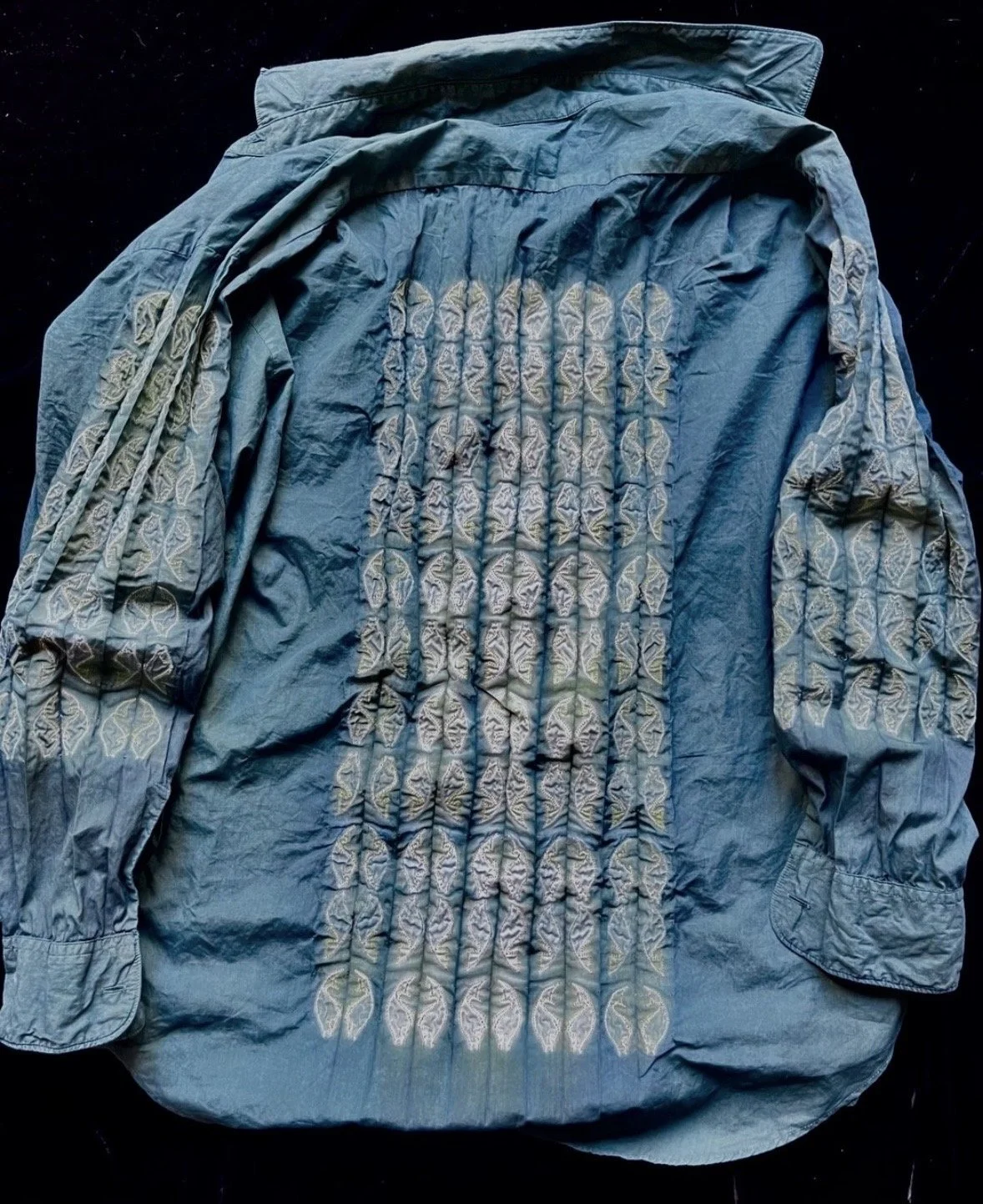
• Peace: David Salama (@dalama0)
• Courage: Dr. Katherine Soucie (@sanssoucie)
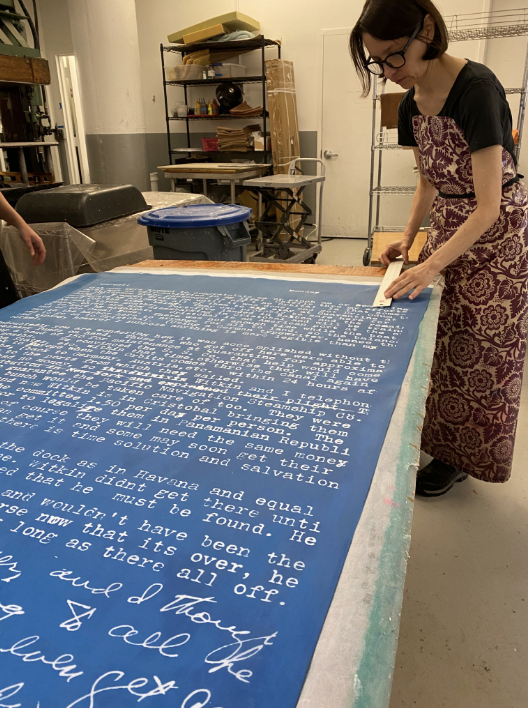
• Compassion: Tatiana Ginsberg (@tsgpaper)
• Empathy: Francesca Schwartz (@francescaschwartzstudio)
• Happiness: Erik Bergrin (@erikbergrin / @spiritbody_clothing)
• 7 Words of Hope: Thea Fine
• 7 Words of Hope: Collection: Mary Jaeger (@maryjaeger_ny)
The program at Mary Jaeger Atelier:
Opening Reception: Sunday, September 6
12:00 PM - 5:00 PM Gallery Open
Artist Talks at 2:00 PM
Panel Discussion: Sunday, September 13
12:00 PM - 5:00 PM Gallery Open
Panel Discussion at 2:00 PM - 3:30 PM Learn more here
Closing Reception: Thursday, September 17
12:00 PM - 8:00 PM Gallery Open
5:00 PM - 8:00 PM Closing Reception
Artist Talks at 6:00 PM
Exhibition: Sunday, September 6 - Thursday, September 17
12:00 PM - 5:00 PM Daily, other times by appointment: email mary@maryjaeger.com
No registration required!
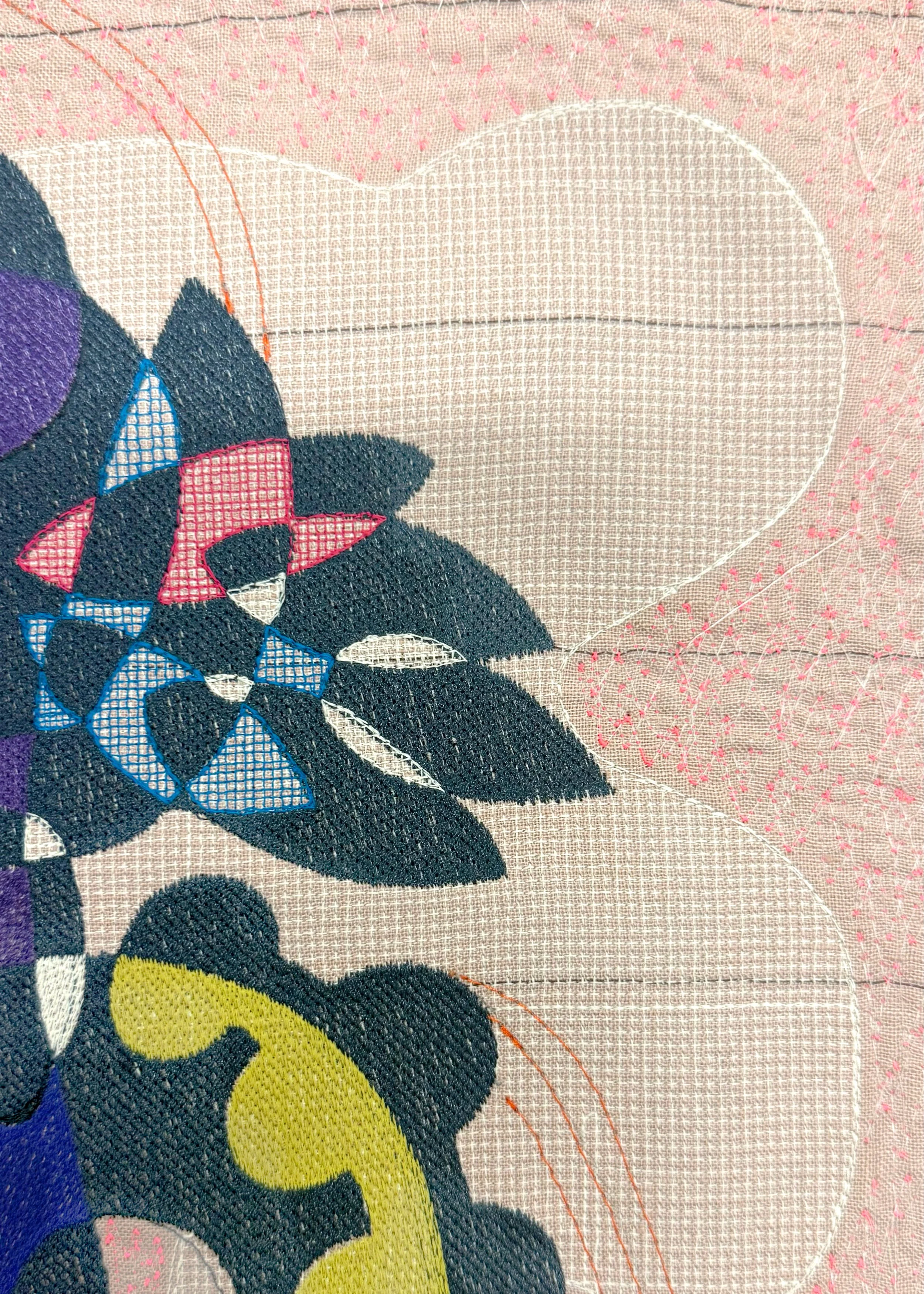
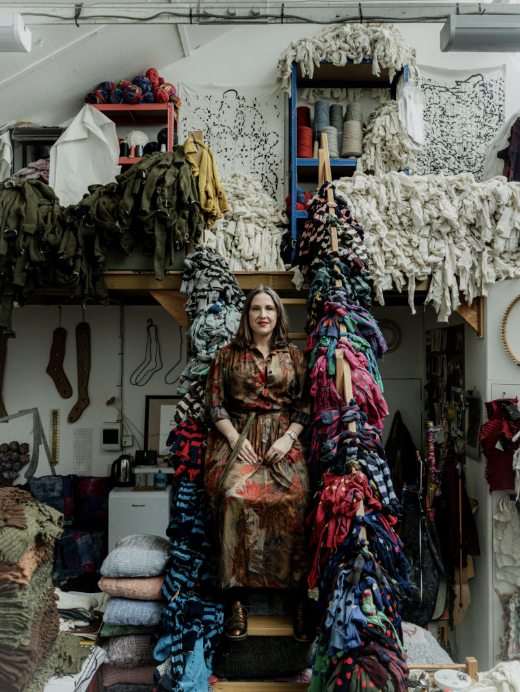
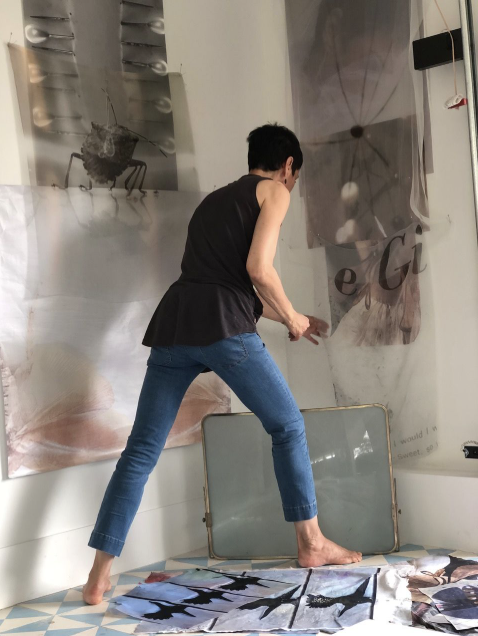
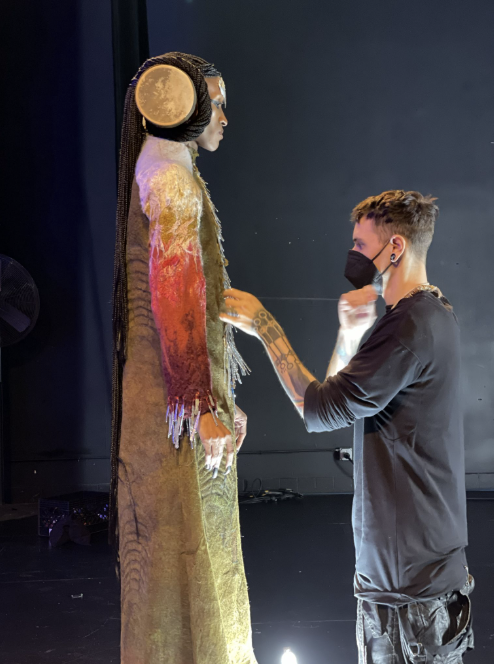
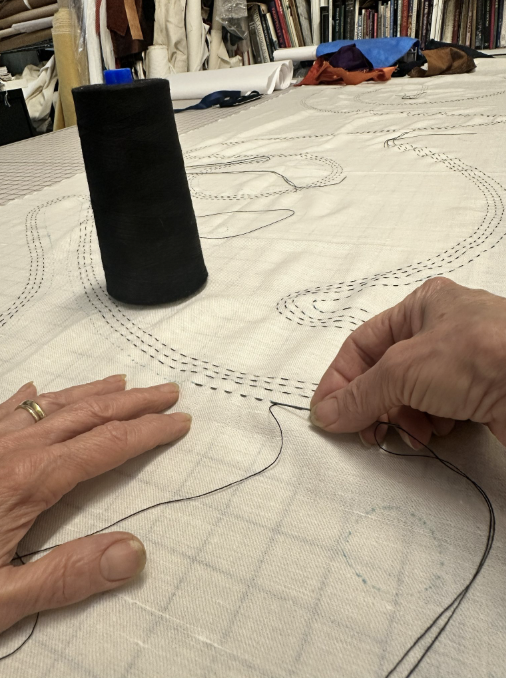
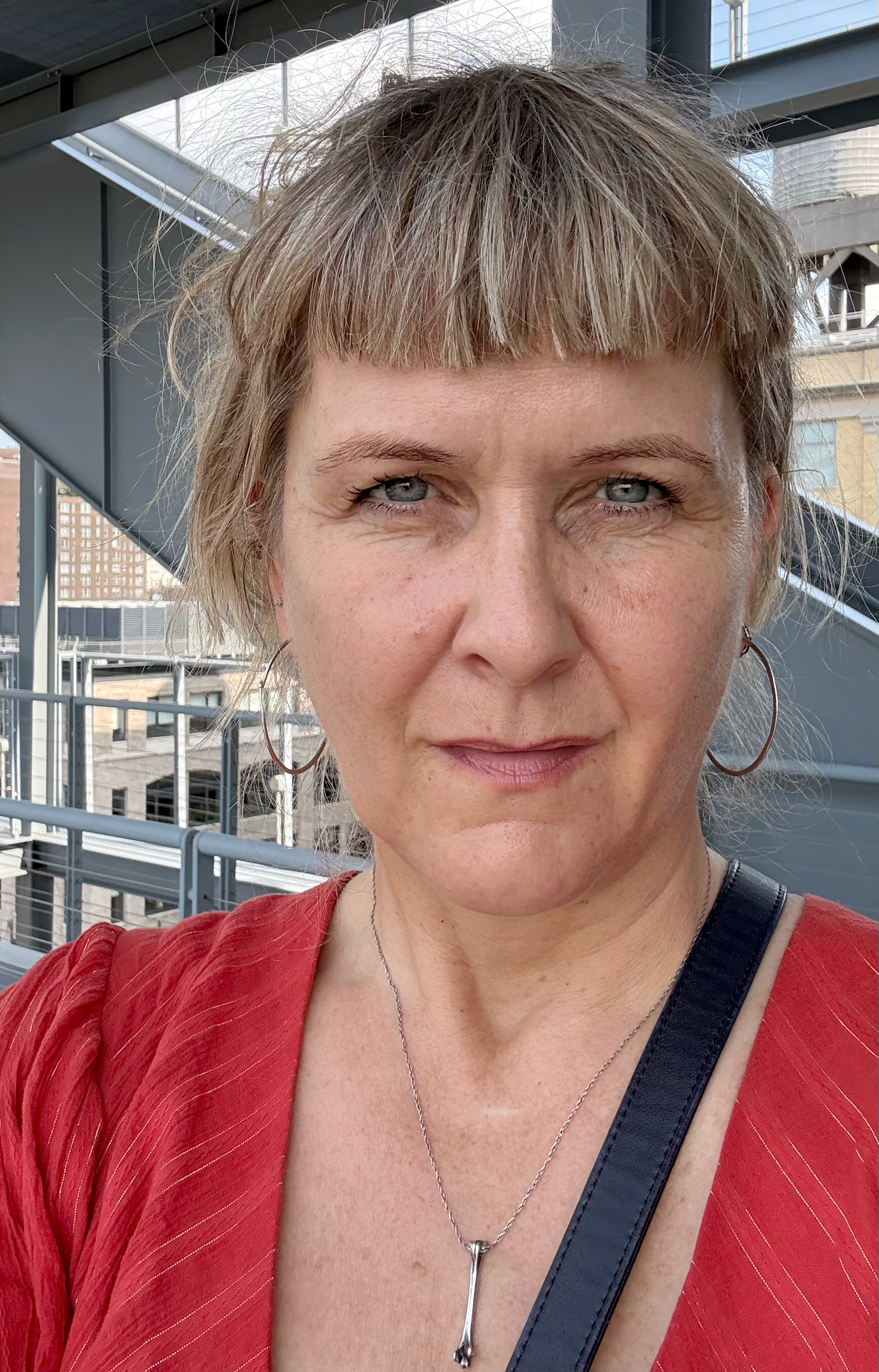
Ragna Frodadottir
“My work focuses on the process of making, working with colors and textures, and the history and culture of symbols and patterns in textiles” - Ragna Froda
Creative Director, NYTM & Edelkoort Inc. | Artist & Curator
Ragna Froda is an Icelandic artist, curator and educator with a background in fashion and textile design. With a strong passion for textiles, innovation, and craft, the foundation of her practice is storytelling through hybrid layers of craft and technology. In the past 15 years, she has lived in New York, Berlin and Reykjavik, where she was head of Textiles at Reykjavik School of Visual Arts. She now lives in NYC where she runs her studio practice and works as the director of Edelkoort Inc. and New York Textile Month.
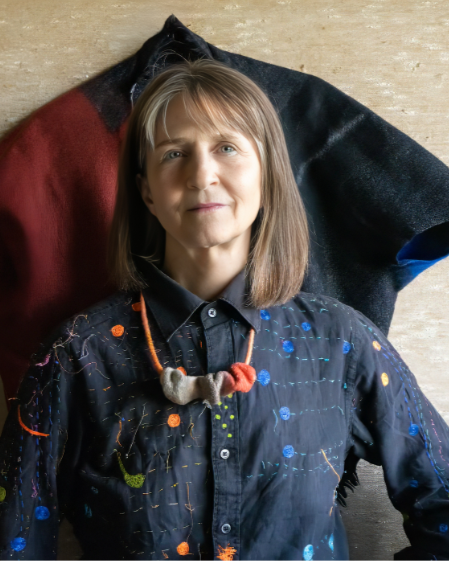
Jorie Johnson
“The history of man includes the history of feltmaking. I like contemporary
feltwork as it offers not only unique fabric design with seamless form, but self-expression and “Viking” protection.” - Jorie Johnson
Kyoto-based Contemporary Felt Artist | Educator & Innovator
Jorie Johnson’s imagination has been totally captured by the capability of wool fiber. With JoiRae Textiles, she continues to explore and create handmade felted woolworks for the body, the home, and the soul. Her works have been collected by the V&A London, MFA Boston and Cooper Hewitt NYC. She travels for research and teaching when the summer winds draw her away from eastern Asia.
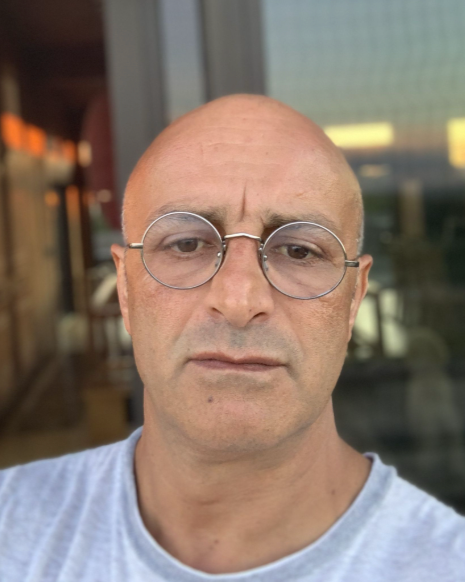
David Salama
“I like to push the limits of possibilities in shibori by combining traditional techniques with machine aided innovation” – David Salama
NYC-based Restauranteur l Multi-Disciplinary Artist & Creative
David Salama cultivates a deep interest in all the arts, expanding on his graphic design background from Tyler School of Art & Architecture. A majority of his life has been spent in the decorative arts and culinary arts with him currently running a restaurant in New York City. Recently he’s had the opportunity to return to textile craft and has spent the last four years learning and practicing Katazome, Shibori and indigo dyeing with on-going trips to Japan for workshops with notable masters.
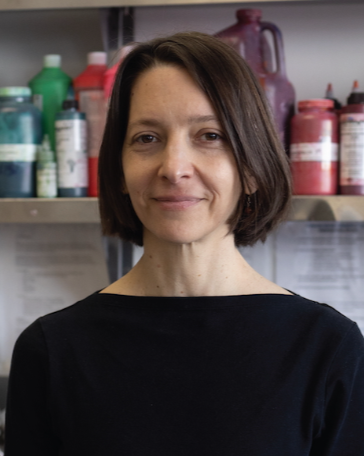
Tatiana Ginsberg
“Studying at one of the oldest dye studios in Kyoto, I learned the art of dyeing paper in brilliant colors for temple festivals, sutra copying, and other uses” - Tatiana Ginsberg
Director of Artistic Projects & Master Collaborator, Dieu Donne Paper Mill l Paper Artist, Writer, Curator & Educator
Tatiana Ginsberg works in handmade paper, creating drawings, books, and installations. She studied at the University of Iowa Center for the Book, received her MFA from the University of California, Santa Barbara and spent two years in Japan researching naturally dyed papers on a Fulbright grant. Ginsberg taught papermaking, printmaking, book arts, and drawing at colleges for more than a decade. Her work combines traditional and contemporary techniques, and focuses on the beauty of everyday things, the infraordinary, and paper as a transmitter of stories.
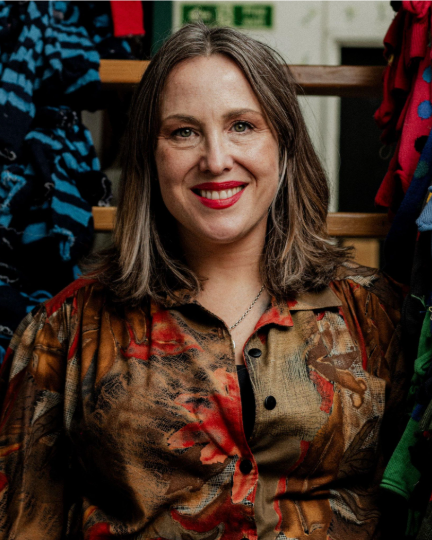
Katherine Soucie
“My East London-based studio focuses on the creative reuse of UK sock manufacturing waste, building on reuse strategies developed through my doctoral research project, New Geographies of (Re)Making” – Katherine Soucie
London-based Sans Soucie, Founder l Artist, Designer & Researcher
Katherine Soucie specializes in creative textile reuse, manufacturing, and mending as both material practice and critical inquiry. Over 25 years, she has developed a multidisciplinary upcycling practice across textiles, fashion, and visual art. After studying fashion design in London and Toronto, and textiles and visual art in Vancouver, she completed a practice-based PhD in Upcycling and Circular Textiles at Kingston University London. Her work has been exhibited, sold, and commissioned internationally - spanning Canada, the USA, Japan, China, Hong Kong, Australia, and the UK – across private collections, film, television, theatre, and performance contexts.
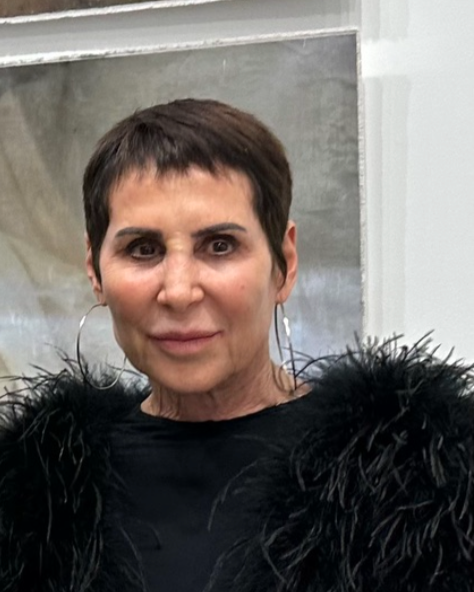
Francisca Schwartz
“My artwork is informed by a fascination with the materiality and metaphors of the female body” – Francesca Schwartz
NYC-based Psychoanalyst l Mixed Media Artist & Visionary
Francesca Schwartz works in a range of mixed media processes encompassing painting, sculpture, photography, and collage. Her diverse materials include inks, dyes, wax, bone, textiles,and found objects, and most recently fire. Schwartz exhibits in solo and group exhibitions, art fairs, and galleries and her art has been featured in international publications. She has received multiple grants, artist-in-residencies, and awards for her multidimensional and provocative work.

Erik Bergrin
“I see creativity as a spiritual practice – a way of transforming what weighs us down into something that sets us free”- Erik Bergrin
NYC-based Costume & Textile Designer for Film & TV l Artist & Researcher
Erik Bergrin is an interdisciplinary artist and textile specialist whose practice spans sculpture, fiber, costume, film, and material-based research. His work has been featured nationally and internationally in solo and group exhibitions at galleries, museums, film festivals, theatres and on television, and has appeared in numerous publications, including Dazed and Confused, The New York Times and L’Officiel. Bergin’s independent clothing line, Spirit Body, is available on his website and at select
stores nationwide.
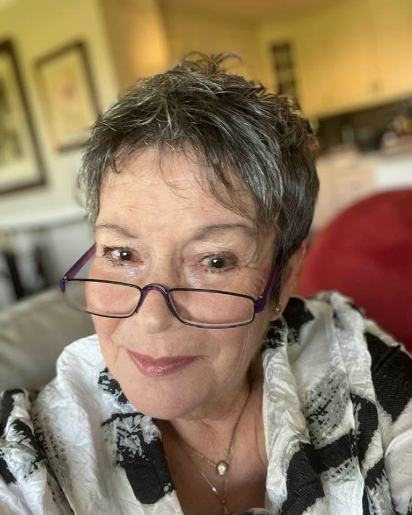
Thea Fine
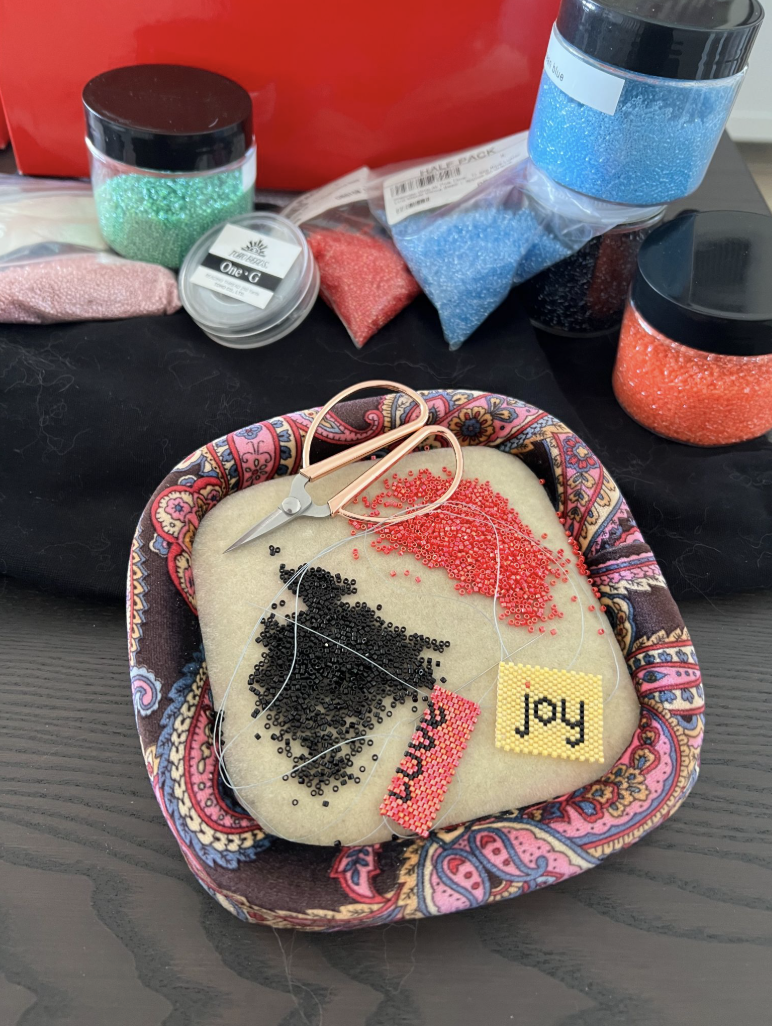
“Working with both hands and head has been my signature throughout my life, from crafting speeches and policy documents to creating jewelry in a second career as a bead weaver to making beaded “statement pins” and more in my so-called “retirement”” - Thea Fine
Metro DC-based Lapsed Healthcare Policy Wonk l Beadweaver & Creative
Thea Fine is a former political policy “wonk” and beadwork artist who spends her retirement creating beaded statements—both political and otherwise—as pins and clothing adornments. Though she learned beadweaving as a child from her grandmother, Rose, Fine set aside the craft for decades, only recently returning to it as a counterbalance to the frenetic pace of life on the edge of national politics. Her pieces, often intended to provoke conversation, have found their way into numerous jewelry collections. While Fine continues to create commissioned work for a dedicated client base, she has also exhibited her collections at nationally juried craft shows, galleries, and boutiques.
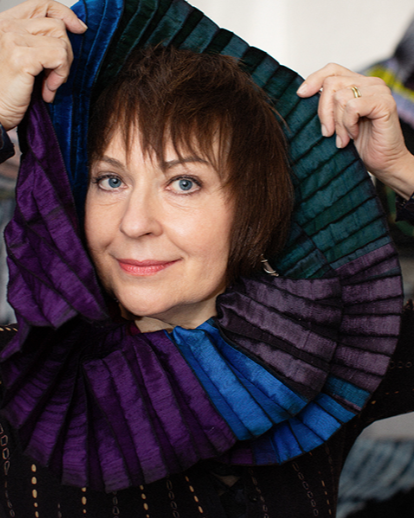
Mary Jaeger
“The core of my textile work is inspired by my passion for handmade and handcrafted details, twisting colors, textiles and patterns in unorthodox ways” –Mary Jaeger
NYC-based Contemporary Textile Accessory Designer I Artist & Innovator
Mary Jaeger’s work explores the intersection of modern elegance and rich tradition. Her aesthetic is defined by uncluttered textiles and accessories that seamlessly meld ancient Eastern sensibilities with contemporary Western design. Drawing on years of study and work across Japan and other areas of Asia, Southeast Asia, and Europe, Jaeger creates timeless collections for fashion and interiors that transition effortlessly between seasons, settings, and occasions. Her work is exhibited nationally and internationally, and can be experienced firsthand at her atelier in Brooklyn, NY.
Located in Williamsburg, Brooklyn, the Mary Jaeger Atelier is a creative studio and retail space where innovative textile designs move from conception to production. Focused on sustainability and circularity, the atelier produces one-of-a-kind and limited-edition clothing, accessories, and interior objects. Mary’s collections utilize natural fibers, shaped-resist dyeing (shibori), and three-dimensional fabric manipulation, often reimagining vintage and post-production materials. Beyond production, the atelier serves as a vibrant community hub for the textile arts, hosting hands-on workshops, international exhibitions, and panel discussions that teach new skills, explore the value of handmade work, and foster camaraderie among makers and clients.
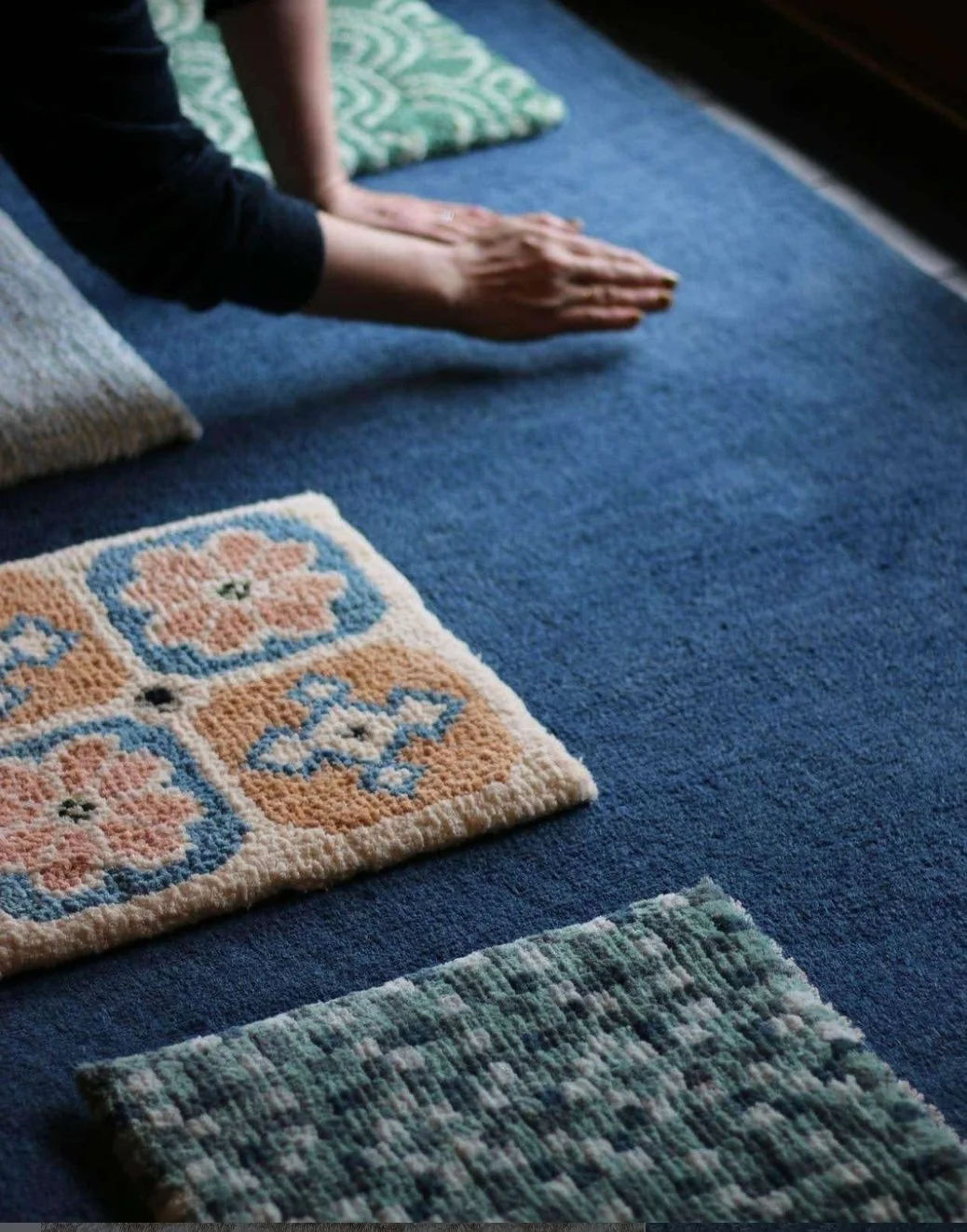
Knotting with Ako Gabbeh x Arts & Crafts Village - Japanese Craftswomen Knotting Life and Art
Ako Gabbeh, a Japanese weaving collective, brings hand-knotted chair rugs rooted in Silk Road tradition and natural indigo dye to Brooklyn. The month-long show features 15+ works, including Noriko Yamanaka's "Mountain" series and Dantsu rugs by Rie Sakagami, September 9–October 1 at Loop of the Loom, DUMBO.
One detail to flag: closing reception is October 1, 6–8pm, but the show is also open through Mondays-closed hours until then — worth double-checking whether Oct 1 is a full closing day or just the reception, since the excerpt/intro treat it as the last day.
TAC AIR 17 Final Exhibition: Stew
In person / Exhibition / Multiple Techniques
“Stew” features works by the 17th cycle of Textile Arts Center’s Artist In Residence program, curated by Romina Schulz.
“A stew, a slowly cooked dish, serves as a metaphor for dedication to the homemade and the collective. It is a gathering of distinct ingredients, each carrying its own texture, history, and flavor, and through sustained proximity, they transform one another. Consider the time it takes to chop and simmer the elements. This commitment to sit with the low fire and tend to the mixture is a practice of care, whether it is for the domestic labor itself, or for the soil that provides the components, or for the community fed by the stew. Let it cook gently, and everything will become tender. In this tenderness there is a memory of home.
At the same time, “to stew” refers to being in deep reflection, pondering, not moving or taking any action. It can also mean to overthink, from a place of anxiety or overwhelm. Thus, rather than an act of intentional simmering, stewing can become stagnation.
The artists' works hold the complexities of this title. The pieces on display reveal a dedication to the details, to each element and its mixture, inviting the viewers to linger with them."
September 10 - Opening Reception
6:30 pm - 9:30 pm
On view: September 12 - 24, 2026
Gallery hours: Sat-Thurs 11:00 AM – 6:00 PM / Fri: Close
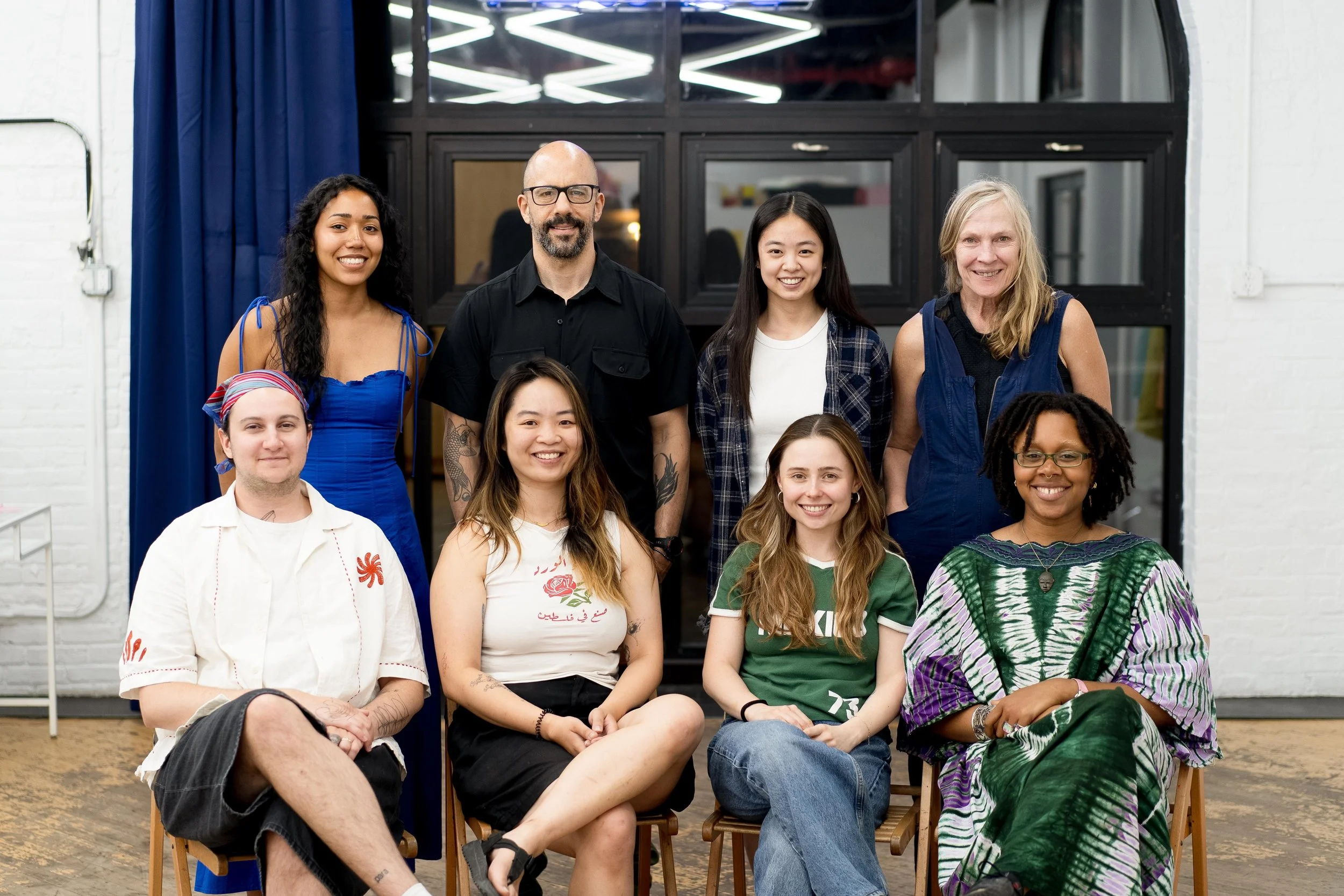
TAC AIR17: Mateo Gutiérrez, Cici Osias, Margaret Roleke, Seyoung Hong, Diana Eusebio, Alessandro Levato, Vero Bello, Vic Liu.
Follow: @mgutierreznyc, @its.cicii, @margaretroleke, @seyoung_h, @DianaEusebioStudio, @levato_archive, @verobellostudio, @v_isforvic
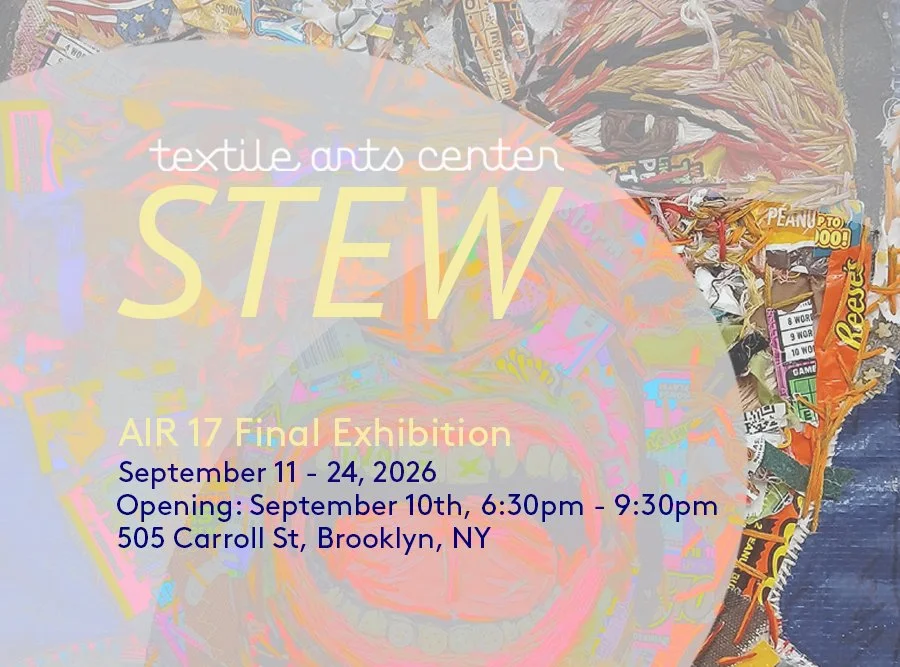
“Stew” features works by the 17th cycle of Textile Arts Center’s Artist In Residence program, curated by Romina Schulz.
textileartscenter.com/announcement/air-17-final-exhibition-stew
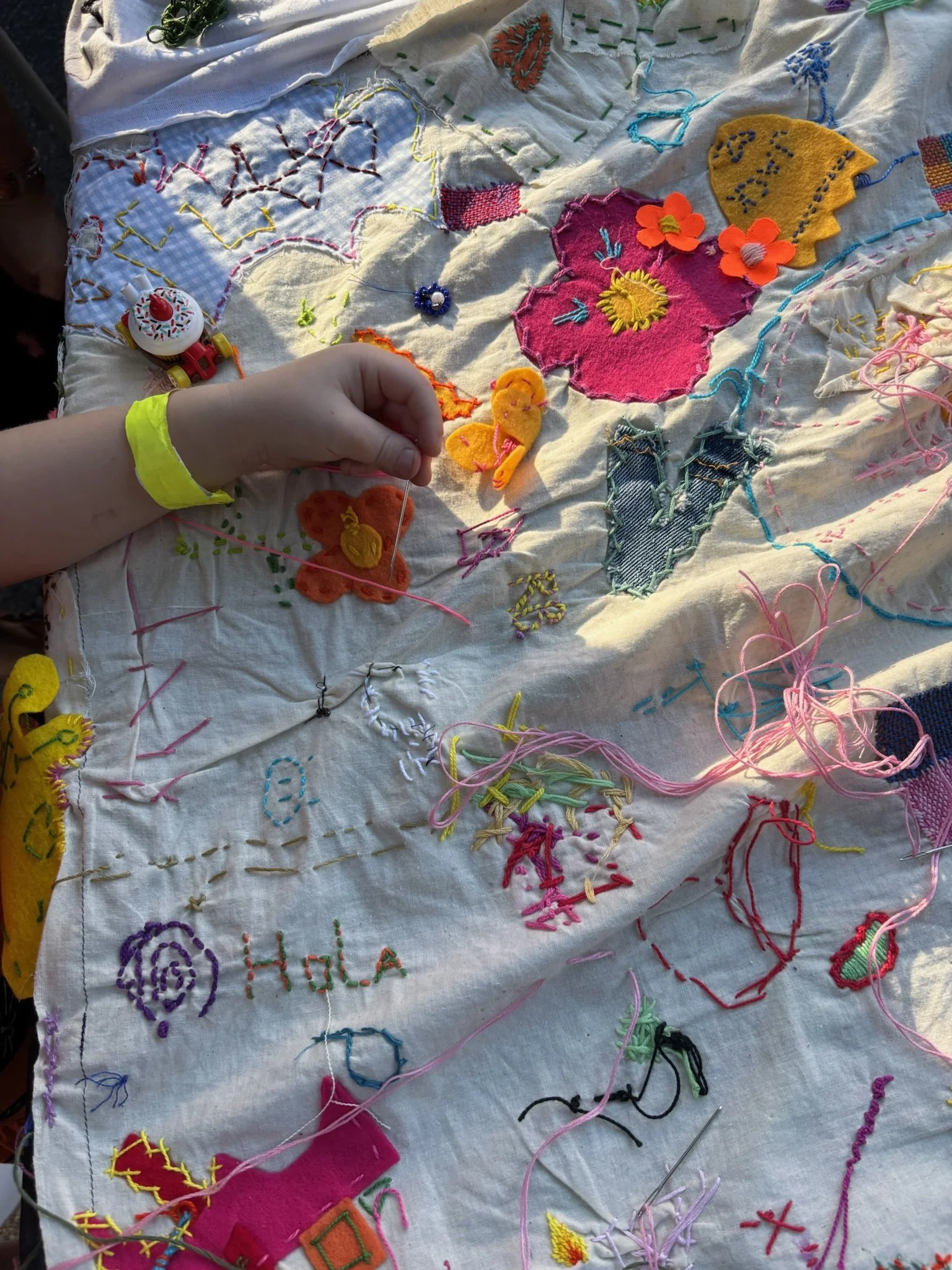
Miron Kiselev - Expressive Repair at M.PATMOS
In person / Multiple Events/ Multiple Techniques
ATELIER MIRONI SEWING, DARNING AND REPAIR CLASS
SATURDAY, SEPTEMBER 12
12:30 PM - 3:30 PM
We are delighted to welcome the talented Miron Kiselev to our backyard for a very special class. Details to follow.
OPENING OF NEW WORKS BY ATELIER MIRONI
We are delighted to welcome the talented Miron Kiselov to the shop for an opening of his new body of smaller works alongside a an exhibit of his ongoing community artwork.
M.PATMOS X EXPRESSIVE REPAIR AT THE ATLANTIC ANTIC
SATURDAY, SEPTEMBER 27
12:00 PM - 6:00 PM
We are delighted to welcome the talented Miron Kiselov to our outdoor Antic location for an epic 12 foot long table length Expressive Repair Workshop.
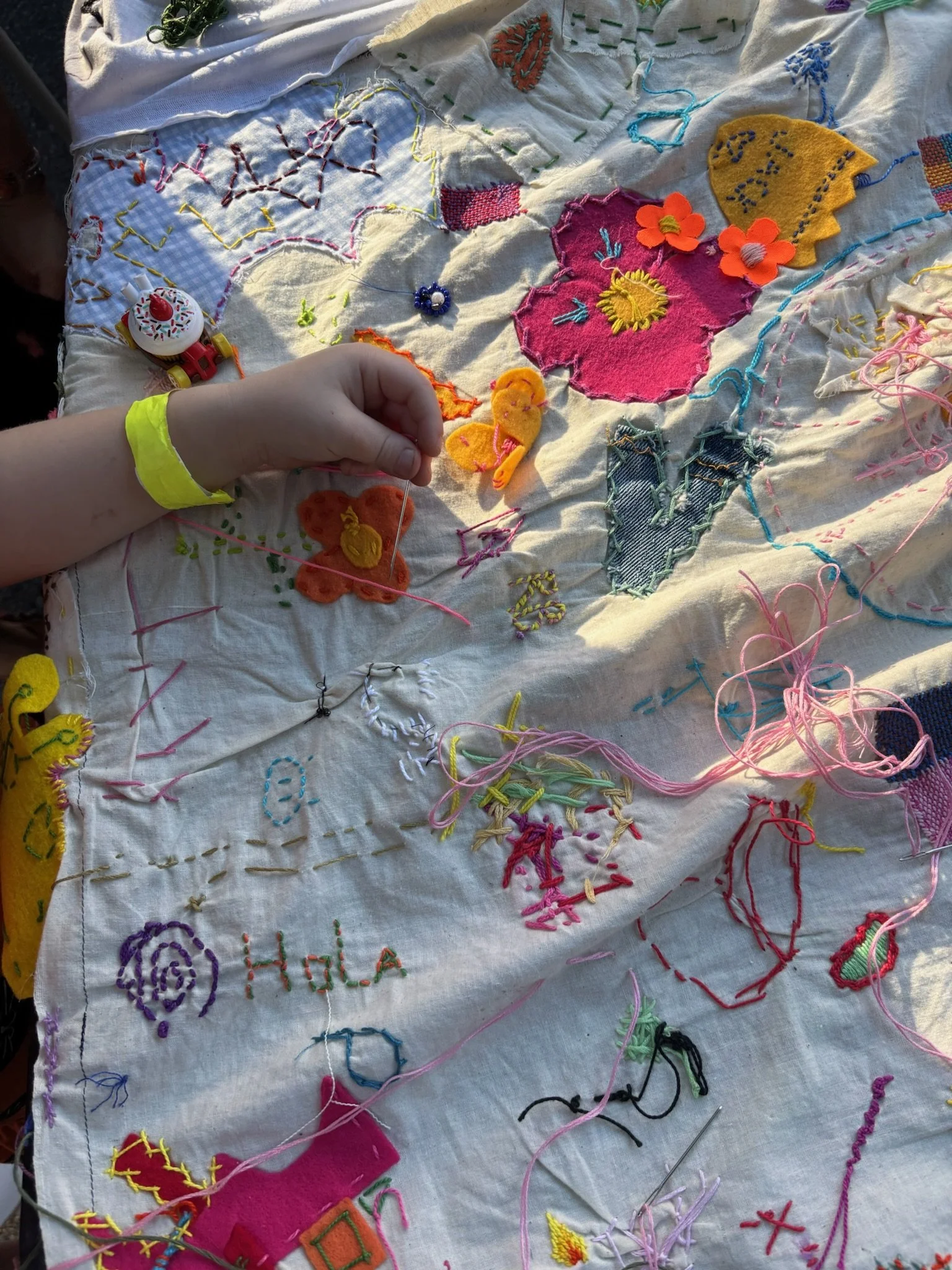
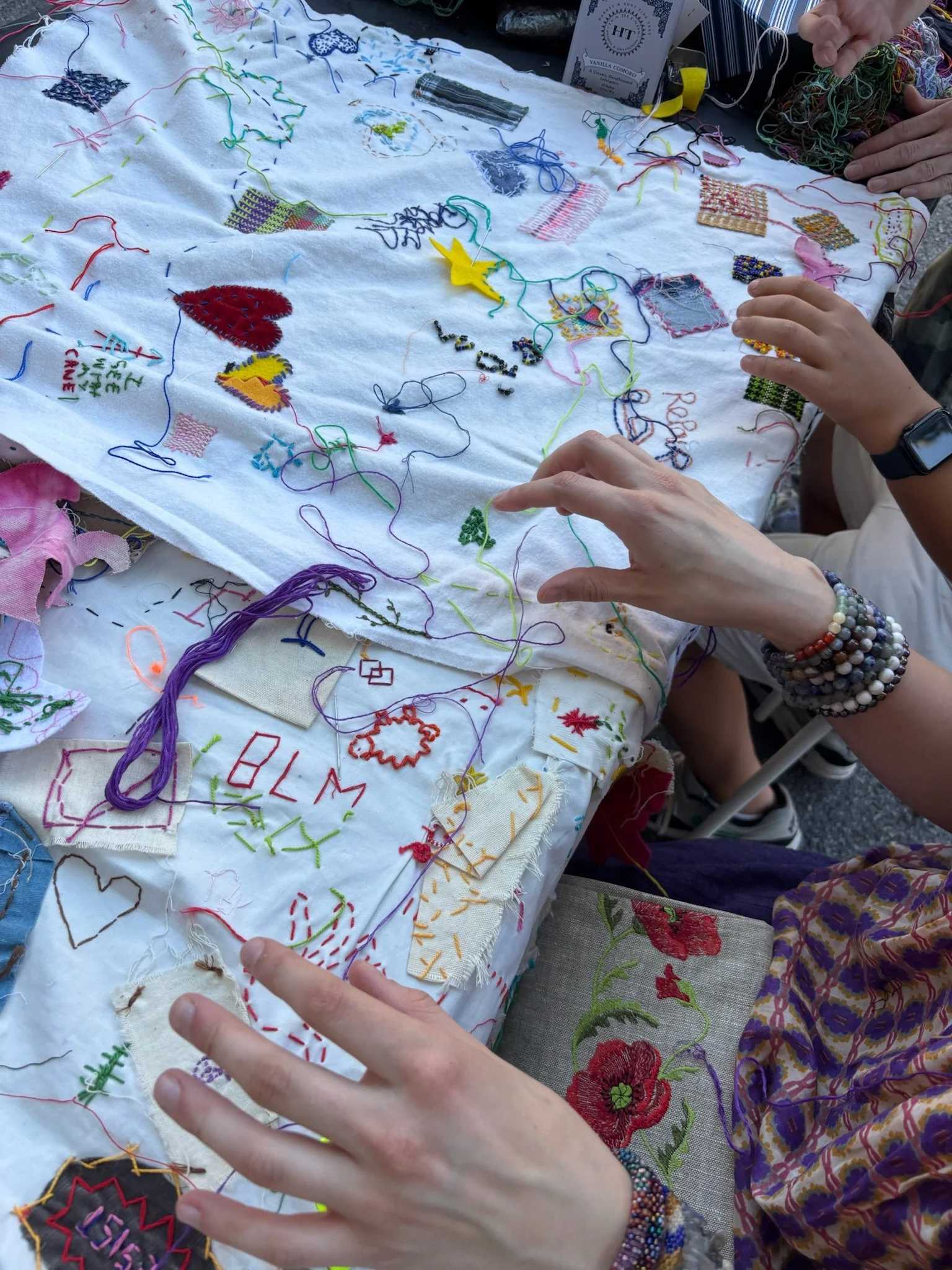
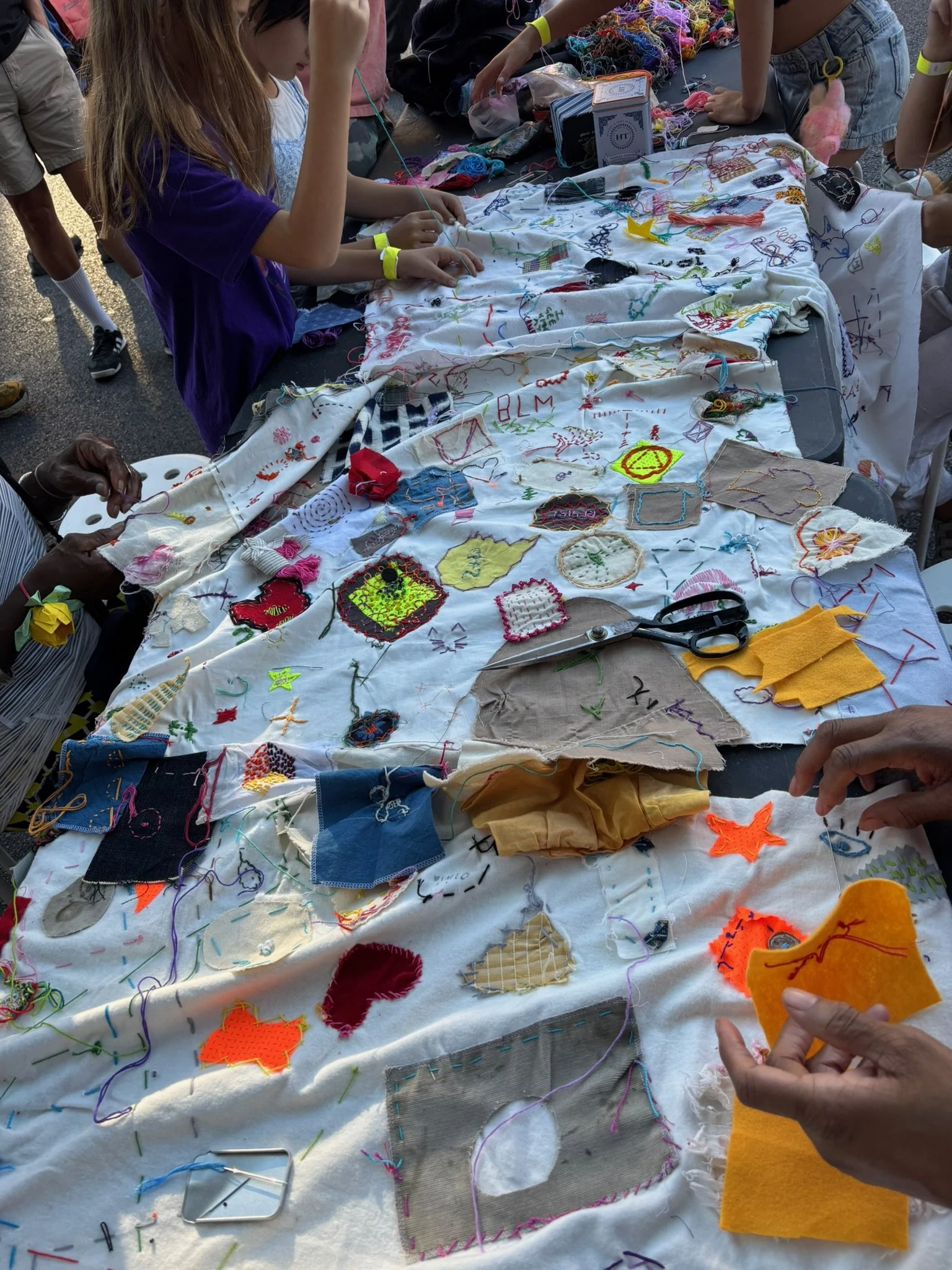
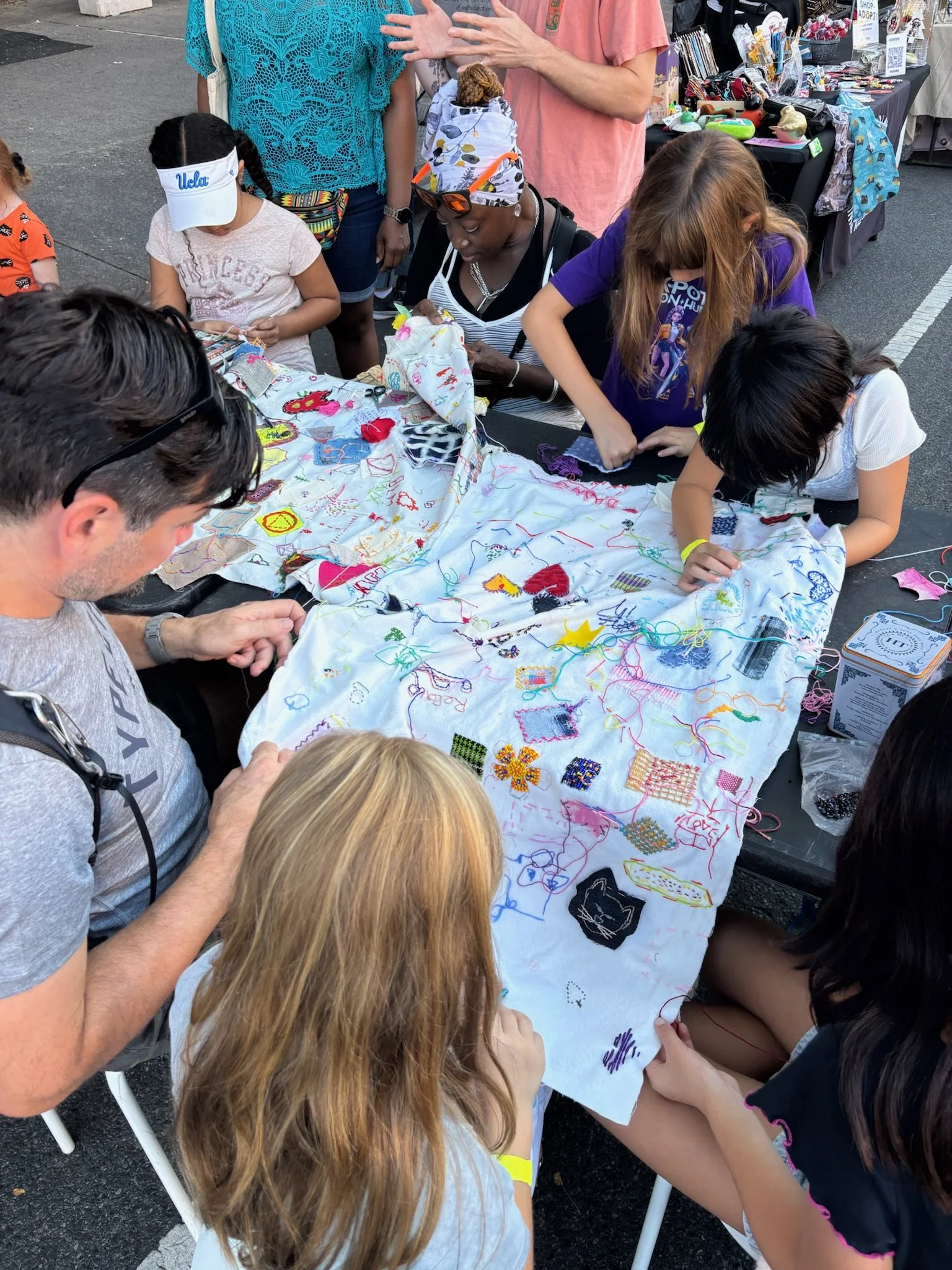
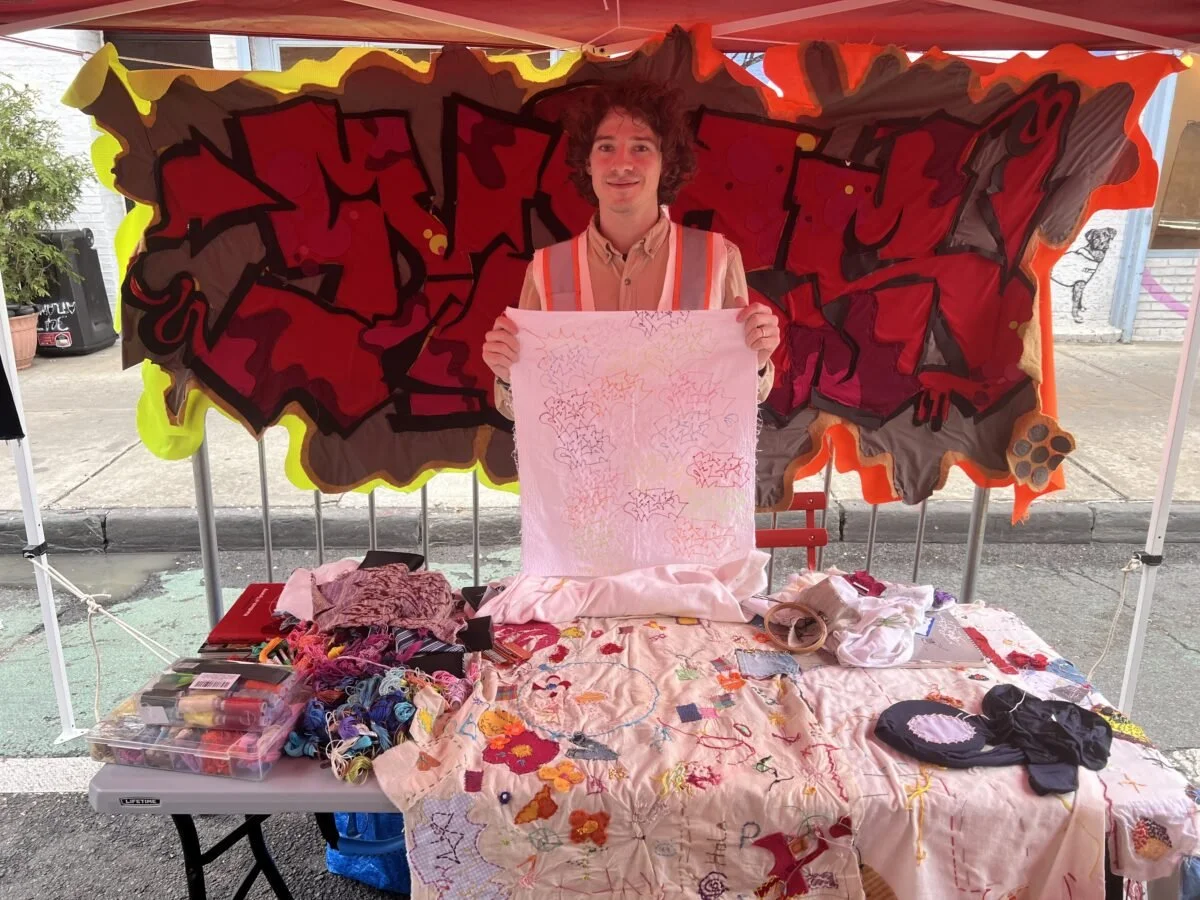
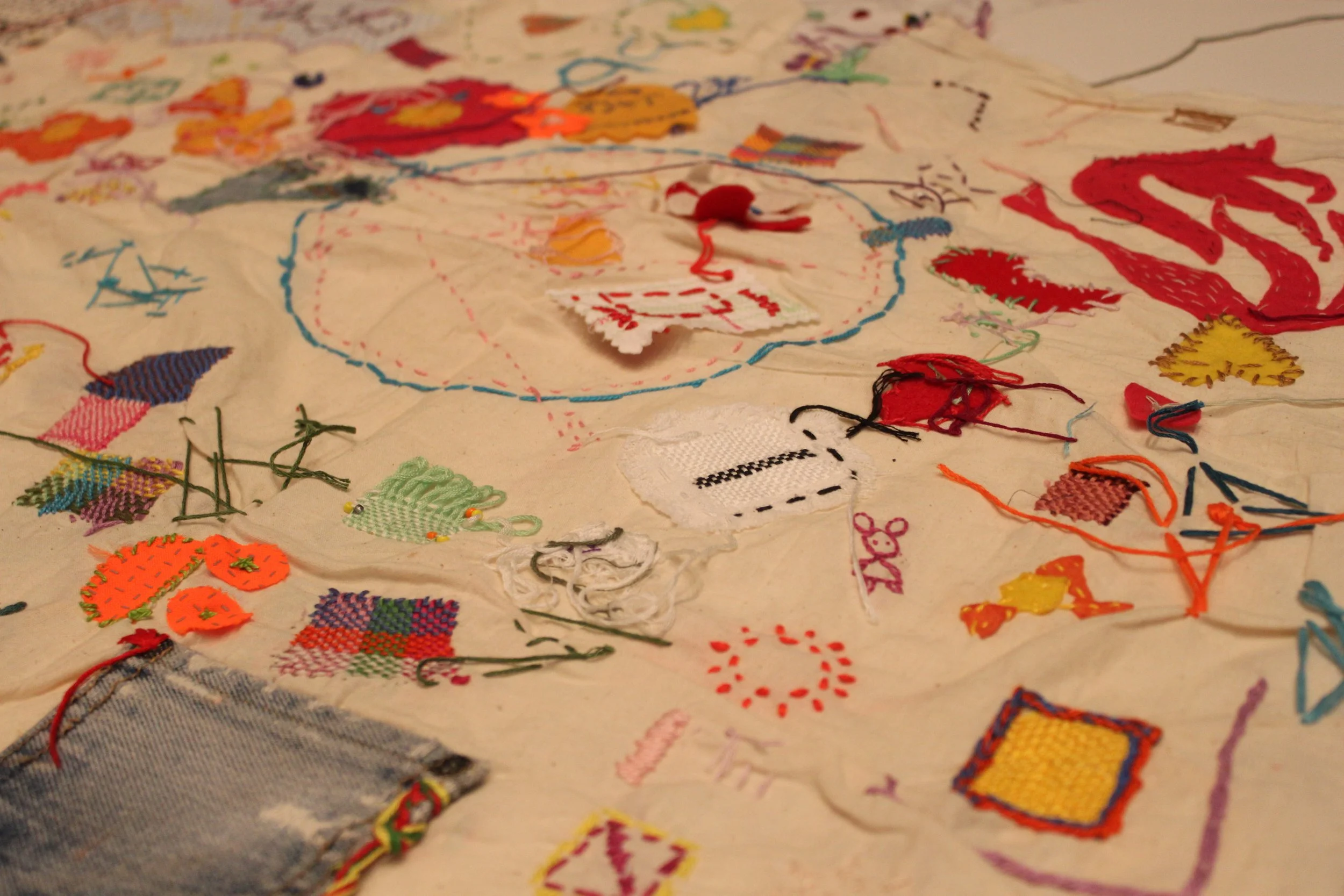
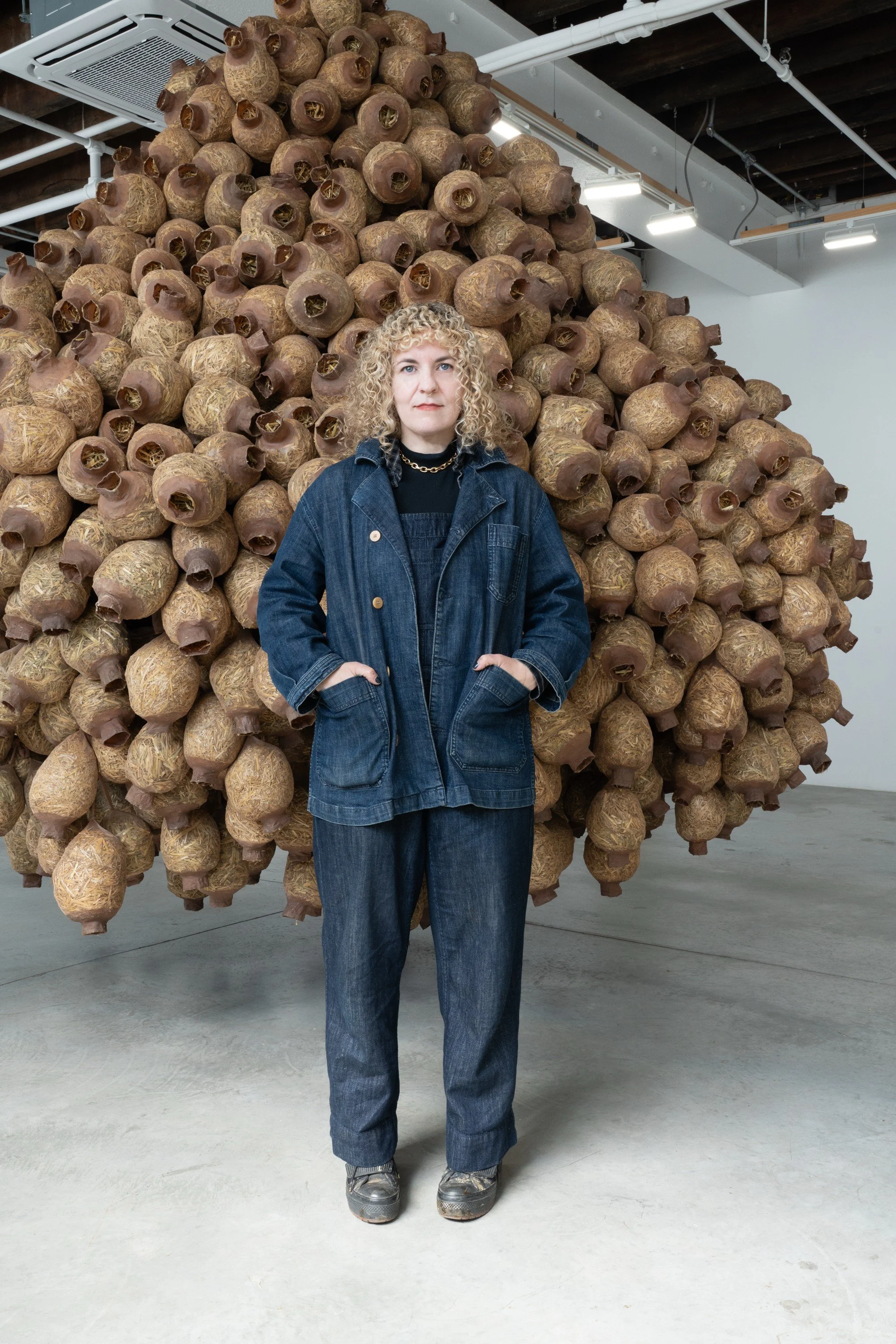
M.PATMOS is a Brooklyn-based label known for modern wardrobe staples and luxurious, textural knitwear designed to last for generations. Founded over a decade ago by designer Marcia Patmos, the brand is committed to sustainability, working with small family-owned factories, fair-trade certified workshops, and artisan collectives around the world. The shop, opened in 2018, showcases like-minded independent designers and frequently collaborates with artists, integrating handcraft techniques, traditional skills, and thoughtful design. Through these partnerships, M.PATMOS supports craftsmanship, fosters community, and creates timeless pieces with a low environmental impact.
New York Textile Month with Kat Howard
In person / Exhibition / Knitting
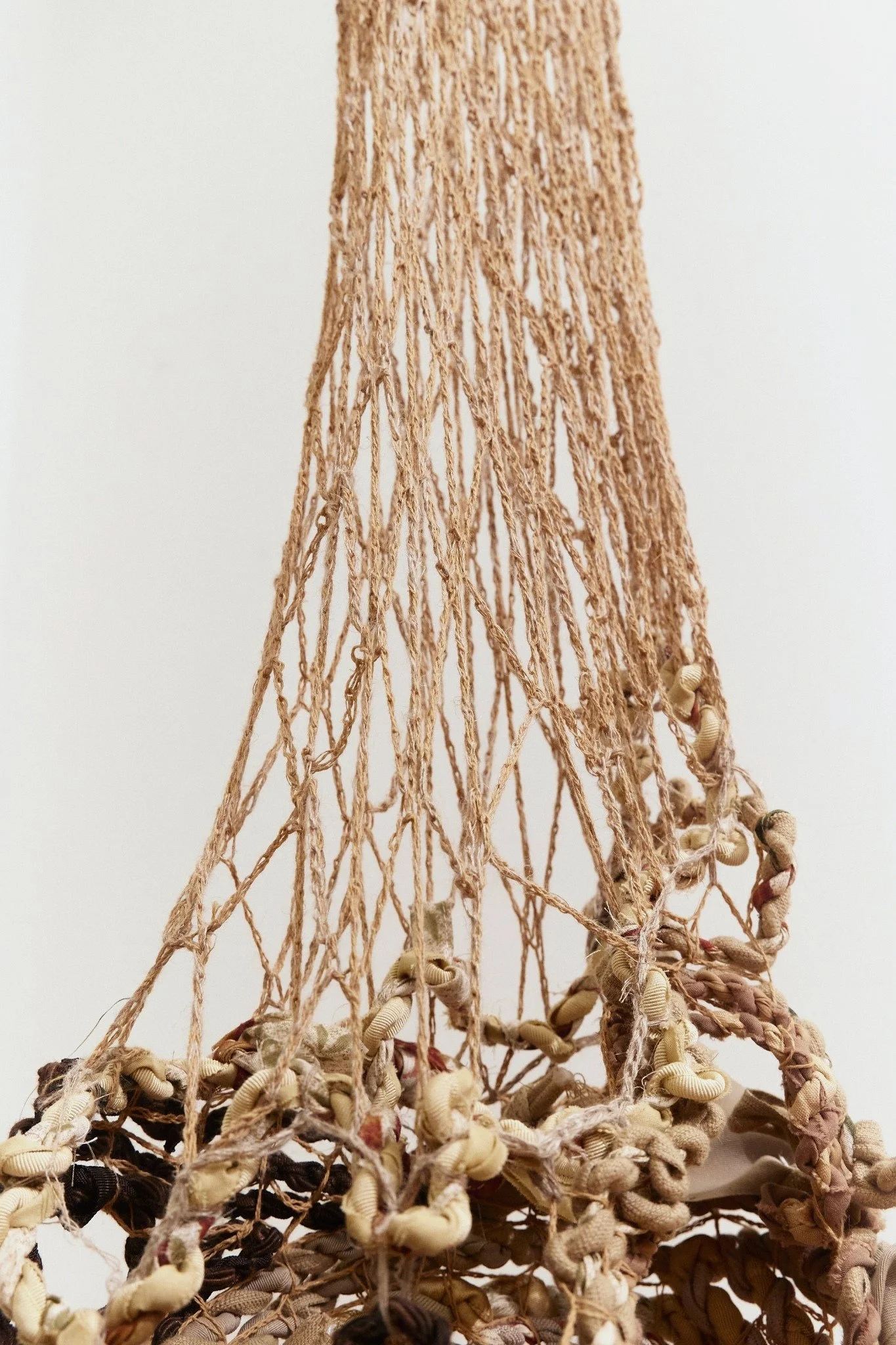
To celebrate New York Textile Month, British lifestyle brand TOAST and artist Kat Howard have collaborated on a textile-based artwork honouring the transformative power of weaving and knitting.
Drawing inspiration from women in ancient Greek mythology, Kat positions weaving, net making and knitting as transformative practices. “In the Odyssey, Penelope uses this seemingly simple act of labour – the craft of weaving and tying knots in yarn, combined with the power of repetition – to effect change and reclaim her fate,” she explains.
Based in Kingston, New York, Kat is a sculptor and installation artist whose work traces the journey of healing from trauma. Through richly textured, abstract forms – from handwoven nets to braided cotton – she explores the relationship between materiality and the body, using tactile processes to evoke resilience and the desire for freedom.
The installation will be on display at TOAST Brooklyn until Sun 18 October.
On View: Saturday, September 12 to Sunday, October 18
11:00 AM - 6:00 PM
No registration required!
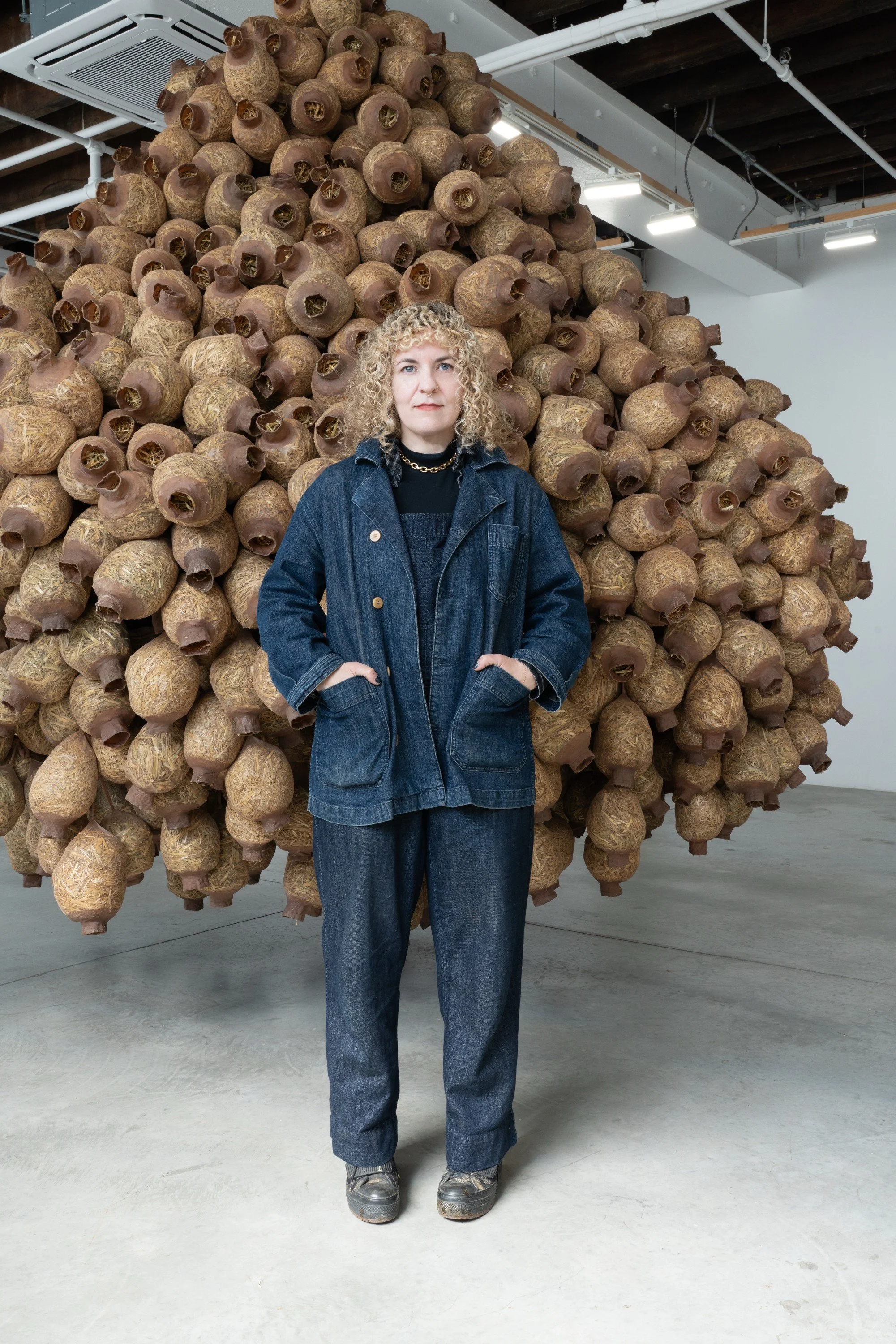
A textile-based artwork by Kat Howard, created to mark New York Textile Month and honor the transformative power of weaving and knitting.
TOAST was founded in 1997 in Wales, TOAST began with nightwear and loungewear inspired by the surrounding landscape and a slower way of life. Since then, we have been creating simple, modern and functional pieces intended to last for years to come.

Twist a Bespoke Yarn with William Storms
In person / Workshop / Yarn Spinning
Join us for a yarn session in the studio, where you’ll tap into your creativity by designing and twisting a unique yarn. We’ll kick off with an overview of novelty yarn construction: exploring techniques that add texture and personality to your creations. You’ll be choosing base yarns from our collection, including:
Alpaca
Cotton + Recycled Cotton
Linen
Metallic (Lurex, Japanese Film Metallic)
Mohair
Neon Polyester
Wool + Recycled Wool
By the end of the workshop, you’ll walk away with one or more skeins of your custom yarn, primed and ready to go for your next project. Completed yarn can come in a skein, yarn cake, or on a cone, as preferred.
Each ticket includes 4 ounces of your custom yarn. Additional yarn can be added during the workshop; as below:
4 Oz: —————— Included in Workshop Ticket
8 Oz: —————— + $30
12 Oz: —————— + $50
16 Oz: —————— + $80
Whether you’re a beginner or experienced, this workshop promises to inspire and elevate your practice with custom yarn.
Dates:
Sunday, September 13:
Morning Session: 11:00 AM
Afternoon Session: 3:00 PM
Saturday, September 19:
Morning Session: 11:00 AM
Afternoon Session: 3:00 PM
Workshop will complete within 1.5 - 2 hrs.


Whirlwind Yarn is a boutique yarn shop in Brooklyn NY, opened by Artist William Storms in 2024.
CO.LAB: Material, Conceptual + Social Intersections in the Studio
Online/ Workshop / Weaving
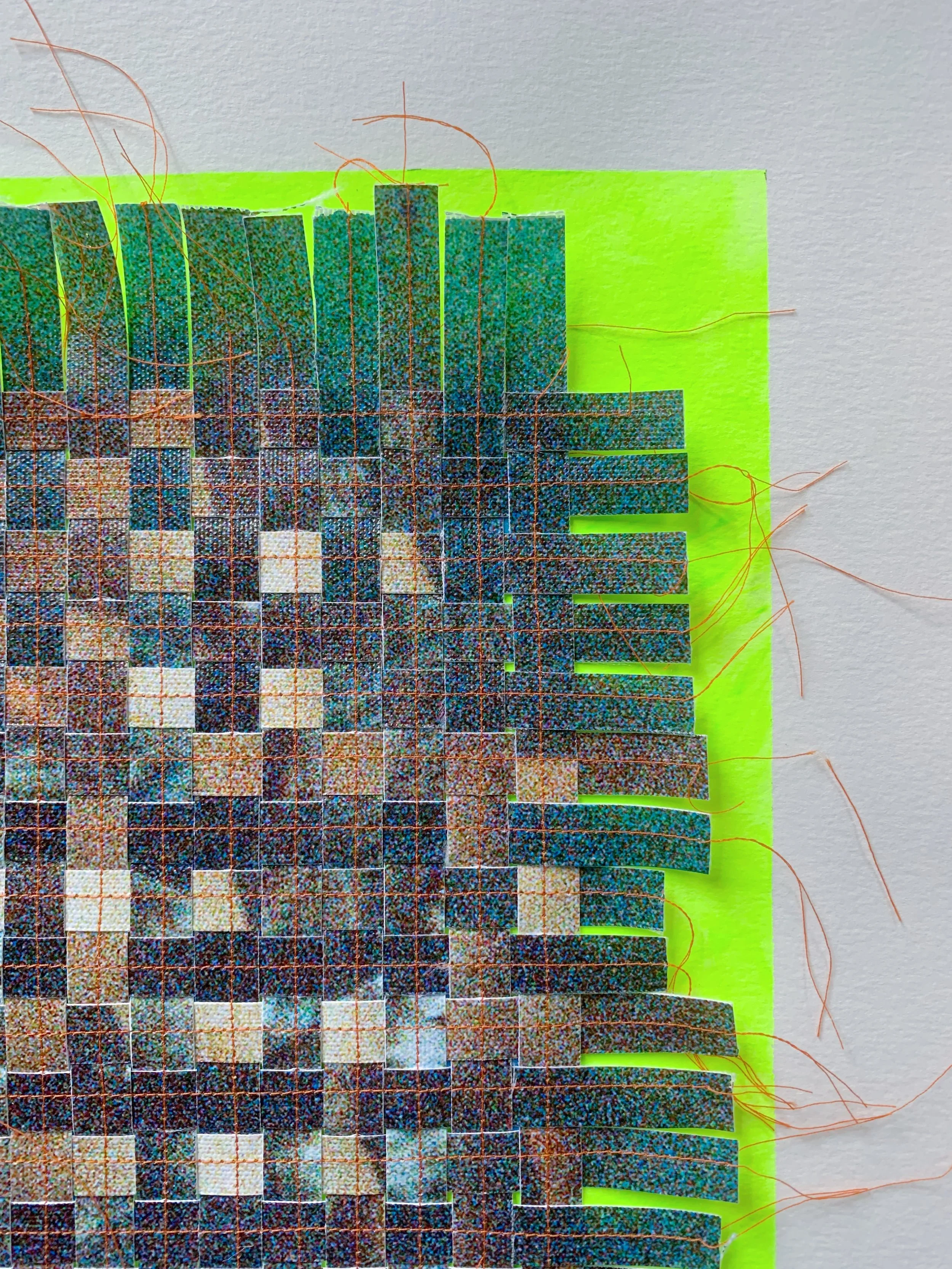
This virtual session explores the relationship between making, thinking, and collaboration in contemporary studio practice. Through a hands-on paper weaving workshop and group discussion, participants will investigate how ideas develop through experimentation, material engagement, and shared creative processes. The session encourages attendees to view the studio as a space where materials, concepts, and people come together to generate new possibilities for creative work.
Presented by Amanda Britton and Johanna Norry, the workshop draws from their ongoing collaborative studio practice and exhibition history. Over the past three years, they have developed a series of exhibitions exploring materiality, process, and collaborative authorship. By sharing elements of their approach, they invite participants to consider the studio as a site of artistic, material, and social exchange, where meaning emerges through dialogue, experimentation, and collective making.
Participants are encouraged to have a variety of paper, photos, thick fabrics, scissors and tape at the ready for the virtual workshop portion.
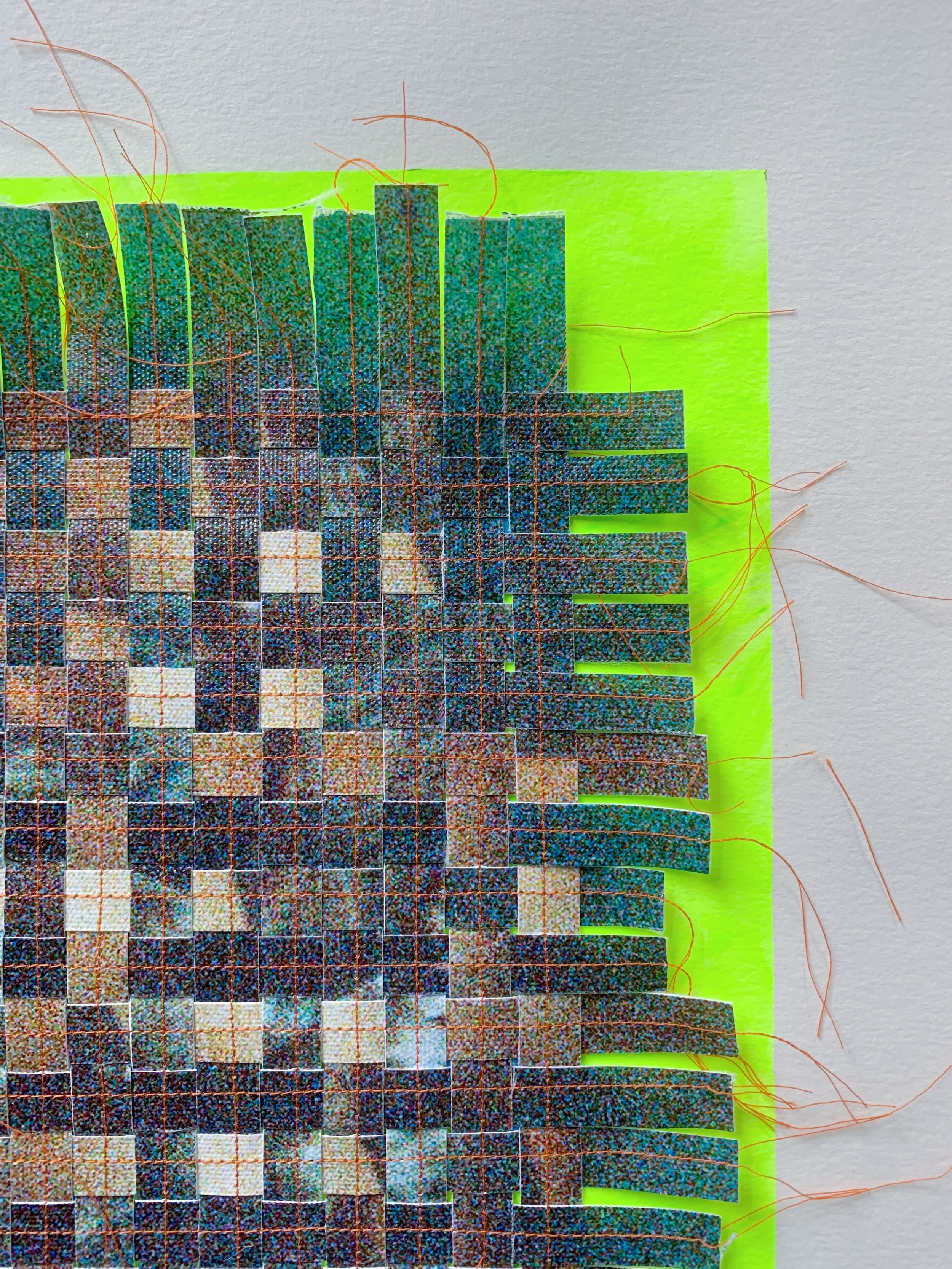
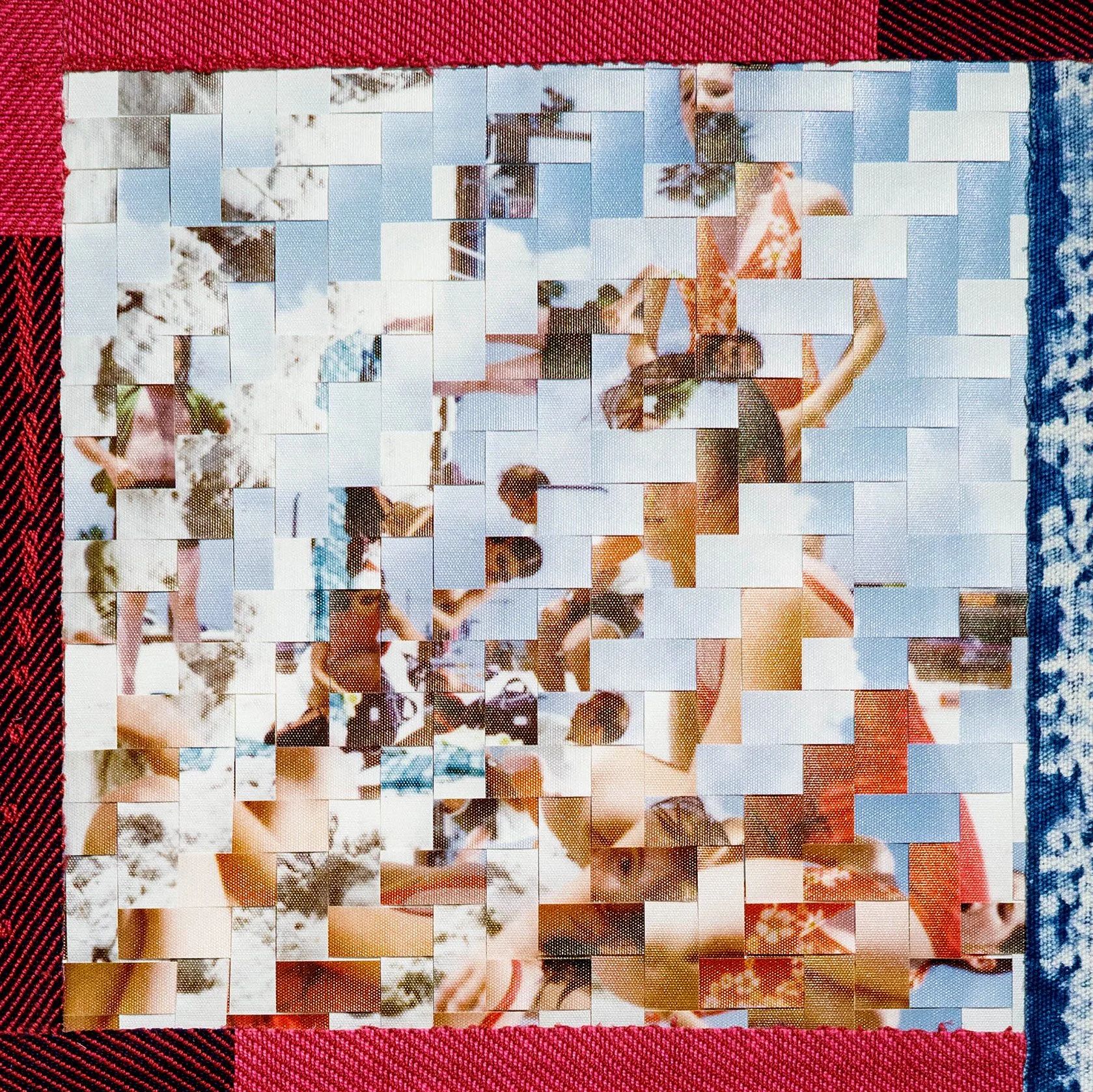
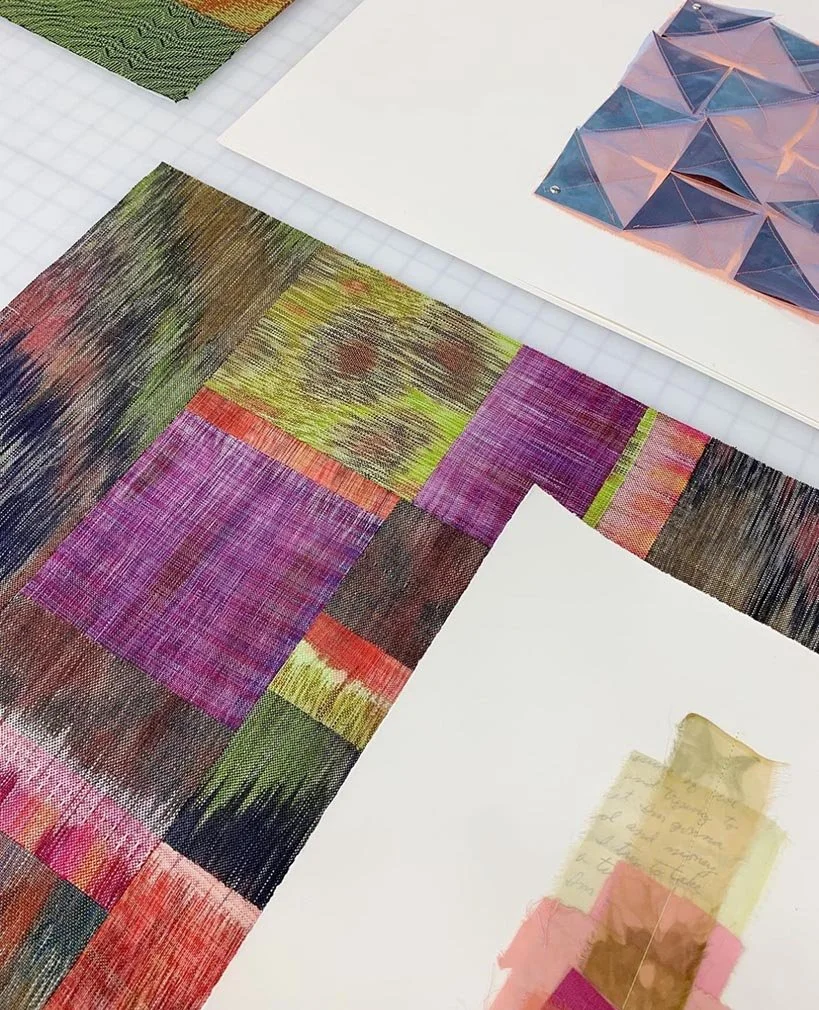
Amanda Britton and Johanna Norry are textile artists and Assistant Professors in the Textiles + Surface Design program at Kennesaw State University located in Metro-Atlanta, Georgia. They received their MFAs from the University of Georgia. Featured in juried exhibitions and group shows across the country for the last decade, their collaborative work has been showcased in duo shows, Common Threads and Material Archive, at several galleries across Georgia and in 2027 will be featured at the Appalachian Center for Craft in Tennessee. TextileArtist.org published an interview with Johanna and Amanda in 2024 about their unique collaborative art-making practice.
Textiles in the Present: A Dialogue Between Tradition and Digitality
Online/ Talk / Multiple Techniques
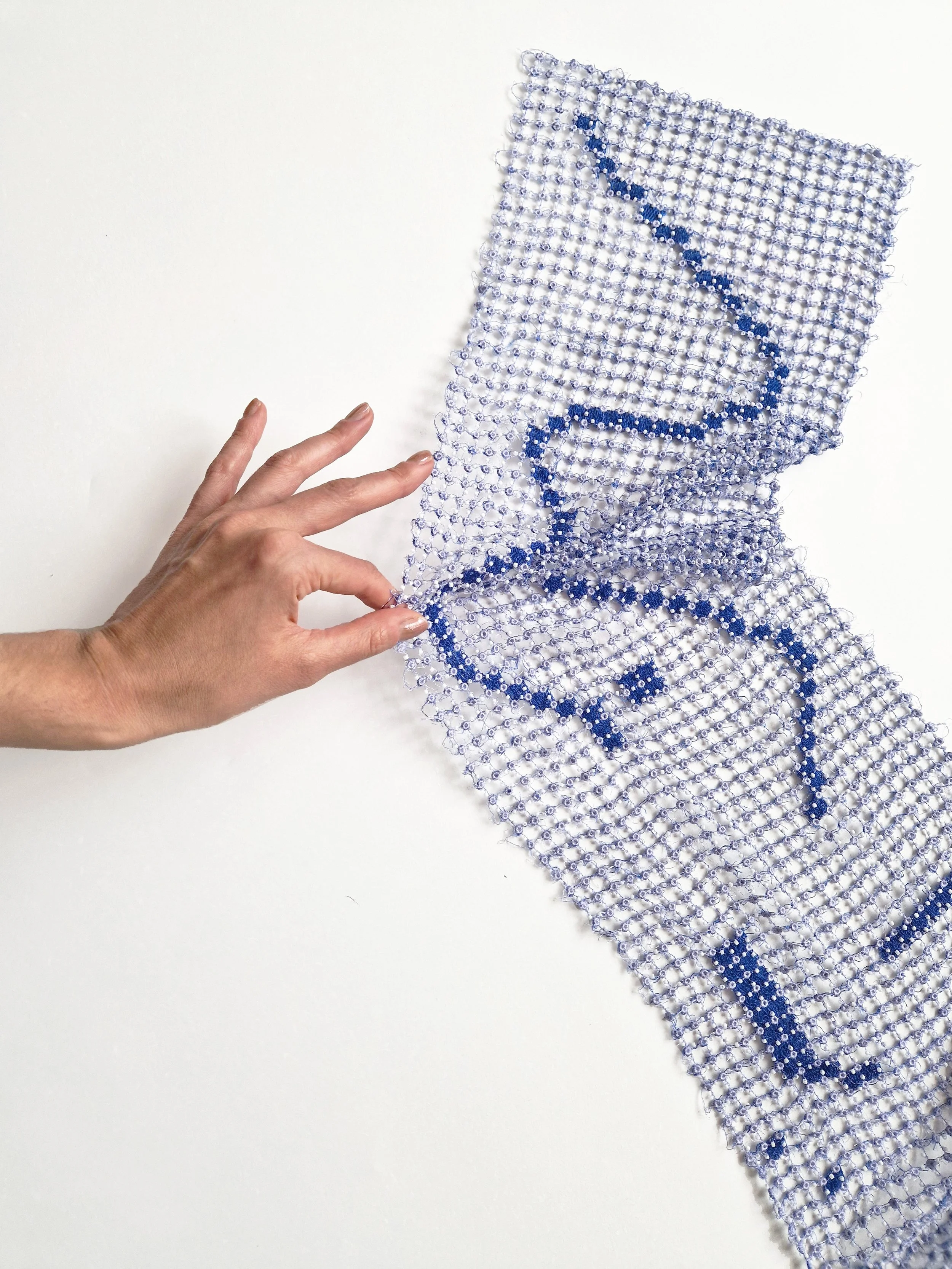
For textile designer Františka Benčaťová, textiles are more of a principle, a system of construction, a certain kind of architecture, as well as a vessel for stories, memory, and the present. Textiles are a timeless medium for her, a vision of the future, a platform for experimentation and innovation, a fascinating living organism that subtly and unobtrusively invades our environment. It is close at hand and yet invisible. Textiles are a ritual, a space, and a memory.
In her online lecture TEXTILES IN THE PRESENT: A DIALOGUE BETWEEN TRADITION AND DIGITALITY, you’ll gain insight into her personal observations on textiles. The designer will offer a detailed look at her textile practise, which draws on craft traditions while pushing their boundaries through industrial machinery and programming to reach a new level of innovation. She experiments with her own weaving techniques to process narrow-leaved cattail by hand. She liberates embroidery from its base material and enriches it by sewing on glass beads in collaboration with a digital embroidery machine. She views the simple basket as an archetypal textile object and, through industrial jacquard weaving, creates multiple perspectives on this object—whether as a three-dimensional form directly on the loom or through a surface-level visual illusion. All of her textile approaches are united by curiosity and experimentation across various textile disciplines, a distinctive focus on structure, and an emphasis on the construction and creation of textile objects through innovative methods.
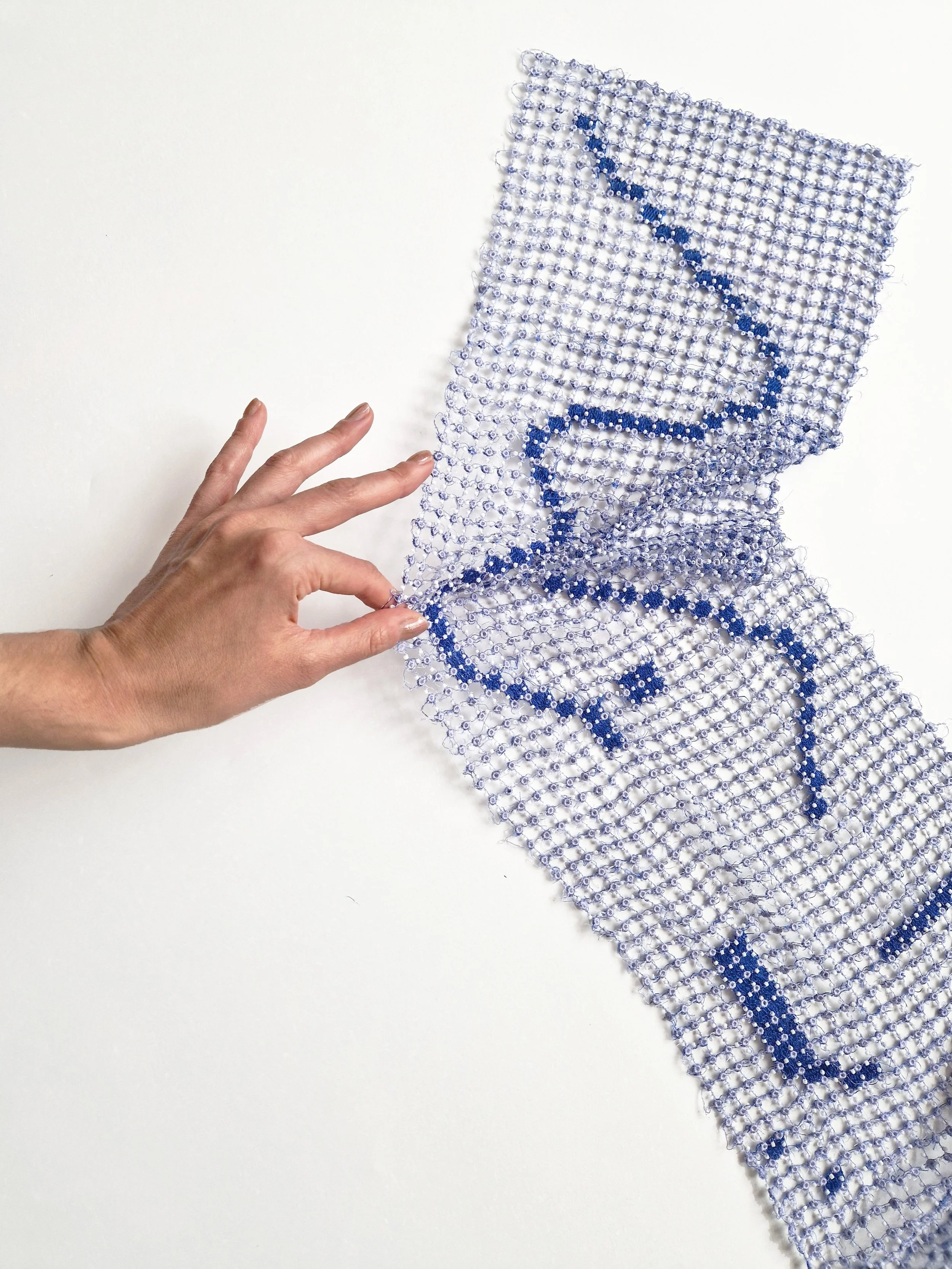
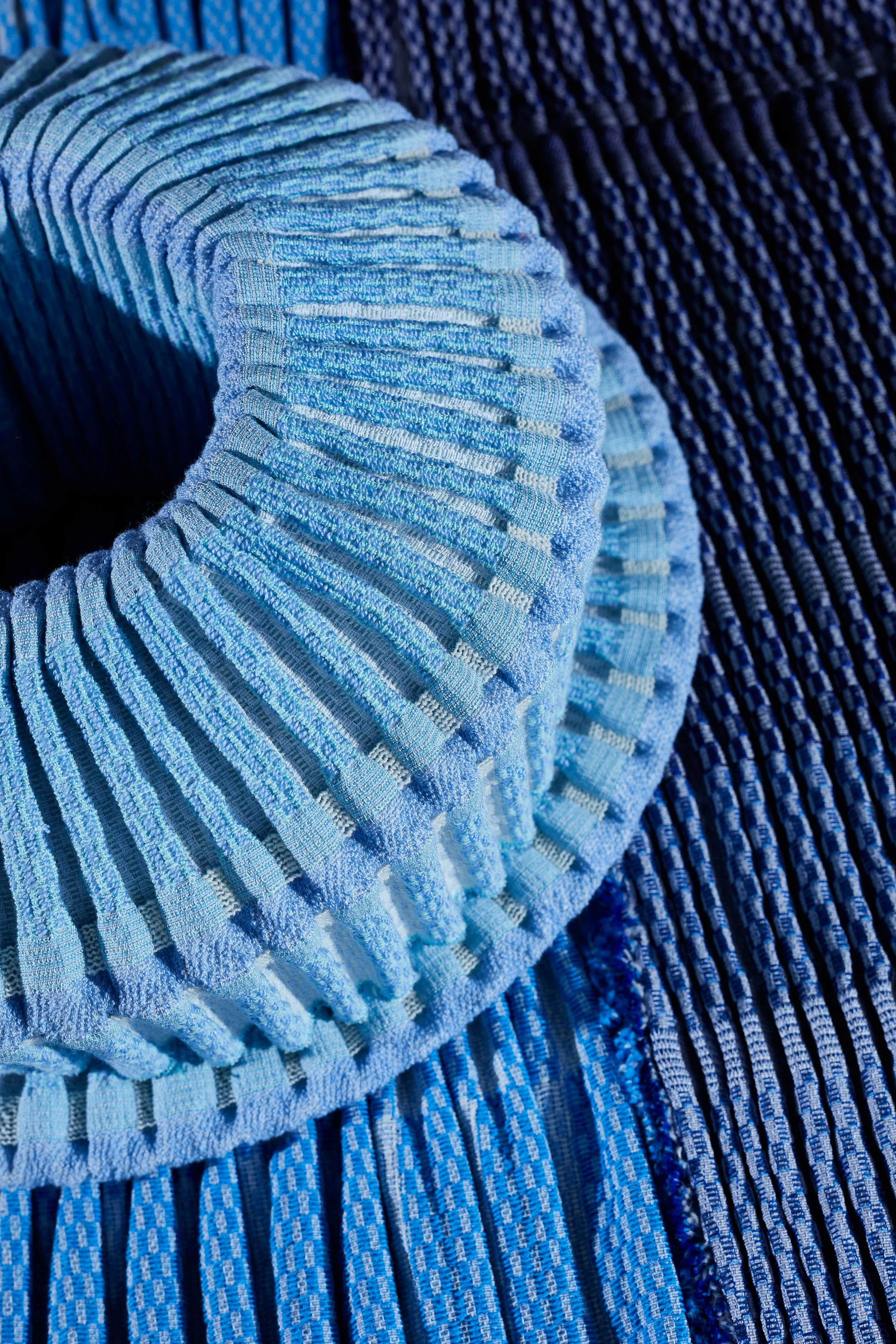
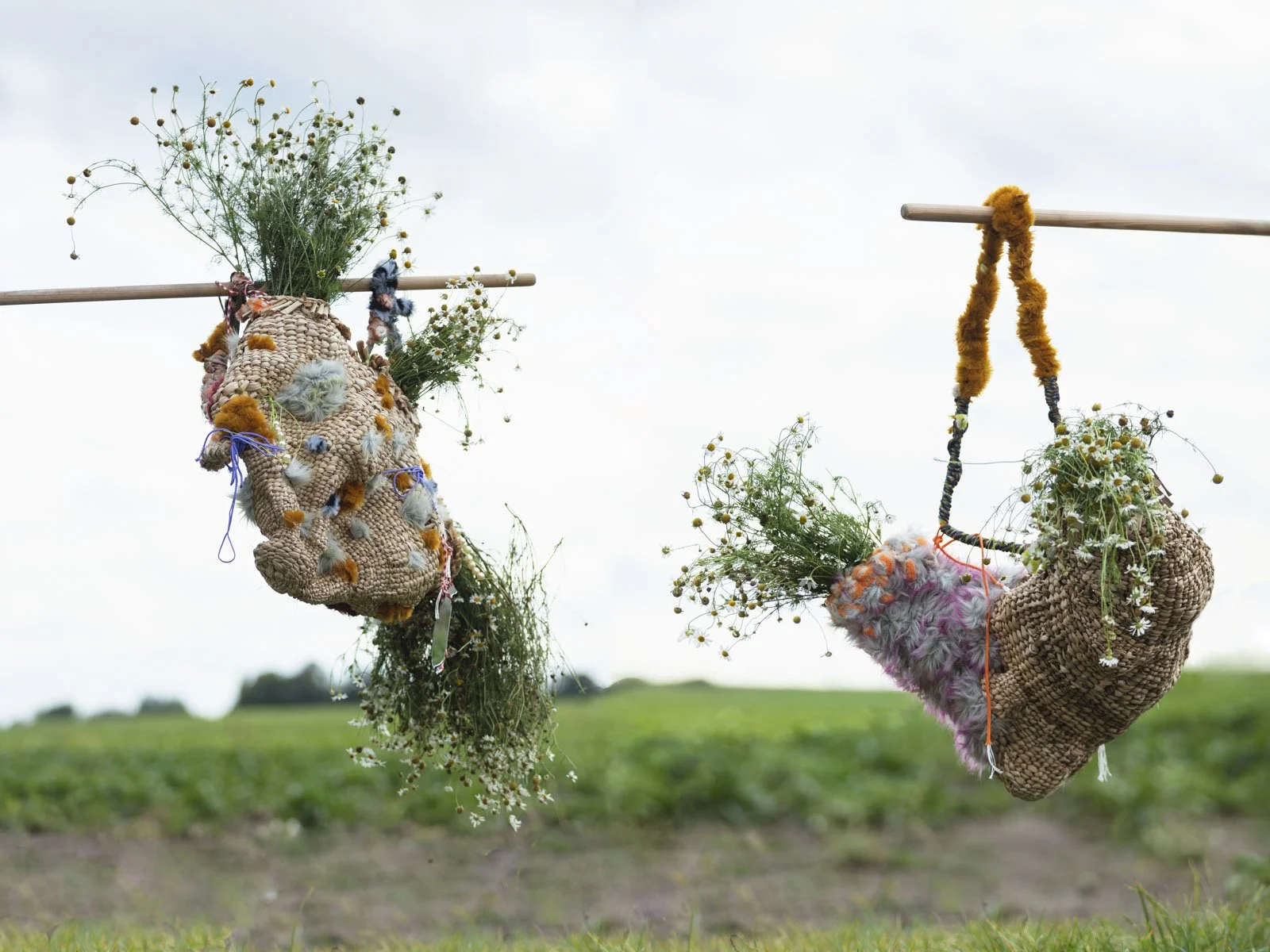
Františka Benčaťová (1996) is a Slovak textile designer based in Prague and a graduate of the Textile Design Studio at UMPRUM (2023). Her work has been influenced by a study visit to KASK in Ghent (BE) under the supervision of Esther van Schuylenberg, as well as a work placement at Simone Post Studio in Rotterdam (NL).
Her work is characterised by an emphasis on the construction and architecture of textiles, which she uses to experiment with materials at the intersection of traditional craft techniques and industrial processing, combined with digital technologies. The playfulness and curiosity of her work are underscored by an optimistic colour palette, tactile spatial effects and a speculative conceptual approach. The designer enjoys pushing the established boundaries of how textiles are viewed and worked with. She perceives textiles as carriers of stories and emotions, as well as a structural principle for discovering and exploring the possibilities of textiles and their existence in the world (contemporary, imaginary, future). The research process is an important aspect of her work.
She currently works as a textile designer in the automotive industry, where she specializes in industrial jacquard weaving and knitting, with a focus on fibre knowledge, textile technology and innovation.
Material Transformations
In person/ Open Studio / Multiple Techniques
Material Transformations
A creative space dedicated to craftsmanship, community, and hands-on making, this partnership brings together artistic exploration and traditional making techniques. Together, the two studios create an environment that encourages creativity, experimentation, and meaningful connections through the handmade process.
No registration required!
There's more happening at this venue! Check other events:
Surface to Form Workshop - textilemonth.nyc/calendar-2026/surface-to-form
Tamar Mogendorff
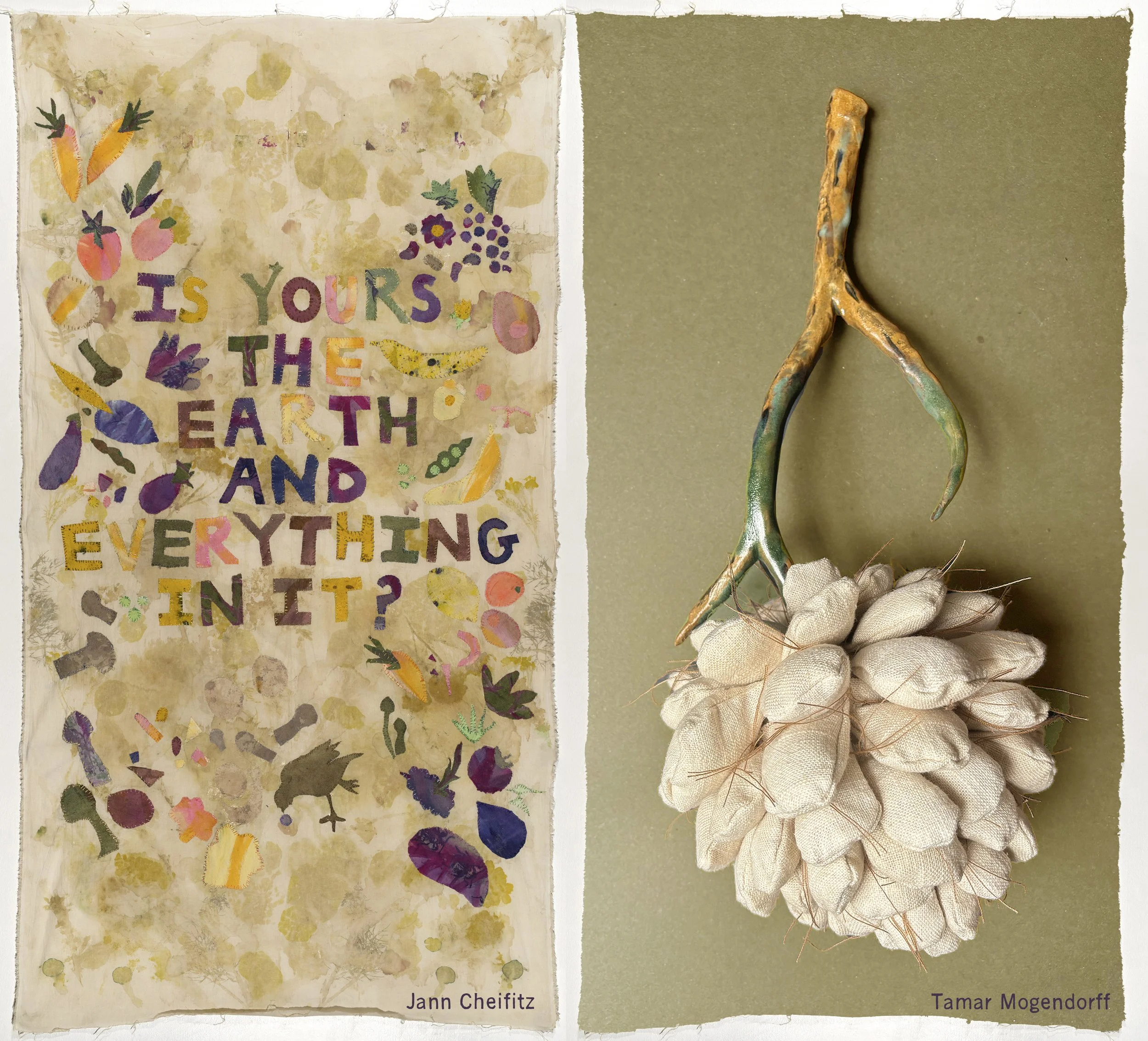
Recognized for her original soft objects, Tamar Mogendorff is an artist and designer based in Brooklyn, New York. Since founding her studio in 2005, she has created one-of-a-kind textile sculptures, home objects, ceramics, and porcelain works. Her work has been exhibited internationally, and she has collaborated with numerous brands, galleries, and retailers.
Jann Cheifitz
Jann Cheifitz grew up in South Africa, and worked in an anti-apartheid art collective.
She moved to New York in 1994, where she built "Lucky Fish," a business producing "hand-printed in Brooklyn" textiles and clothing, inspired by the spirit of her artwork. For production she worked in collaboration with small print shops local to Brooklyn, producing artisanal products in small batches.
Her new body of artwork is textile based. The works are embroidered, sewn, patched, quilted, painted, screen-printed or made in clay creating a kaleidoscope of images – life and death cycles, fertility, fecundity, fallow times, soil, loam and compost – degeneration producing regeneration, creation and procreation, the body held with the earth's spirit, with the garden as inspiration.
Jann has participated in numerous group exhibitions, and has held a number of solo shows both locally and Internationally.

From Soil to Spool: A Tour of FIT's Rooftop Natural Dye Garden and Weaving and Knitting Labs
Visit FIT's 9th-floor rooftop Natural Dye Garden, home to more than 25 dye plant species, then tour the weaving and knitting labs and view Farm to Fabric, the curated work of TDM senior capstone students. September 17, 5:30–6:30pm at FIT, Chelsea.
The Way Words Turn
In person / Exhibition / Wrapping
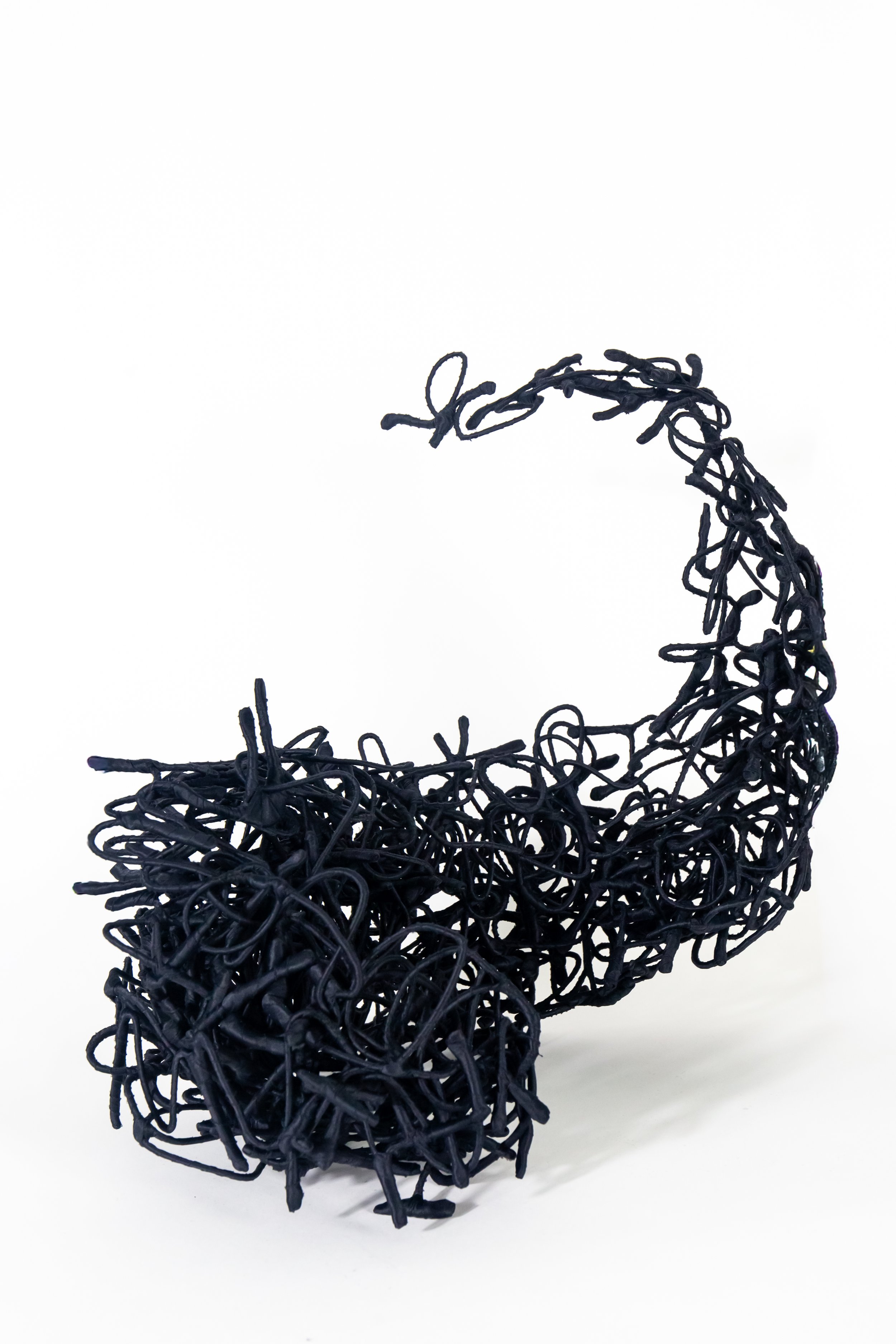
"In conjunction with New York Textile Month and New York’s September art and design calendar, Scavolini SoHo Gallery, in collaboration with The CAMP Gallery, presents The Way Words Turn, an exhibition-event by Federica Patera & Andrea Sbra Perego.
Federica Patera & Andrea Sbra Perego are an Italian artist duo based in New York. Their practice brings together textile art, language, sculpture, installation, and research into verbal roots, exploring how words, materials, and spatial relationships shape the way we understand and inhabit the world.
Conceived specifically for the Scavolini SoHo showroom, the project brings together a selection of works from the artists’ ongoing Roots series, dedicated to verbal roots and to the relationship between language, matter, and the construction of reality. Rather than approaching the showroom as a neutral exhibition space, the artists respond to its architecture, surfaces, materials, and points of visibility through site-responsive interventions developed in dialogue with the space.
As often happens in Patera & Sbra Perego’s practice, the project began with a text: Elémire Zolla’s essay “Language and Cosmogony,” which reflects on the story of Creation in relation to the development of languages across the world, both ancient and modern. For the artists, Roots is a cosmogony: an inquiry into beginnings, into how something comes into being, how it starts, and according to what order."
Opening Reception
Thursday, September 17, 2026
6:00 PM - 8:00 PM
Exhibition
Through Tuesday, October 13, 2026
Monday to Saturday, 11:00 AM to 5:00 PM
No registration required!
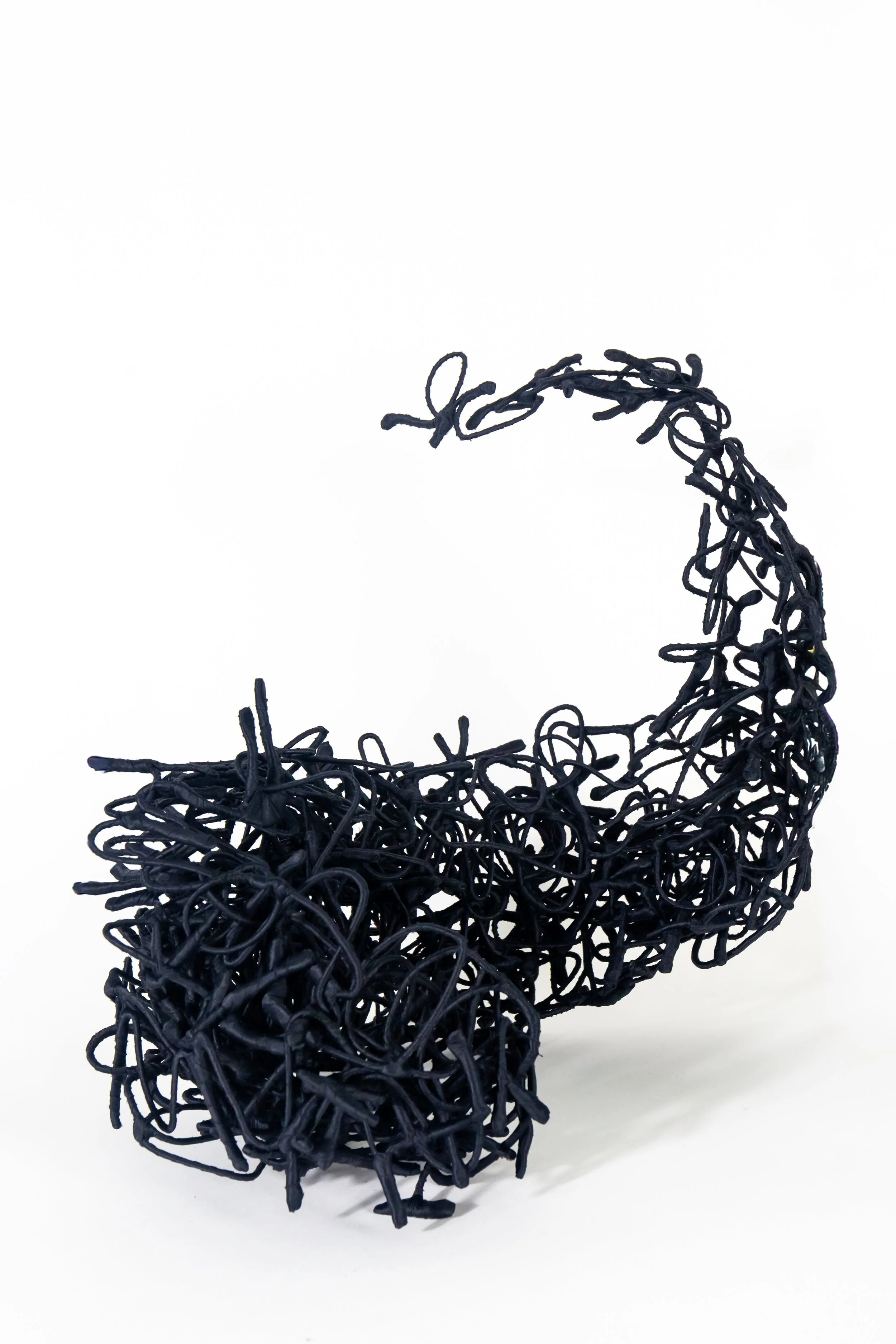

Federica Patera and Andrea Sbra Perego are an Italian artist duo based in Brooklyn, New York. Federica comes from literature and publishing; Andrea from street art and painting. In 2017, their different worlds merged into a shared practice. Their collaboration intertwines textile- and text-based processes, often incorporating recycled materials. They consider language and writing as porous, living systems, generating layered meanings and narratives that explore how multiple points of view can reveal unexpected forms of universality. From wall-mounted pieces to sculptural objects, immersive installations, and sound- integrated environments, the duo uses scale, calligraphy, and materiality to shape the relationship between viewer, work, and space. By isolating a detail or multiplying it infinitely, Patera and Sbra Perego question hierarchical relationships between humans, the environment, and the role of perception.
Haute Texture — Weaving Light in the Studio
Online/ Open Studio / Weaving
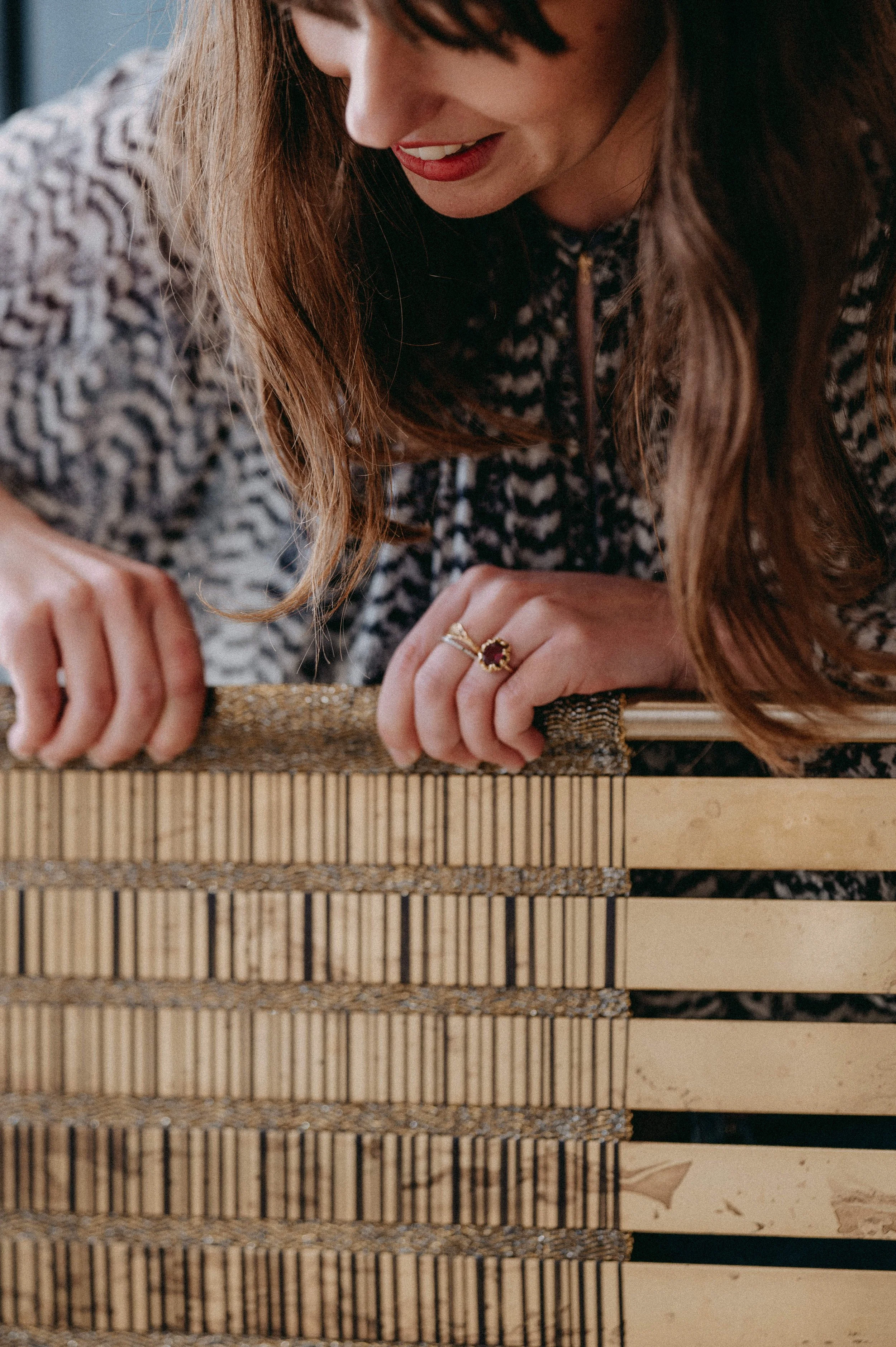
Adélaïde Germain opens the doors of her Paris studio for an online visit into architectural weaving. On a hand loom, she works in the spirit of French haute couture, treating swatches of reclaimed matter the way a couturier treats precious fabric. Her pieces are true garments for architecture, gowns that dress walls and let light move through them.
Everything begins with reuse. Eyewear acetate, brass, glass and materials salvaged from events, offcuts and manufacturers become the raw matter of her work, chosen for the way they hold and release light. From these fragments she composes surfaces of high texture, panels, screens and light filters conceived not as decoration but as building material, dividing space and shaping its light and acoustics. Her signature gesture, which she calls sertissage, is born from the meeting of weaving and architecture.
Filmed in her studio at the Manufacture de Belleville and presented in French with English subtitles, the session moves from the raw material to the gesture, then to a reading of her named pieces, including work shown at the Petit Palais in Paris. A live question-and-answer moment closes the event. Germain develops her practice with RÉEMPART, a non-profit turning reclaimed materials into cultural narratives.
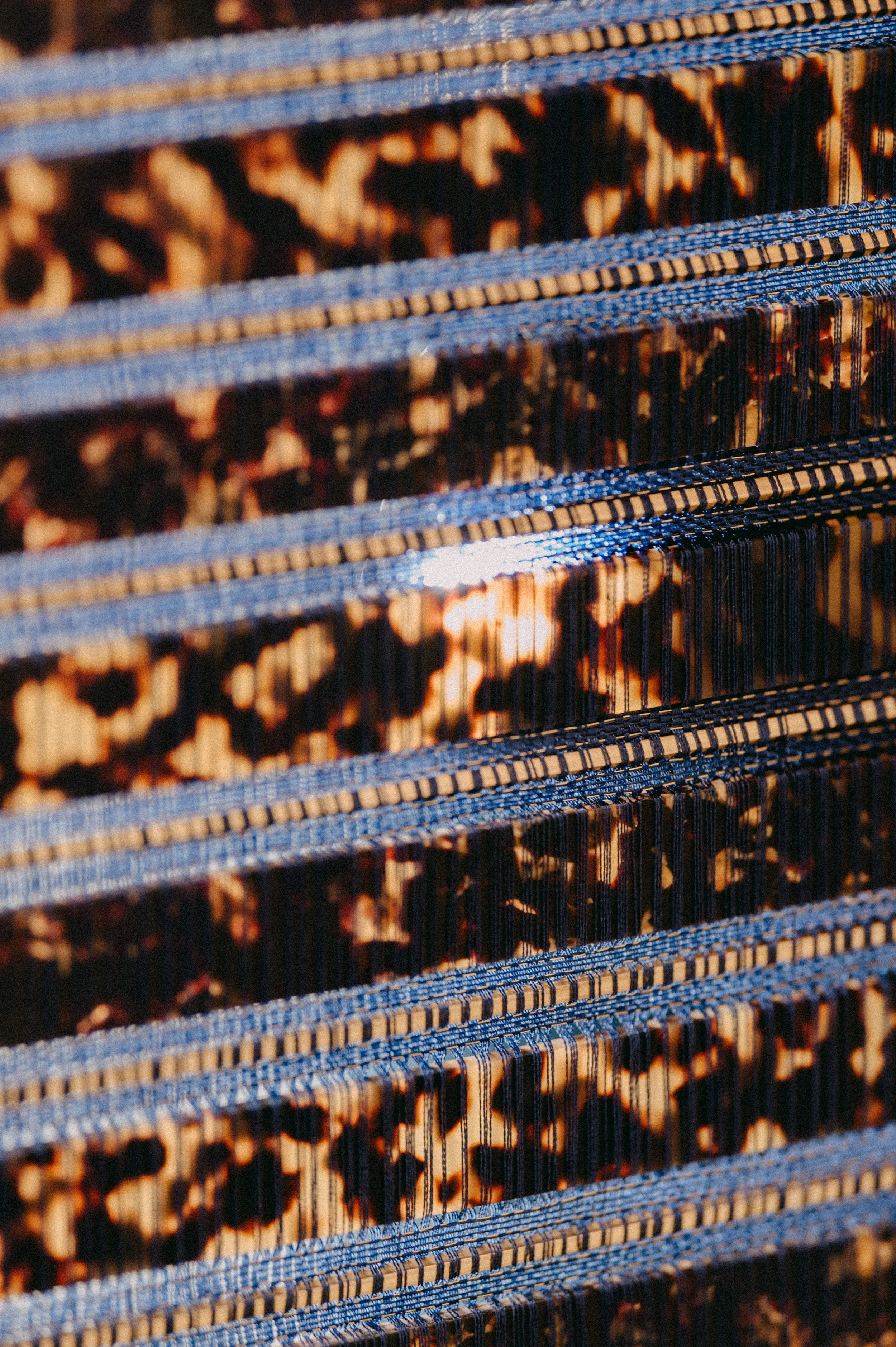
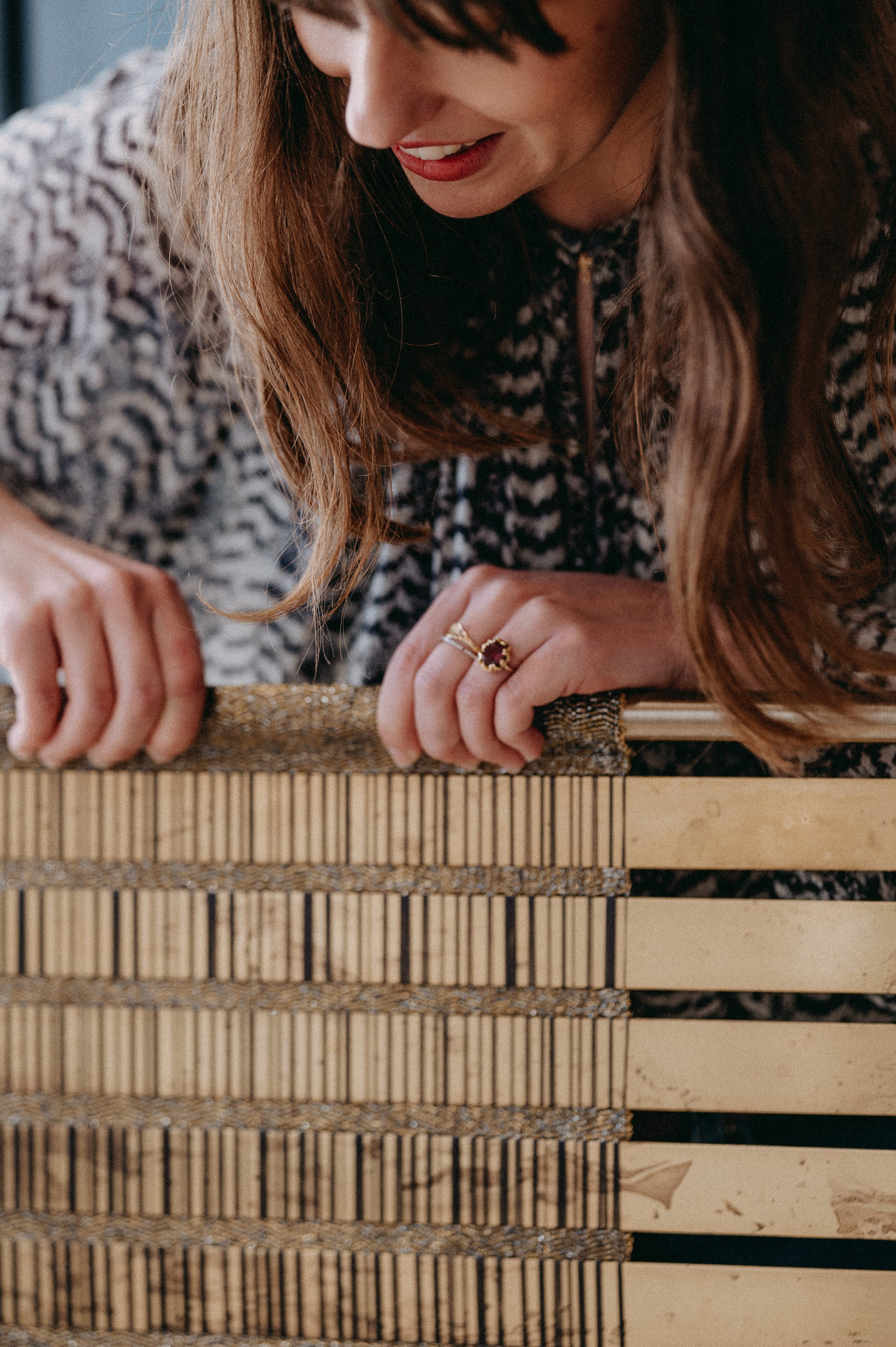
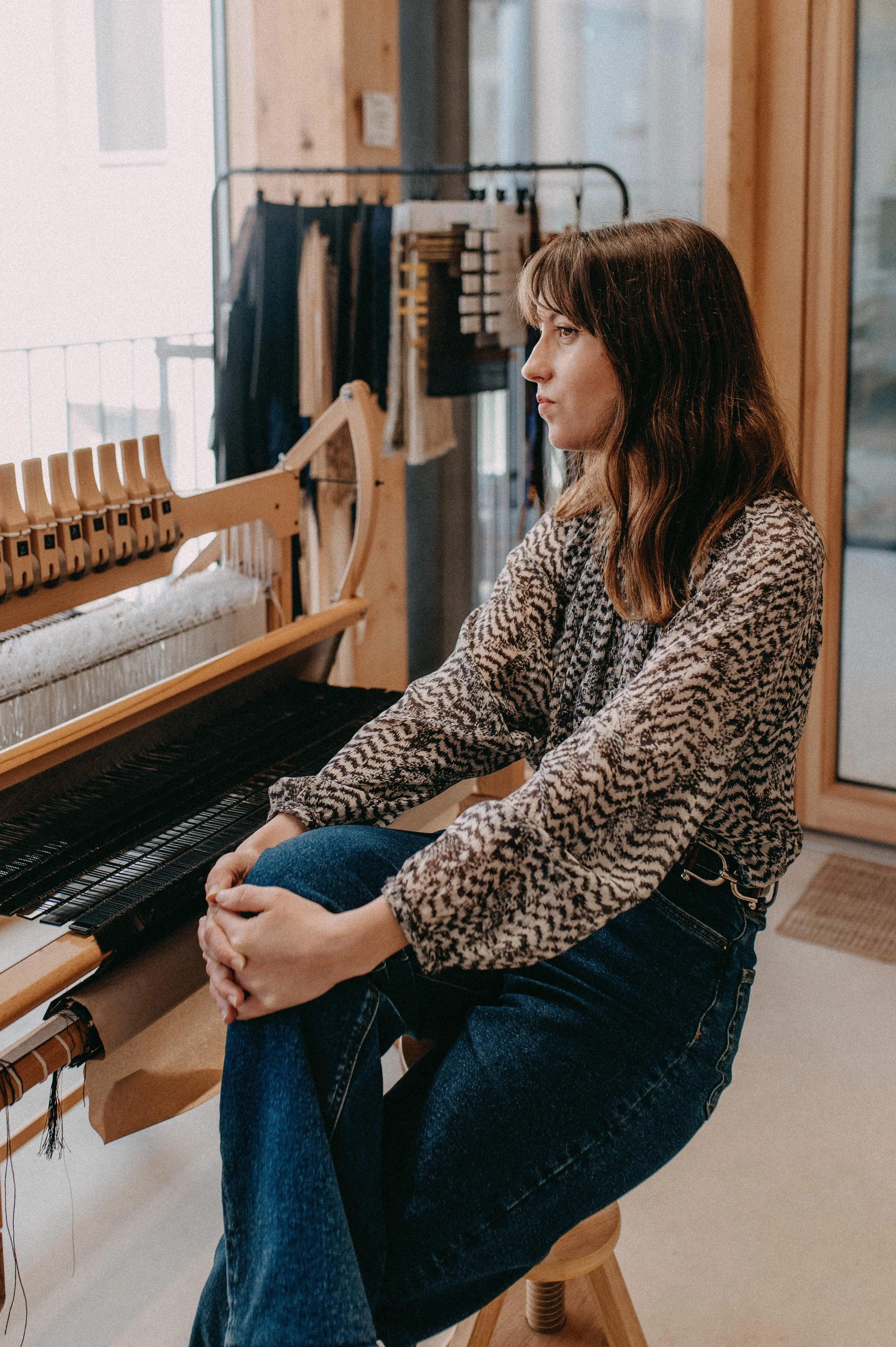
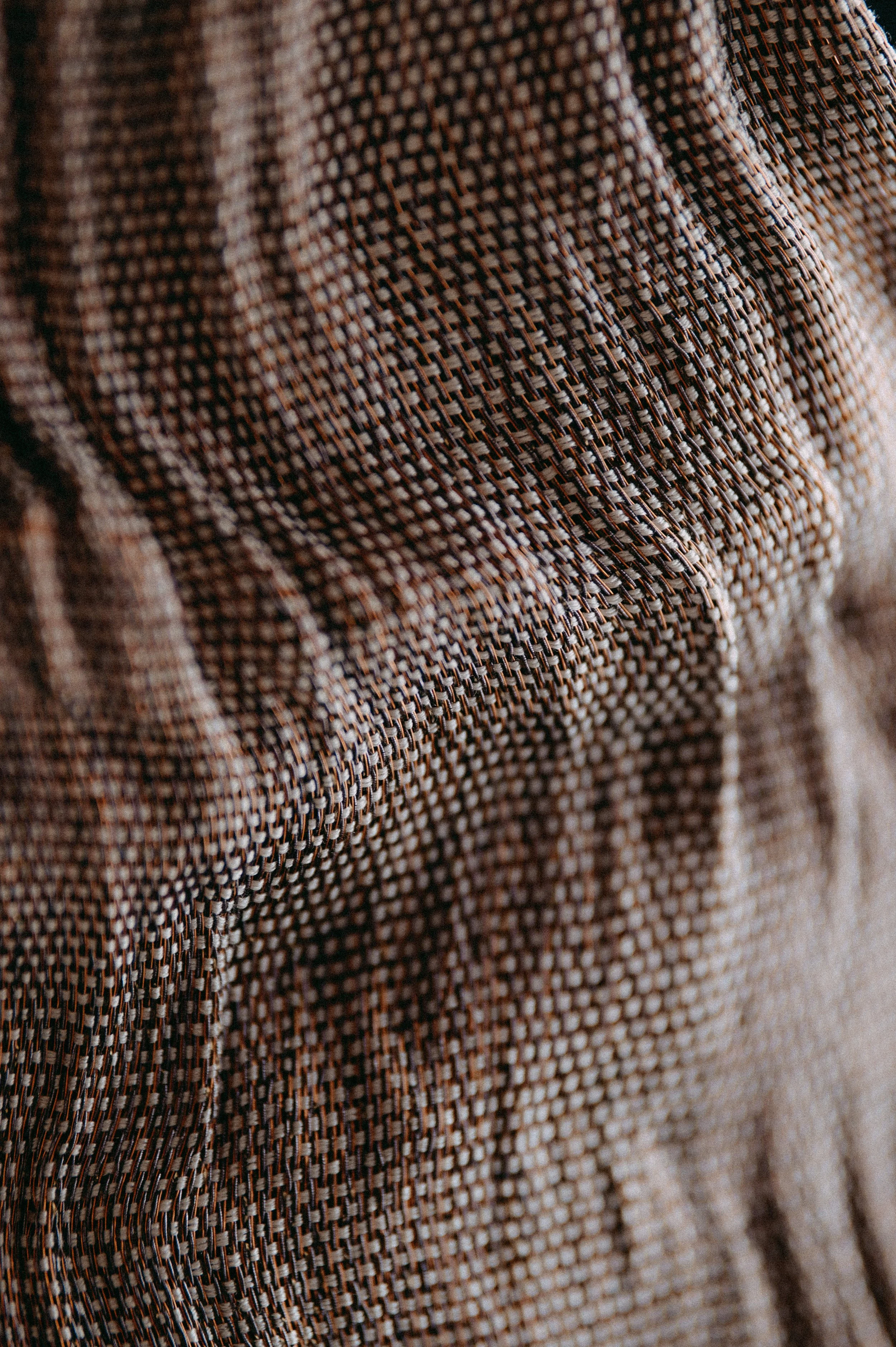
Adélaïde Germain is a Paris-based weaver working at the intersection of textile and architecture. On a hand loom, she creates architectural weavings, panels, screens and light filters conceived as building material rather than decoration, through a gesture she calls sertissage, born from the meeting of weaving and architecture. Reuse is her first creative constraint: eyewear acetate, brass, glass and salvaged materials become surfaces that hold and shape light. Her work has been shown at the Petit Palais in Paris. She develops her practice with RÉEMPART, a non-profit turning reclaimed materials into cultural narratives, which supports her research and productions.
Fashion for Robots: Designing the Future
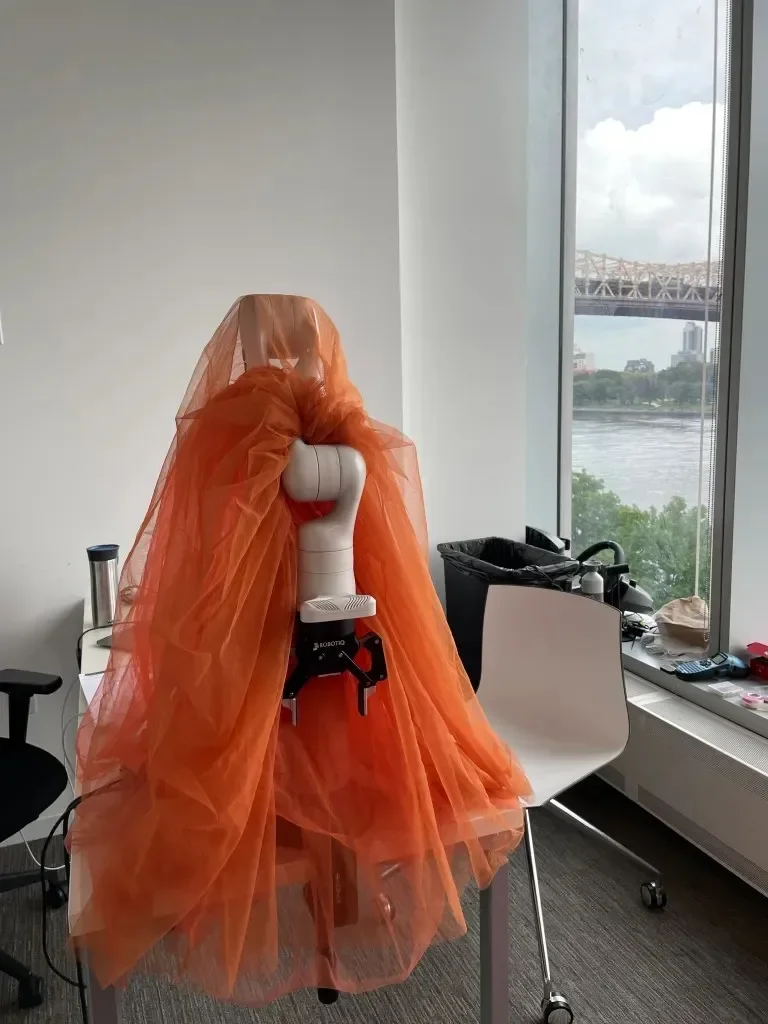
Fashion for Robots: Designing the Future — online talk and workshop with Natalie Friedman, New York Textile Month 2026
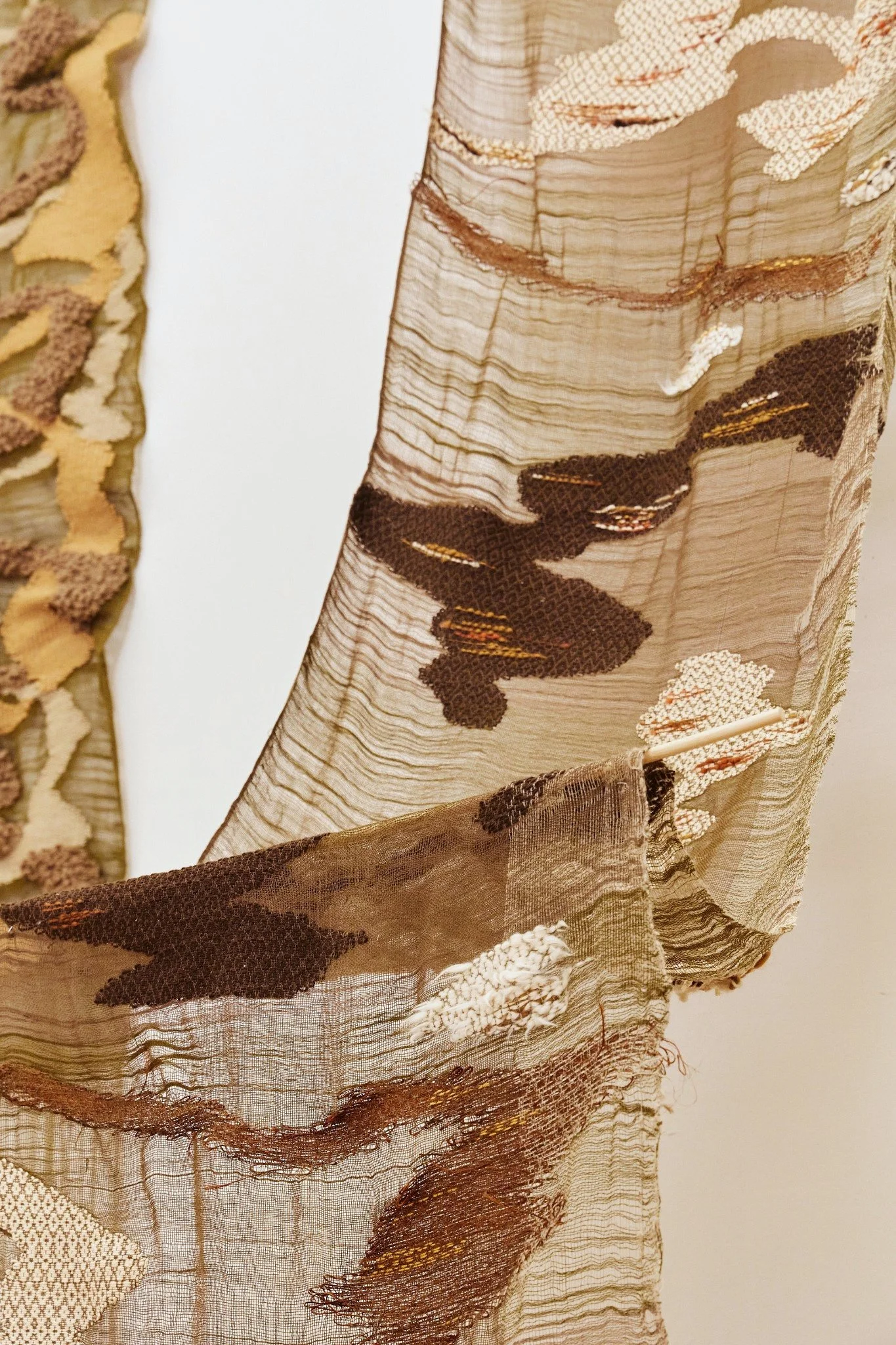
Inside the studio: Luisa Mantelli at Drawing Room
In person / Exhibition / Multiple Techniques
Drawing Room Williamsburg is opening its doors for an informal studio gathering with textile artist Luisa Mantelli as part of New York Textile Month.
For the occasion, Mantelli will bring together finished works alongside pieces still in progress, transforming the space into a studio where exhibition and making can coexist. Visitors will be invited to look closely at the work, see materials and processes in progress, and experience Drawing Room as both a working studio and a place for gathering.
Luisa’s work explores relationships between people and environments through weaving, crochet, embroidery, and other forms of material transformation.
The event is also an invitation to spend time together. Artists, makers, students, and anyone interested in textiles are welcome to come by, see the work, meet others in the community, and hang out at Drawing Room.
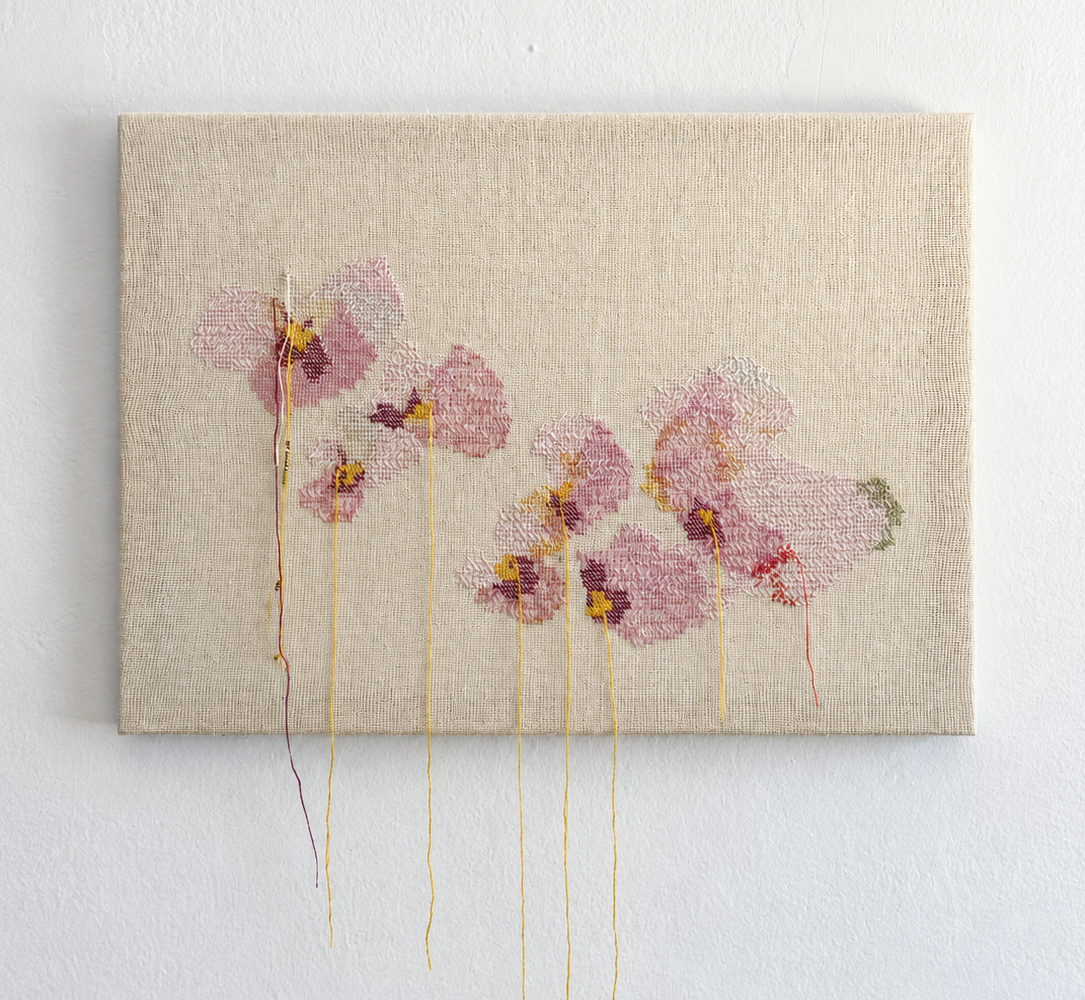
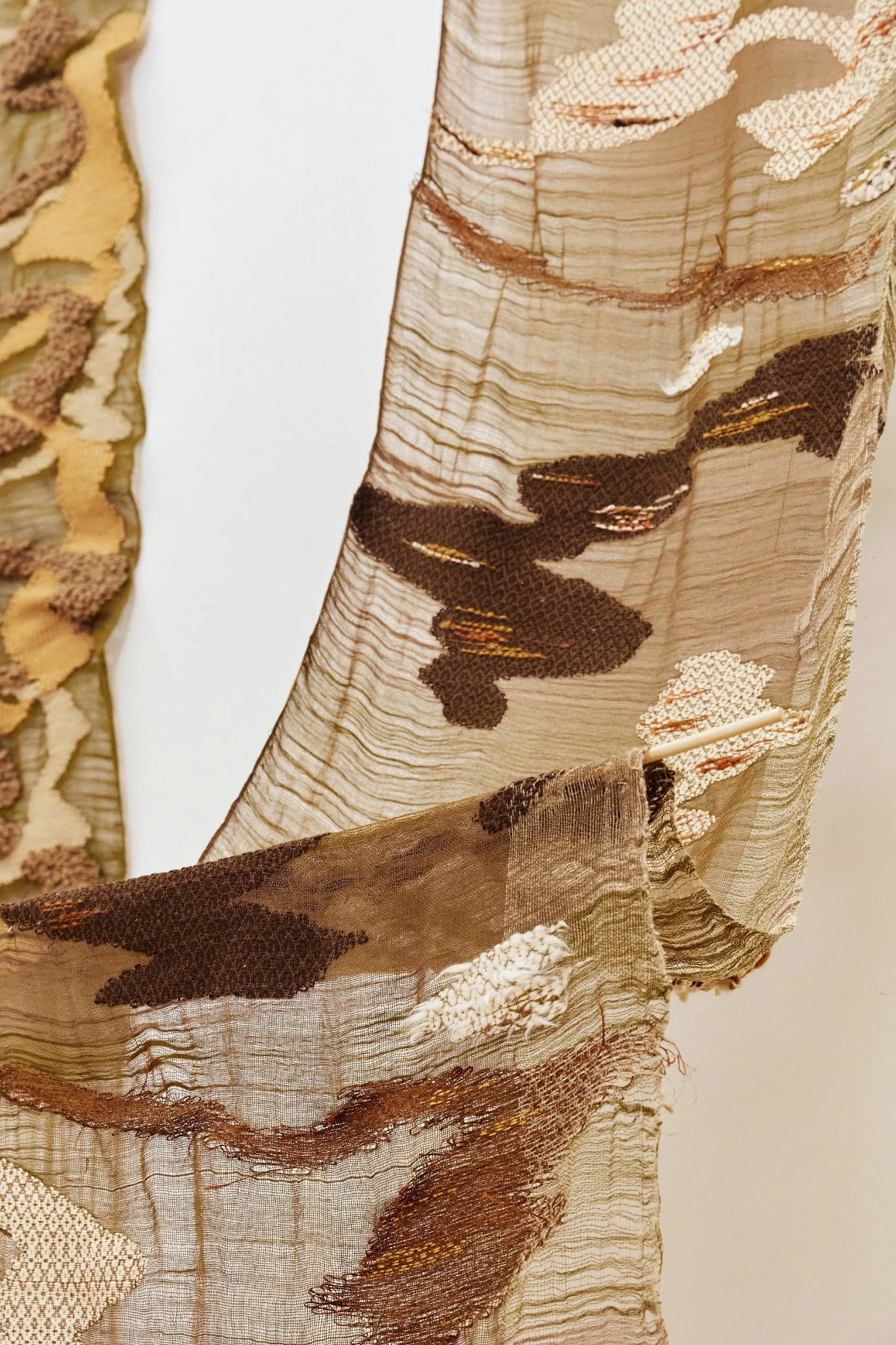
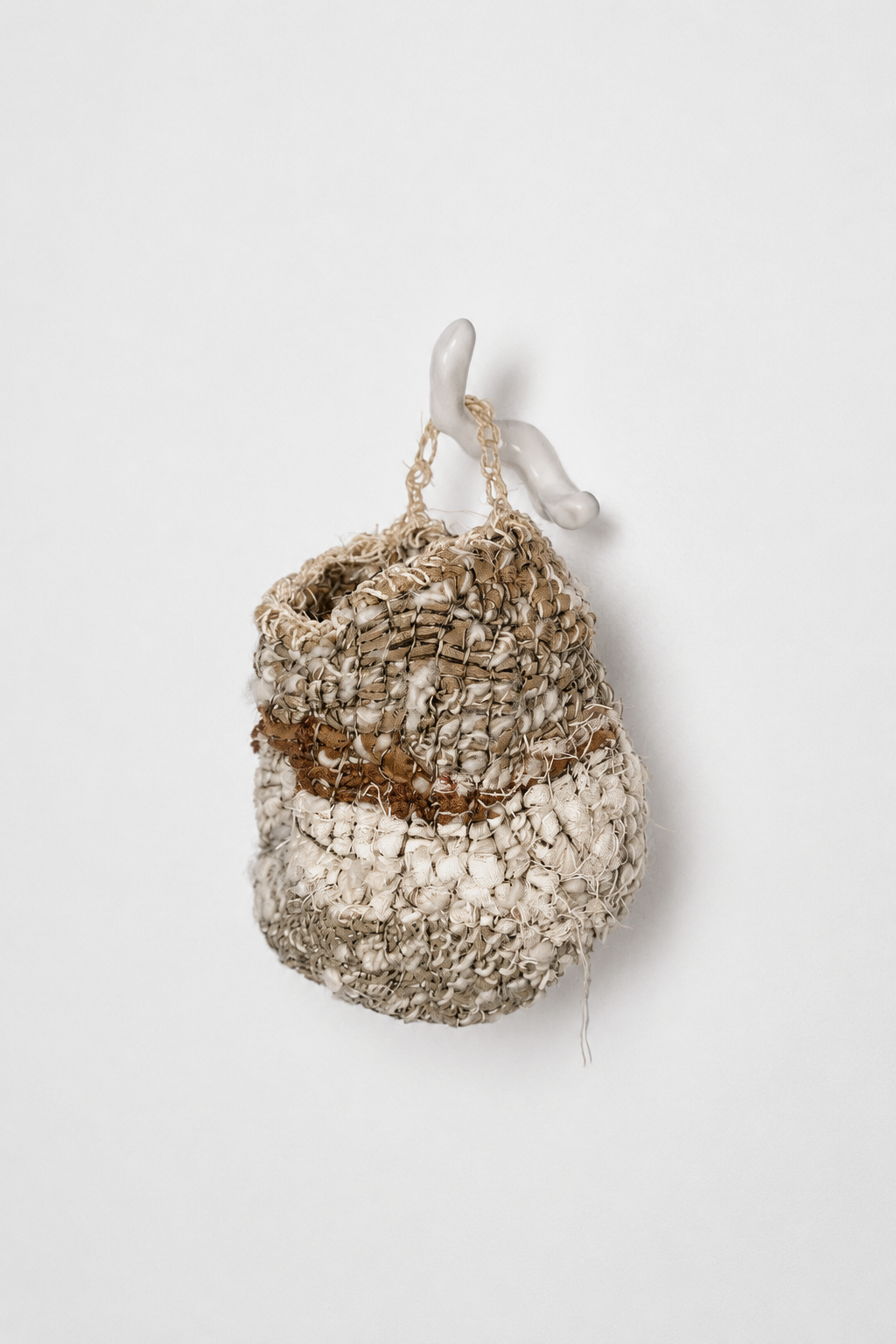
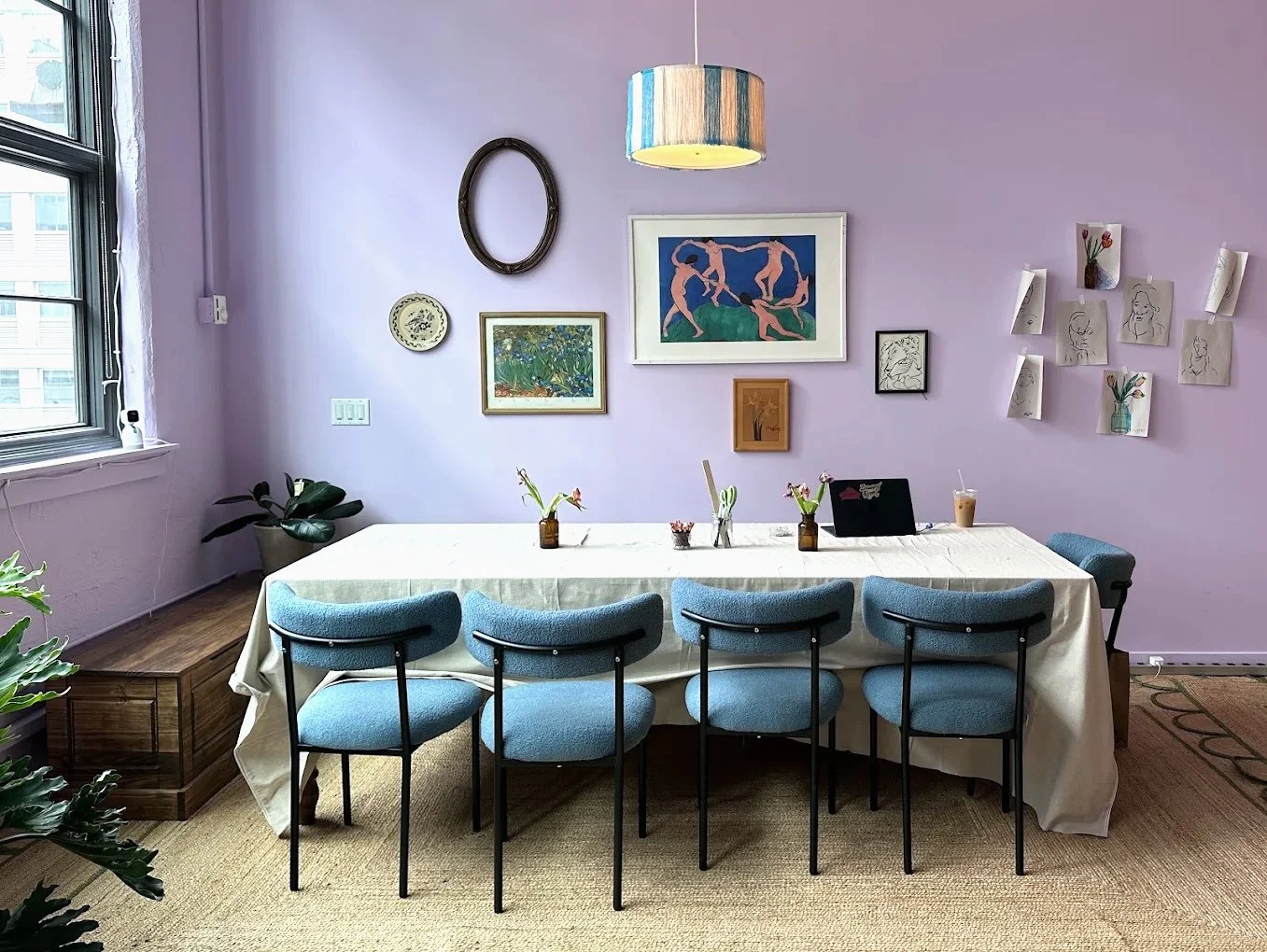
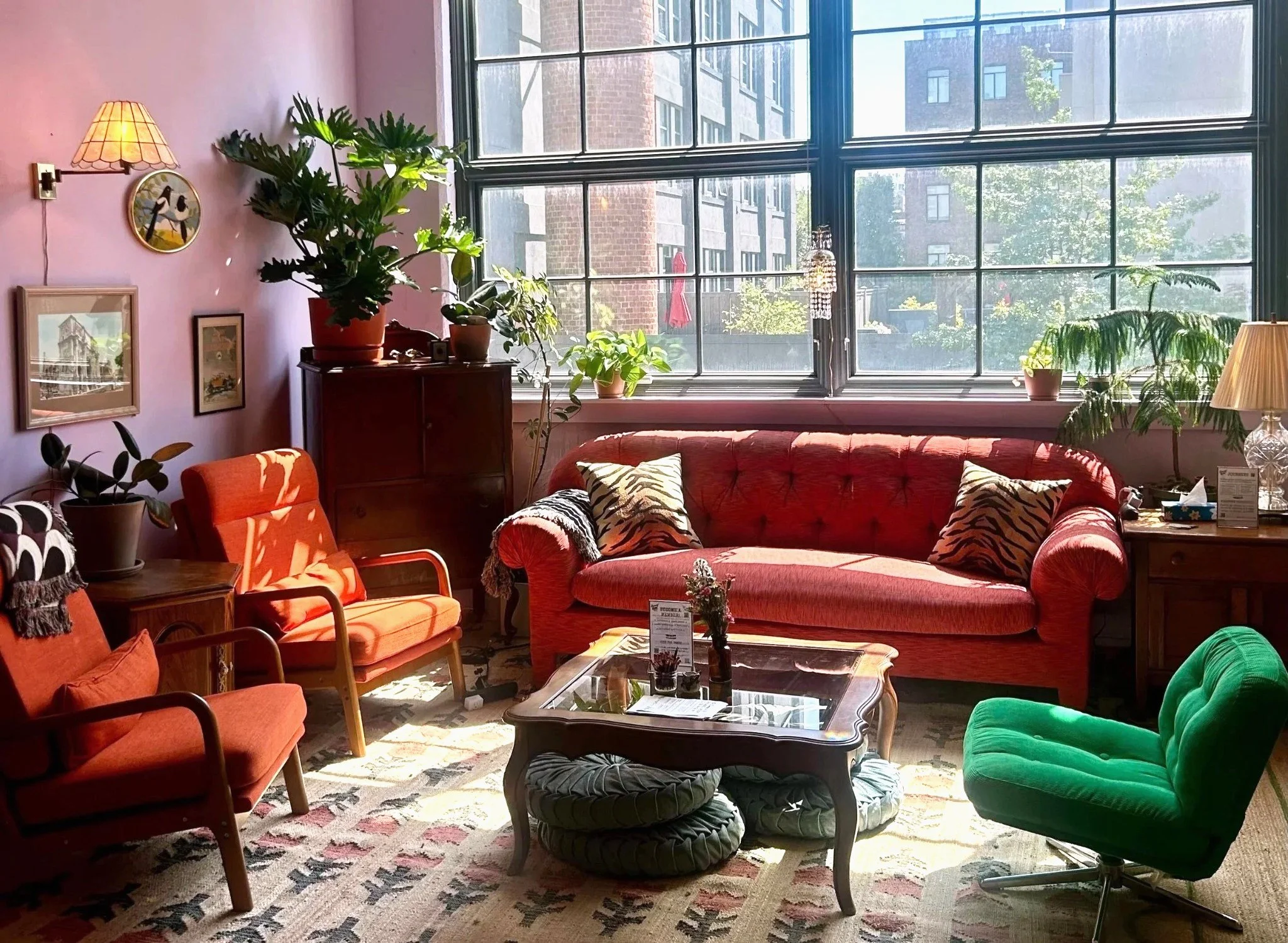
Luísa Mantelli is a Brazilian textile artist based in New York City. She earned her MFA in Textiles from Parsons School of Design in 2025, following earlier studies in architecture and urban planning. She combines studio practice with education as a part-time faculty member at Parsons School of Design, the Program Manager for ProjectArt, and an instructor at Drawing Room. Mantelli’s practice explores the relationships between people and their environments, translating themes of migration, influence, and transformation into sculptural textile forms.
Hemp Farm to Fabric - History and Future Summit
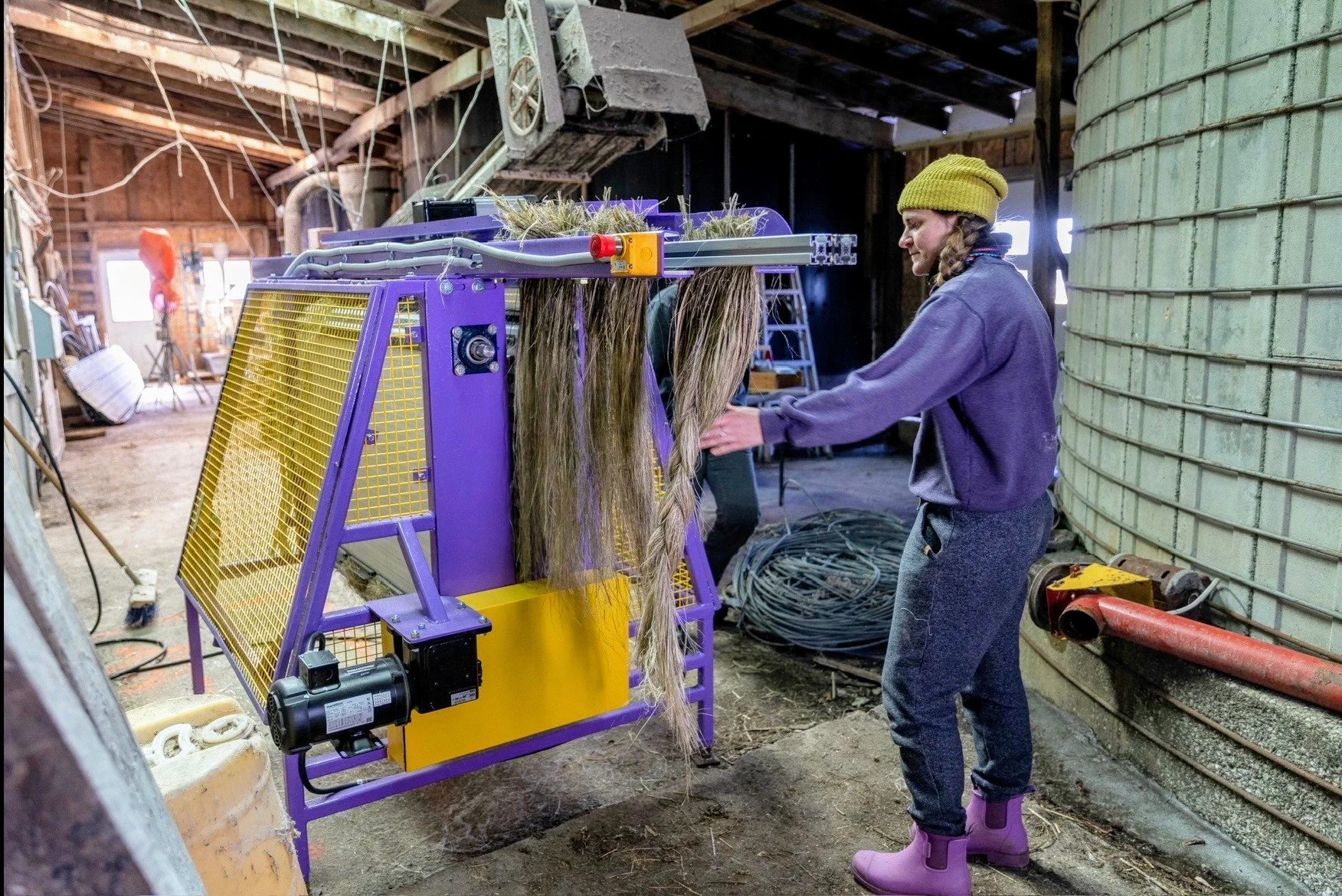
"The Farm-to-Fabric Hemp Textile & Fashion Summit brings hemp farming, textile innovation, and sustainable fashion to Brooklyn and Governors Island, September 18–20, 2026, as part of New York Textile Month."
One structural note carried over from the Mary Jaeger conversation: Friday/Saturday at Brooklyn Peace Center is an industry summit, and Sunday at Governors Island is a separate public fashion showcase and magazine launch — different venue, different audience, different vibe. If you want each to be independently discoverable and shareable (someone searching just for "hemp fashion show Governors Island" won't easily find a page titled "Summit"), it's worth giving Sunday its own calendar entry and SEO fields, cross-linked to this one, rather than folding it into a single page.
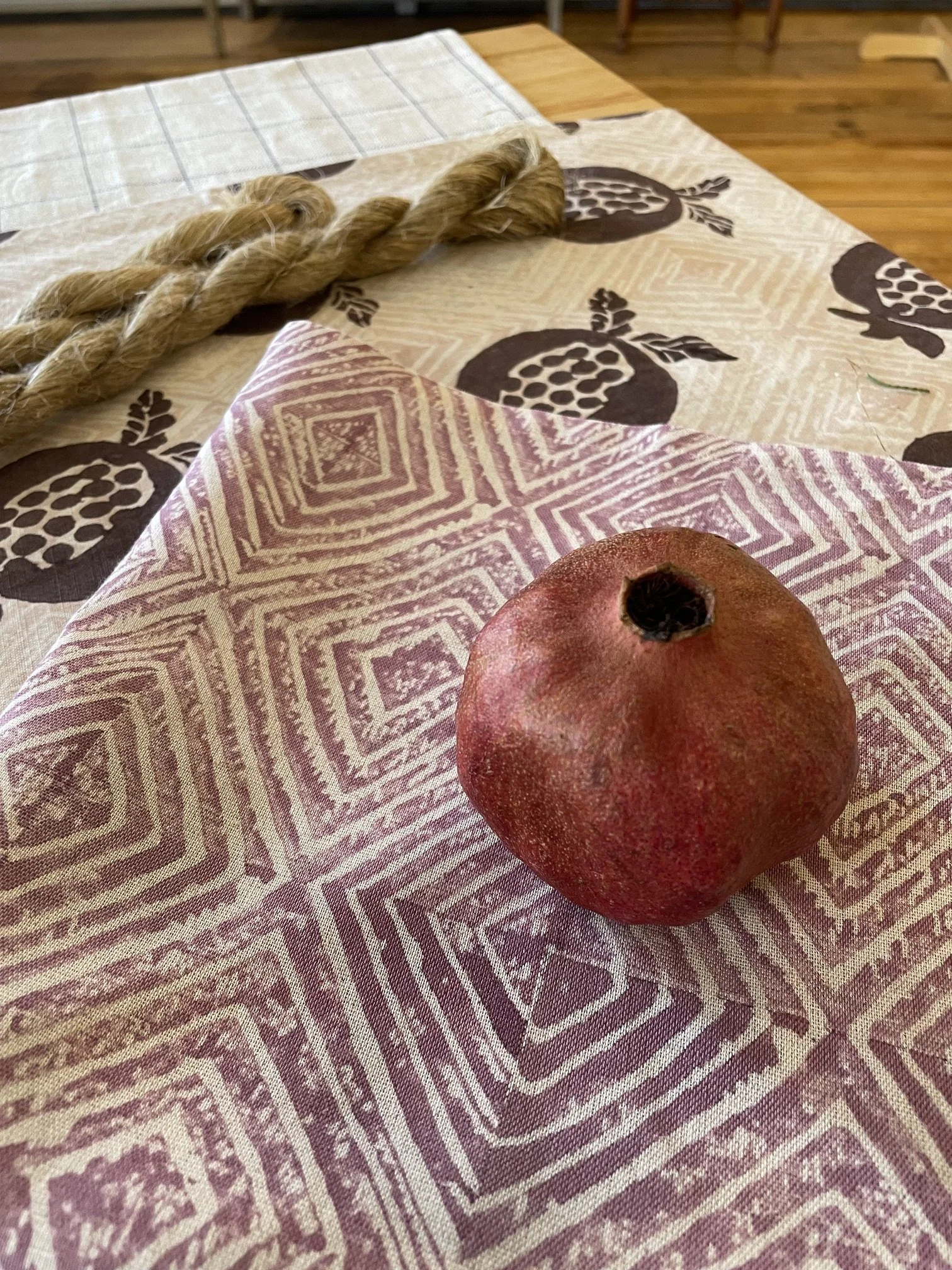
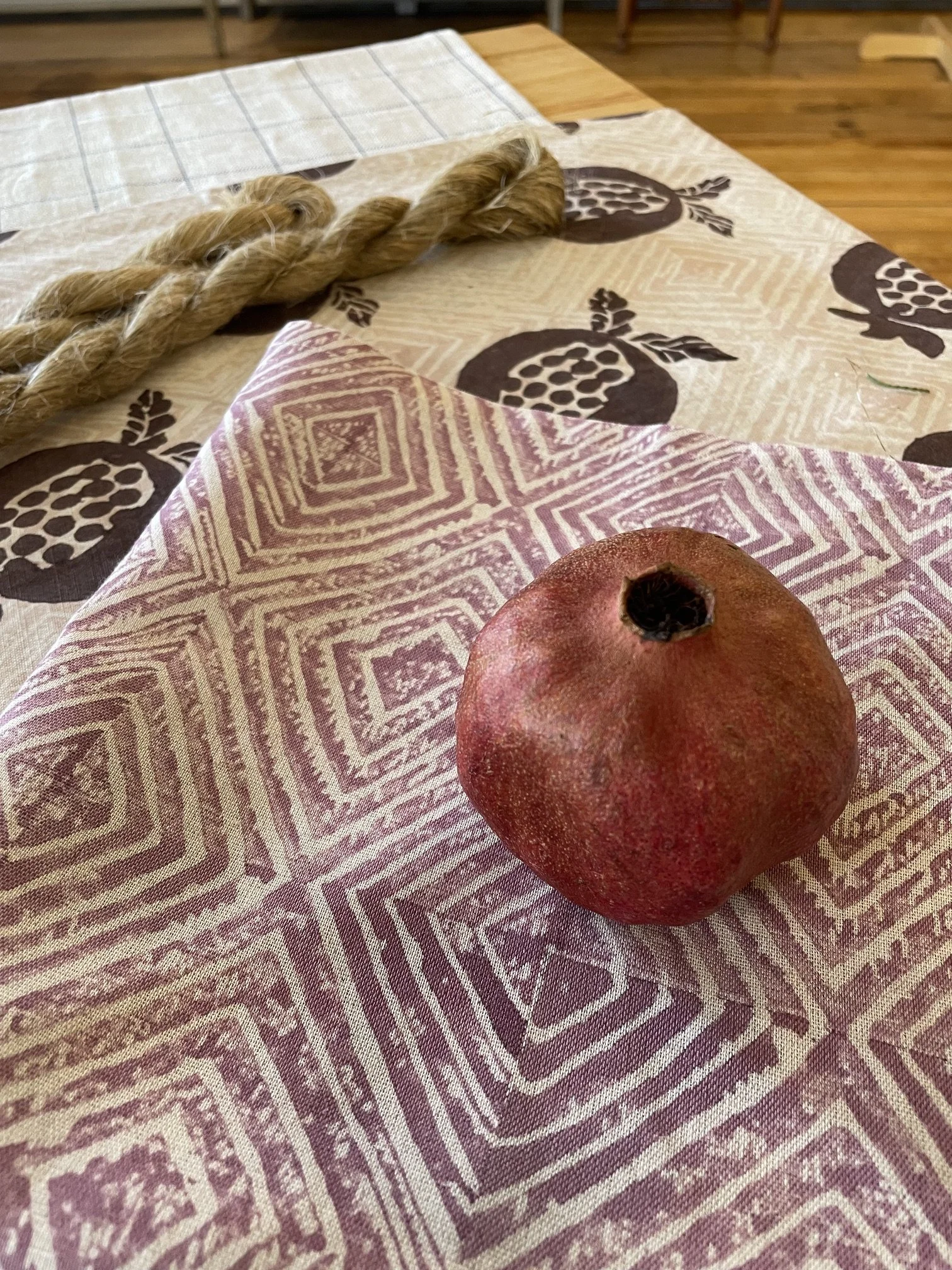
Upcycling with Blockprinting
In person / Workshop/ Block Printing
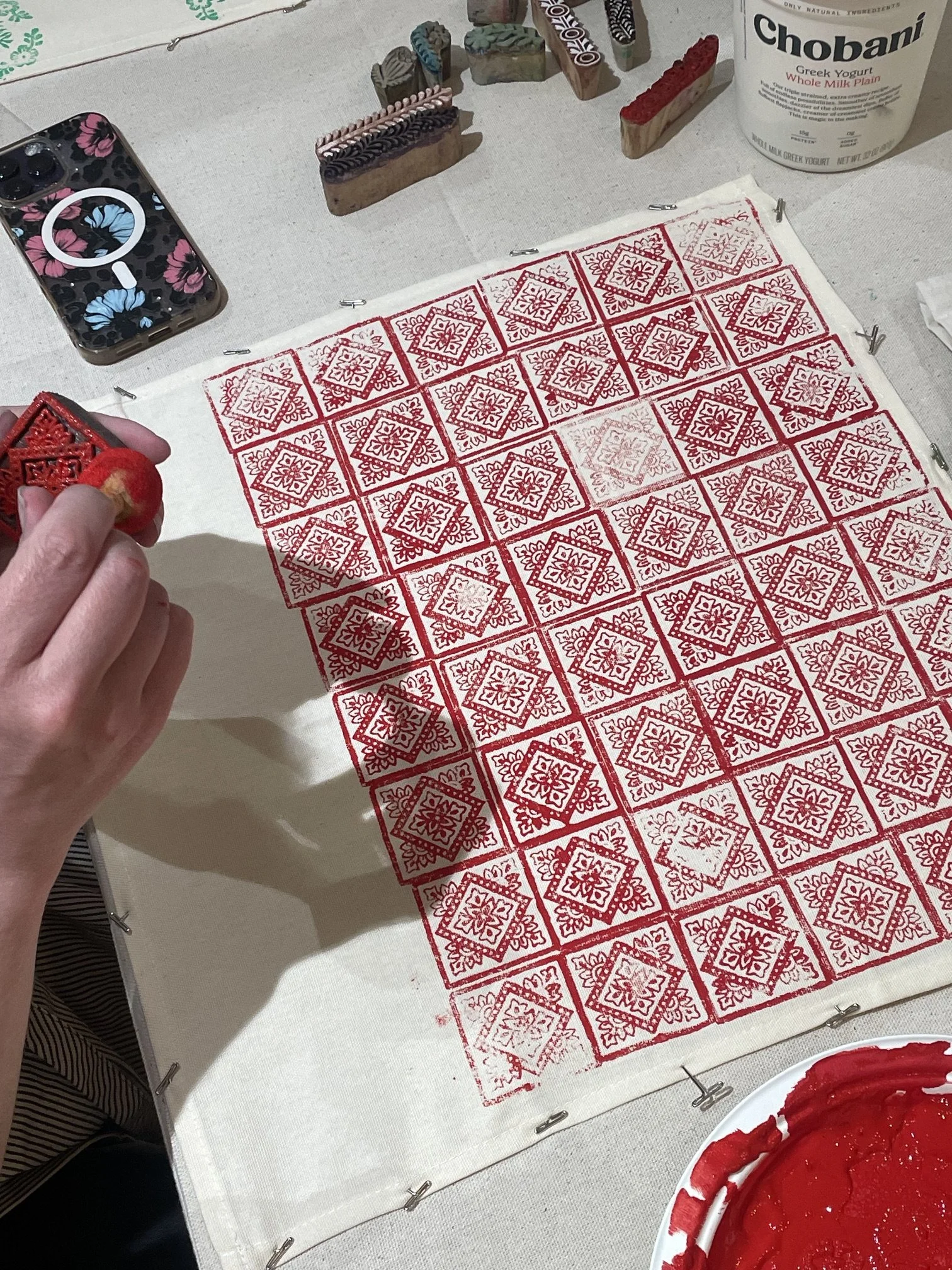
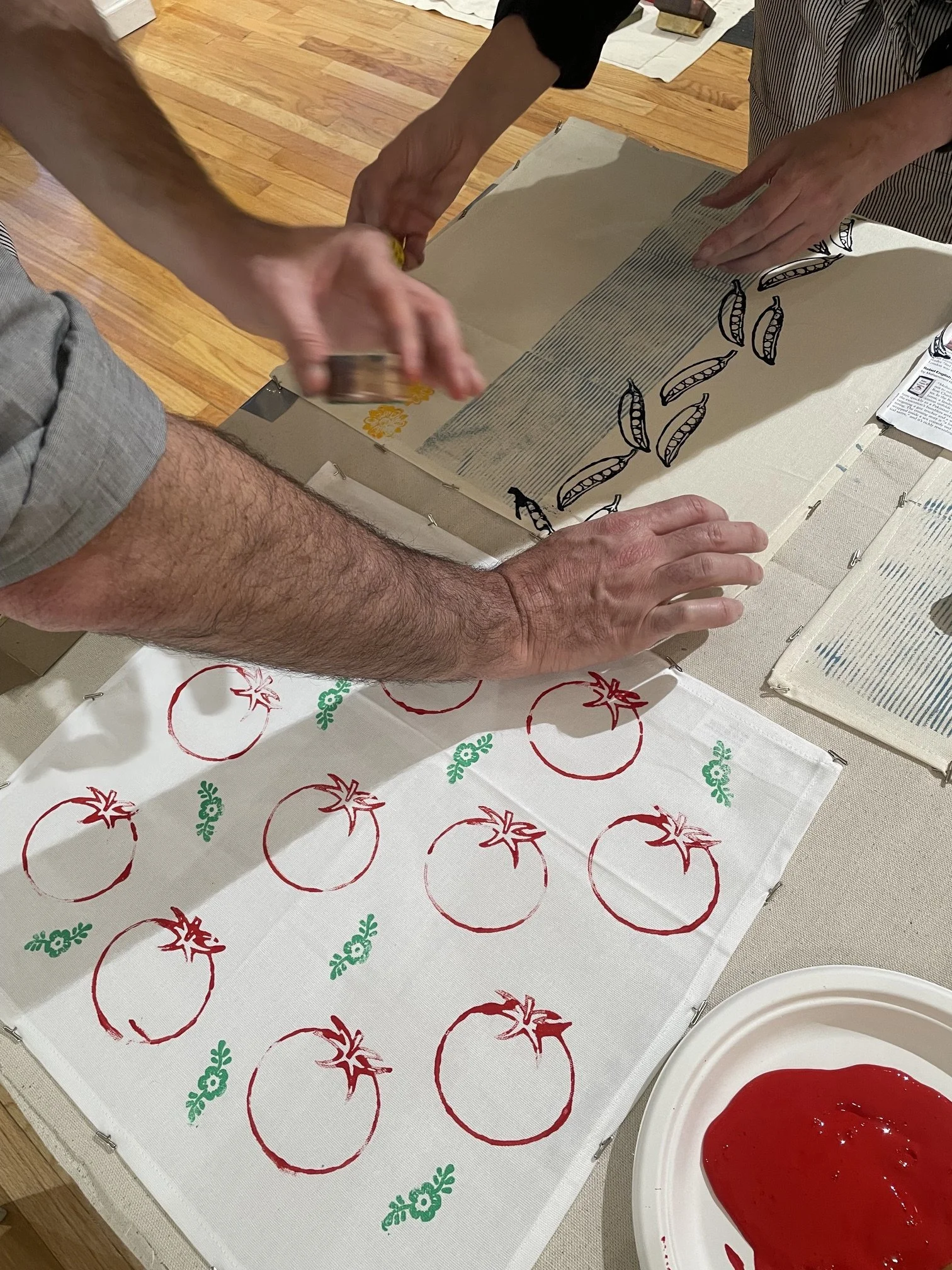
Reimagine your textiles and clothes with new hand block printed patterns in this hands on workshop.
For a third year in a row, Cynthia Director Studio is hosting an upcycling blockprinting workshop for New York Textile Month.
In this hands on workshop, there will be a demo about blockprinting, then participants will learn how to block print onto fabric and clothes. All of the blocks we use are sourced from India & we will be using water-based screen printing inks. This workshop includes a piece of fabric to print on.
Please bring your own shirts, fabric, napkins, tea towls, and clothes.
This workshop is offered in the morning or afternoon (both sessions are the same), or make an artistic day retreat and sign up for both sessions.
Saturday, September 19, 2026
9:30 AM - 12:30 PM
2:00 PM - 5:00 PM
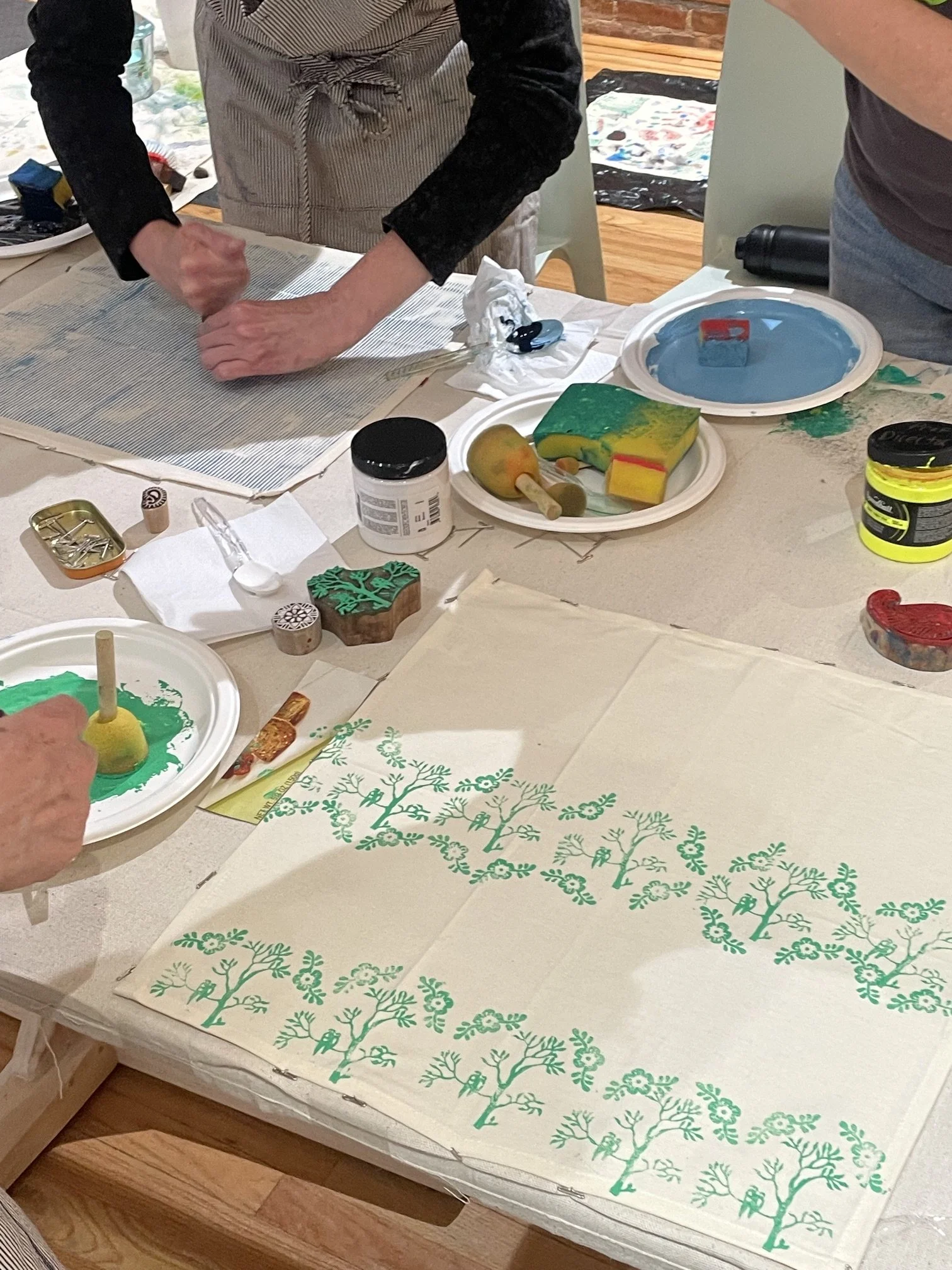
Cynthia Director is a fashion and home textile designer, artist and educator based in New York City and New Delhi. She has lived and worked as an international designer in India for over a decade. Her love of color, craft, travel and blockprints is inspired by her time in India. Cynthia is an assistant adjunct professor at FIT and a visiting professor at several design schools in India. She consults with home textile design businesses in the US and India, and has a home decor textile line of craft based products. She received her MA in sustainable textiles from University of the Arts London: Chelsea, and her BFA from Rhode Island School of Design.
Open Streets Reads
In person / Workshop / Stamping
As part of our back-to-school Open streets event, GGripo Art and Design will host a t-shirt decorating workshop for kids.
No registration required!
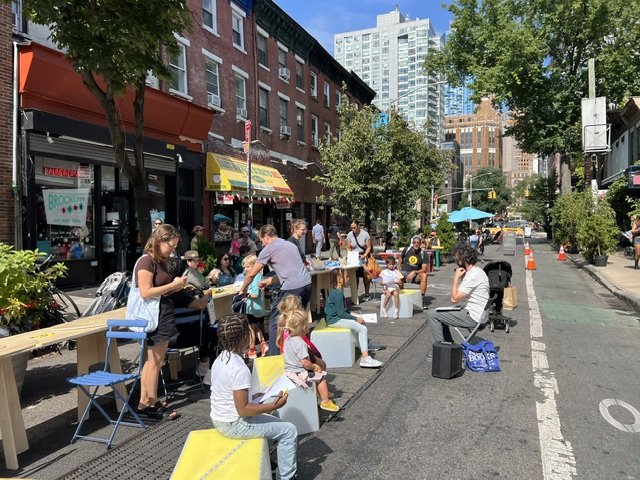
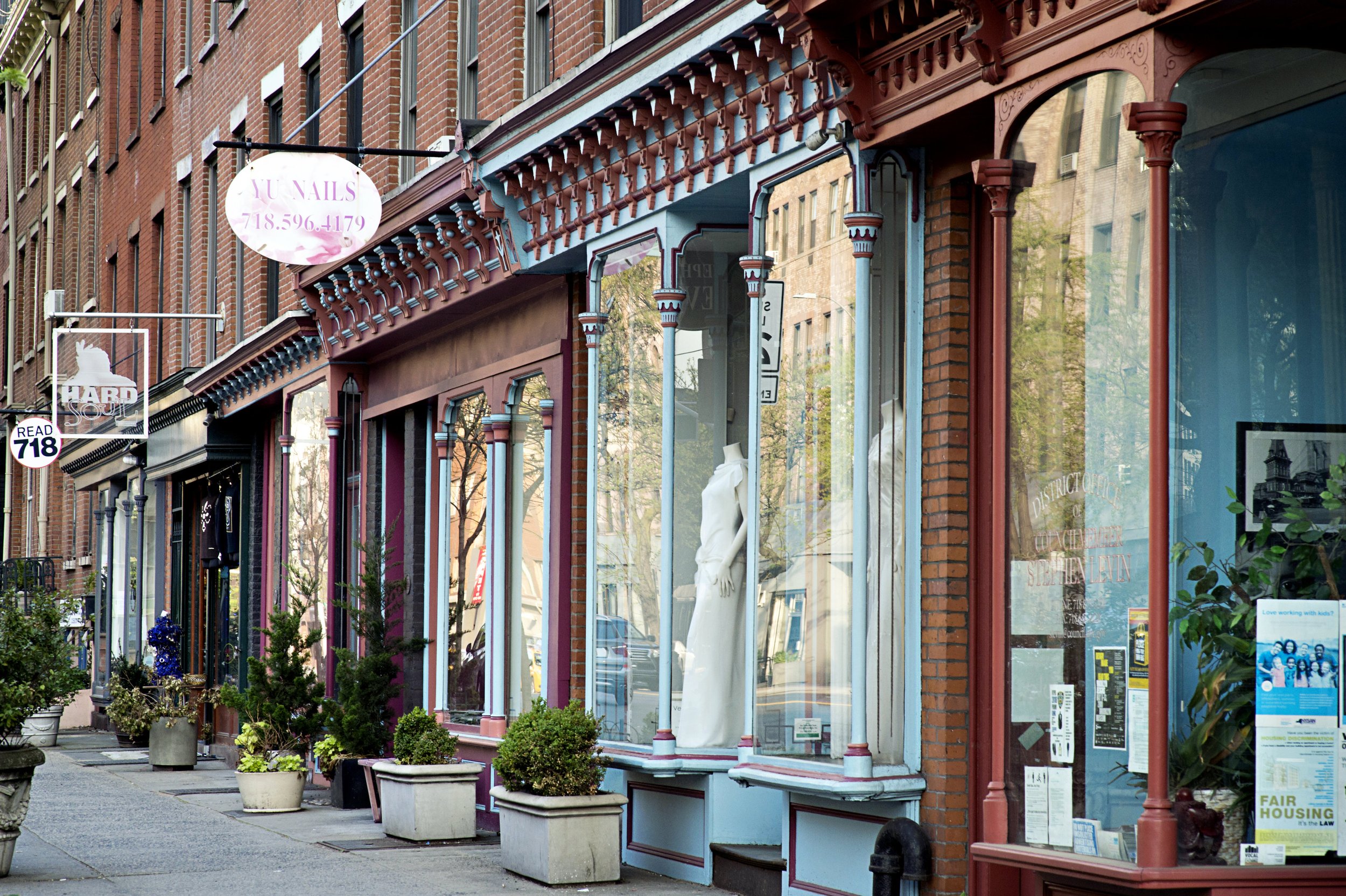
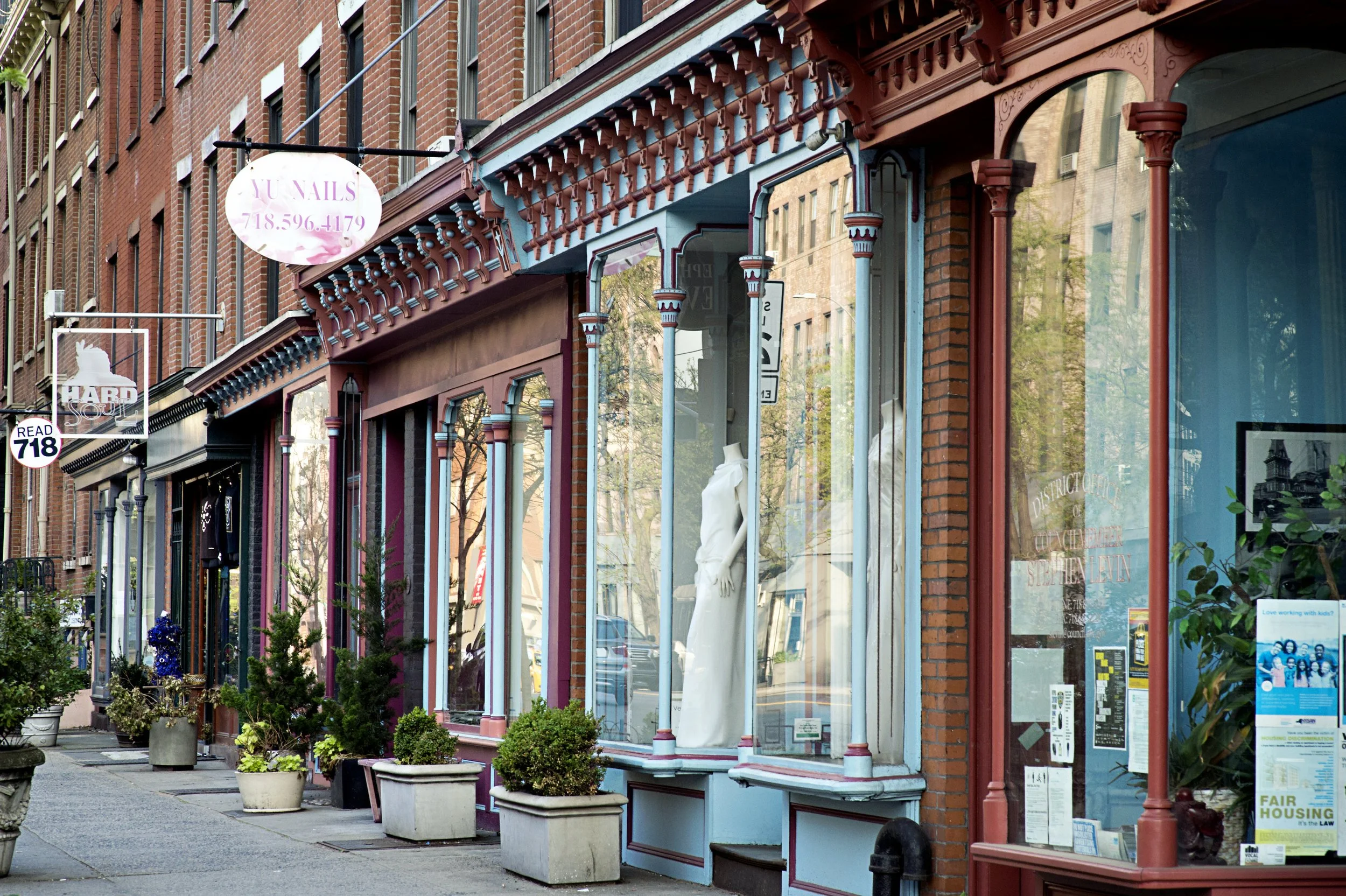
Representing more than 380 businesses in the vibrant neighborhoods of Brooklyn Heights, Boerum Hill, and Cobble Hill, the Atlantic Avenue Business Improvement District (AABID) is dedicated to promoting the long-term economic development of Atlantic Avenue from Fourth Avenue to the Waterfront.
Carbon Farm Tour
In person / Tour / Textile Industry
Join New York Fibershed for another Carbon Farm Tour! Experience this hands-on, educational event exploring how textile sourcing can positively impact climate change and regional economies.
What to expect
• Farm Tour & Alpaca Visit:
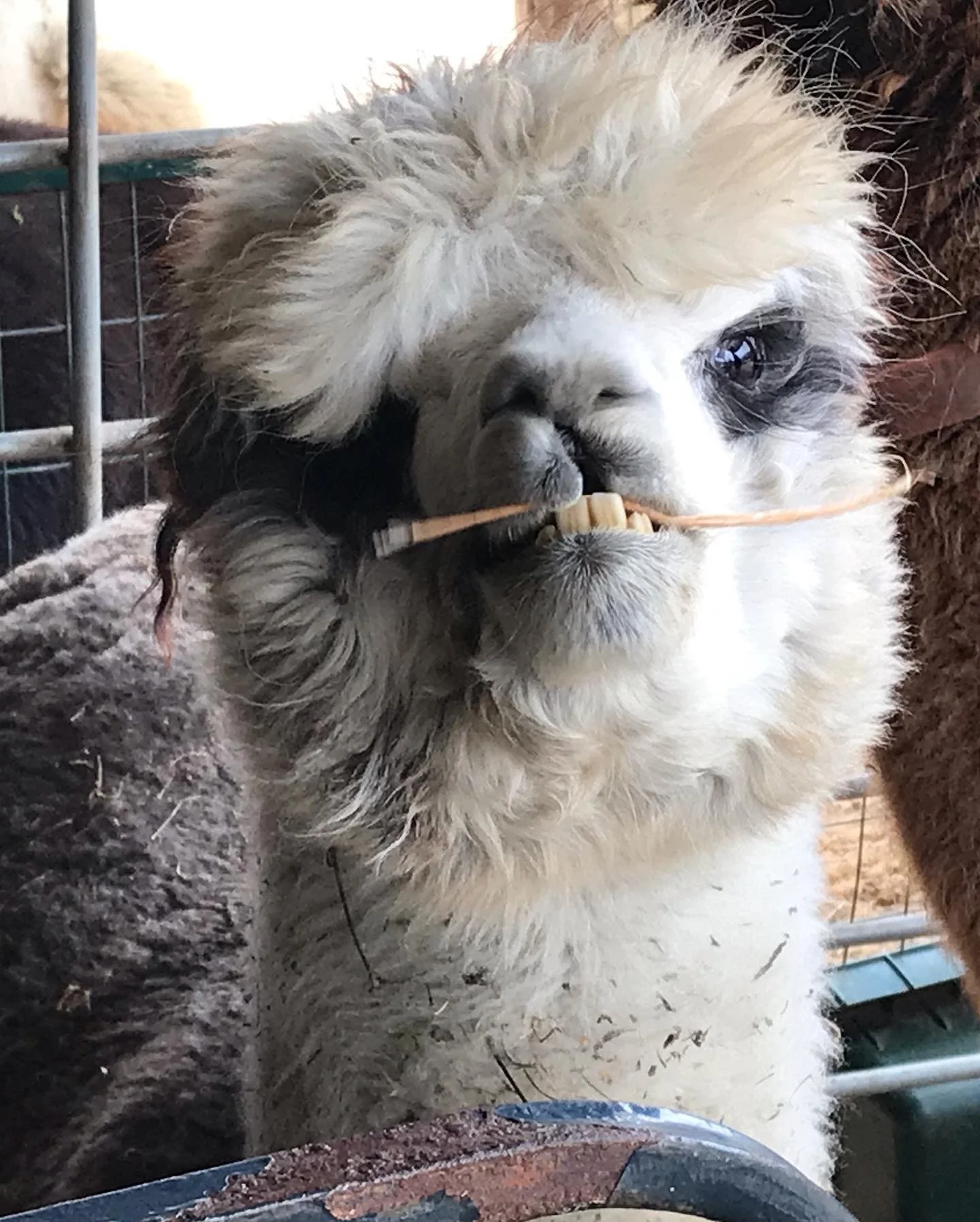
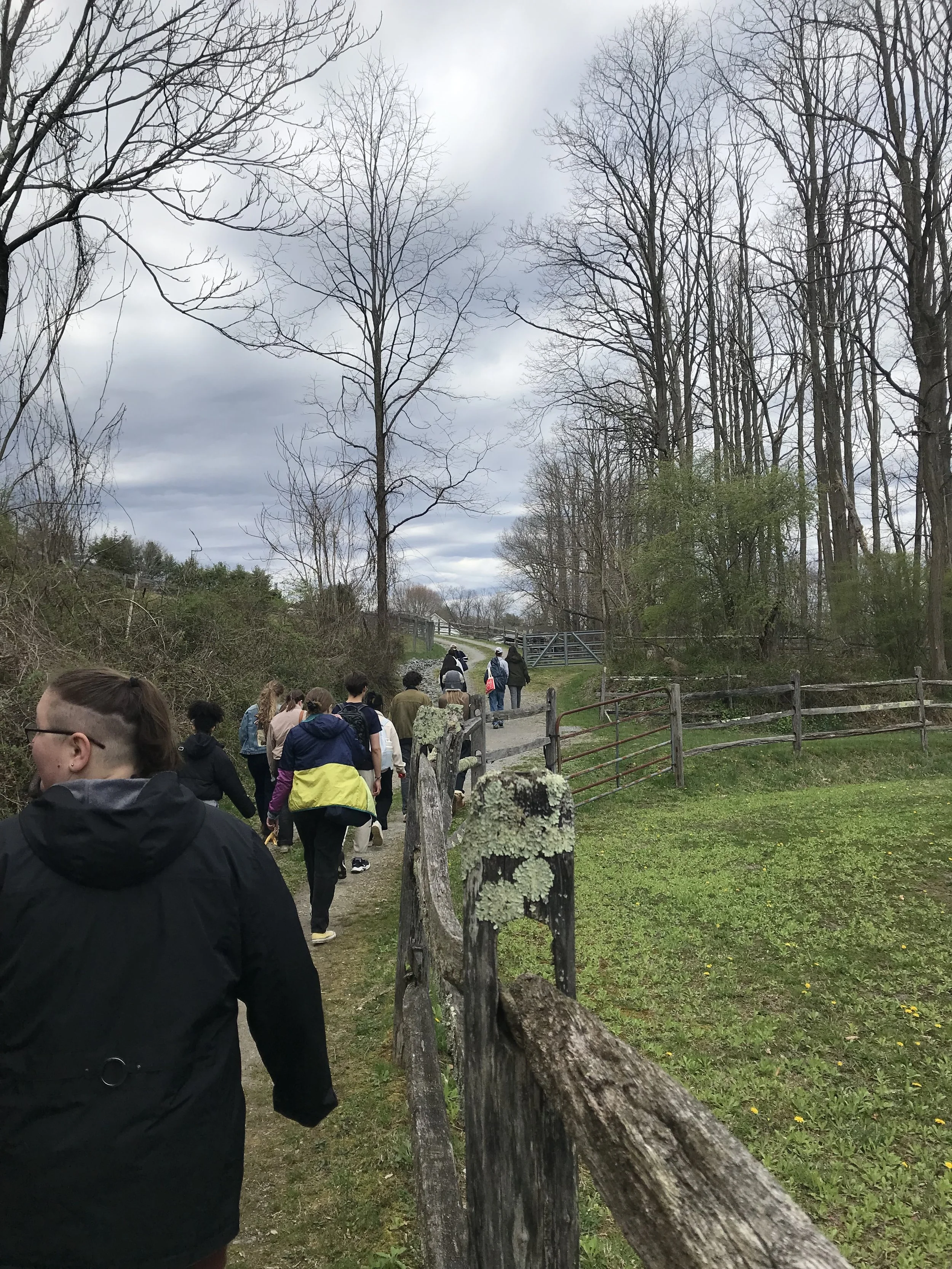
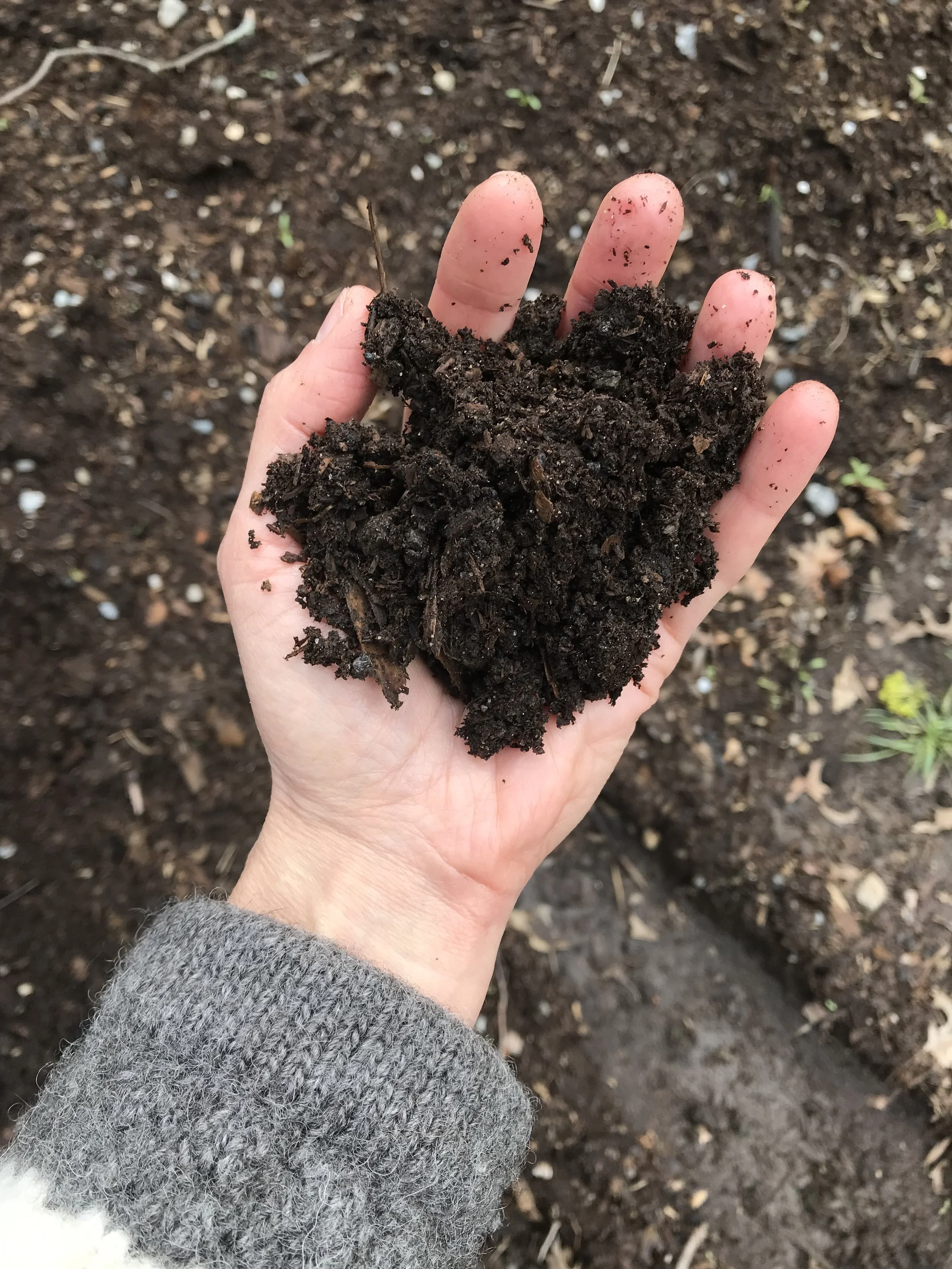
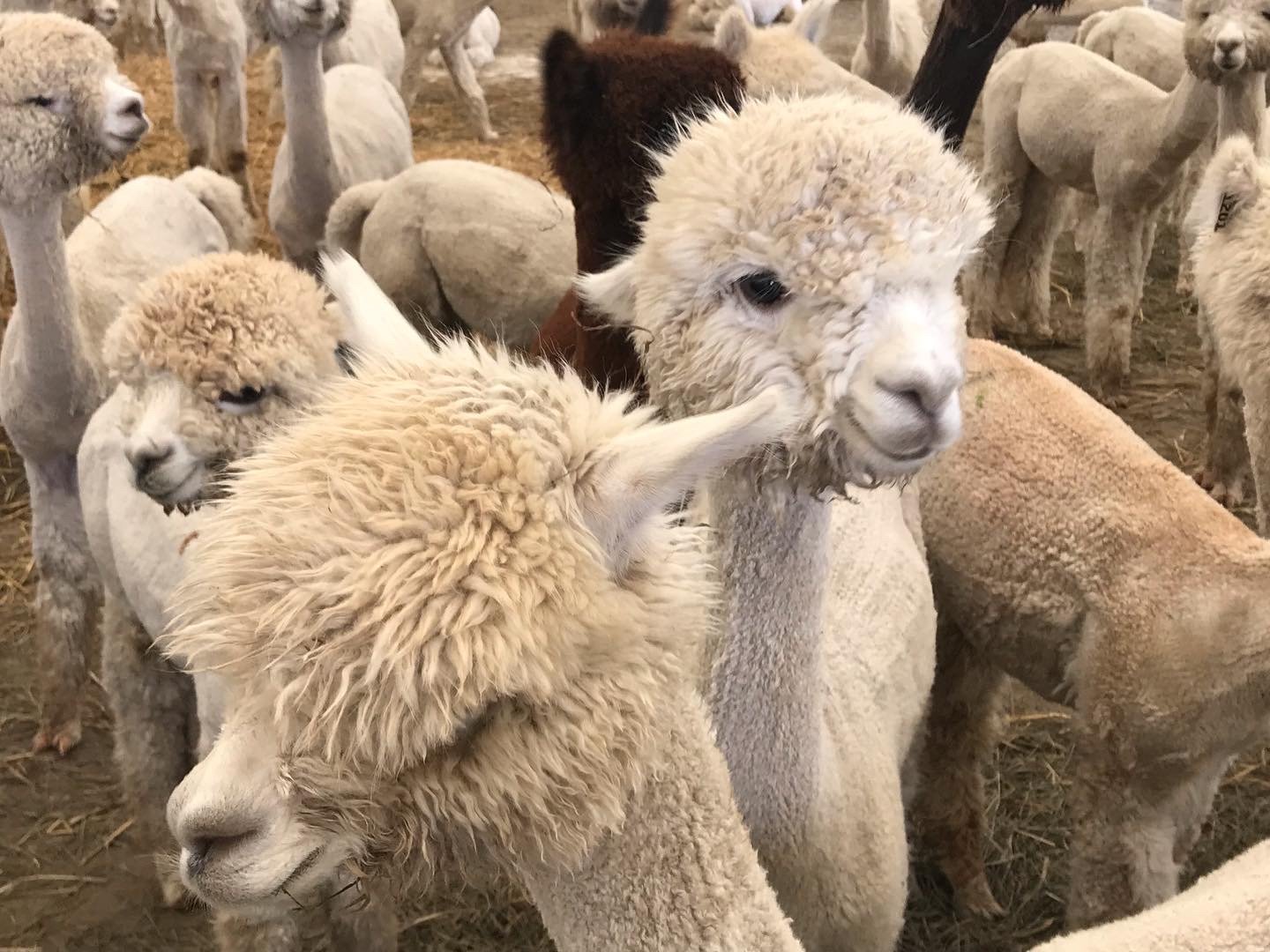
Take a guided tour of Faraway Farm Alpacas and see sustainable farming practices in action! See their compost system and learn about soil amendment. Get up close to the alpacas and explore their role in regenerative agriculture.
• Meet Industry Innovators:
Connect with leaders from the agriculture, design, and manufacturing industries who are driving the shift toward regenerative, climate-beneficial models in the regional textile sector.
• Climate Beneficial™ Verified Textile Displays:
Discover how textiles can help the climate and explore Climate Beneficial™ Verified textile products.
• Carbon Farming Talk:
Hear from New York Fibershed's Carbon Farm Planner about regenerative soil protocols.
• Expert Q&A Panel - Engage in a lively discussion with experts on topics such as:
Carbon sequestration practices on the farm
How farm management influences fiber quality
Regional fiber cultivation, processing, and manufacturing
Building a farm-to-product supply chain focused on slow growth and bio regionalism
Organizing cooperative economic models to uplift small businesses
Strategies for growing a socially and environmentally equitable textile industry.
Refreshments:
Light fare and beverages provided by Marbled.
New York Fibershed is a nonprofit organization dedicated to connecting and strengthening the fiber and textile communities across New York State. We are a community of farmers, processors, artisans, makers, designers, educators, and advocates working together to build a more circular and climate beneficial textile system.
We believe that what we wear, what we make, and how we connect to the land matters. Through educational programming, industry development, and collaborative projects, we strengthen the connections between soil, fiber, and community while supporting regenerative agriculture, local economies, and regional textile production.

Reined In – A Solo Exhibition by Natale Adgnot
Reined In' is a solo exhibition of new soft sculpture and fiber works by Natale Adgnot, on view at Peep Space gallery in Tarrytown, NY, September 19 through November 1, 2026.
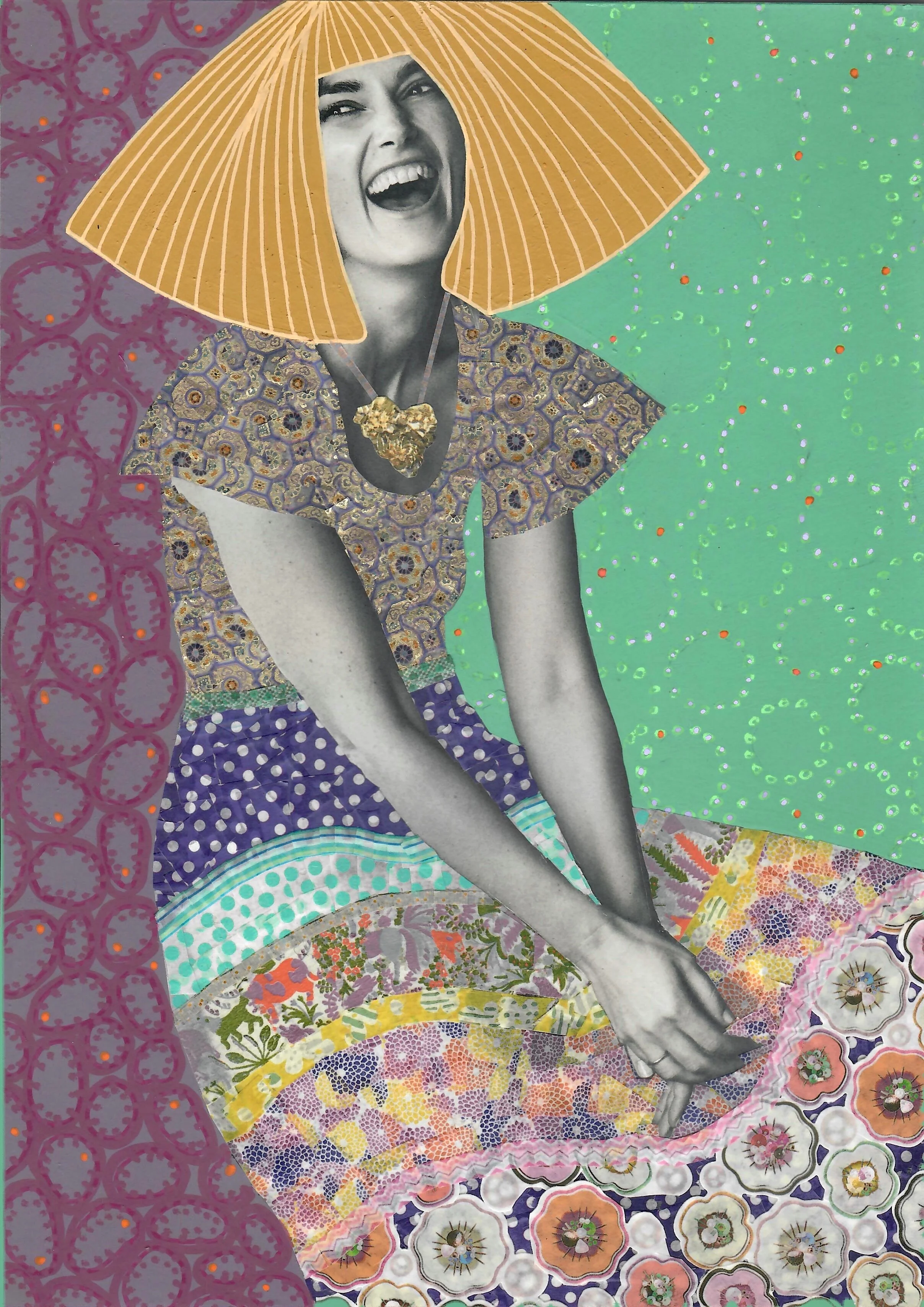
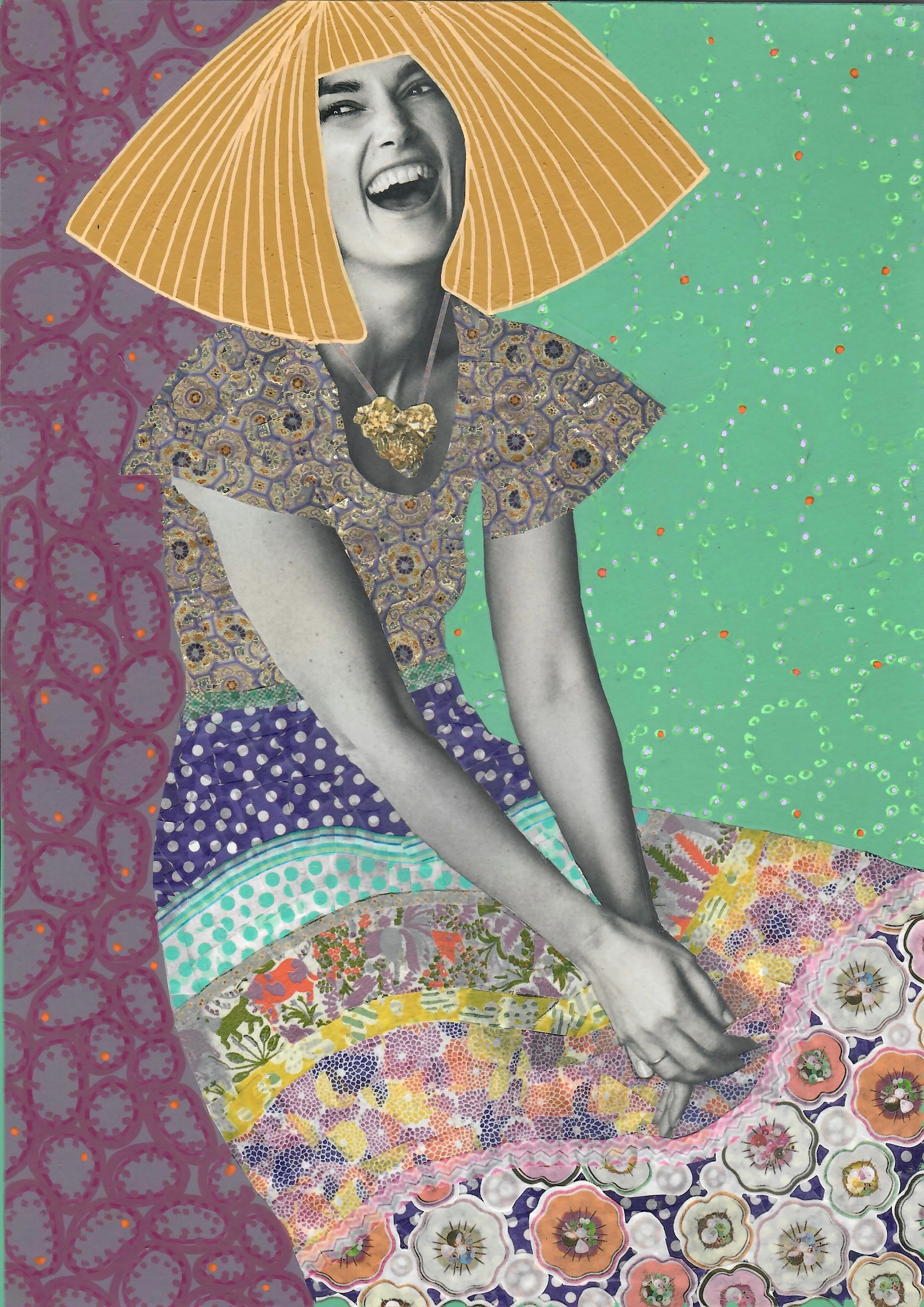
Re Fashion
In person/ Workshop / Textile Collage
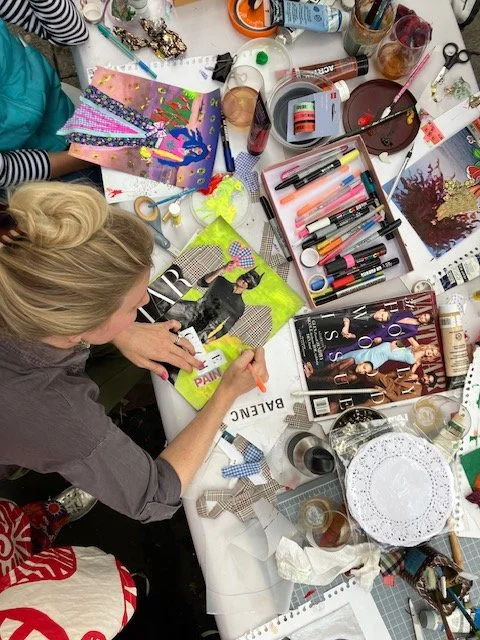
Celebrating New York Textile Month, we are excited to host an innovative workshop of fashion sketching with a twist.
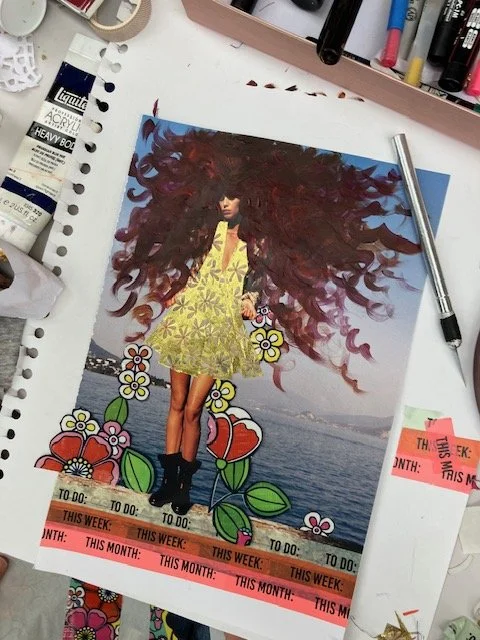
Exploring textile possibilities using collage techniques with image, paper, acrylics, markers and fabric. Paula Rennis will guide you to the process.
Sunday September 20th, 3-5pm
1 class - $48.00 [2 hours]
A 2-hour workshop at the artist's studio at 18th St & 4th Ave. Park Slope, Brooklyn.
Upon registration you will receive the address.
Price includes all supplies. Limited space to 12 spots.
Any questions please reach out to paularennis@m2viscom.com
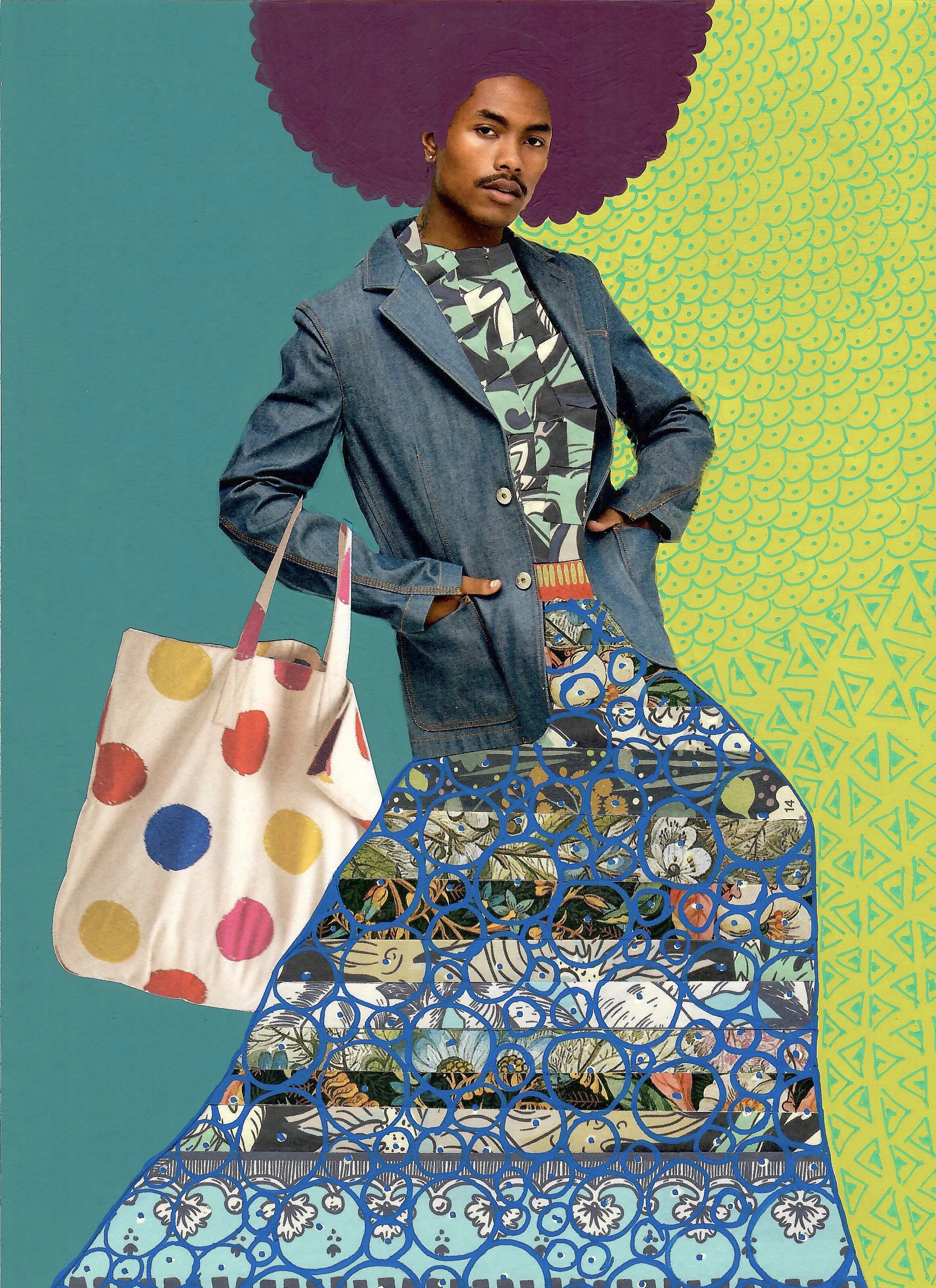
Argentinean by nature New Yorker by heart, I came to the US on a Fulbright Scholarship for a master's at Pratt Institute and studied
painting at The Art Students League of NY.
My imagination runs full speed looking at fashion magazines searching tor uniqueness, color and patterns, but only seeing outfits without personality. Nothing speaks to me. So I re-fashion the fashion magazines one page at a time. Once I find a pose that attracts me I create the outfits and accessories that I would love to see, adding some humor too dressing them with my "textiles" of acrylic, markers, paper, tape and fabric.
Negotiated Skin
In person / Exhibition / Biomaterial
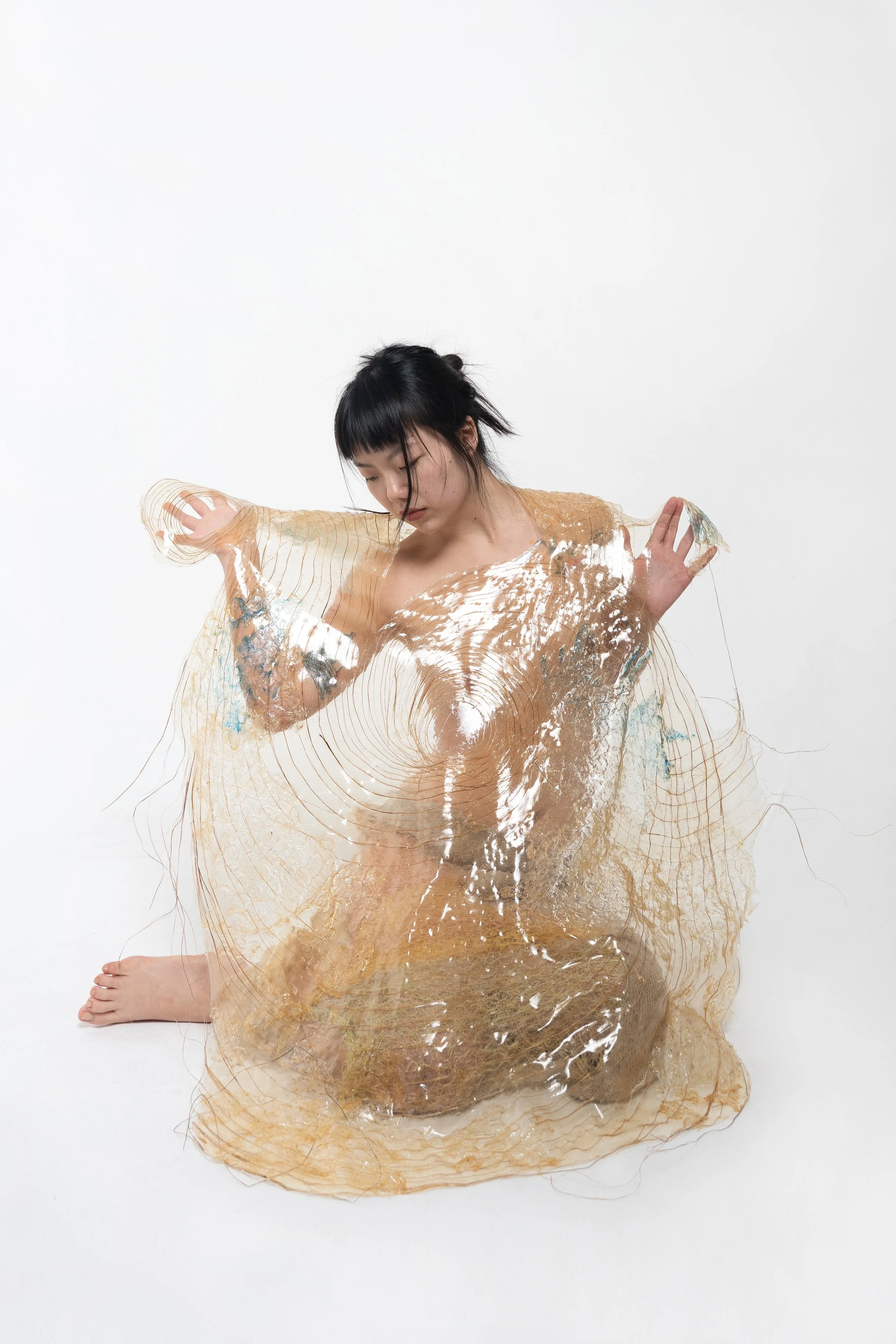
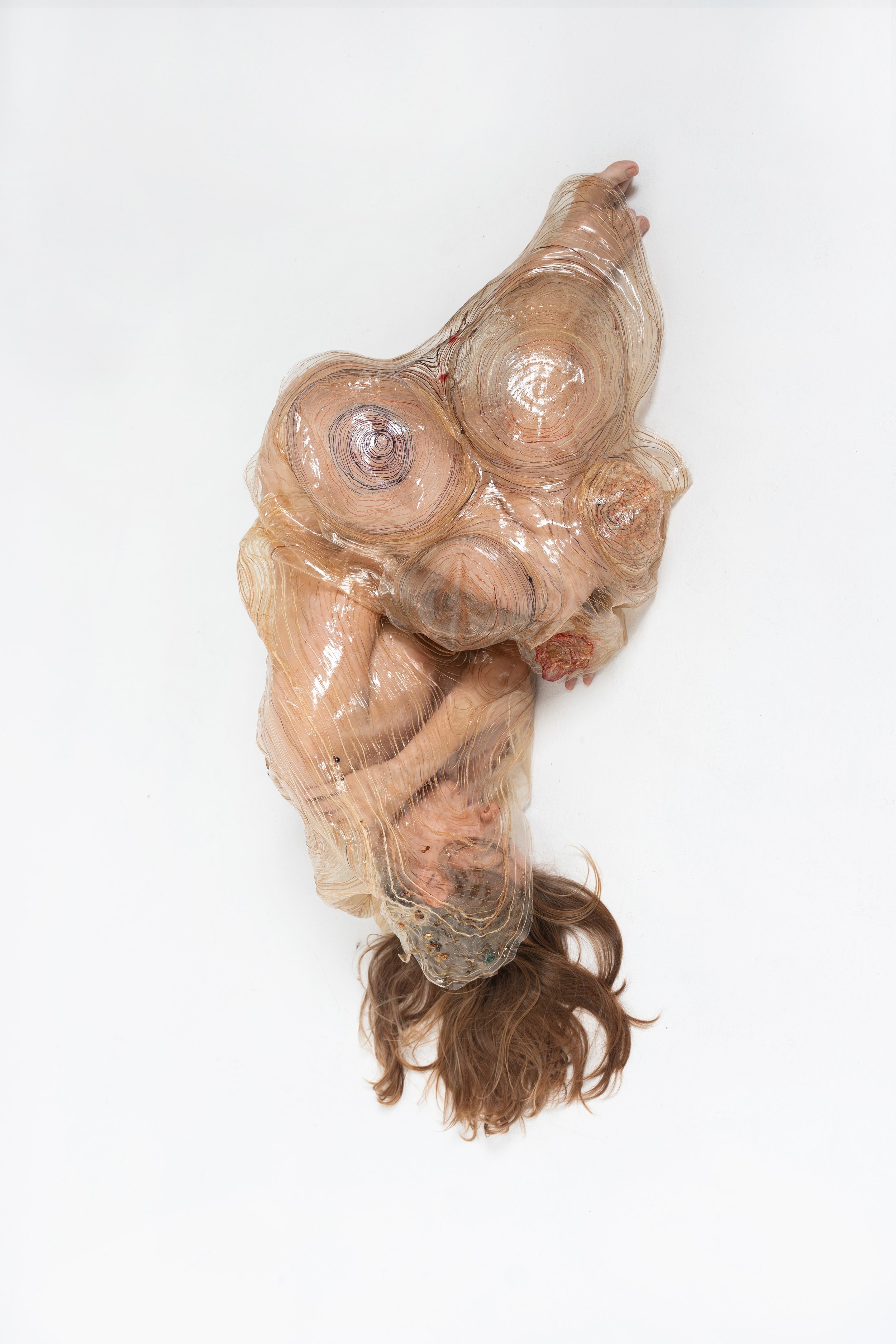
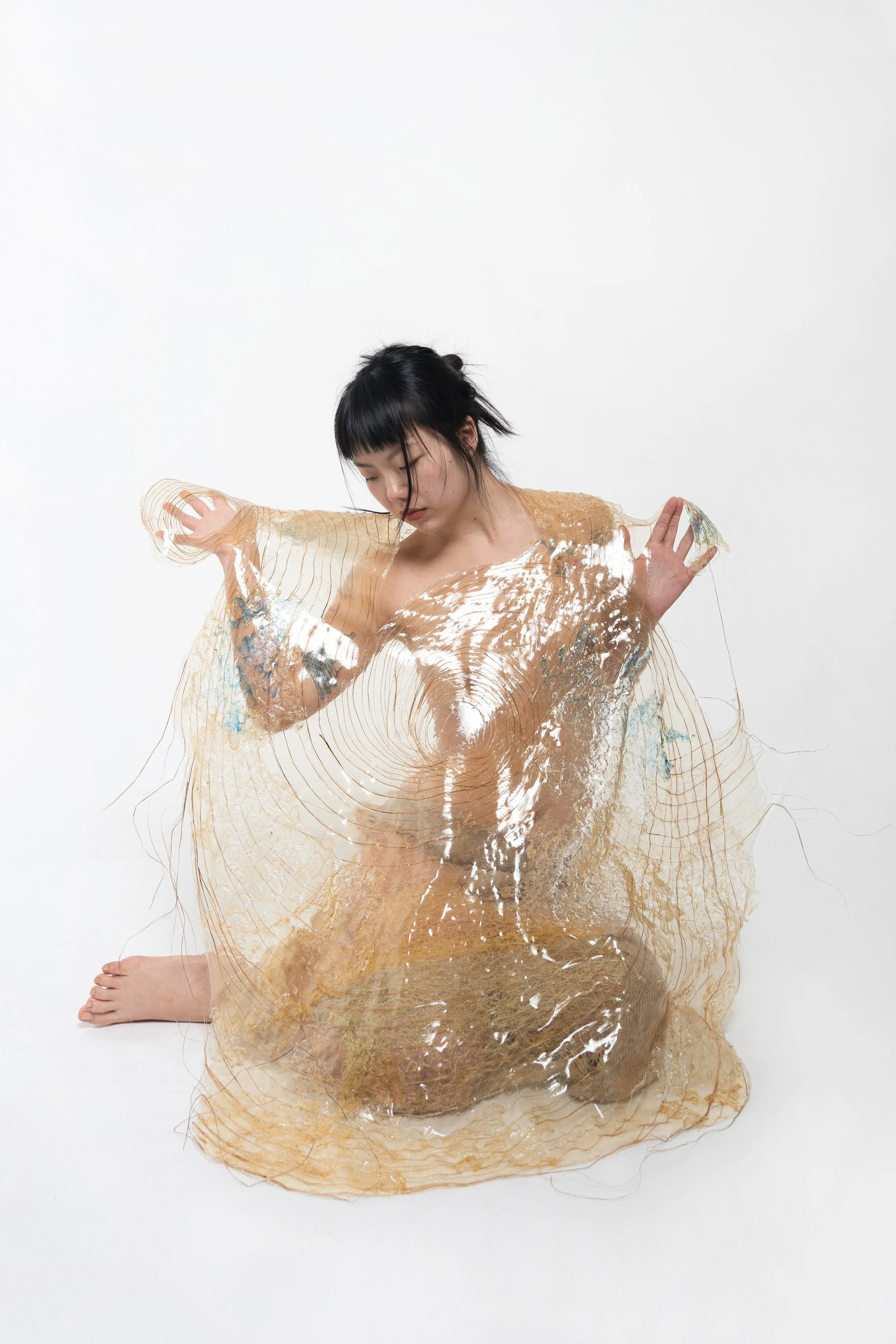
Negotiated Skin is an immersive, interdisciplinary solo exhibition by New York-based artist Freda Xinyue Xia, presented at Gallery 456, the visual arts exhibition space of the Chinese American Arts Council. Bringing together wearable sculpture, suspended fiber works, mineral-pigment paintings, and Chinese paintings, the exhibition creates an evolving environment in which soft sculptural forms and paintings enter into dialogue across body, material, time and space.
For this exhibition, Xia develops translucent, membrane-like forms through layering, suspension, collapse, and visible acts of repair. Instead of depicting the body directly, these works register its presence, moving between garment, sculpture, and installation. Alongside them, mineral-pigment paintings of heads glimpsed in New York City subway spaces offer a figurative counterpoint, tracing bodies in motion, proximity, and separation.
Across these media, Negotiated Skin explores boundaries between intimacy and exposure, abstraction and figuration, material fragility, and shared presence. Skin emerges not as a fixed border, but as a changing surface shaped by pressure, contact, and repair. Visitors are invited to move through the installation and encounter the work through proximity, movement, and perception.
Opening Reception: Sunday, September 20
6:00–9:00 PM
Closing Walkthrough / Artist Talk: Tuesday, September 22
6:30 PM – 7:30 PM
Chinese American Arts Council’s Gallery 456 Visual Arts Exhibition Series is made possible by the New York State Council on the Arts with the support of the Office of the Governor and the New York State Legislature.
Freda Xia is a multidisciplinary artist and designer based in New York. With a background in painting, fashion design, and textiles, she is currently pursuing an MFA in Textiles at Parsons School of Design. Her practice moves between biomaterials, wearable sculpture, soft textile structures, and installation. Working with hand-reeled raw silk, wool, fruit waste, and protein-based biomaterials, she creates membrane-like forms that explore bodily memory, rupture, repair, and transformation. Her work investigates textiles as living systems of protection, adaptation, and material alternatives to petroleum-based surfaces.

Textiles Close Up
Join a live virtual roundtable hosted by the Textile Society of America, bringing together curators, scholars, and artists from Central New York to explore the dressed body, wearable innovations, and how textiles shape identity. Wednesday, September 23, 2026, 12:00–1:30 PM online.
Rethinking Textiles in an Age of Waste
Online/ Talk / Dyeing
Rethinking Textiles in an Age of Waste: A Study of Japanese Traditional and Contemporary Textiles, based on a year of field research in Japan.
This talk presents research and findings from Larissa Zemke's Master's thesis, Rethinking Textiles in an Age of Waste: A Study of Japanese Traditional and Contemporary Textiles, developed through a year of field research in Japan (2019–2020). Using a research-creation methodology, the project examines how traditional Japanese textile practices and philosophies offer lessons for textile sustainability today, with a focus on translating those insights into the activewear industry.
Drawing on archival research, interviews with artisans, and hands-on material experimentation, the talk explores how Japan's textile heritage, from bast fiber cultivation to traditional dye and weaving practices, informs more circular, less wasteful approaches to material design. Larissa shares how these findings shaped tangible design proposals, illustrating how traditional knowledge can inform contemporary innovation in fast-moving, high-waste sectors like activewear.
Attendees will gain insight into Japan's textile traditions as a living case study for sustainability, practical frameworks for applying historical practices to modern material challenges, and a window into research-creation as a methodology bridging academic research and design practice.
This talk is ideal for designers, brands, and researchers seeking grounded, culturally rich approaches to rethinking material use and waste in the fashion industry.

Larissa Zemke is a textile expert and material innovator focused on sustainability, natural fibers, and circular practices. Her international career across New York, Paris, Vienna, Kyoto, and Montreal spans print and embroidery, knitwear, leatherwork, dyeing, visual merchandising, and product management. She has contributed to an open-source textbook on corporate social responsibility published by SUNY, and is currently co-authoring a fashion-sector edition of the book.
Larissa holds a Bachelor's degree from the Fashion Institute of Technology and a Master's in Design from Concordia University (2023), rooted in a year of field research in Japan on sustainable fiber systems. She aims to advance innovation across the global apparel industry.
Larissa Zemke's consulting practice supports brands and institutions in advancing circular, responsible material practices through slow fashion frameworks and design with care. Her work has been shared through exhibitions, talks, workshops, and publications at leading design schools in New York, Montreal, and London. Recent collaborations include developing a biodegradable insulated jacket with Quebec industry partners and research conducted with Harvard's Innovation Lab.
She is also building a personal platform dedicated to slow fashion and sustainability. Larissa is open to interdisciplinary collaborations driving circular innovation across the global fashion industry.

Soil to Surface
In person / Exhibition / Dyeing
Soil to Surface highlights the creations of small-scale women farmers, women’s cooperatives, and internationally recognized designers from Türkiye, alongside the work of School of Art and Design students, faculty, and alumni at the Fashion Institute of Technology (FIT). Proposing an alternative framework where farmers, craftspeople, and designers operate on equal ground, the exhibition sees the FIT community actively reimagining these materials for contemporary design through technical experimentation and innovative thinking.
Agricultural waste and local textile materials are repositioned in a contemporary context, allowing multiple narratives to emerge across time and geographies, while creating new paths for creative businesses to be local, sustainable, and value-driven.
Central to this process are women farmers and women’s cooperatives in Türkiye, whose knowledge, labor, creativity, and lived experience have transformed agricultural byproducts into new material possibilities. Their relationship with the land has been cultivated across generations. Working with pomegranate peels, walnut husks, nettle leaves, onion skins, bay leaves, and barley straw, they transform these materials into plant-based dyes, paperlike surfaces, and handcrafted embellishments. By integrating agricultural production with artistic practice, Soil to Surface challenges conventional hierarchies and suggests a more inclusive and socially just model for creative collaboration.
The exhibition opens on Thursday, September 24 and is on view at the FIT Art and Design Gallery through November 1, 2026.
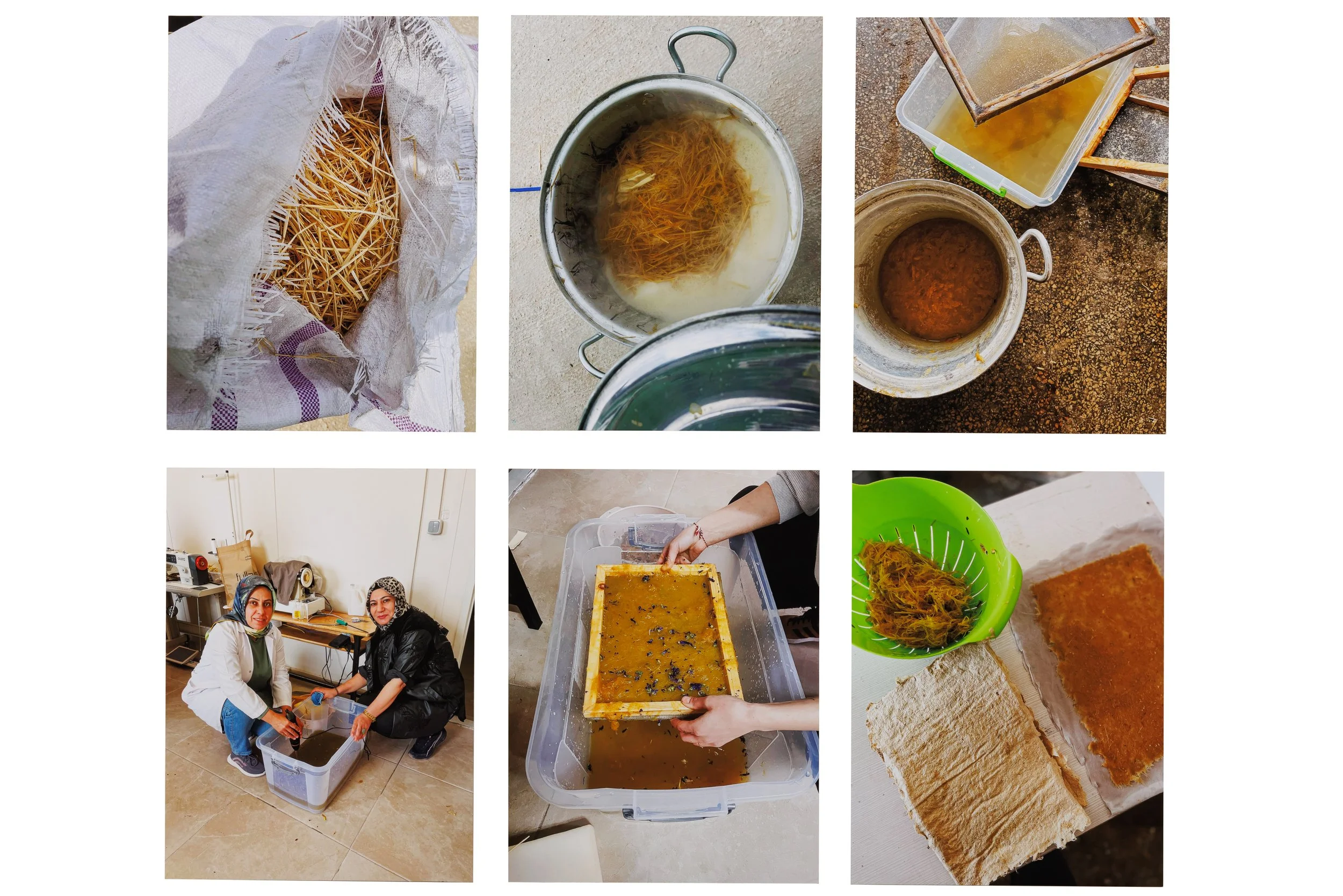

The Art and Design Gallery at FIT showcases the work of students, faculty, and distinguished alumni, as well as invited guest artists and collaborators. It is a window into the College and a window out. The exhibition spaces serve as a place to foster learning and innovation.
Breathing Patterns
In person/ Exhibition / Embroidery
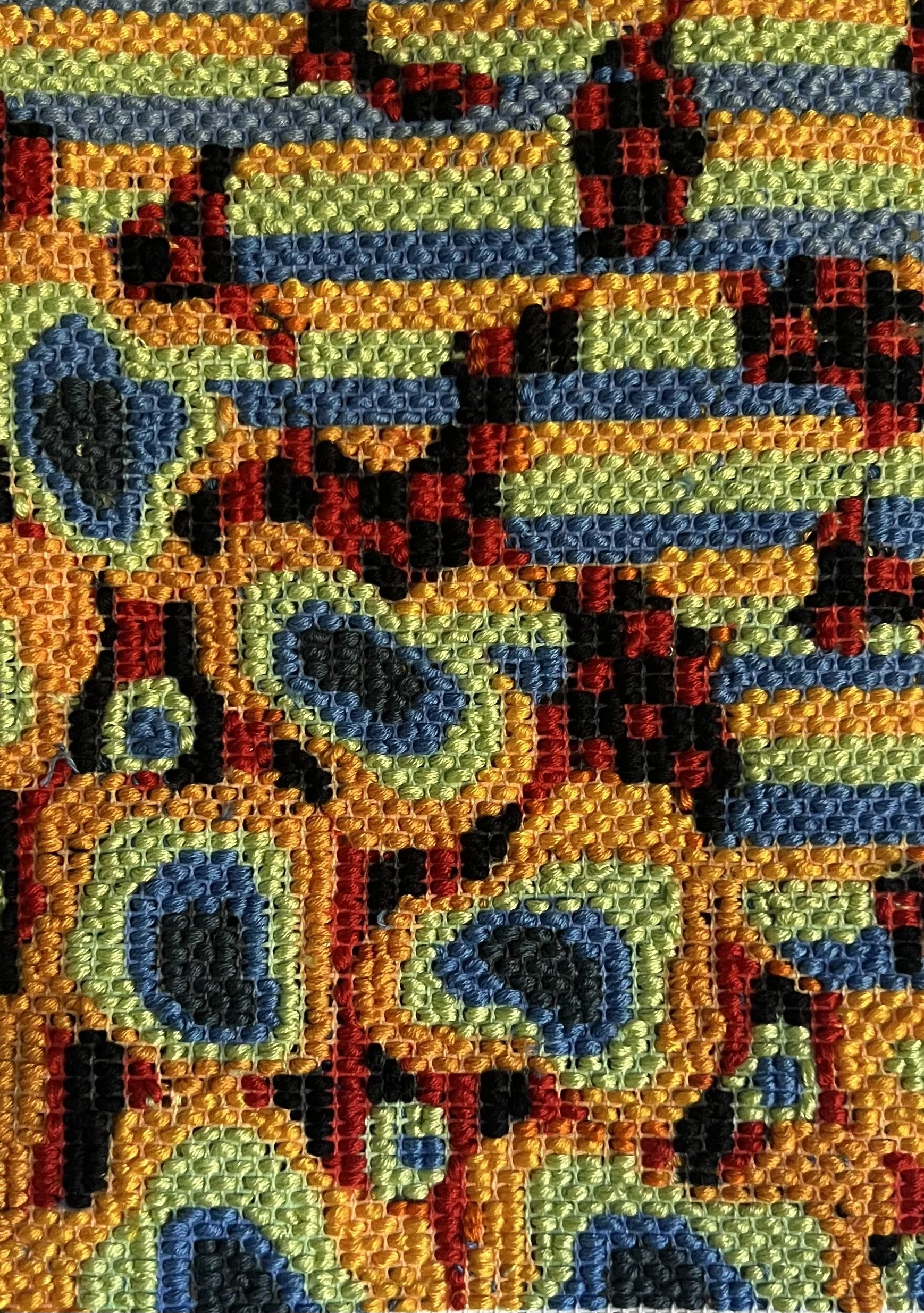
Breathing Patterns is an exhibition of hand-embroidered wall works and accompanying scent compositions that explore geometry as a living, embodied system. Created through slow, repetitive hand needlework, the embroidered forms draw on geometric patterning as a language of structure, care, and endurance. Each stitch accumulates time, marking the quiet labor of the hand while transforming rigid systems into intimate, tactile surfaces.
The geometric patterns suggest order and repetition, yet they are never mechanical. Slight irregularities—inevitable in handwork—introduce breath, vulnerability, and presence. These deviations become central to the work, emphasizing the body behind the pattern and the feminist lineage of needlework as both domestic labor and creative resistance.
Scent functions as an invisible counterpart to the stitch. Developed in dialogue with the embroidered forms, the fragrances move through space as thread moves through cloth—activating memory, emotion, and physical awareness. Rather than illustrating the visual works, scent extends them, allowing the patterns to be felt as atmosphere and duration.
Together, embroidery and fragrance invite a slower mode of attention. Breathing Patterns proposes making and sensing as acts of care, where repetition becomes meditative and geometry becomes intimate—measured not only by the eye, but by the body in time and breath.
No registration required!
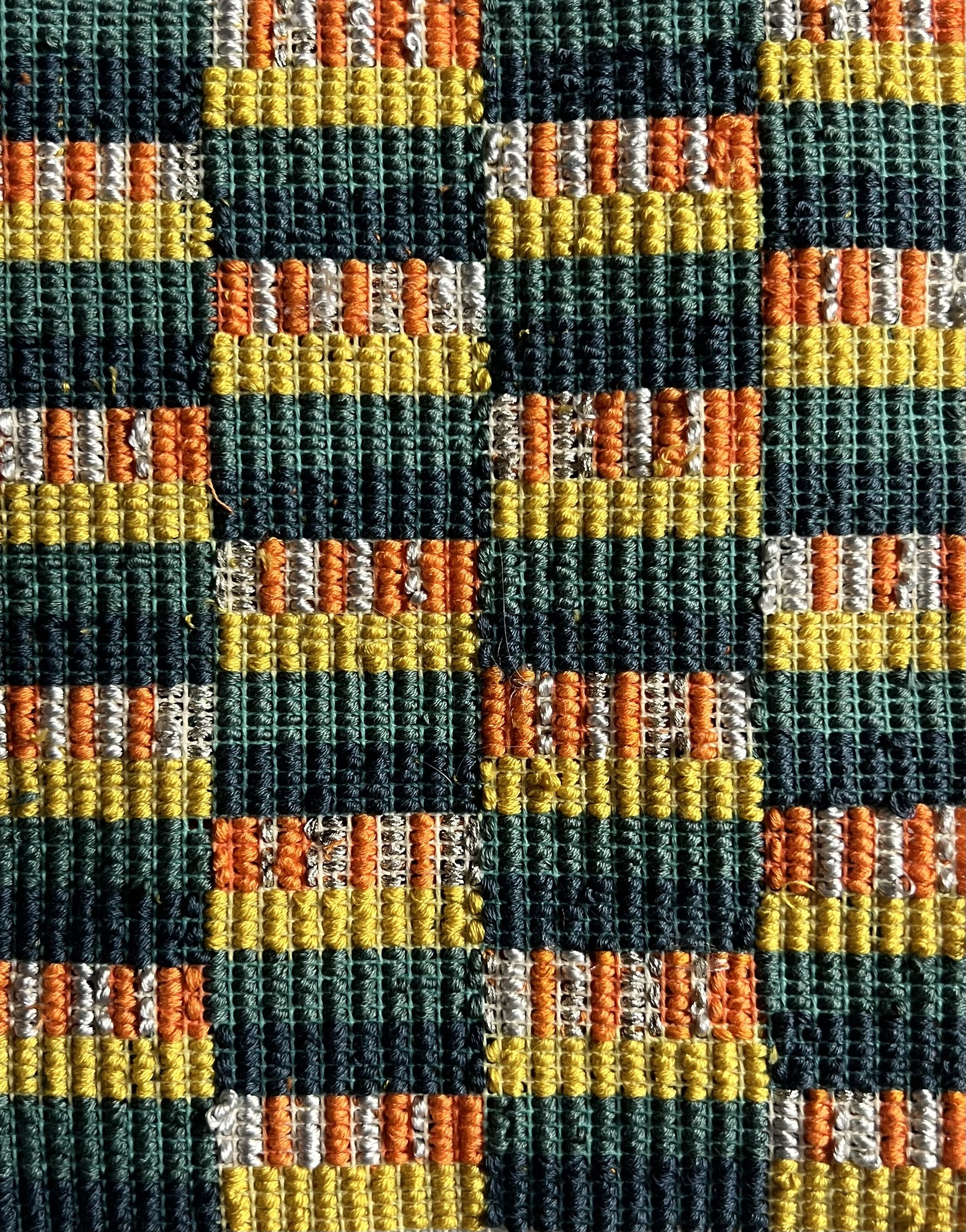
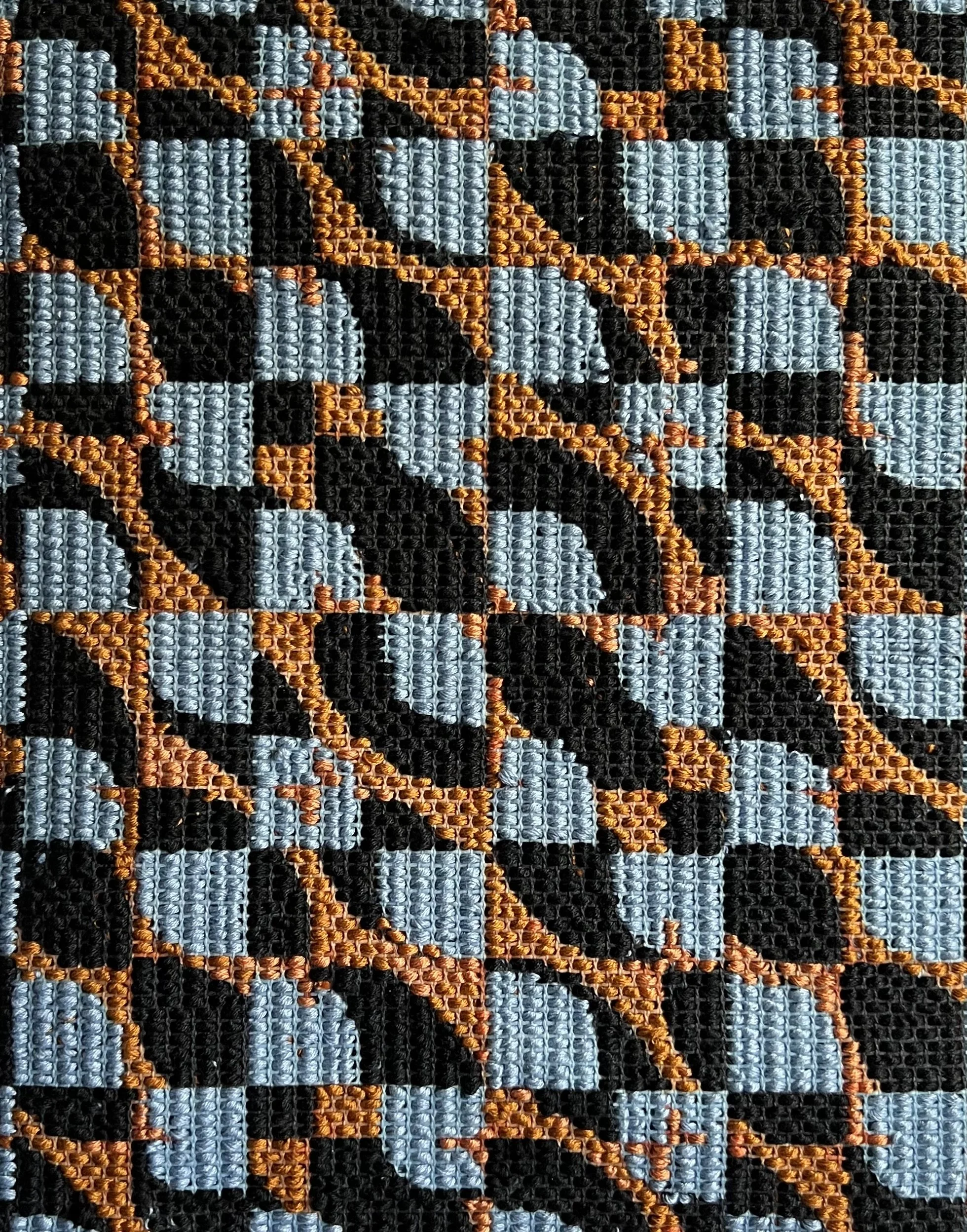
Anna Novakov is an interdisciplinary artist working across textile, scent, and installation. Rooted in traditions of hand needlework, her practice draws on Serbian cultural heritage and the labor of domestic craft to explore memory, lineage, and embodied knowledge. She integrates olfactory elements to extend the sensory experience beyond the visual, creating immersive environments that engage touch, smell, and sound. Her work often examines themes of diaspora, transformation, and intimacy, positioning the handmade as both material and method. Through repetition and subtle variation, Novakov constructs poetic spaces where personal and collective histories quietly converge.
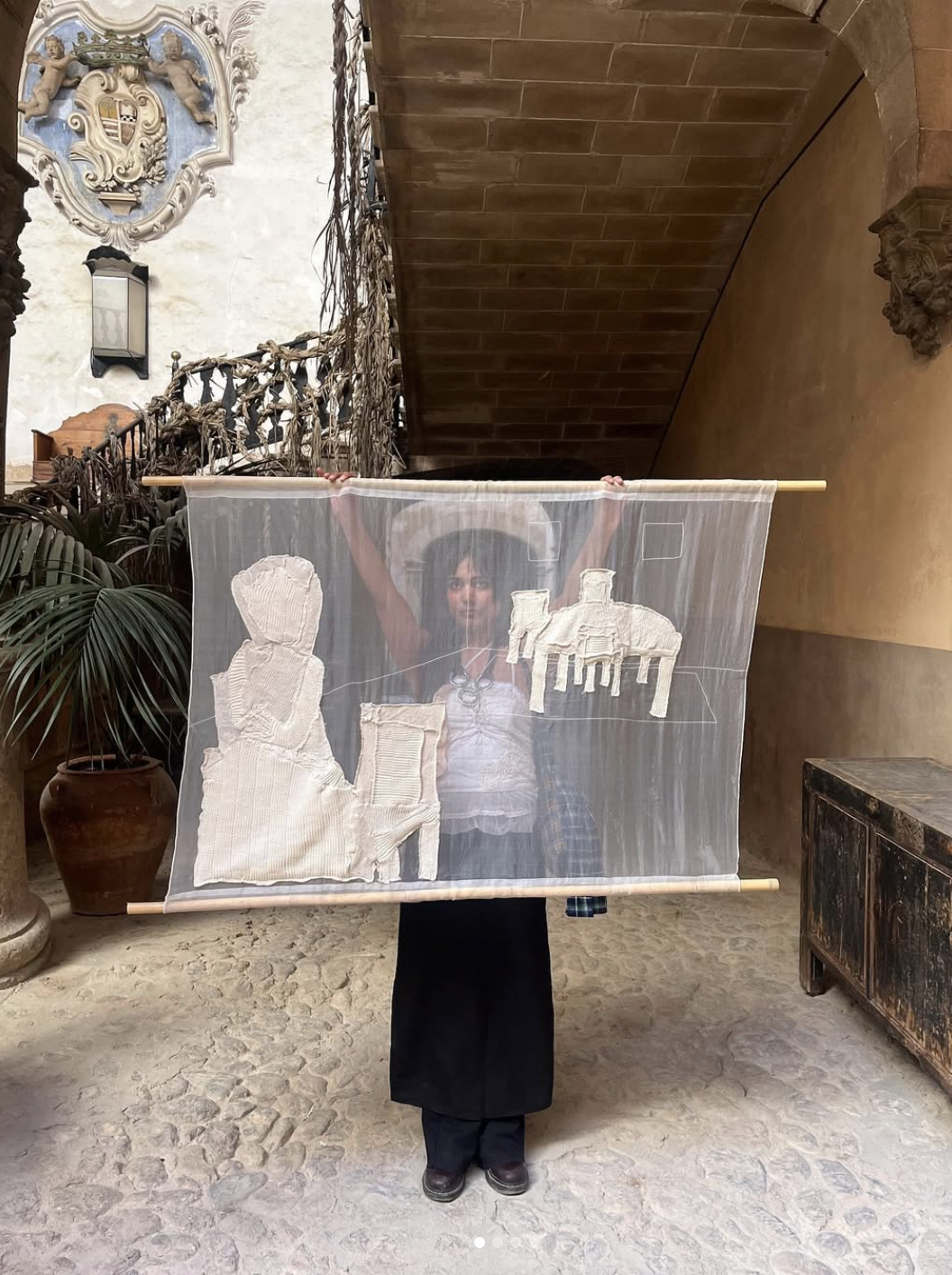
Contemporary @ Heirloom presents Shradha Kochhar: Elongating Time
Contemporary @ Heirloom presents Shradha Kochhar, a Brooklyn-based textile artist whose hand-spun, hand-knitted khadi sculptures made with indigenous kala cotton explore material memory, invisible labor, and South Asian narratives. Opening September 24, 2026.

From Farm to Fabric: Indigo Cultivation in the Lowcountry
Online/Workshop / Textile Industry
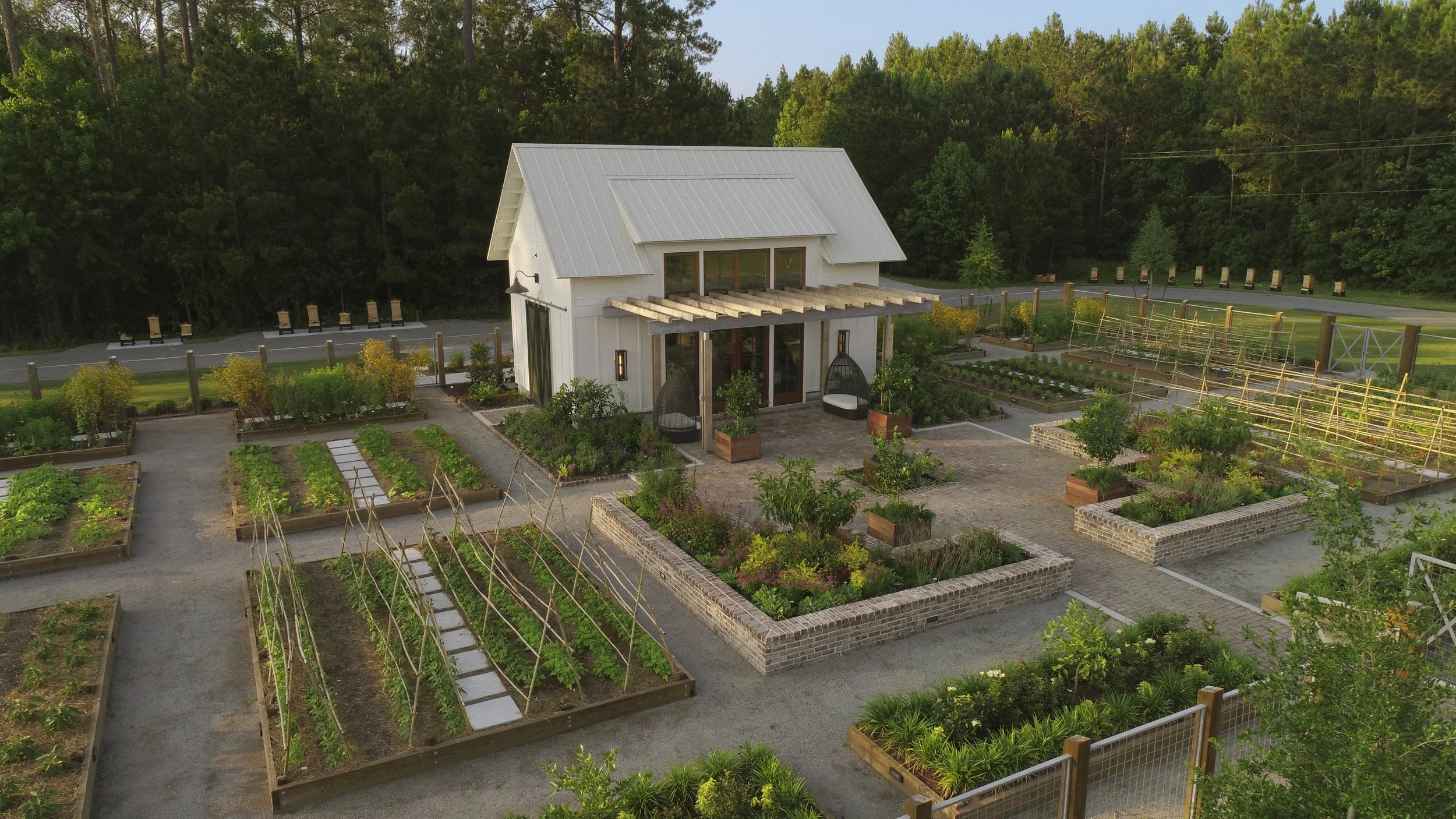
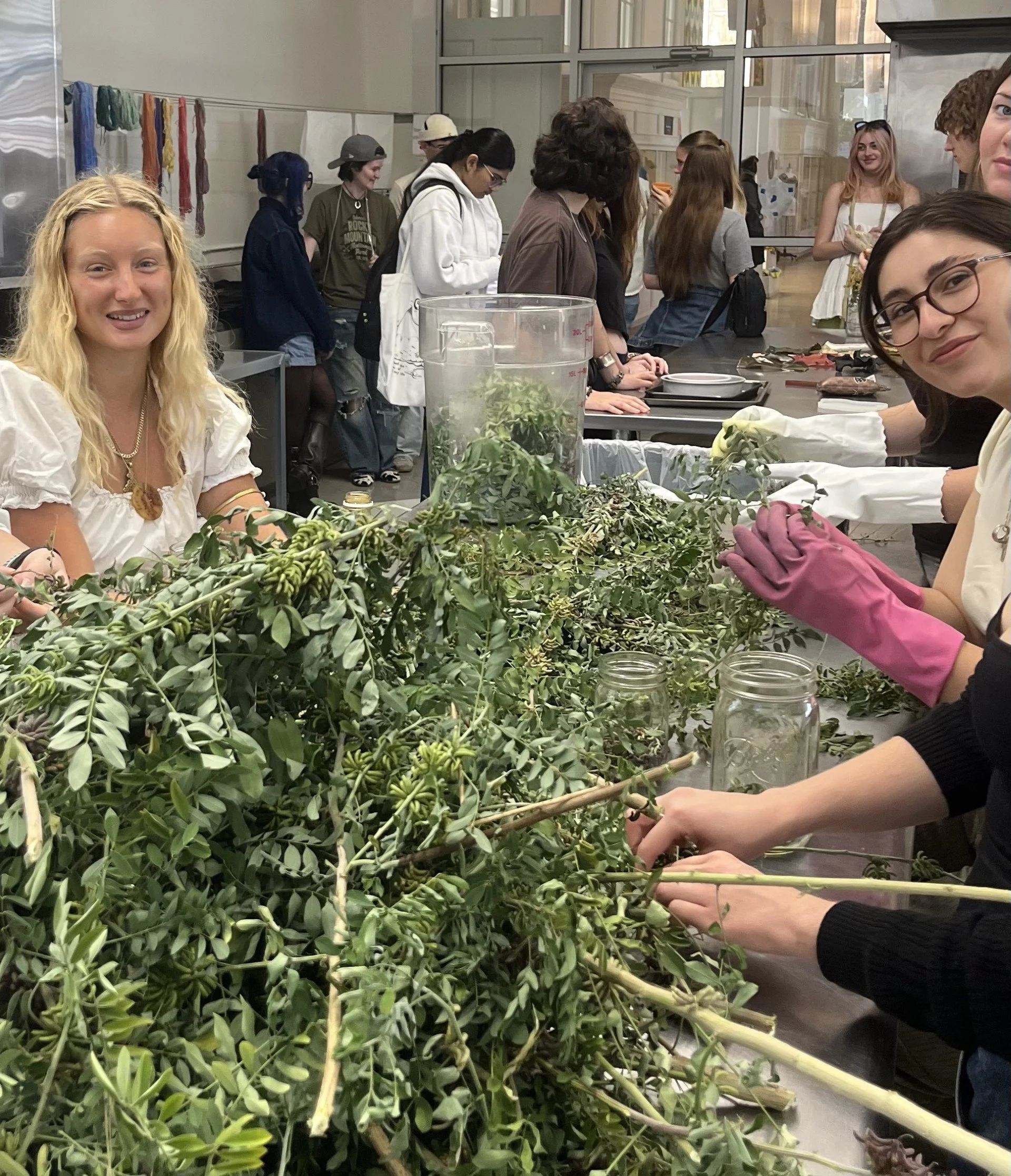
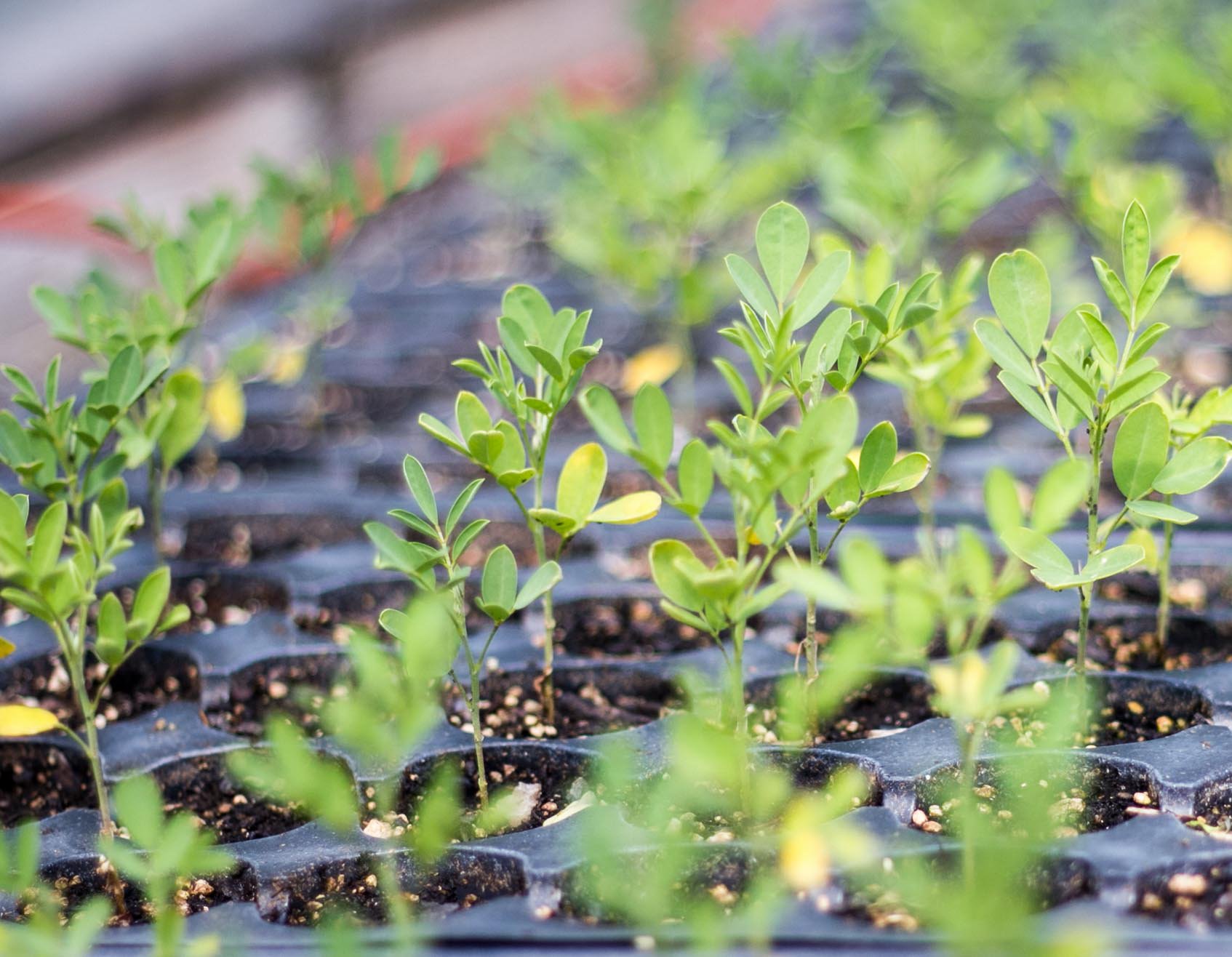
Join Heather Powers, President of the International Center for Indigo Culture and SCAD alumna (Fibers BFA, 1998), and Professor Jessica Smith as they guide Fibers students through cultivating and processing Indigofera suffruticosa at the BACK40, SCAD's sustainable urban farm.
This virtual program is designed to educate consumers, artists, and farmers about the importance of this irreplaceable regional agricultural and cultural resource. It explores indigo's history in the Lowcountry, the coastal region from north of Charleston, South Carolina, through Savannah, Georgia, to Jacksonville, Florida. Once a major colonial cash crop and source of the region's iconic deep blue dye, indigo is now being revived by Gullah Geechee farmers and artisans to preserve cultural heritage, sustain family lands, and produce natural, non-toxic dyes.
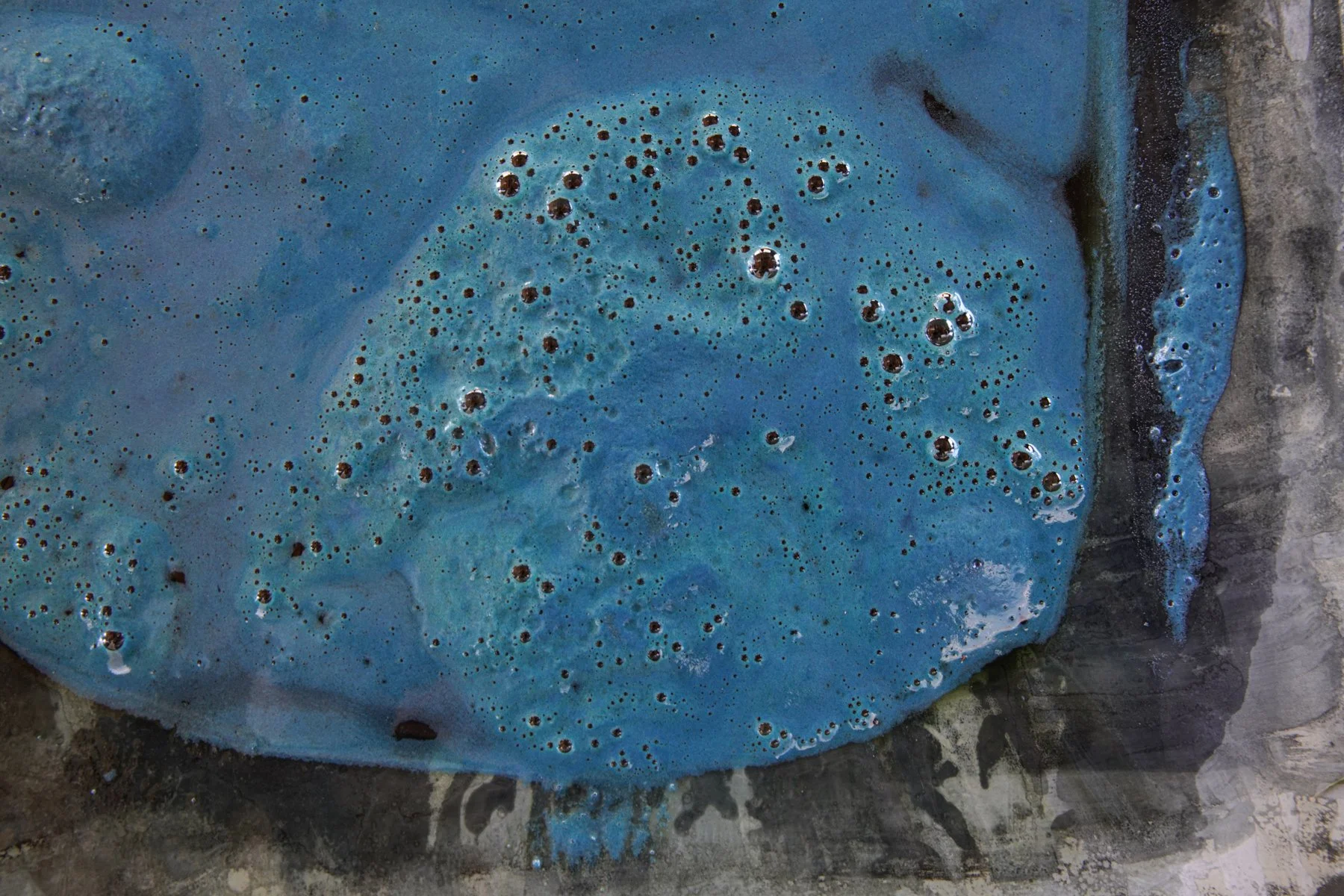
Over two days, the SCAD Fibers department and Heather Powers demonstrate cultivating and processing indigo leaves into dyestuff, covering harvest, fermentation, filtration, drying, and storage.
Day One - Thursday, September 24, 12:00 PM – 1:30 PM
Examines indigo's significance as both cash crop and art form, including tools and methods used by enslaved people, many from West African indigo-dyeing traditions, and how contemporary artists and farmers carry the practice forward today. As students harvest plants, Heather will demonstrate a fresh-leaf vat using freshly picked leaves.
Day Two - Friday, September 25, 10:00 AM – 2:00 PM
Covers pigment extraction, an all-day process open to tune in and out of, culminating in filtration of the extracted indigo for drying and storage.
All stages will be recorded and shared with registered participants afterward.
Jessica Smith is an artist and designer based in Savannah, Georgia. Her studio practice investigates the social and political role of textiles in Western culture, with a focus on authentic material production, from natural dye to 3D printing. She is a fibers professor at SCAD and co-author of Overshot (UGA Press, 2020).
Heather Powers career in textiles began with a BFA in Fibers (SCAD). Her creative practice (weaving & natural dyeing) informs her projects as a collection consultant and appraiser across design, research, and education. In 2021, she earned an MA in Historical Craft and directs the International Center for Indigo Culture.
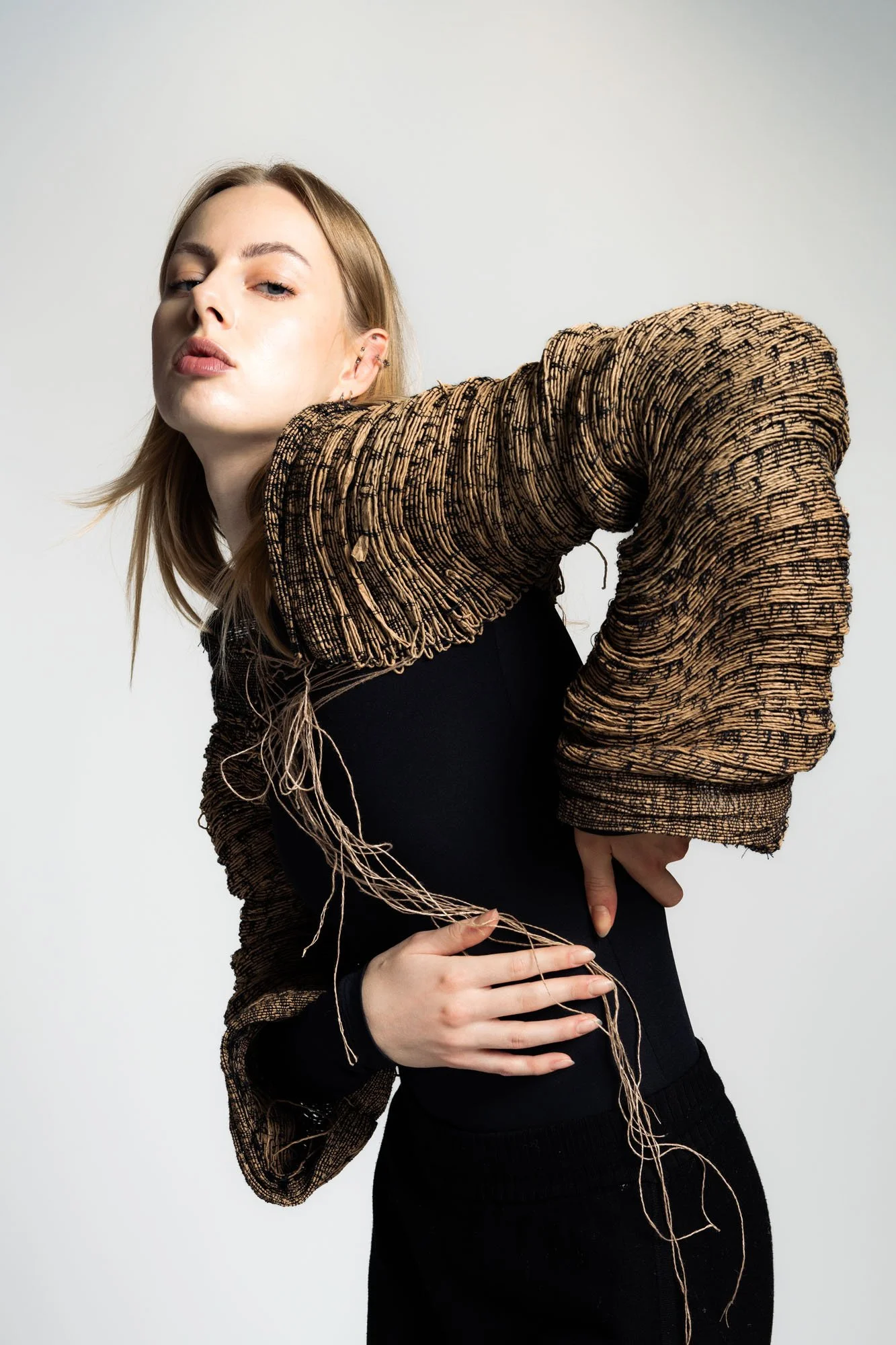
Tour de Tools. Hacking the weaving tools
A live online tour of the Textile Department at Pallas University of Applied Sciences, showcasing DIY-modified weaving tools and student work that challenges conventional weaving techniques. Friday, September 25, 2026, 2:00–3:00 PM.
Growing, Gathering, and Generating: Pathways and Possibilities for Native North American Fiber Plants
Online/ Talk / Processing & Spinning
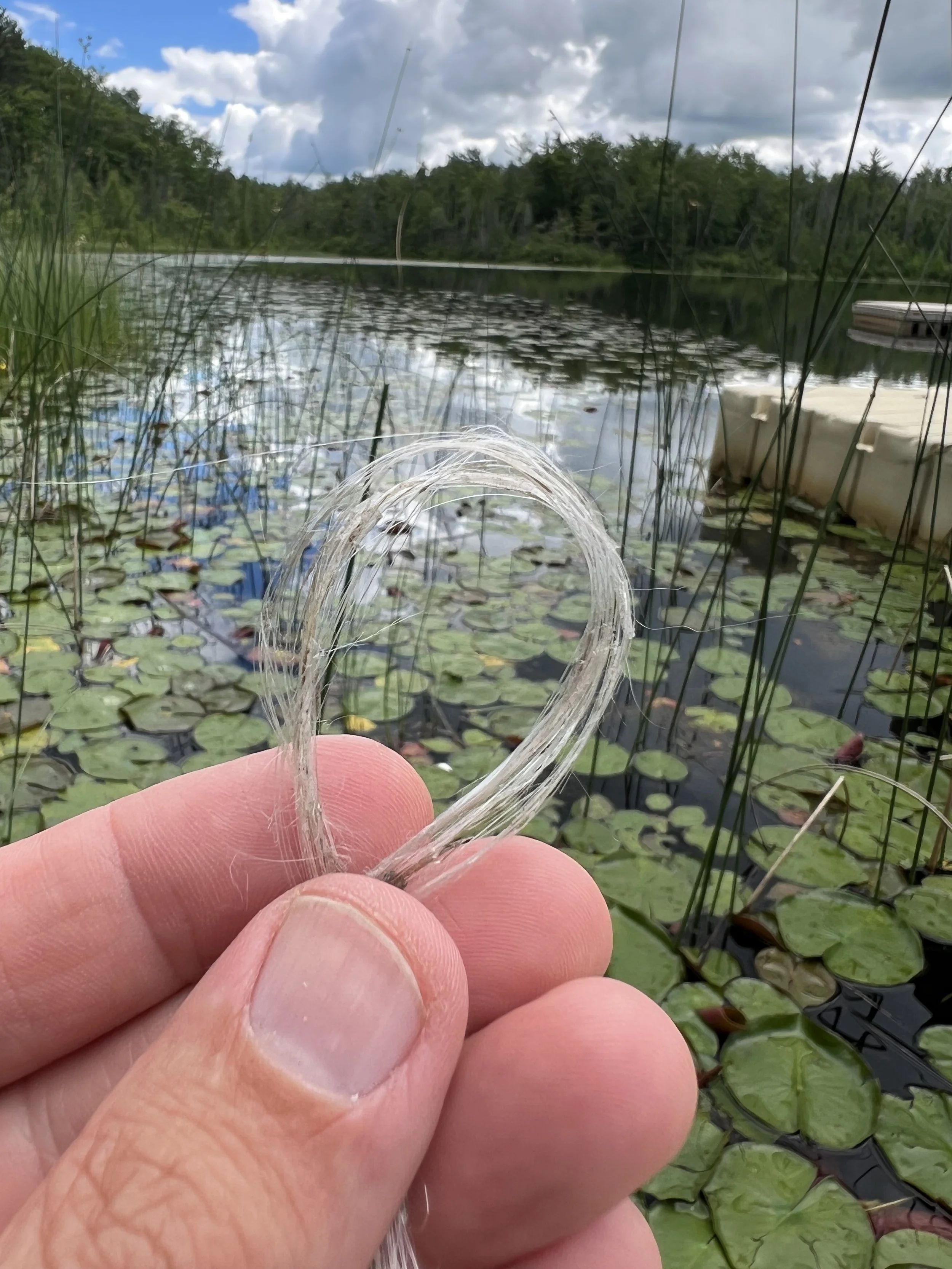
Mitch Frank will present alongside two University of Wisconsin–Madison undergraduate researchers on the varied potential of North American fiber plants. The talk will explore growing, gathering, and processing plants for textile fiber, as well as opportunities to make use of other plant materials and processing byproducts.
Frank will discuss his ongoing research into native North American plants that produce bast fiber with qualities similar to flax and hemp, including approaches to cultivation, responsible gathering, and processing fiber for yarn and textiles. Undergraduate researchers will present two related material studies that look beyond the production of conventional fiber. One project explores the use of woody hurds and shive left after fiber processing to create biocomposite materials. The other investigates native fiber plants as alternative cellulose feedstocks for regenerated fibers.
Together, these projects consider how fiber plants might provide multiple useful material streams and how greater use of perennial and naturally occurring species could expand the range of plants considered for textile and material production.
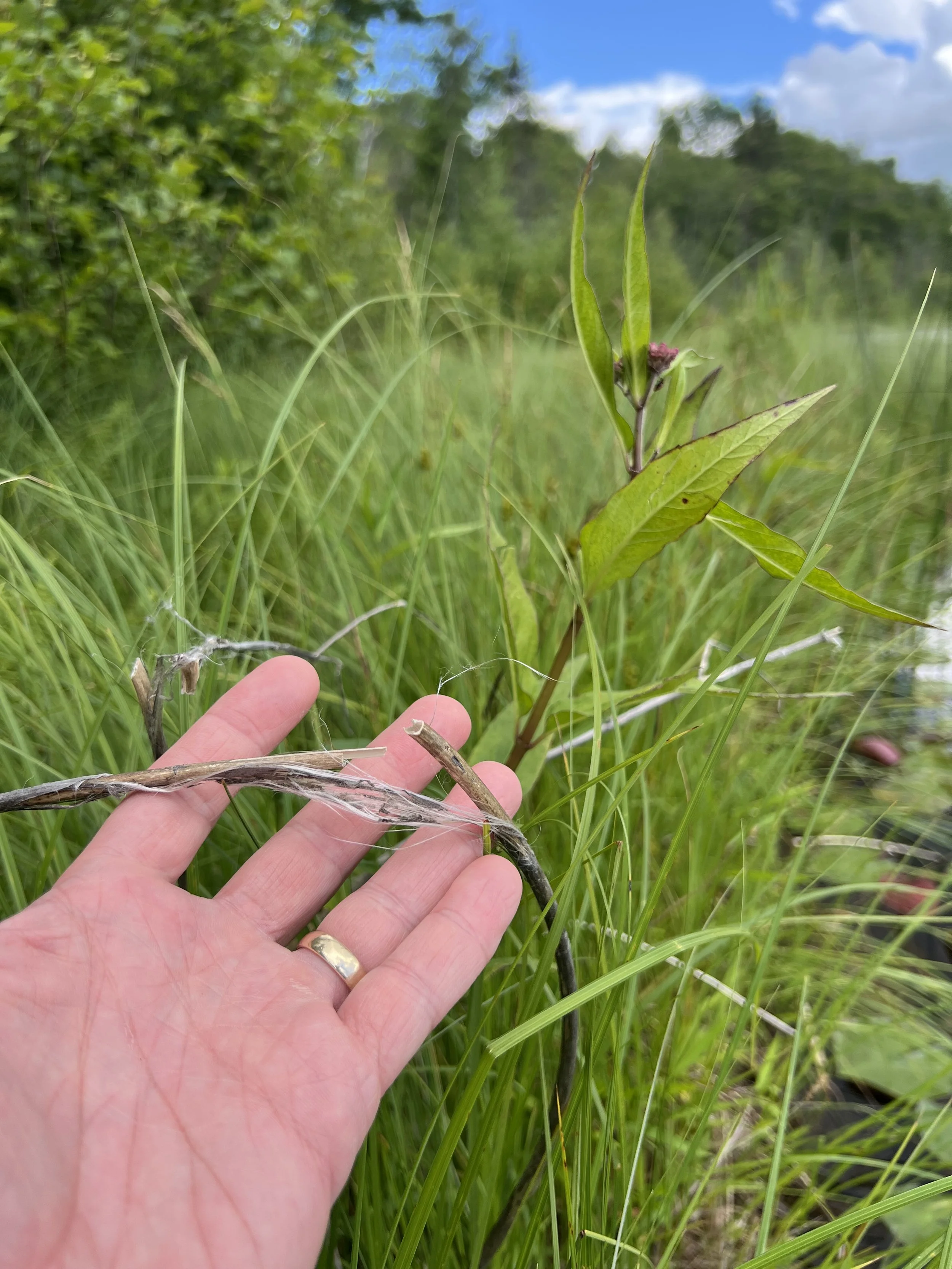
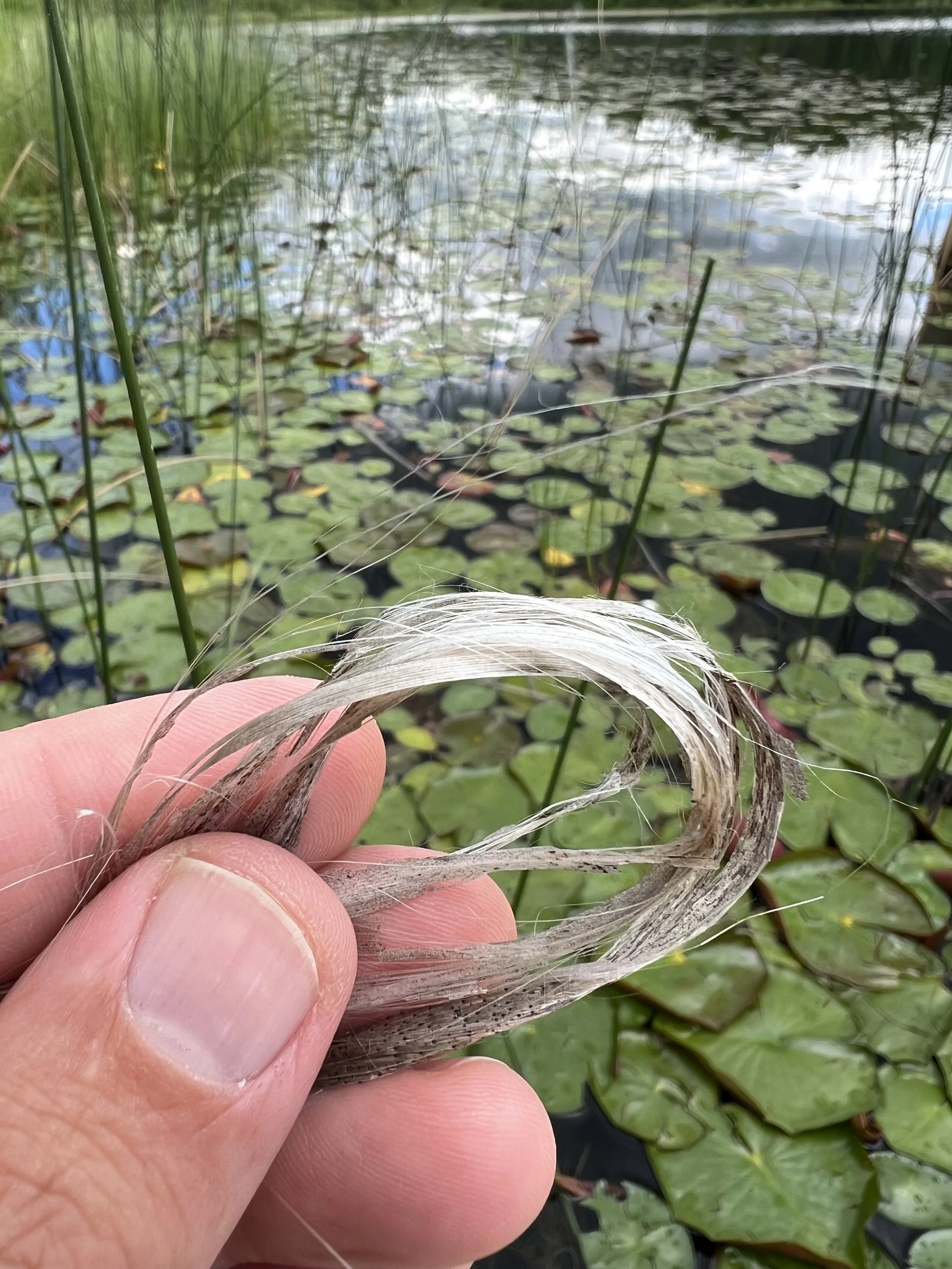
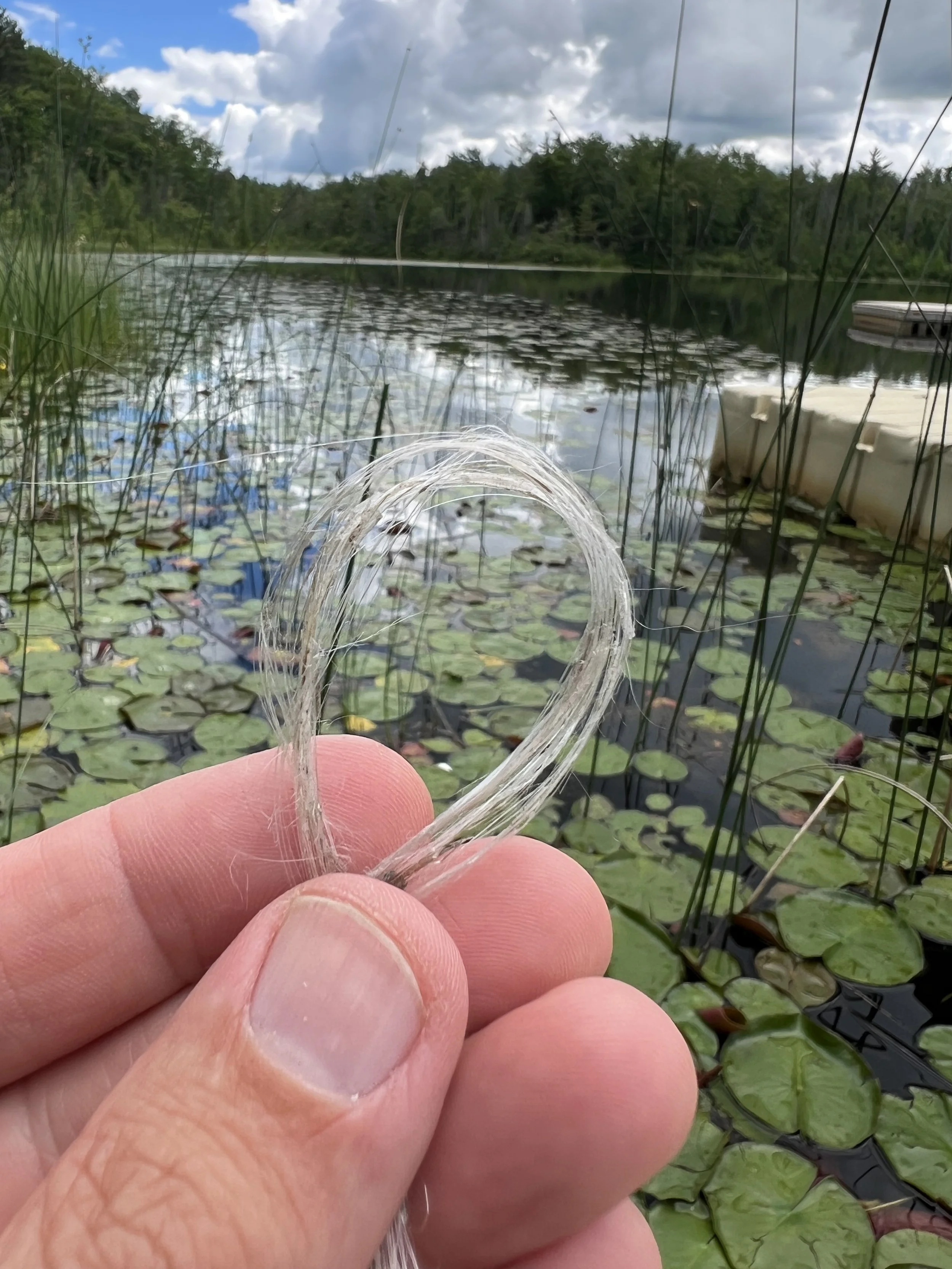
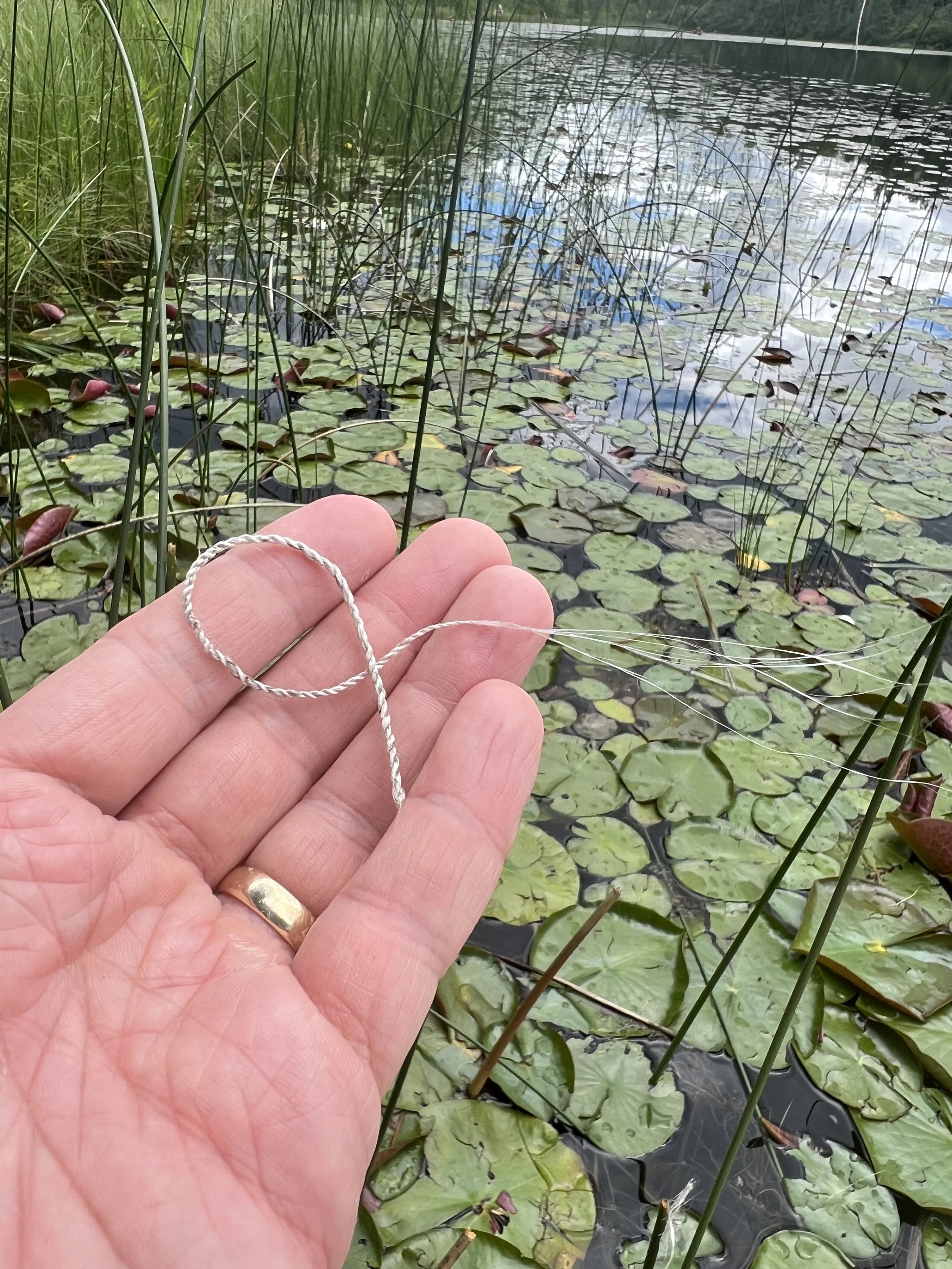
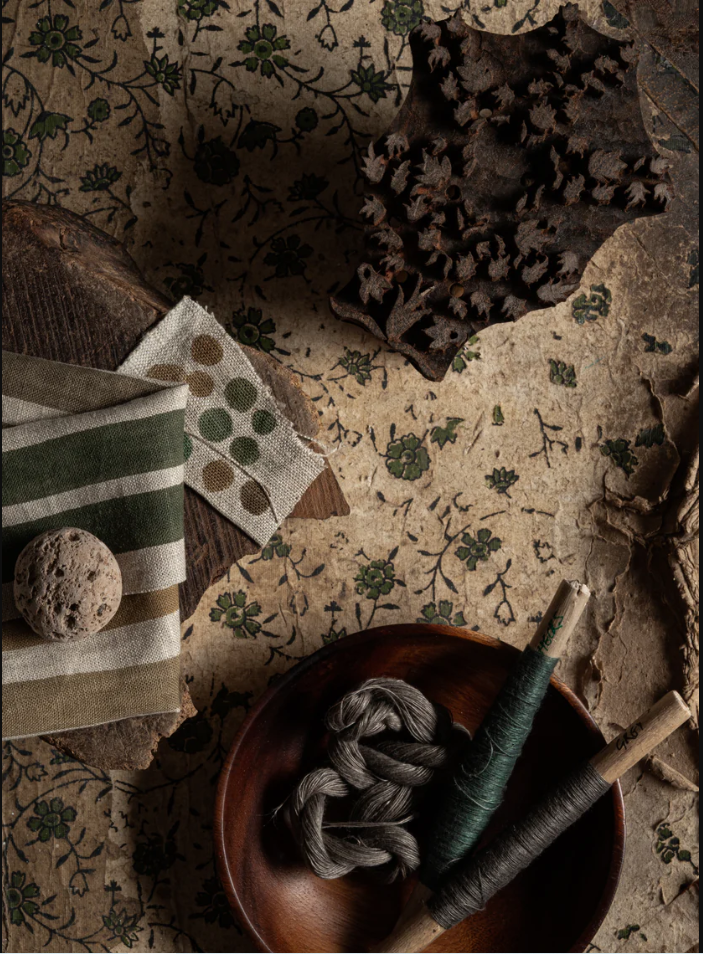
Blue Star Line is a project by educator and designer Mitch Frank. “Line” is a trade term for the long fibers that can be harvested from the stems of some plants. Line fiber is used to make strong yarn for weaving and knitting.
Textile Stories: The Art of Block Printing
Sooteē invites visitors into an immersive exhibition and hands-on block printing workshop celebrating India's textile heritage—hand block printed and handwoven textiles, Shisha mirror work embroidery, and the artisans who preserve these traditions. Friday, September 25, 2026, 1:00–5:00 PM.
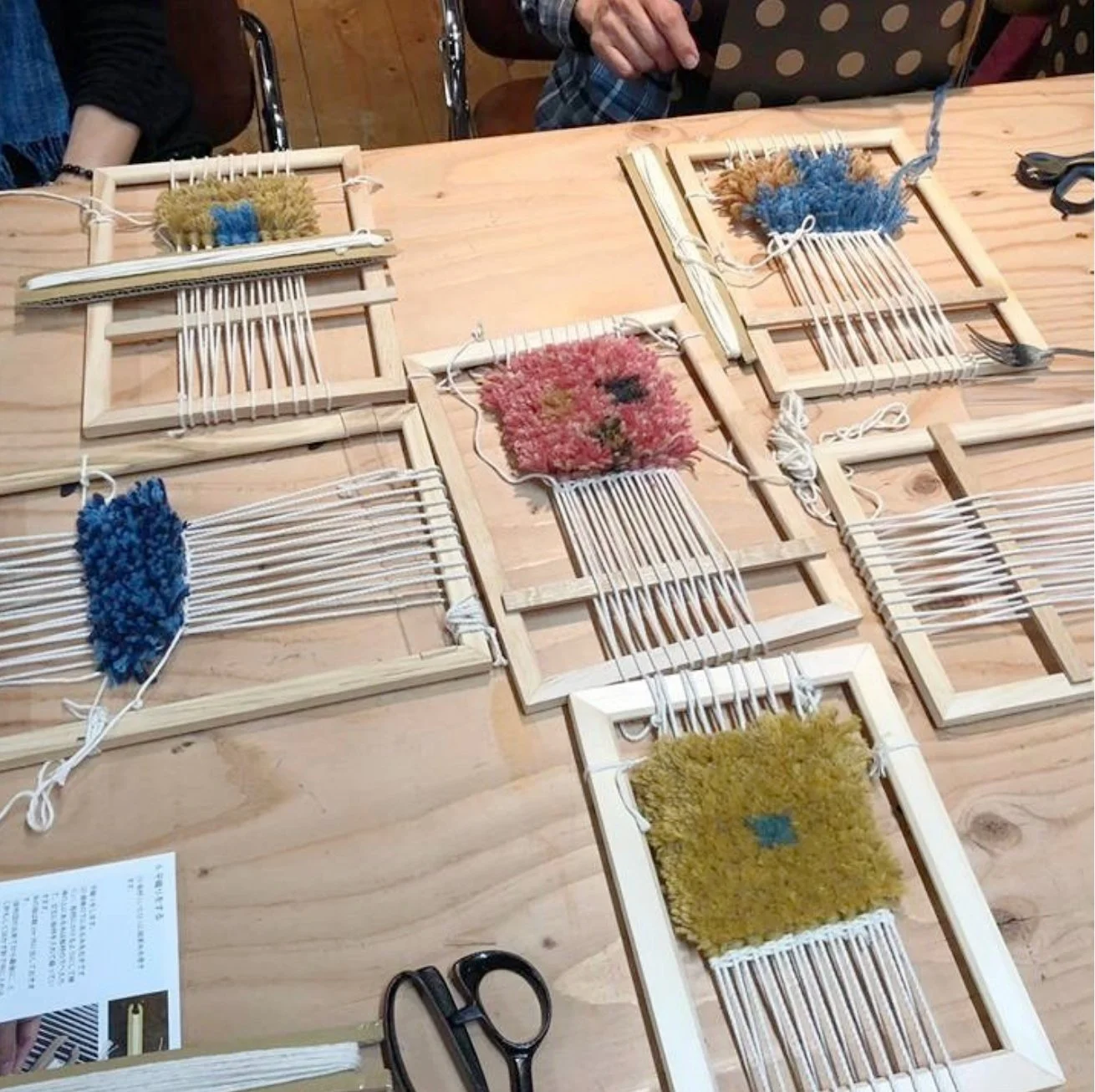
Knotting Sampler Workshop with Toyomi Harada
Looking for things to do in New York this September? Learn the Turkish knotting technique on a mini frame loom with instructor Toyomi Harada at Loop of the Loom — September 26 at the UES studio, September 27 in DUMBO — part of New York Textile Month.
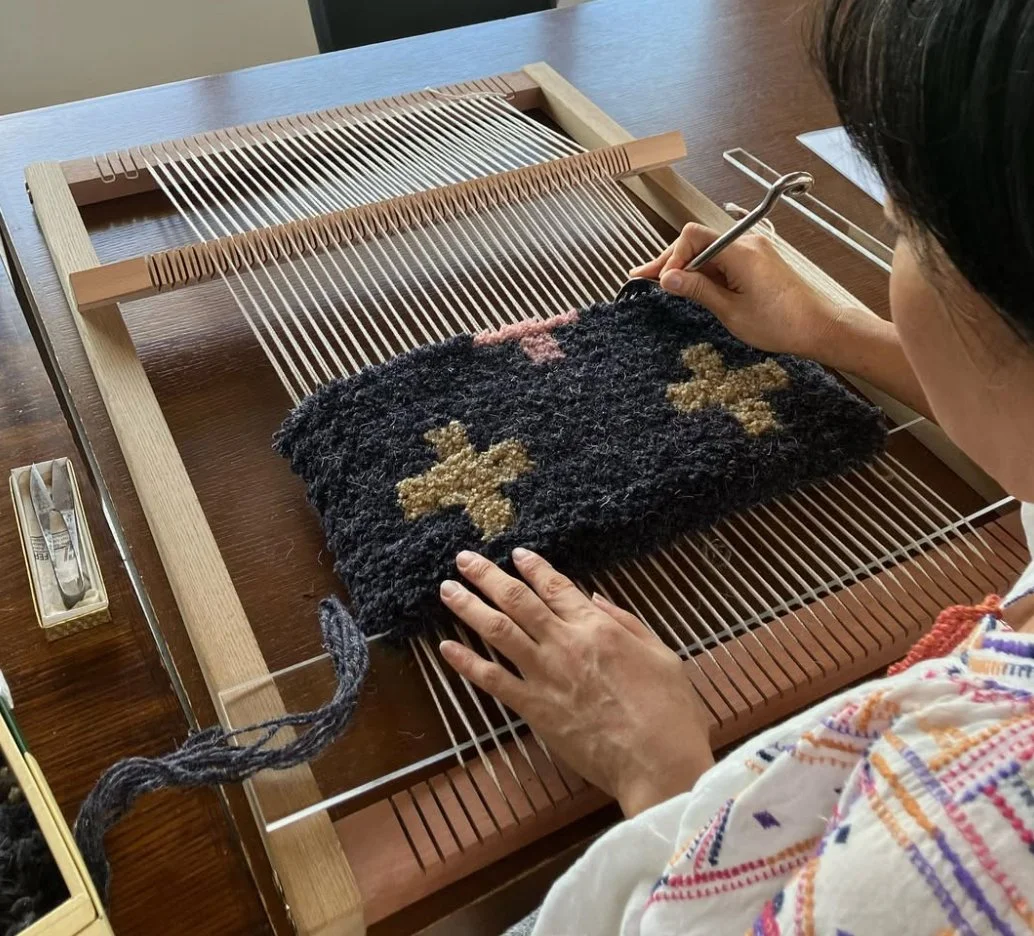
Where Every Rug Begins: A Full-Day Knotting Workshop by Noriko Yamanaka
Looking for things to do in New York this September? Learn the Turkish knotting technique on a mini frame loom with instructor Toyomi Harada at Loop of the Loom — September 26 at the UES studio, September 27 in DUMBO — part of New York Textile Month.
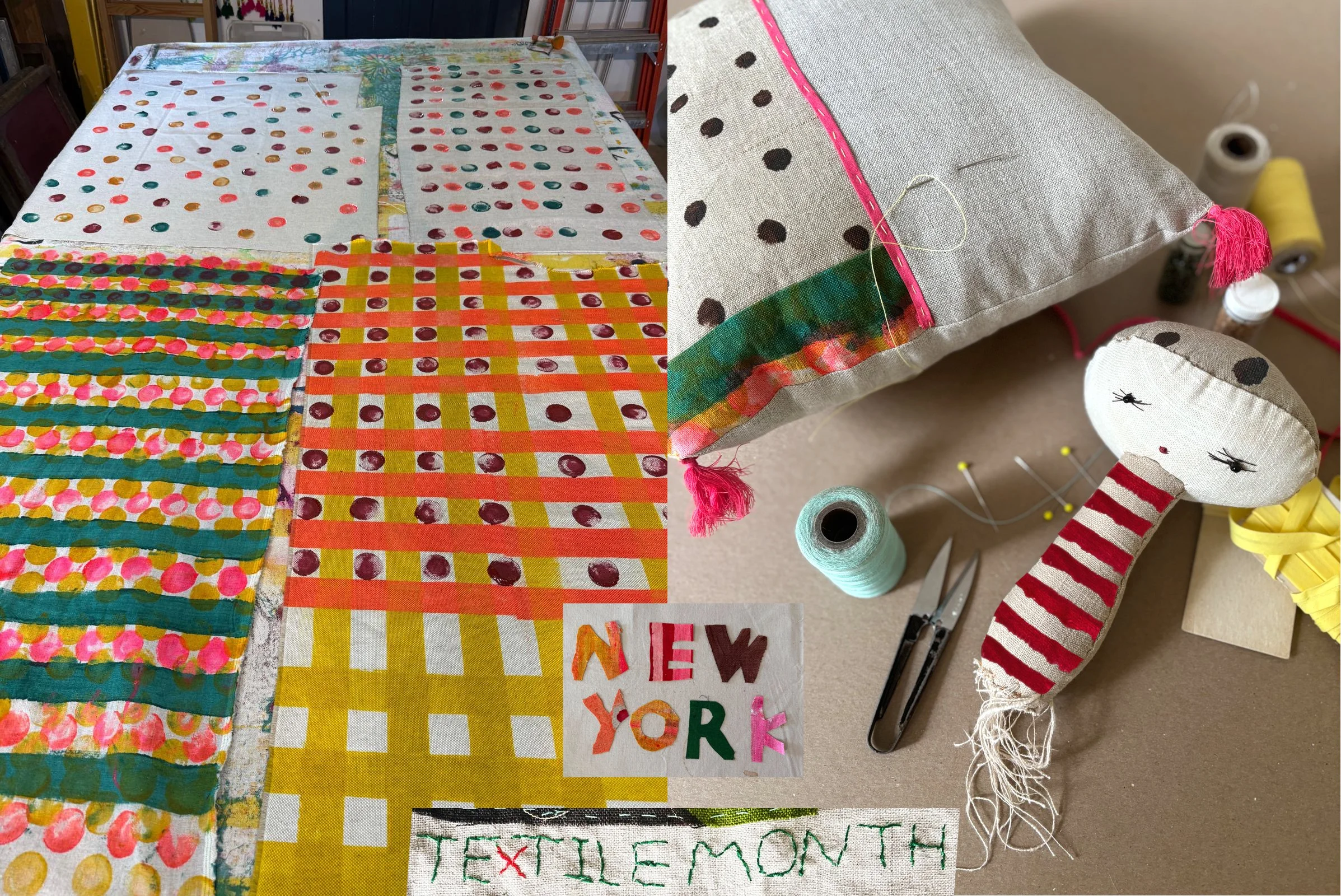
Surface to Form
In person/ Workshop / Multiple Techniques
Surface to Form: Print Paint & Sew, Textile Sculpture, Object or Decor
A two-part workshop led by Jann Cheifitz and Tamar Mogendorff exploring the transformation of surface pattern into soft dimensional relief and textile sculpture.
Beginning with printmaking and painted imagery, participants will experiment with layering, shaping, padding, and stitching to transform two-dimensional surfaces into tactile sculptural forms. Working intuitively, we will explore the relationship between image and object, color and form, creating unique textile pieces that exist between painting, sculpture, and textile.
No prior experience is necessary. Basic hand-sewing skills are helpful.
Saturday, September 26 11:30 AM - 4:00 PM
Tuesday, September 29 6:00 PM - 9:00 PM
There's more happening at this venue! Check other events:
Material Transformations Open Studio -textilemonth.nyc/calendar-2026/material-transformations
Tamar Mogendorff
Recognized for her original soft objects, Tamar Mogendorff is an artist and designer based in Brooklyn, New York. Since founding her studio in 2005, she has created one-of-a-kind textile sculptures, home objects, ceramics, and porcelain works. Her work has been exhibited internationally, and she has collaborated with numerous brands, galleries, and retailers.
Jann Cheifitz
Jann Cheifitz grew up in South Africa, and worked in an anti-apartheid art collective.
She moved to New York in 1994, where she built "Lucky Fish," a business producing "hand-printed in Brooklyn" textiles and clothing, inspired by the spirit of her artwork. For production she worked in collaboration with small print shops local to Brooklyn, producing artisanal products in small batches.
Her new body of artwork is textile based. The works are embroidered, sewn, patched, quilted, painted, screen-printed or made in clay creating a kaleidoscope of images – life and death cycles, fertility, fecundity, fallow times, soil, loam and compost – degeneration producing regeneration, creation and procreation, the body held with the earth's spirit, with the garden as inspiration.
Jann has participated in numerous group exhibitions, and has held a number of solo shows both locally and Internationally.
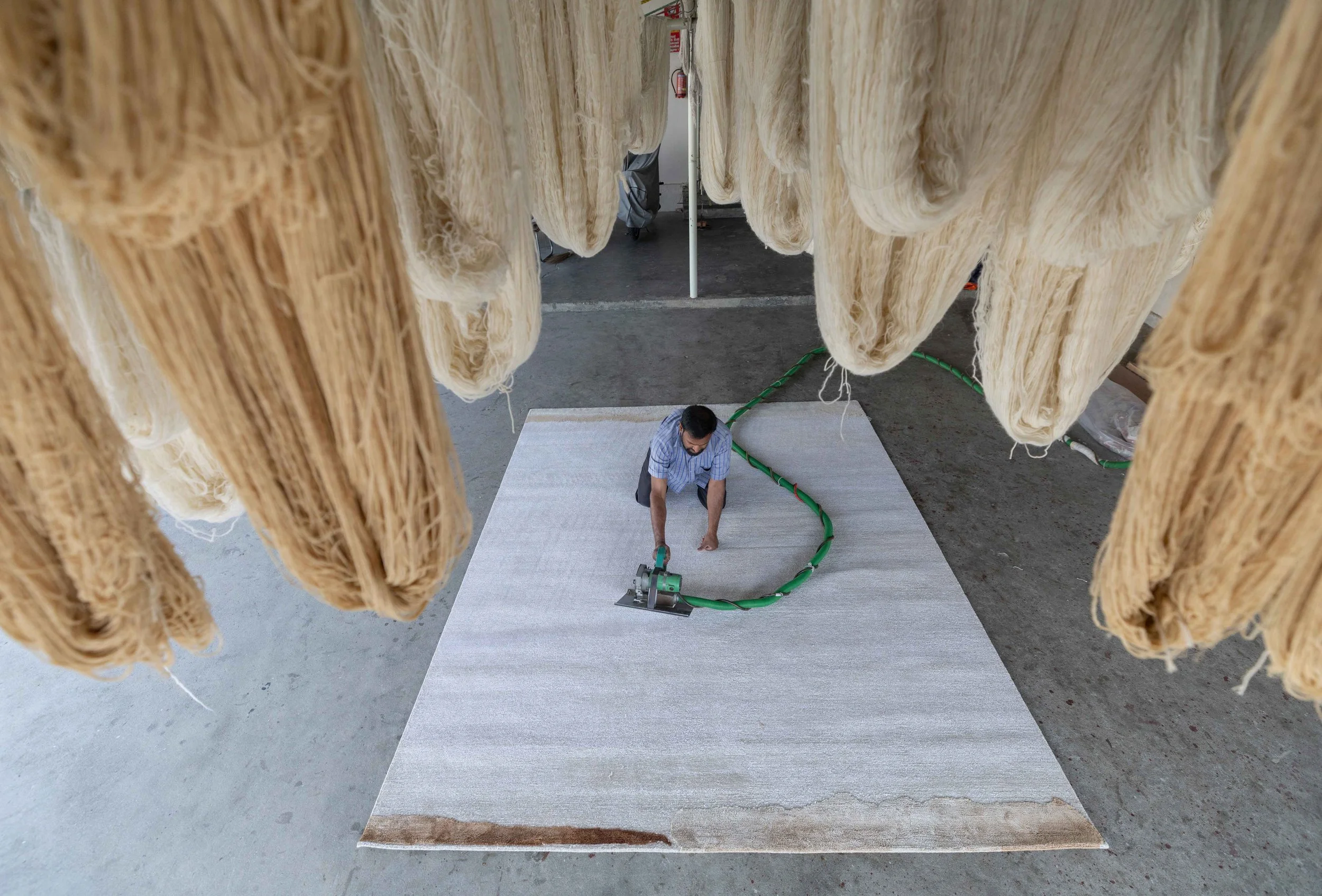
COVER Connect New York
COVER Connect New York, the annual trade show for high-end rug brands hosted by COVER magazine, returns to Manhattan with 44 international rug and carpet companies showcasing artisan-made weaving. Saturday, September 26 – Monday, September 28, 2026.

Talking Textile Conference: Success Stories
Online/ Talk / Multiple Techniques
OUR ANNUAL TALKING TEXTILES WEBINAR
Moderated by Philip Fimmano & Li Edelkoort
Recent graduates have harnessed their creativity to take on the design and art worlds, quickly establishing their independent practices as integral parts of the cultural community. Fibre and fabrics therefore become important tools to transform society through conscious thinking, aesthetic activism and ecological awareness. As the industry’s young leaders, their hopeful quest is human-centred, reaching new audiences through touch and tactility, appealing to the senses at a time when we need it most. Success stories that illustrate the foundational value of design education and the true power of textiles.
Speakers:
Shradha Kochhar
Mitch Frank
Sabrina Stadlober
Sugandha Gupta
Aradhita Parasrampuria
Kamilla Kuszon
Astrid Brondgaard Jensen
Carolyn Smith
We will also be announcing the winner of Dorothy Waxman International Textile Design Prize 2026!
The webinar is free and open to all.



clockwise: Shradha Kochhar; Mitch Frank; Sabrina Stadlober; Sugandha Gupta; Aradhita Parasrampuria; Kamilla Kuszon and Astrid Brondgaard Jensen (photo by Rigetta Klint); Carolyn Smith
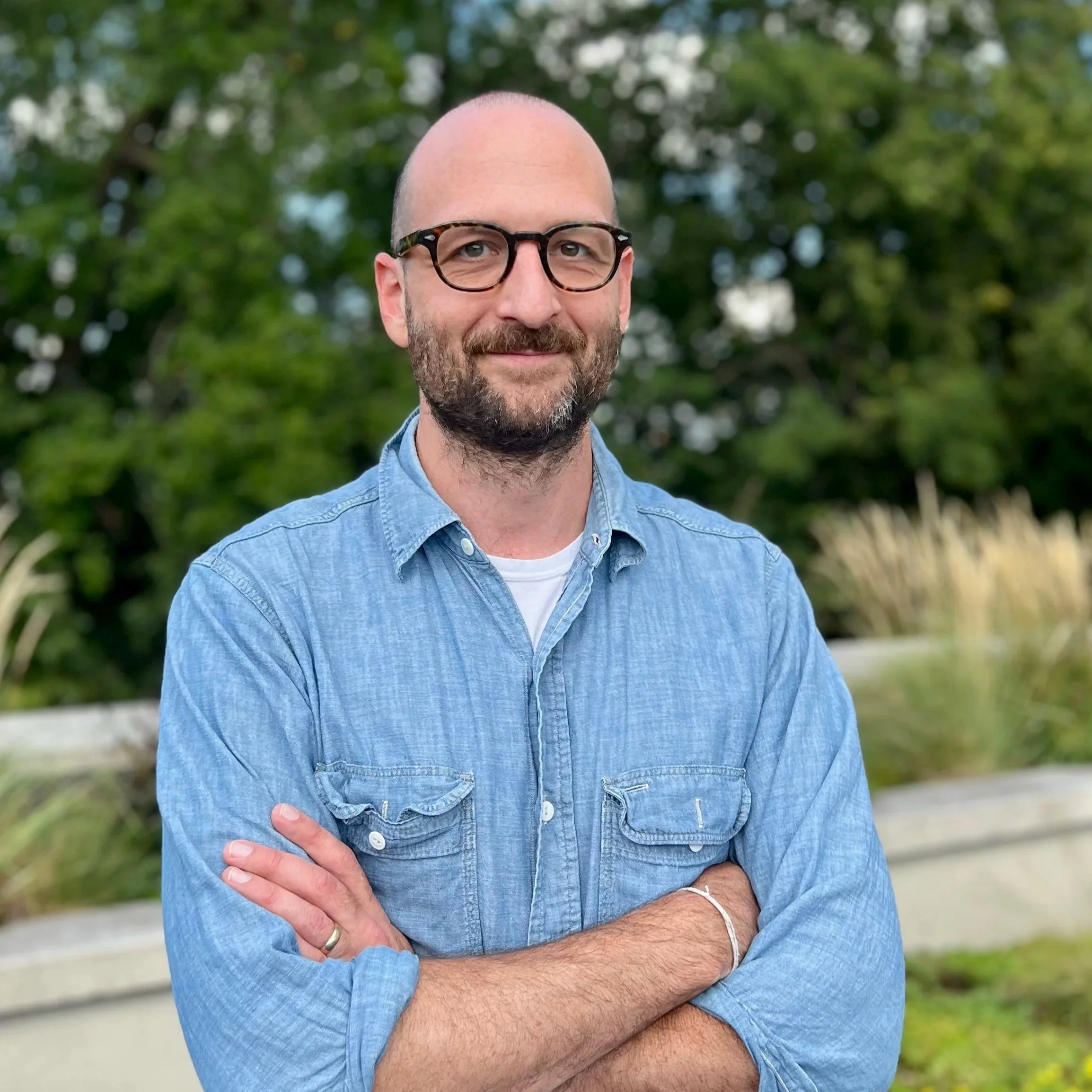
Mitch Frank, a clothing and fabric maker and an educator at The University of Wisconsin-Madison. He teaches in the Textiles and Fashion Design program. A lifelong environmentalist, he works in craft because craft prioritizes materials and materials come from the environment. His work looks at native ecologies, appropriate technology, and environmental justice.

Sabrina Stadlober is a fashion, textile, and product designer based in Austria. Her work is defined by a conceptual, research-led approach that brings ethics and aesthetics into dialogue. During her Master’s degree in Textiles at Polimoda, in theFrom Farm to Fabric to Fashion program, she developed a deep appreciation for alpaca wool.This interest became the foundation for the long-term projectSoil to Soil, a fully circular collection developed in collaboration with Austrian alpaca breeders.Sabrina’s practice spans textiles and wearable design, with a focus on natural materials and responsible craft as forms of creative expression. In addition to developing her own slow collection, she teaches fashion and natural fibers.

Shradha Kochhar, an artist with a focus in fibre, based in Brooklyn, New York. Best known for her home spun and hand knitted ‘khadi’ sculptures using ‘kala cotton’ - an inherently organic cotton strain indigenous to India, her work is at an intersection of material memory, tactile histories and intergenerational dialogue. Focusing on generating a physical archive of personal and collective south asian narratives linked to women’s work, invisible labor and grief, the work is large scale and exists as sculpture beyond whispers over generations.
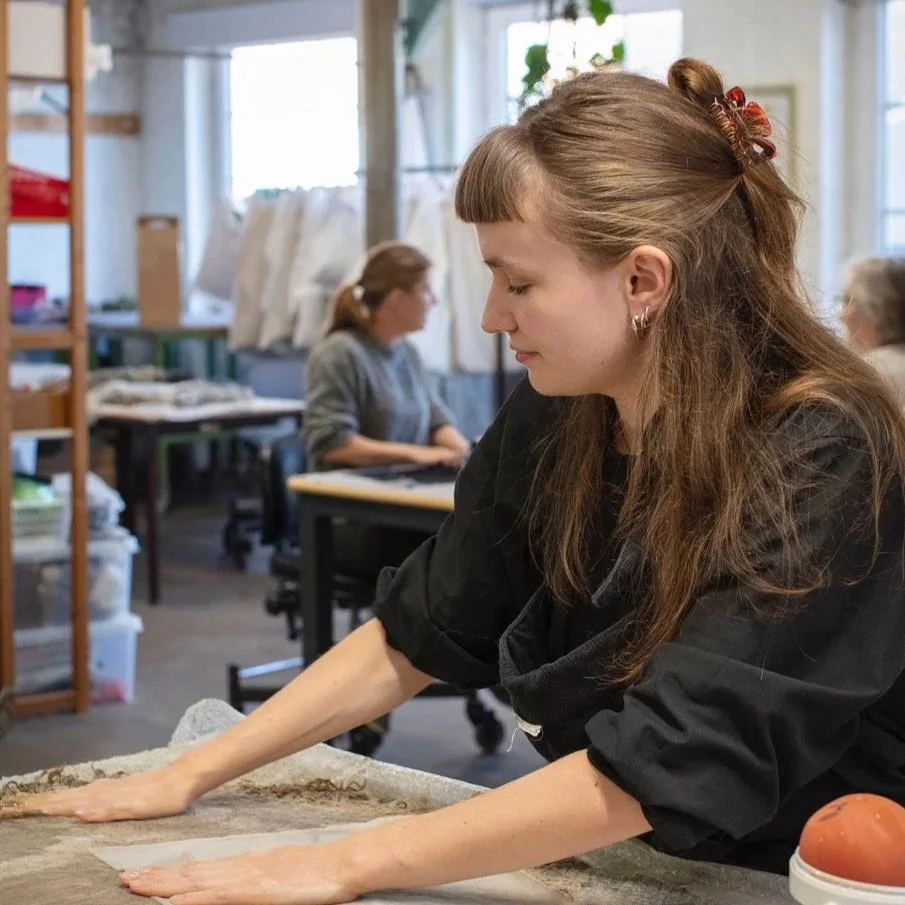
photo by Rigetta Klint
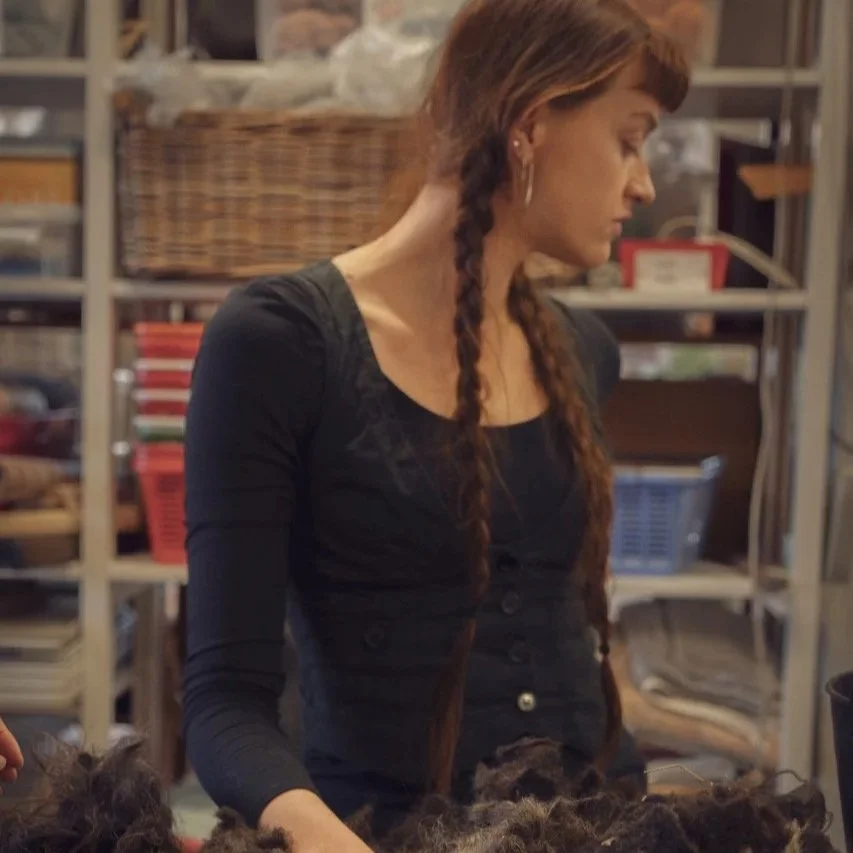
photo by My Lambertsen
Kamilla Kuszon and Astrid Brøndgaard Jensen, textile designers and Feltmaker apprentices based in Denmark. During their Bachelor's degree in Textile Design at the Swedish School of Textiles, with a specialization in weaving, they began their work with wool, initially experimenting with fulling different woven wool bindings to create shape and texture.
Today they are doing a three-year apprenticeship as Feltmakers, deepening their knowledge in felting and working directly from fiber to form. Their work is driven by a fascination with raw wool in natural colors, textures, and organic behavior. Rather than controlling the material, they collaborate with it, allowing its inherent qualities to shape each piece.

Sugandha Gupta, Assistant Professor of Fashion Design and Materiality at Parsons School of Design. She is an award winning multi-sensory artist and designer. Her textiles, sculptures and garments invite wider audiences to interact with her work through touch, sound, smell, sight and their embodied strengths. Her research interests lie at the intersections of disability, environmental and embodied justice. Her work has been showcased at The American Crafts Council, Smithsonian Craft Show, The UN Headquarters, New York Textile Month, Guggenheim Museum, The Visions Museum of Textile Art and Hunterdon Art Museum among others. Recently, her two commissioned looks have been permanently acquired and showcased as part of the current ‘Costume Art’ show at The Metropolitan Museum of Art, NY.

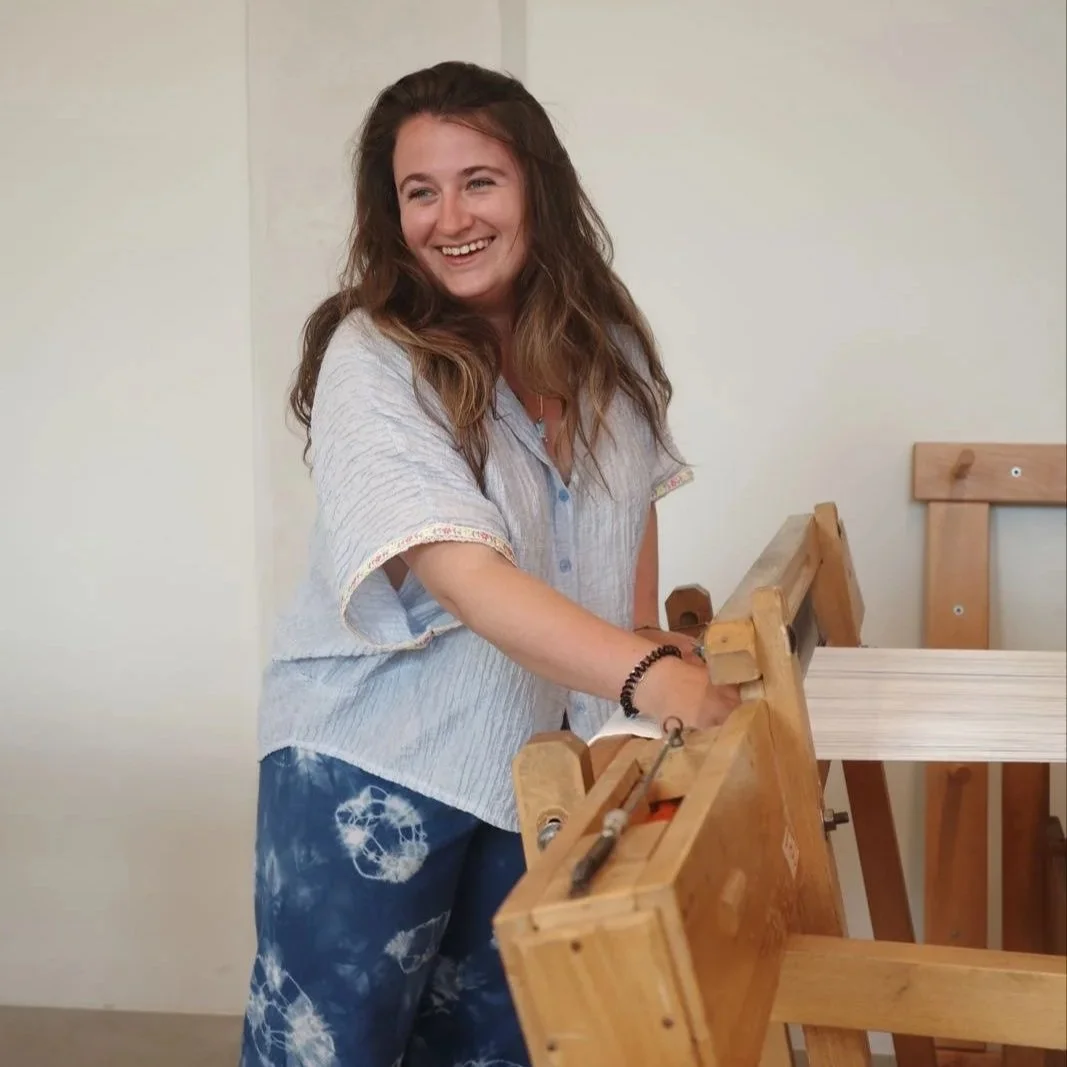
Aradhita Parasrampuria, materials designer and founder of Cellsense. She leads a team developing sustainable embellishments and beaded fabrics from algae and cellulose, offering alternatives to plastics in fashion, jewelry, and beauty. Trained at Parsons School of Design, Aradhita’s experience spans material science at Slow Factory Labs and design roles at Tory Burch and threeASFOUR. Cellsense has successfully completed pilots with four brands and continues to collaborate with partners on new biomaterial applications. Their work has been featured by WGSN, Vogue, and Forbes. Outside of work, Aradhita enjoys volunteering at Genspace.
Carolyn Smith, a weaver, designer, and textile advocate based in Pennsylvania. Her experience in the Farm to Fabric to Fashion Masters at Polimoda sparked a personal love of craft, with a specific love of weaving. Her collection Trousseau became her own personal archive of connection to craft, the sea, and making with her hands. She now works on vintage looms at Tuscarora Mills within Family Heirloom Weavers, weaving heritage fabrics from natural fibers like hemp, linen, and cotton. She is committed to continuing America's weaving legacy through natural materials and teaches craft workshops to help others find their own connection to textiles.
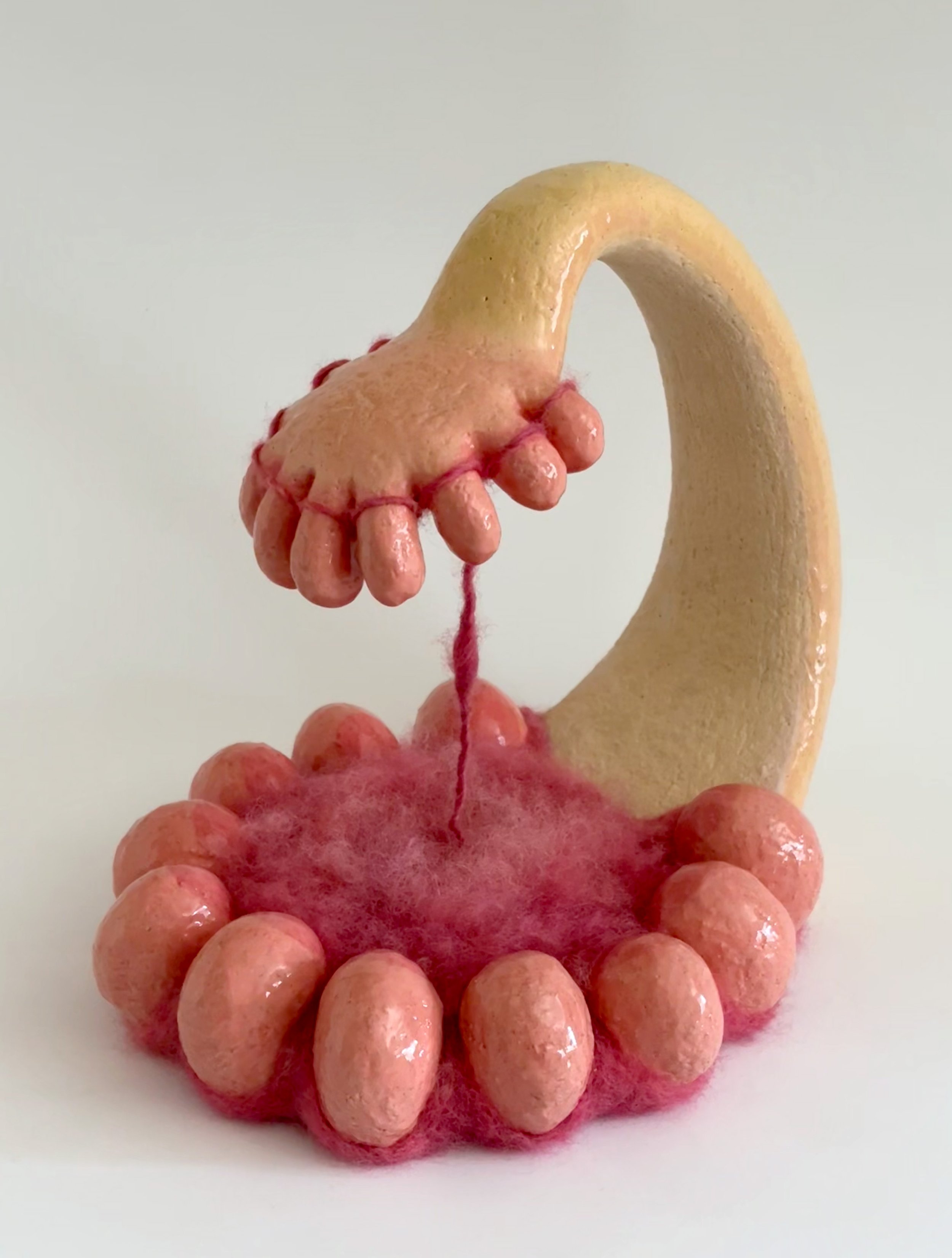
Shared Structures
Shared Structures brings together artists Elizabeth Tolson, Katie Coughlin, Luiza Kurzyna, and Suzanne Goldenberg, whose work moves between textiles and ceramics through weaving, stitching, and coiling. Opening reception and artist talk at Mouse Ceramic Studio, Brooklyn, Sunday, September 27, 2026, 5:30–9:00 PM.
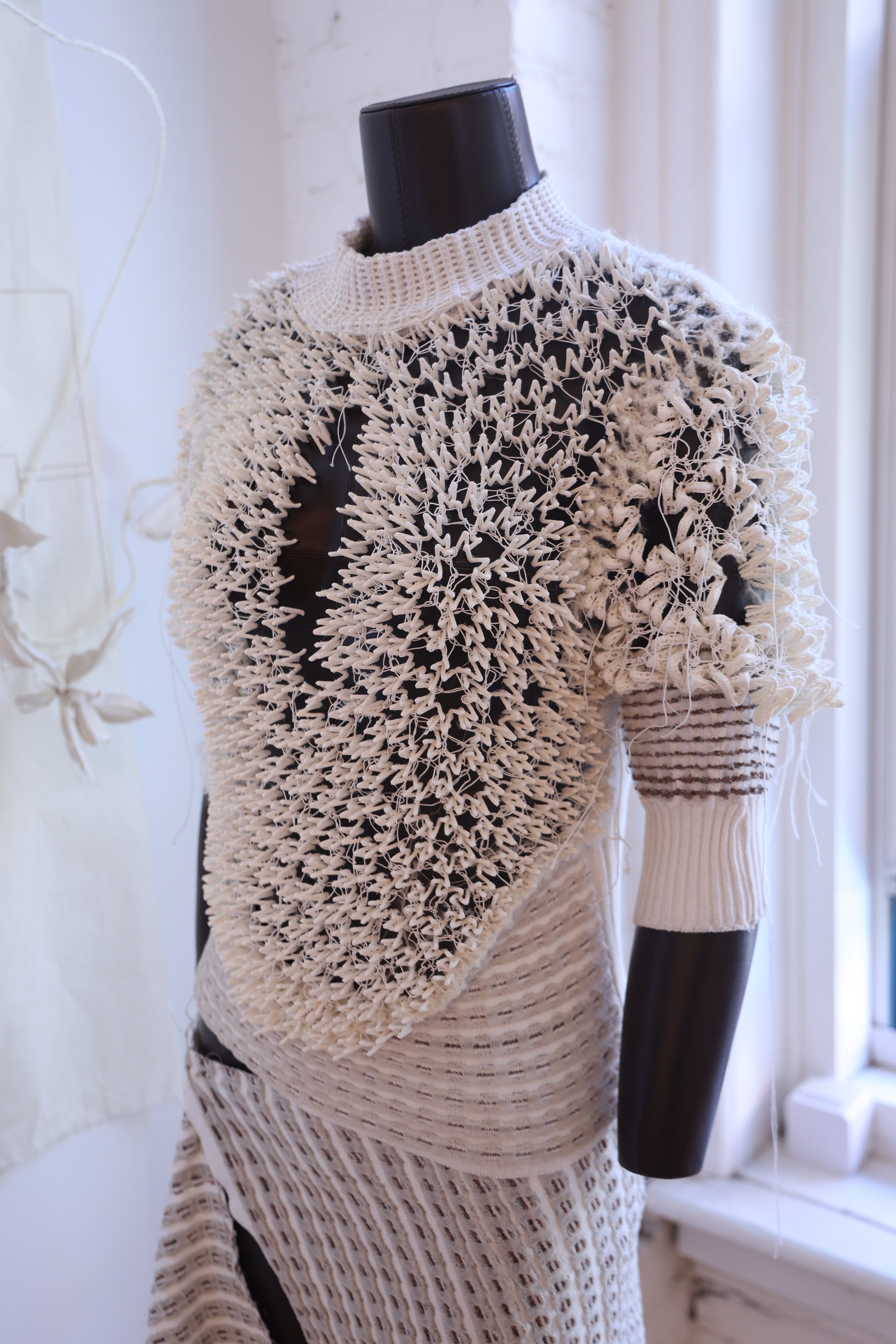
3D printing Lace Lab
An online workshop exploring 3D-printed lace, from digital modeling in Adobe Illustrator through slicing and printing, and how 3D-printed components can be combined with embroidery, knitting, and crochet. Sunday, September 27, 2026, 7:00–8:00 PM.
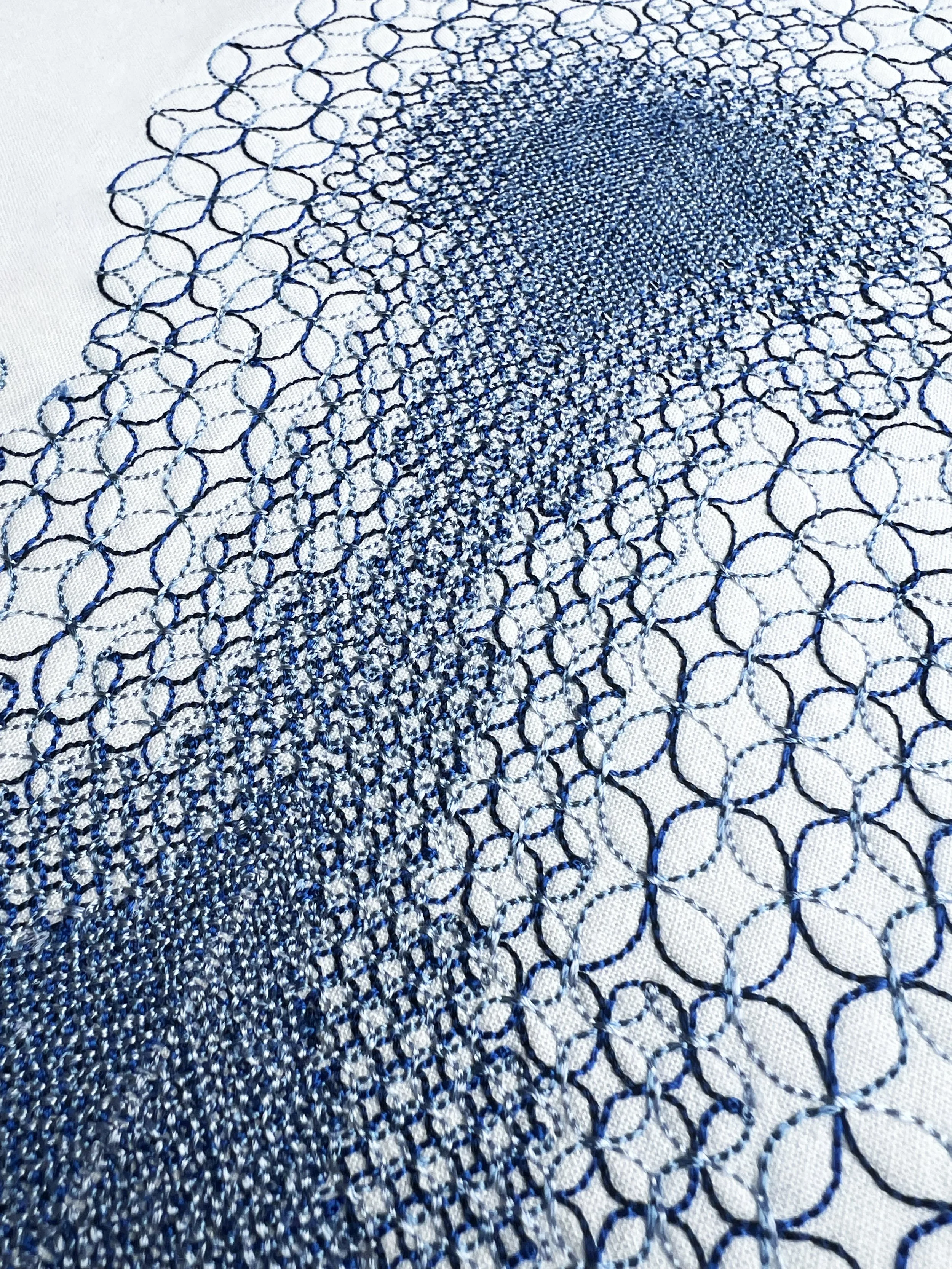
Machine Stitch
Machine Stitch brings together Response Patterns (Anette Millington & Travis Fitch) and artist Ragna Froda for a talk on digital embroidery, machine collaboration, and materiality—exploring how the embroidery machine becomes a creative partner in pattern, texture, and storytelling.
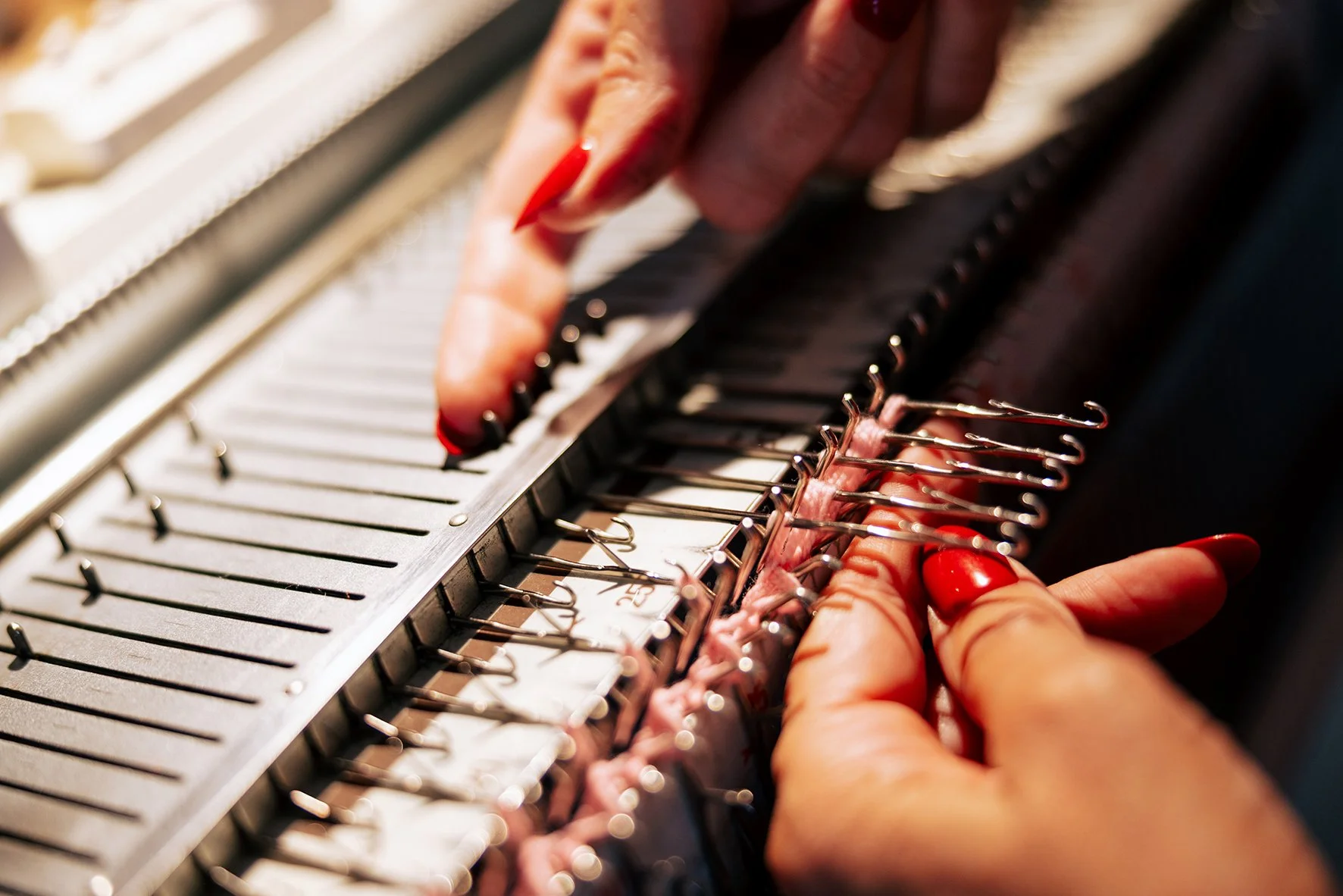
The Garment that Remembers
Online/ Talk / Knitting
The Garment that Remembers: what our clothes know, and who tells their stories
Every garment carries a history: the hand that made it, the origin of its yarn, each repair and each new owner. For most of fashion's history that history has been lost the moment a piece leaves the maker. This live talk asks what changes when a garment is designed to remember.
Working live from her studio on the Fleurieu Peninsula in South Australia, designer and researcher Angelina Russo builds a poncho from vintage and deadstock yarns on vintage knitting machines, in a practice rooted in Italian textile heritage from the Sannio region. Because each piece cannot be replicated exactly, you watch its record assemble, stage by stage, as the poncho comes together.
Alongside the making, you read a garment of your own. Using a card provided online, you sort its fibres into natural and synthetic, look for proof that the fibre is what the label claims, and set down what you expect of the piece, how long you will keep it and how often you will wear it. The card then stays with the garment and waits, in a pocket or a drawer, for the day a decision about its future is due. That small act, a record that travels with a garment, is the everyday form of what the emerging Digital Product Passport is reaching towards.
What you'll leave with:
A card to keep with one of your own garments, written now and answered later
A way of reading any piece you own for the record it carries, and the record it has lost
A route to follow when a forgotten garment asks to be kept, repaired, passed on or recovered
This is a live session, presented before dawn from the other side of the world, with time for questions.
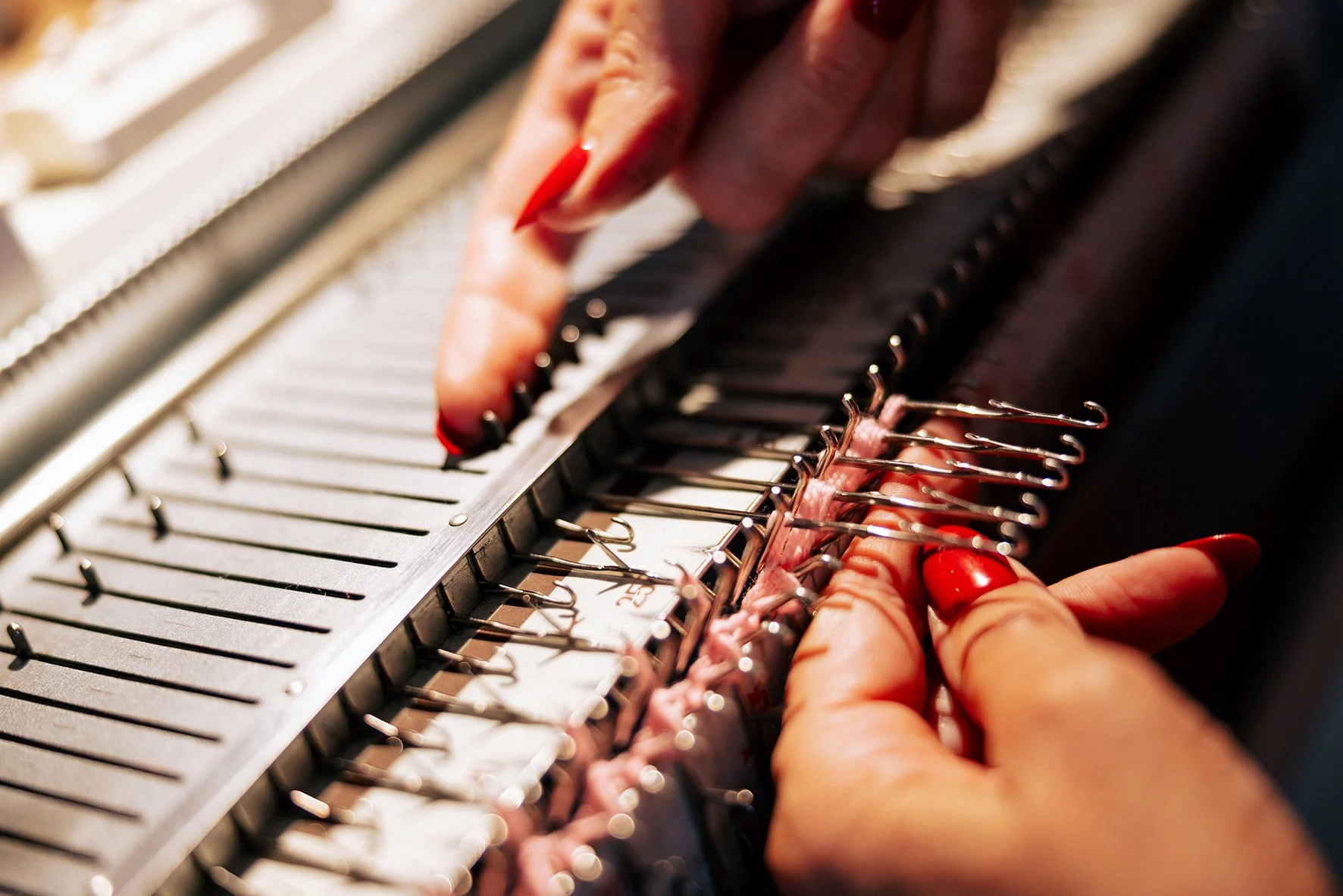

Angelina Russo is a designer and researcher, and the founder of Fleurieu Made, a circular knitwear studio on the Fleurieu Peninsula in South Australia. Working from vintage and deadstock yarns on vintage knitting machines, in a practice rooted in her Italian textile heritage, she makes one-off pieces meant to be carried for years. Alongside the studio she develops the FM Circular Fashion IQ Index, which makes circular practice visible and verifiable. Angelina researches how garments might carry their own records of origin, repair and afterlife, returning fashion's memory to the makers and wearers it belongs to.

Woven Together Fashion Show
In person / Open Studio / Weaving
Intertwine Arts wants to celebrate the creativity, beauty, adaptability, and fun of disability-based clothing design with a fashion show at the Positive Exposure Gallery. Disabled models are paired with disabled and non-disabled designers to create a piece unique to them, which will then stroll down the runway! The runway show will be the closing finale of Intertwine Arts’ annual Woven Together exhibition, which celebrates the artistry of disabled individuals with a display of fiber artworks created over the year in weekly weaving workshops.
There's more happening at this venue! Check other events:
Woven Together Exhibition - textilemonth.nyc/calendar-2026/woven-together-exhibition
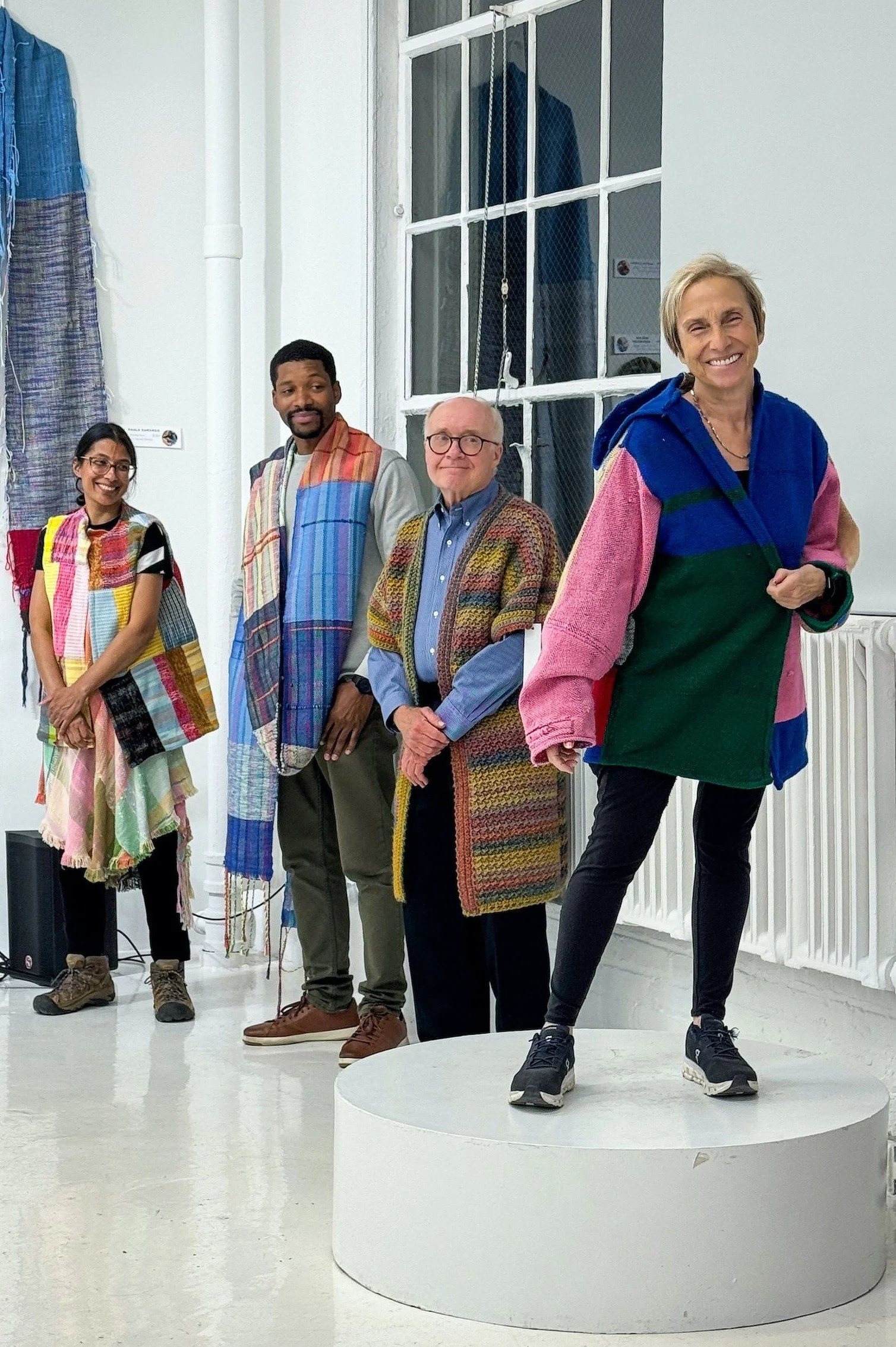
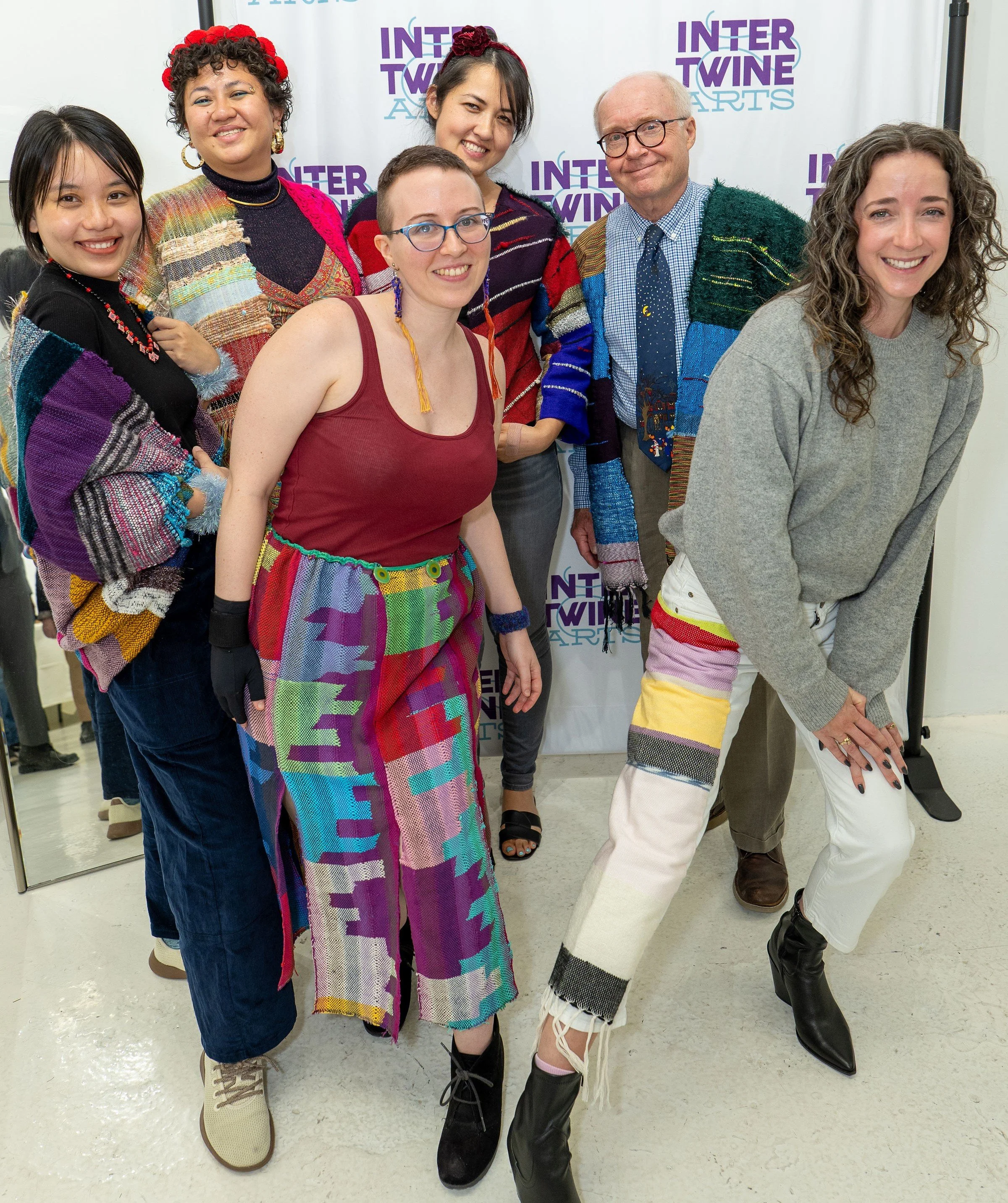
The artists represented are artists with disabilities from Intertwine Arts’ programs across four New York City boroughs of Queens, Brooklyn, Manhattan, and the Bronx. The disabilities experienced range from cognitive disabilities, to physical disabilities, to neurodivergence, to chronic illness, and more. All are burgeoning weavers and fiber artists, primarily exploring the woven medium. Their talents also extend into embroidery, crochet, sewing, and beyond.
Textile Tactics: Crafting Culture
In Person / Talk / Textile Industry
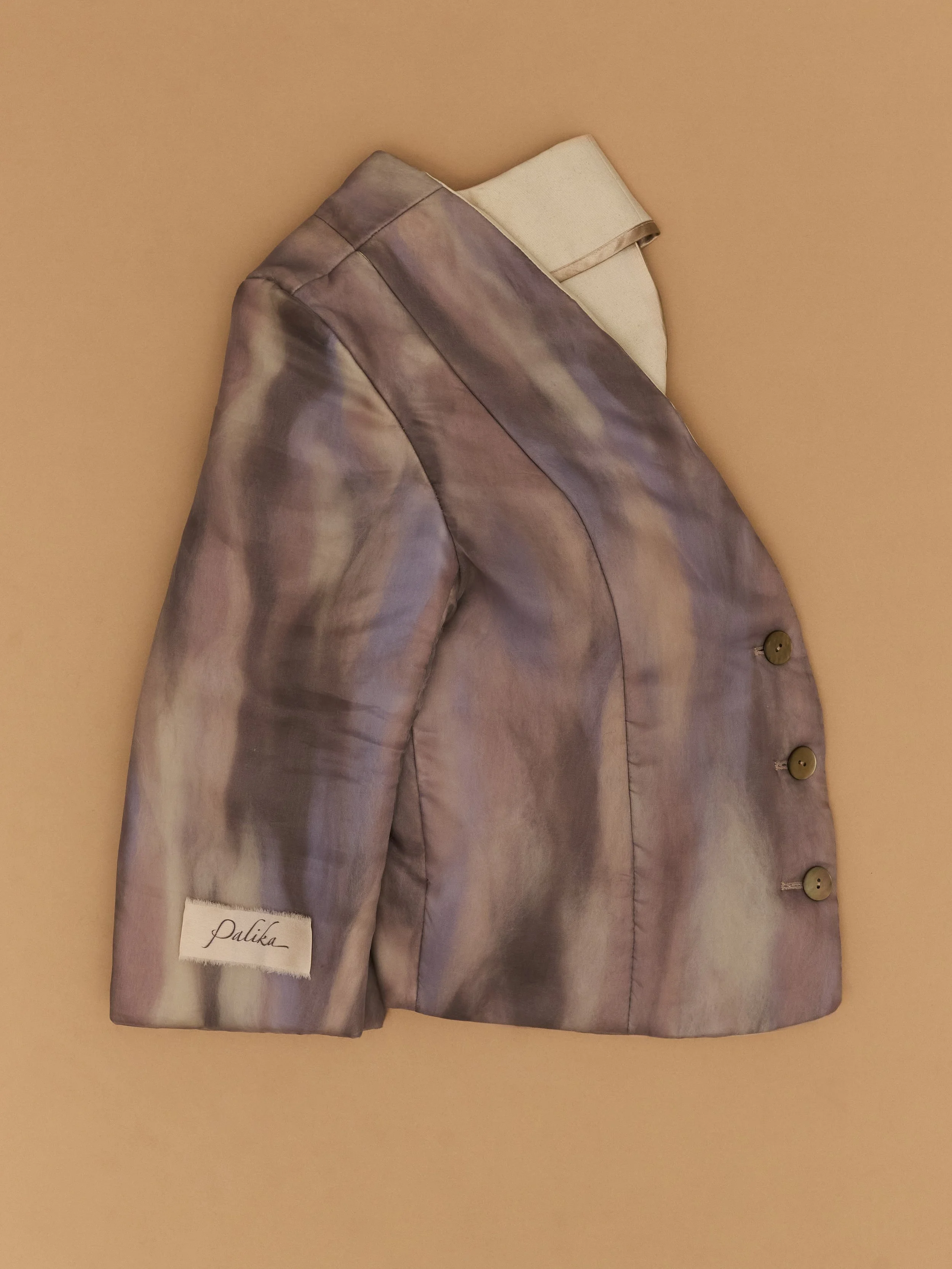
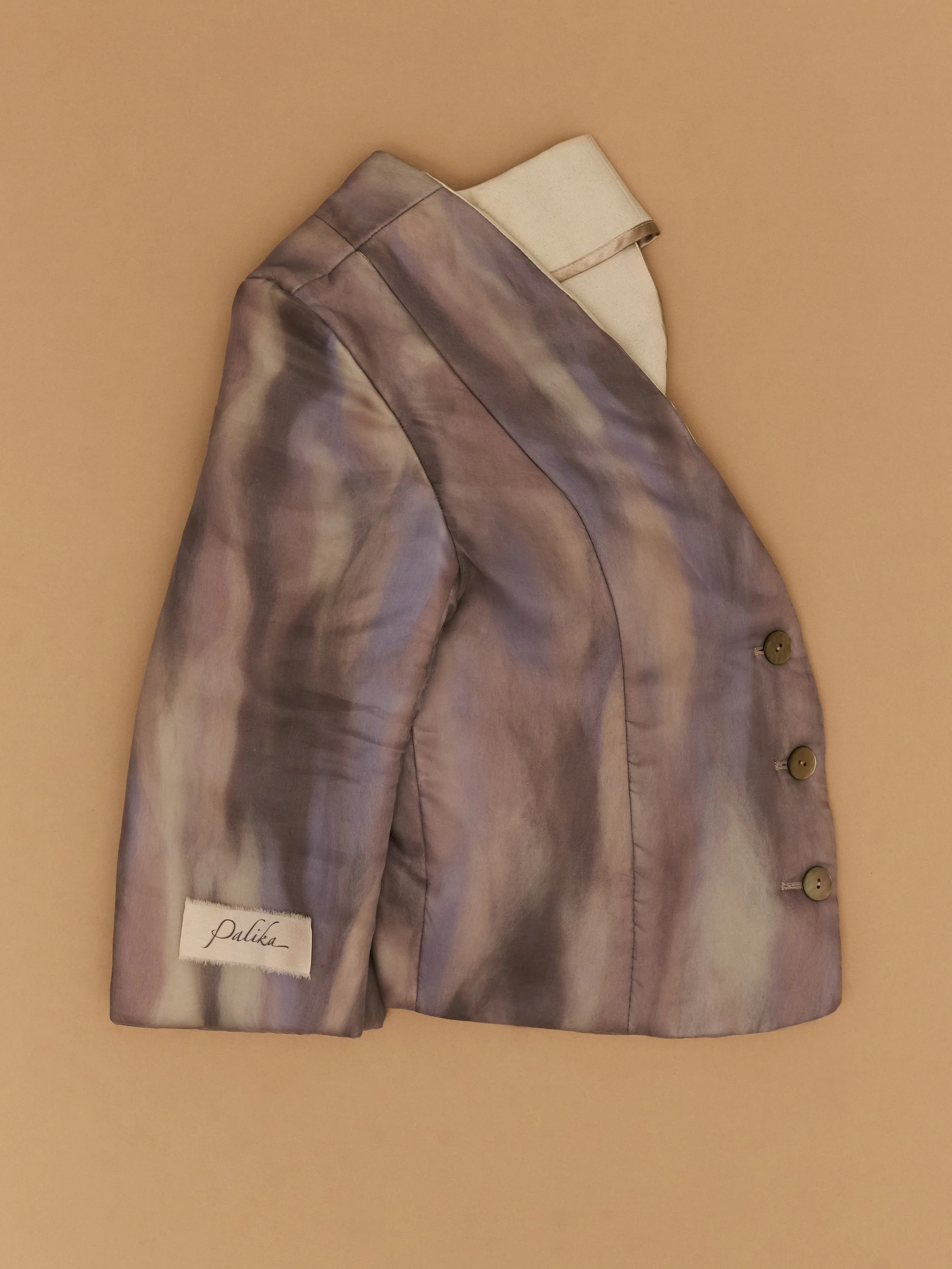
Join us at the Library for Arts & Culture for a hybrid exhibition and panel discussion, highlighting three textile artists and designers whose work shapes and drives culture. Curated and moderated by Chyna Cassell, the program will feature works from Sade Mims of Edas, Naima Dobbs of Nailoh Knits, and fashion designer, Mahima “Palika” Sirikulthada.
The program will open with guests engaging with selected exhibited works throughout the space, followed by a presentation of Mahima’s "i can’t cross my legs, can you?" fashion film. Chyna will moderate the panel, which will focus on the artists’ respective practices and methods, and the cultural context surrounding their works. The evening will conclude with a brief mingling session with beverages and light refreshments.
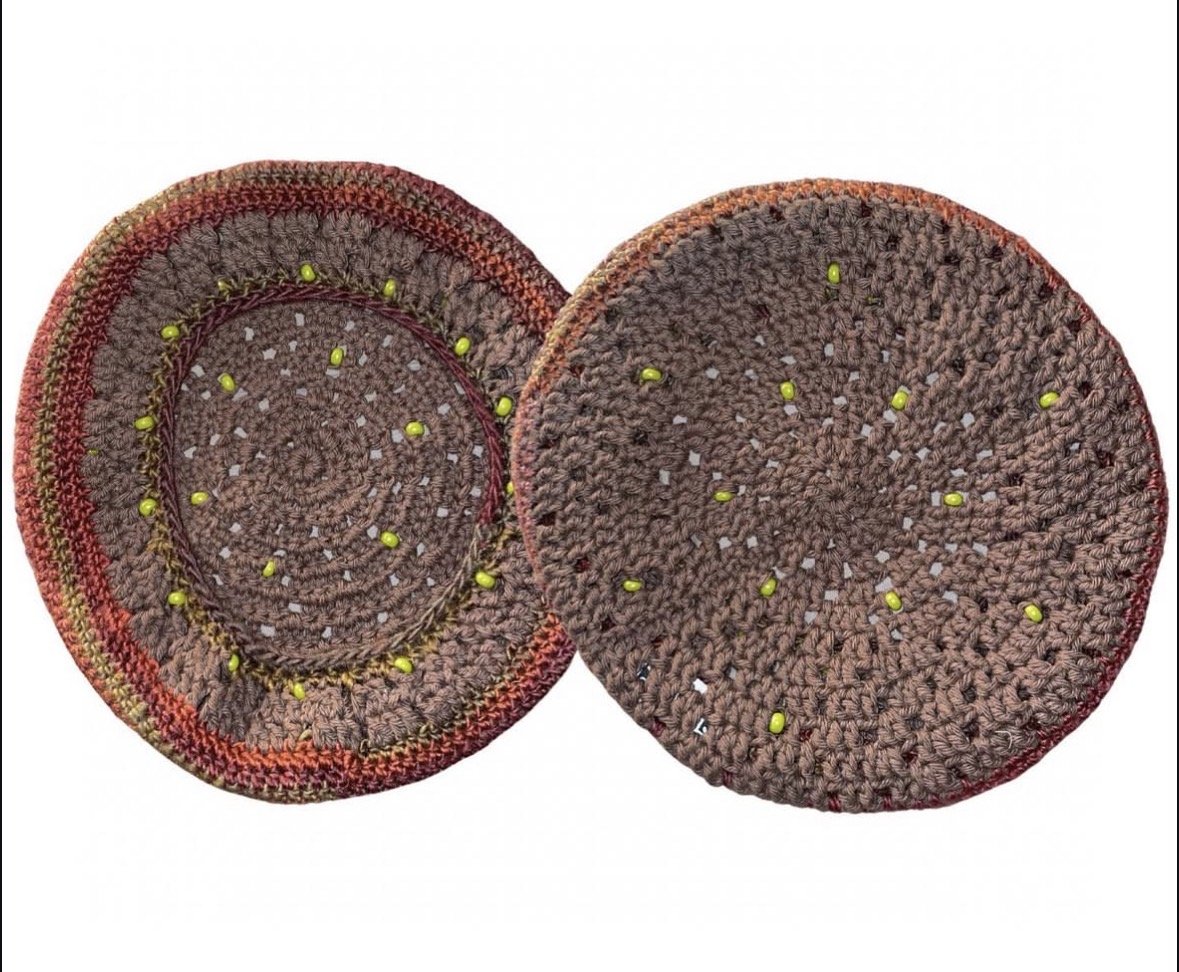
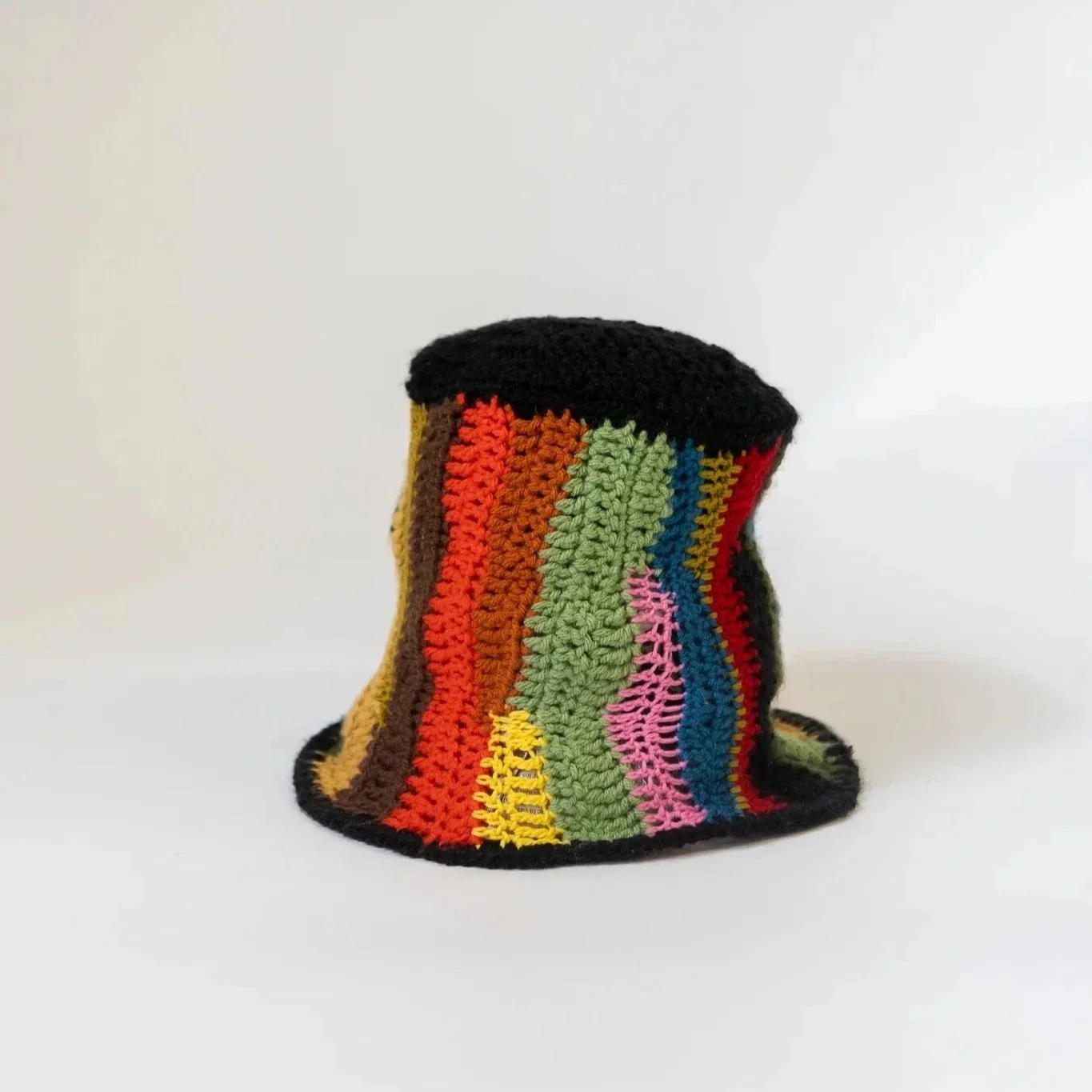

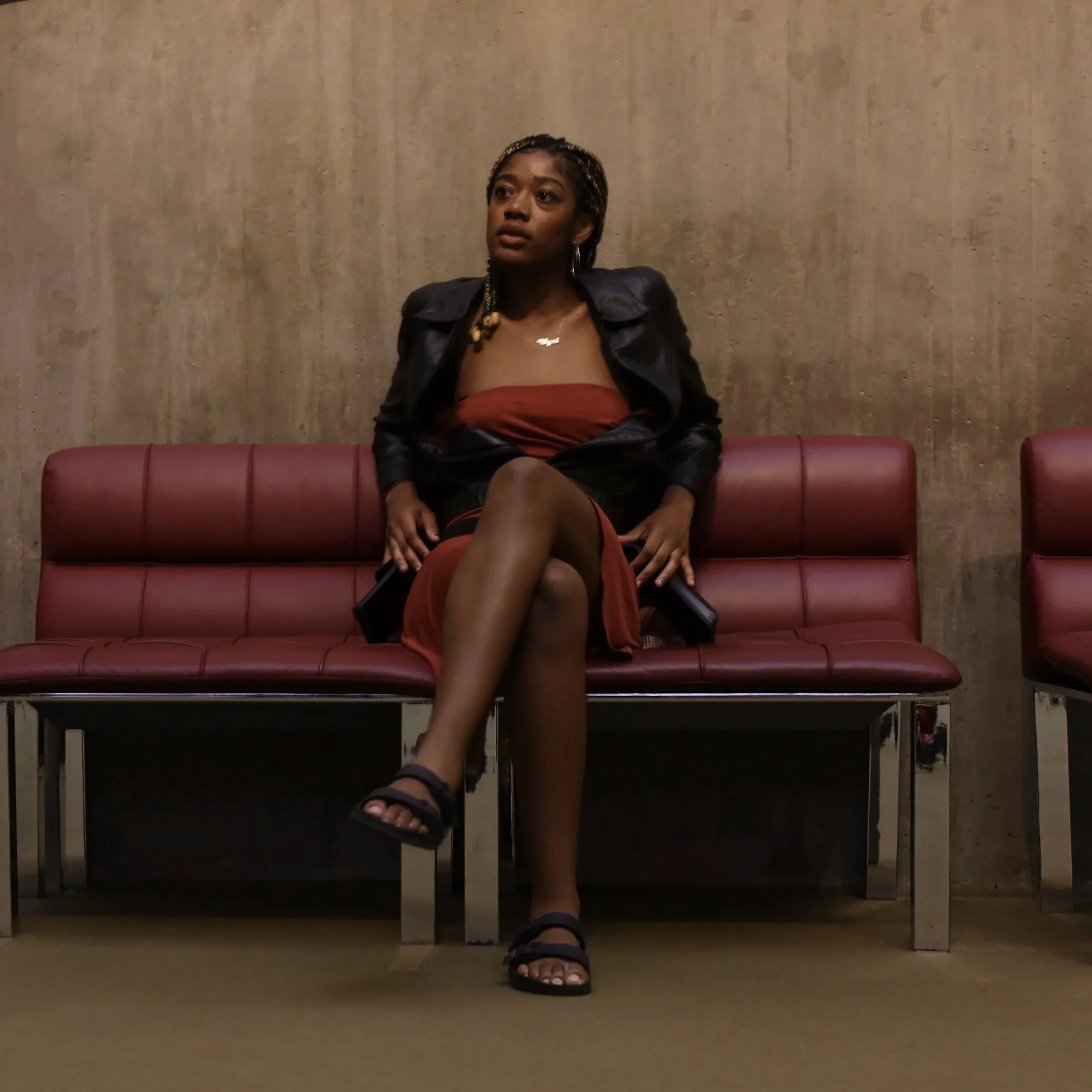
Sade Mims is a New York City–based artist and designer working at the intersection of fashion, art, and cultural storytelling. With over a decade of experience in creative and fashion direction, her practice is defined by a refined visual language, a sharp instinct for forecasting, and an ability to translate ideas into cohesive, resonant worlds.
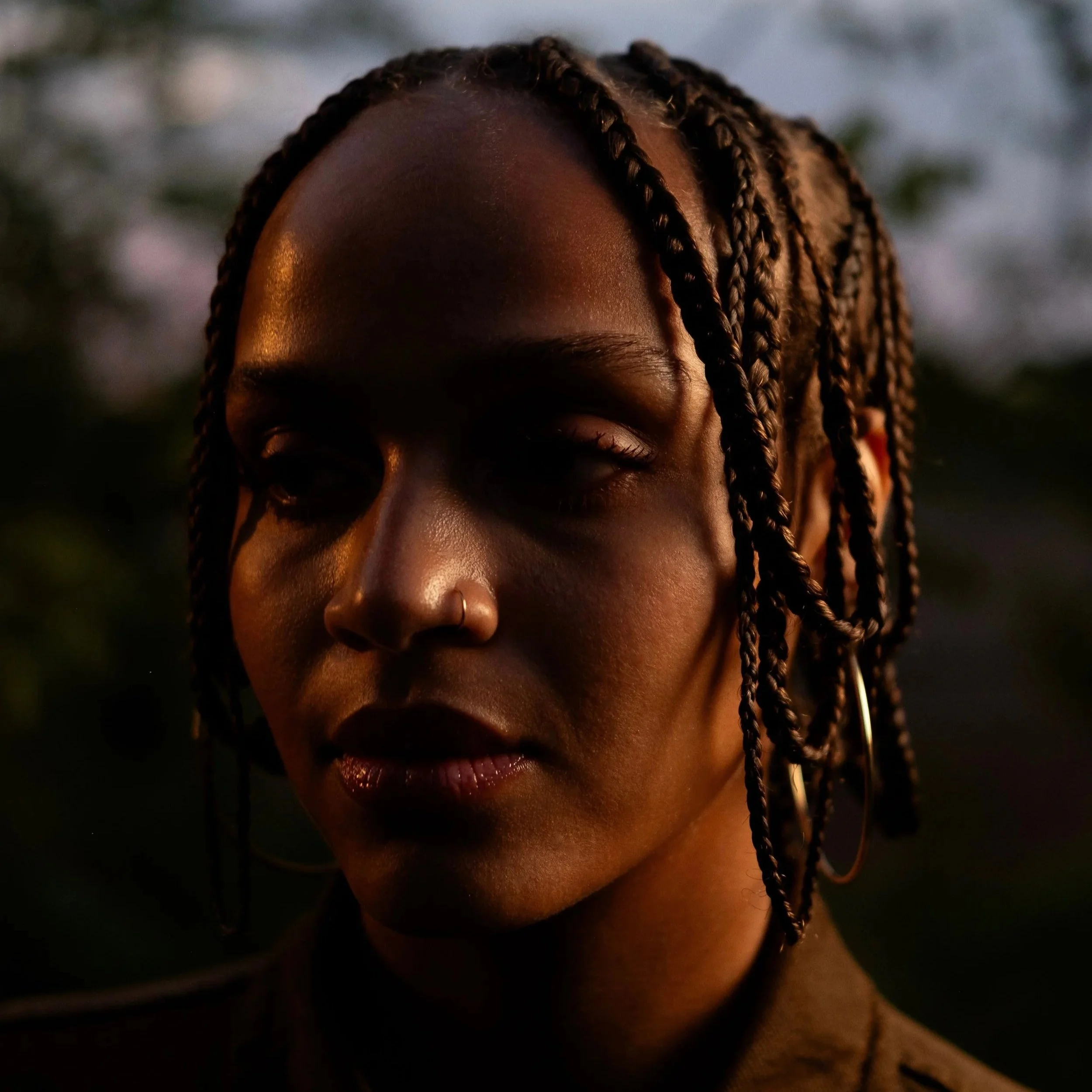
Naima Dobbs (a.k.a. Nailoh) is a New York based musician, textile artist, and educator born and raised in Atlanta, GA. Her artistic practice intertwines electronic music, textile art, and video design in a multimedia offering she dubs Synthetwine. Her debut EP, Smile, was released in Dec 2025. She is the founder of knitwear brand, Nailoh Knits (est. 2020).
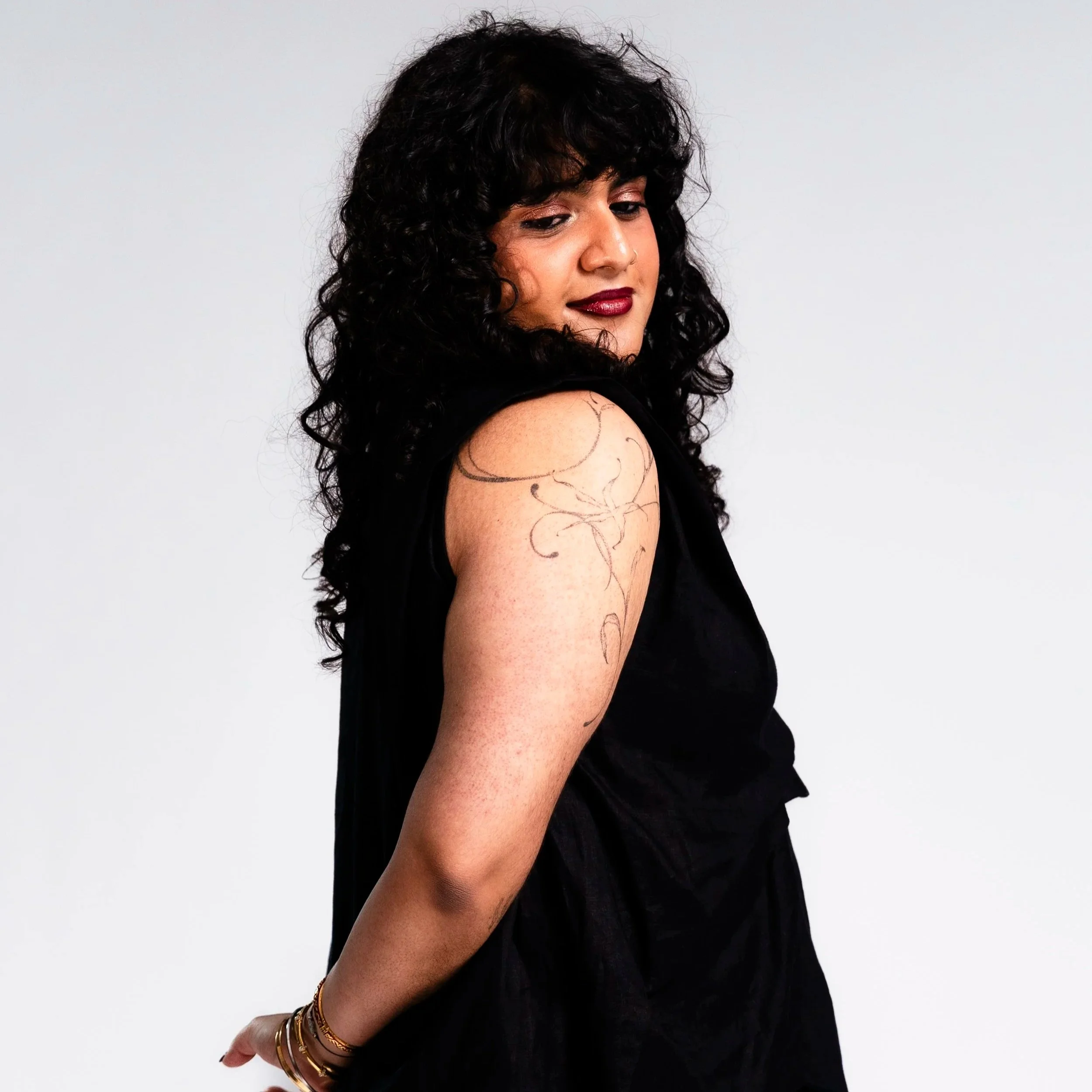
Mahima “Palika” Sirikulthada is a designer and multidisciplinary artist whose practice is compelled by fit: an ongoing exploration of how we perceive, navigate, and anchor our bodies within the world. Raised within communities where art is woven into the everyday, she carries a deep respect for making as inheritance, as resistance, and as ritual. This foundation informs works rooted in continuous exploration: learning, questioning, and allowing space for growth. For Sirikulthada, creation is both personal and political: a means of archiving lived experiences while imagining new ones. Her work moves fluidly between fashion, sculpture, and textile-based practices, grounded in materiality and the intimate relationship between body, form, and environment. She hopes to inspire through art that is deeply researched, and embedded in care, craft, and honest storytelling.
Chyna Cassell is a multi-disciplinary artist, writer, event producer, and cultural programmer. In 2021, she received a bachelor's in Global Studies from The New School. Chyna was an artist-in-residence at Casa Na Ilha Artist Residency in Ilhabela, Brazil (2021), and at Hangar Center for Artistic Research in Lisbon, Portugal (2024). She partners with several Brooklyn Public Library branches to facilitate programs including the Reel to Real short film screening series at the Library for Arts & Culture. Her work appears in IMPULSE Magazine, Omenana African Speculative Fiction Magazine, The African Film Festival Archives, Afapinen, and The Shallow Tales Review. You can stay up-to-date on her work at her website, chynacassell.com.
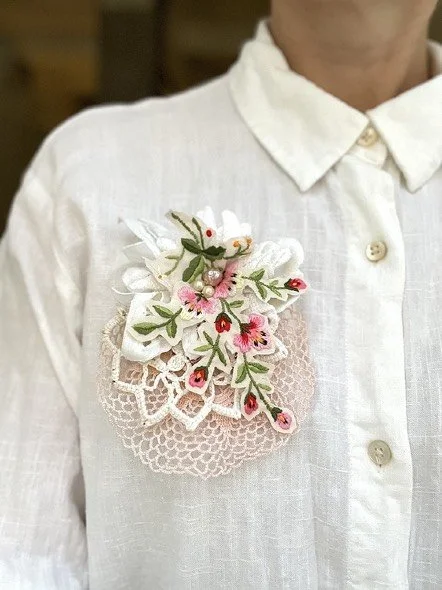
Bloom Brooch Workshop with Heidi Hankaniemi
In person / Workshop / Embroidery
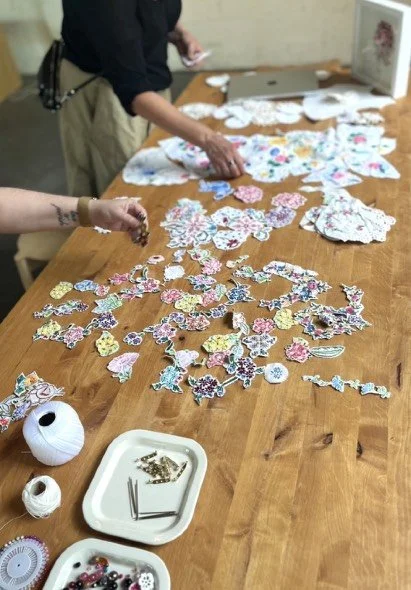
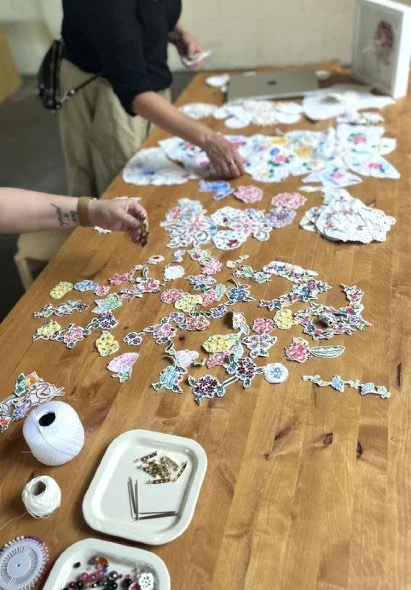
Inspired by trend forecaster Li Edelkoort’s prediction that “Extravagant Brooches” are trending, we’ll make one ourselves! The workshop will begin with an artist talk by celebrated textile and performance artist Heidi Hankaniemi, followed by a hands-on session. Join Heidi on a quest to repurpose vintage embroideries and sew a brooch on a backing of industrial felt with a brooch clasp. Materials are provided, but if you have any old embroideries that you think are fitting and you wish to repurpose, please bring those. Together, we’ll create one-of-a-kind brooches by repurposing vintage floral embroideries and laces into wearable art. No sewing skills required.
Heidi Hankaniemi was born in Ekenäs Finland and currently lives in New York City. She received her BA (Hons) Degree in Critical Fine Art Practice from Central Saint Martin’s College of Art and Design, London, as well as a Diploma in Fine Arts from Kanneljärven Opiston taidelinja, Finland. Heidi has exhibited throughout Europe and the United States, including at the Moscow Museum of Modern Art, St. Petersburg Metro Museum, and the Massachusetts Museum of Contemporary Art.
Heidi’s work has been featured in Artnet, Vogue UK, FJORDS magazine, Elle Deco ES, Elle Decoration UK, Elle UK, Architectural Digest, Frame, I.D. magazine, Interview magazine, Crystallized, Dazed and Confused, Marie Claire, Hello!, among others. She was featured in Episode #1 of the documentary series Adress: New York, Kaleido Productions/ YleFEM, Finland. She has also been featured in Art TV, with Felicity, a documentary series thatlaunched in April 2023 on Airline Entertainment networks Worldwide.
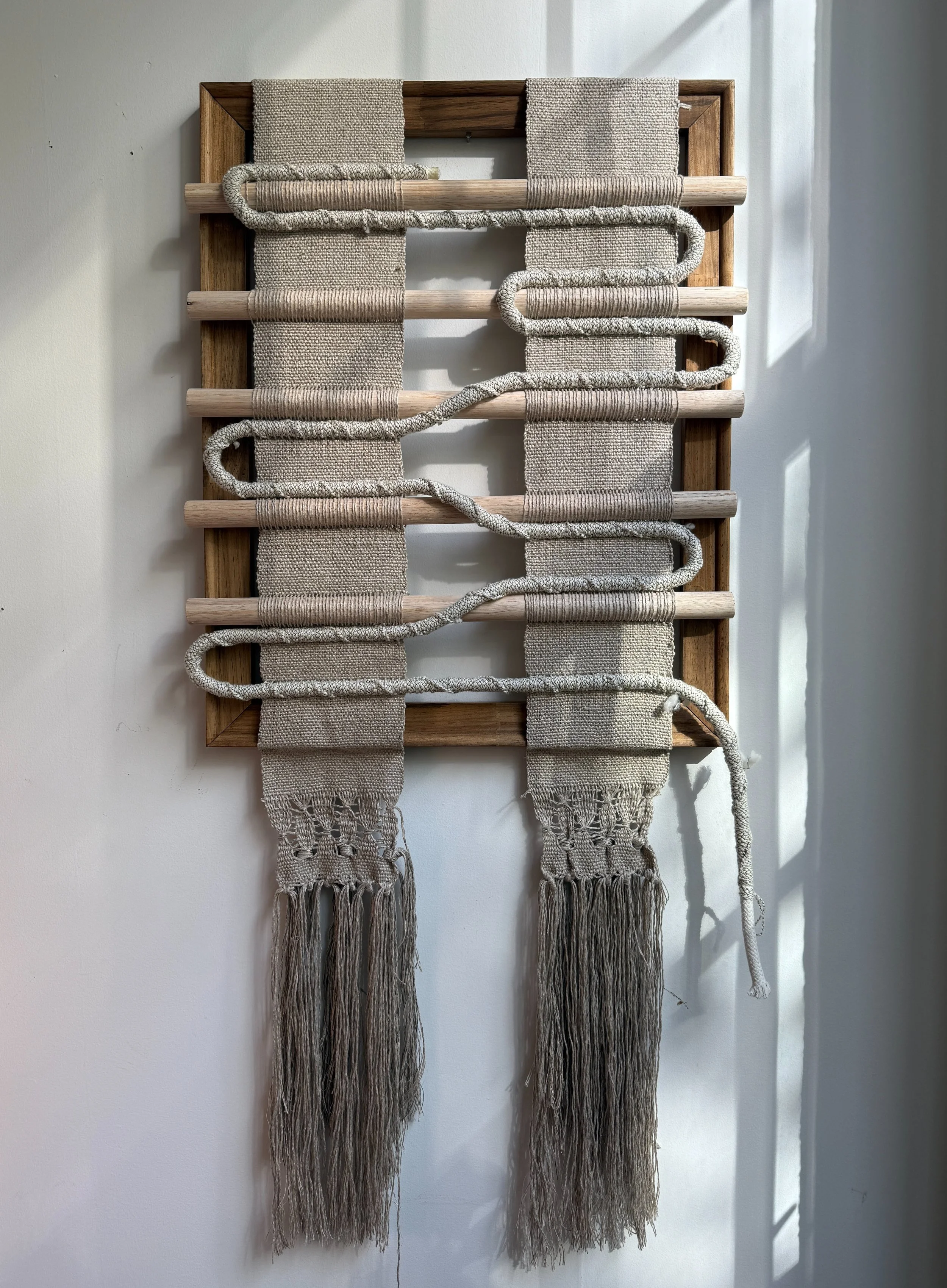
Interior textiles Today: A New York Perspective
In Person / Talk / Textile Technique
INTERIOR TEXTILES TODAY: A NEW YORK PERSPECTIVE brings together designers, educators, and industry voices to ask a simple but pointed question: what does it actually take to build and sustain an interior textile practice in this city right now?
Presented by New York Textile Month, FIT's Surface Design program, and Textile Eye, the evening will center on inspiring presentations and open discussion about where New York's interior design landscape stands today.
Whether you're a working designer, a student, or simply curious about the forces shaping the rooms we live in, join us for an evening built around one central question: what does it mean, and what does it take, to make interior textiles in New York today?
Program
6:00 PM: Doors open
6:30 PM: Event start time
6:30 PM - 6:40 PM: Welcome Susanne Goetz Chair | Textile/Surface Design and Ragna Froda Director New York Textile Month
6:40 PM - 6:55 PM: Presentation Saana Baker (FIT alumna), Textile Eye
6:55PM - 7:05 PM: Presentation Lori Weitzner
7:05 PM - 7:15 PM: Presentation William Storms(TSD alumnus)
7:15 PM - 8:00 PM: Panel discussion, moderated by Saana Baker
8:00 PM: Event wrap up
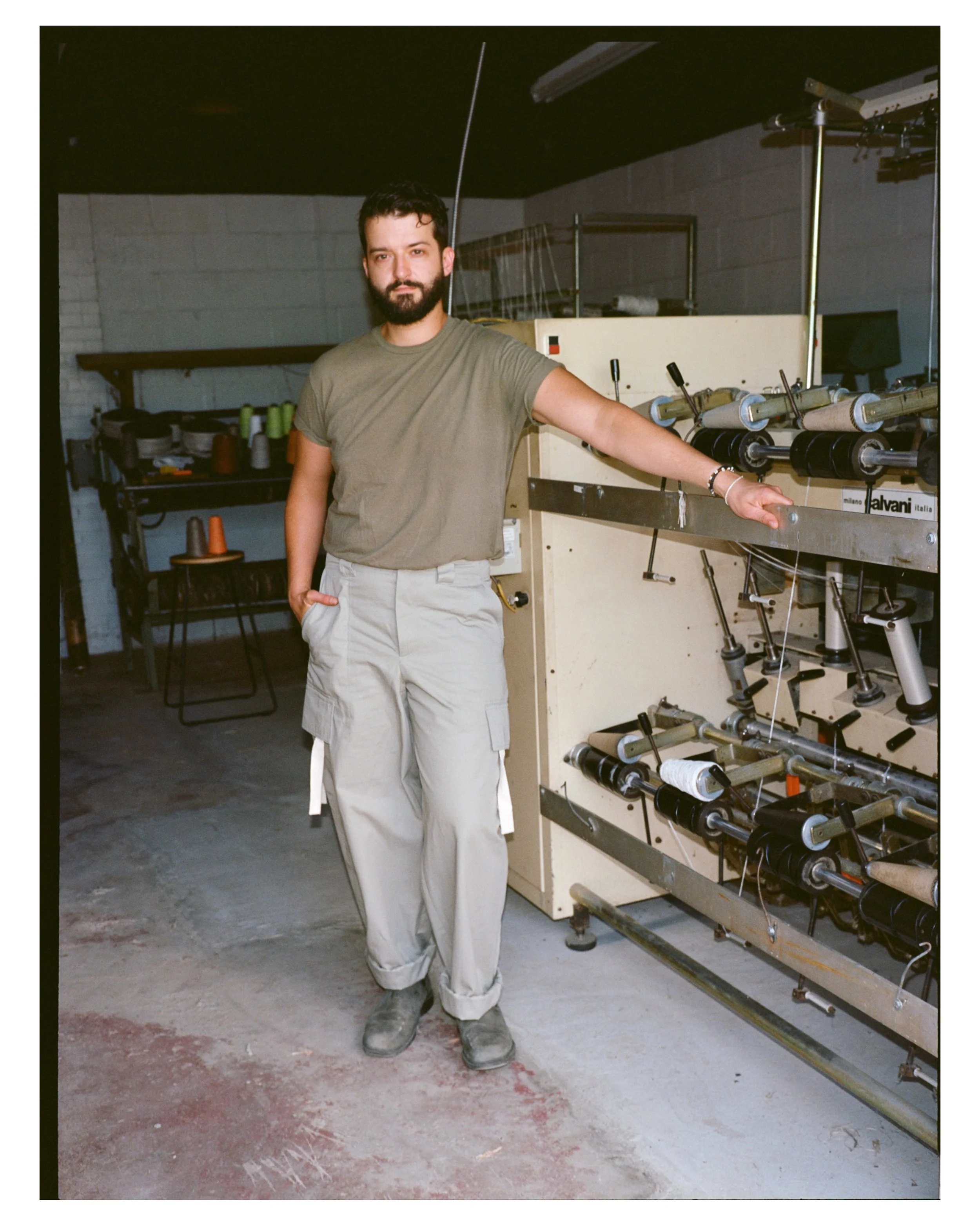
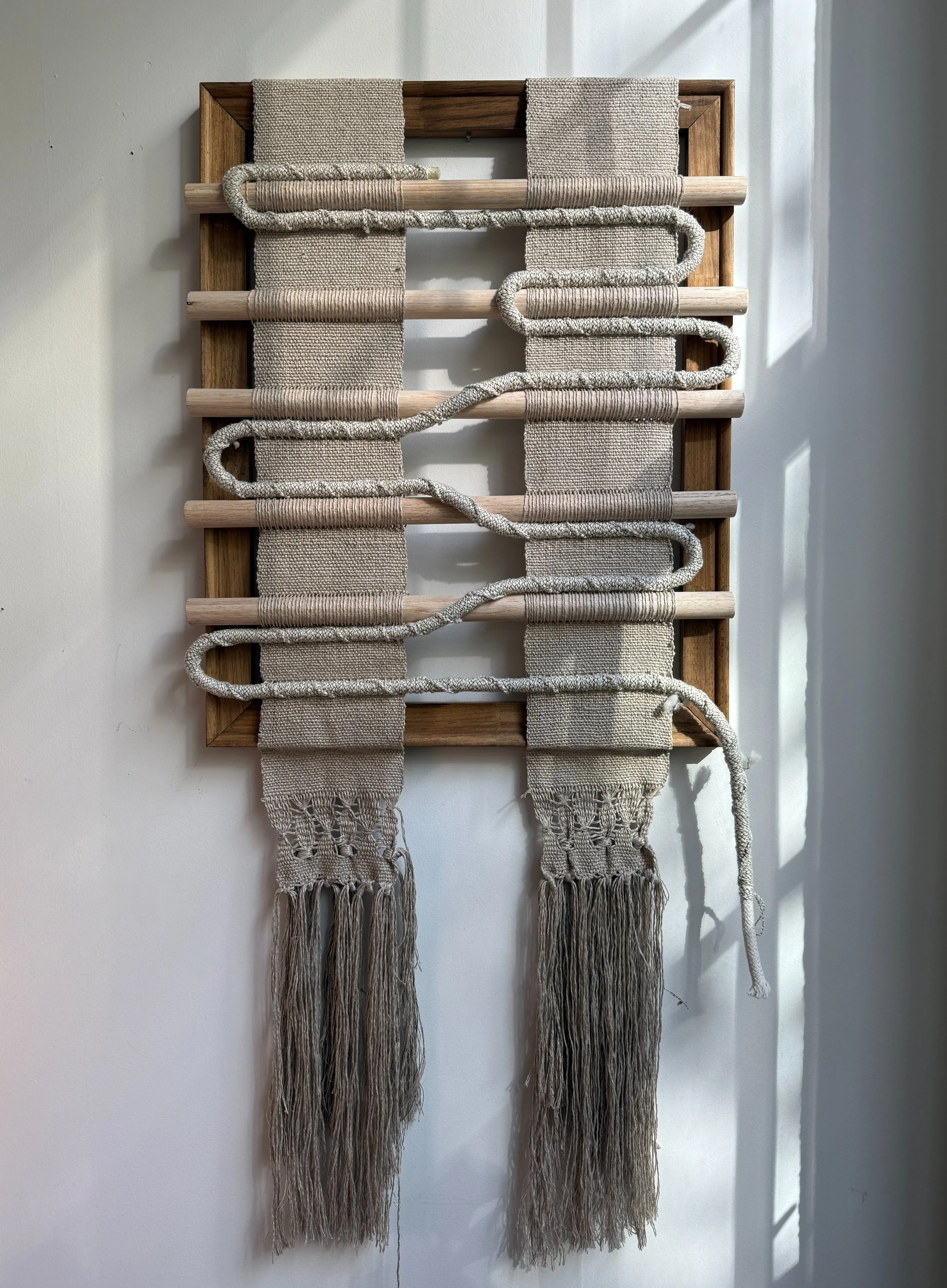

Saana Barker - Textile Eye
Saana Baker is a textile designer, consultant, and Editor-in-Chief of The Textile Eye, an independent quarterly report devoted to high-end textiles and surface design. She studied textile design at FIT before holding design leadership roles at Schumacher and Barbara Barry and consulting on collections for Jiun Ho, Kravet, Clarence House, Crypton, and McGuire Furniture. She founded The Textile Eye to provide in-depth international fair coverage, trend analysis, and industry interviews. Baker is also a frequent speaker, a Trend Spotter for Home Accents Today, and has appeared in Business of Home, Arch Digest Pro, Aspire Design and Home, and HUE.
William Storms
William Storms (b.1991) is a Brooklyn-based artist and textile designer exploring handweaving and material development. A graduate of FIT, he studied at ENSCI–Les Ateliers in Paris before developing Jacquard fabrics as a designer at US Textile Mills, like Sunbrella and Crypton. Through his namesake studio, he creates custom fabrics, sculptural woven works, and site specific installations in collaboration with the A&D community.
Lori Weitzner
Lori Weitzner, Principal Designer of Weitzner limited is internationally known for her contributions to the world of textiles, wallcoverings, rugs, passementerie, stone and tile, bedding, and other products for interiors and gifting. Her work is in the permanent collections of such museums as the Cooper- Hewitt in New York and The Victoria Albert in London as well as a special exhibition about color during the Venice Biennale 2022. She is the recipient of more than thirty five prestigious design awards and her work is featured regularly in such media as Elle Décor, Architectural Digest, and The New York Times. She has authored her first book, Ode to Color: The Ten Essential Palettes for Living and Design, published by HarperCollins, and lectures around the world on the effects of color on our well being. Including an extensive partnership with Google XI.
Brian Delp
Brian Delp is a consumer goods and retail strategist with executive leadership experience across global, product-driven organizations, including President at Himatsingka America and CEO at New Sega Home. He has operated across the full consumer ecosystem, holding leadership roles spanning manufacturers, importers, brand portfolios, and retail-facing organizations. In parallel, he teaches leadership, marketing, product strategy, and design research at the Fashion Institute of Technology and Parsons School of Design. He serves as Vice President of the Board of the Home Fashion Products Association and President of the HFPA Foundation, and contributes as a writer, speaker, and advisor across the retail and consumer landscape. He holds a B.A. in Business Administration from Elon University and an MBA from the Cornell SC Johnson Graduate School of Management.
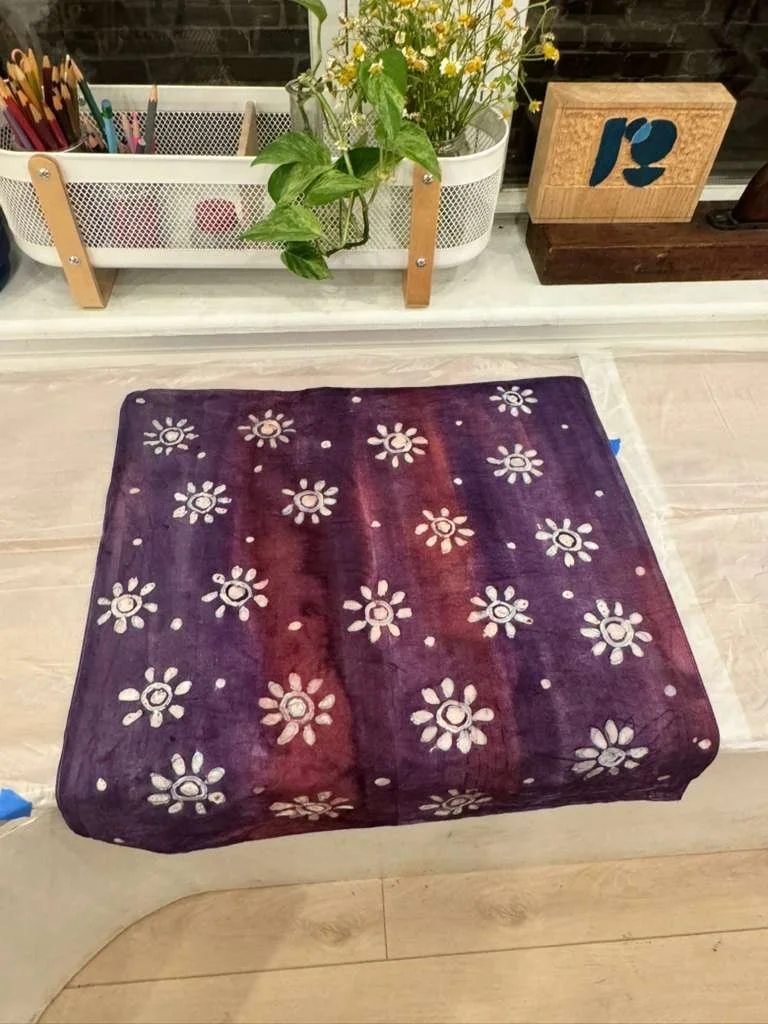
The Art of Batik: Exploring Wax-Resist Textiles
In person / Workshop / Dyeing
Drishti Jaggi is hosting The Art of Batik: Exploring Wax-Resist Textiles, an immersive workshop that introduces participants to the traditional art of batik and its contemporary possibilities. Through a hands-on exploration of wax-resist techniques, participants will learn how wax and dye interact to create layered patterns, textures, and unique textile surfaces.
The workshop invites participants to discover the process of designing on fabric through experimentation with wax application, color layering, and resist methods. Drawing inspiration from the rich cultural history of batik, the session encourages participants to explore their own creative expressions while gaining an understanding of this time-honored textile practice.
Participants will have the opportunity to experiment with different tools, materials, and approaches to create their own batik-inspired textile pieces. The workshop is designed for all skill levels and welcomes anyone interested in textiles, surface design, and sustainable craft practices.
Through this creative experience, Drishti Jaggi aims to celebrate the beauty of textile traditions while encouraging mindful making, material exploration, and a deeper appreciation for the stories woven into cloth.
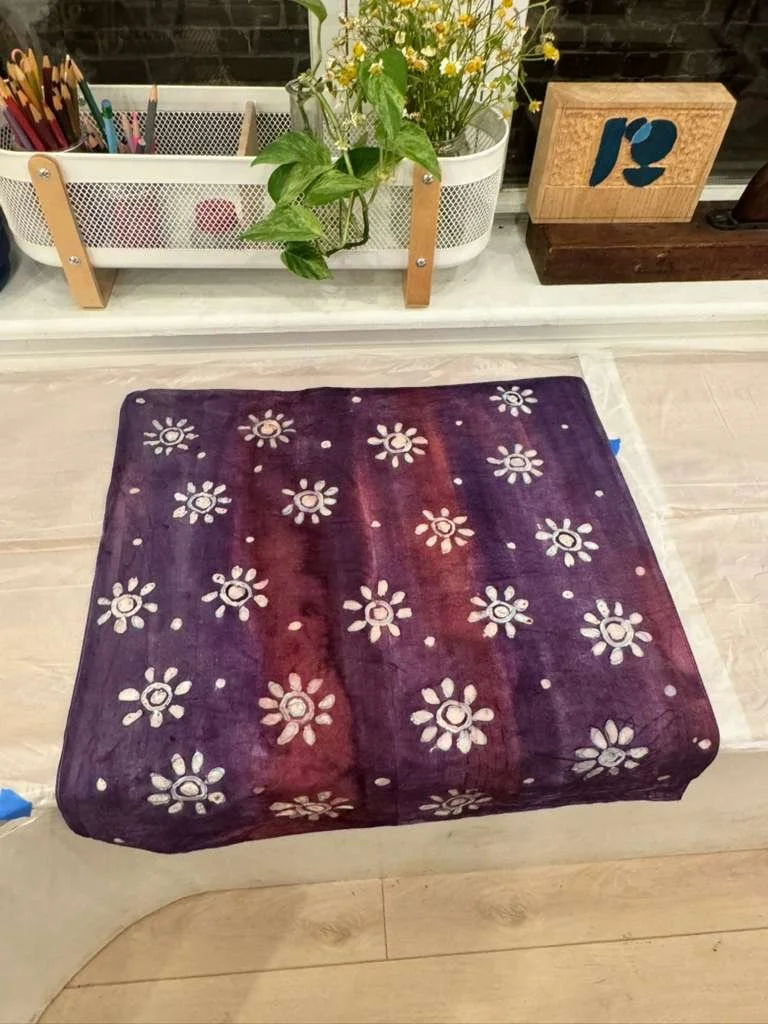
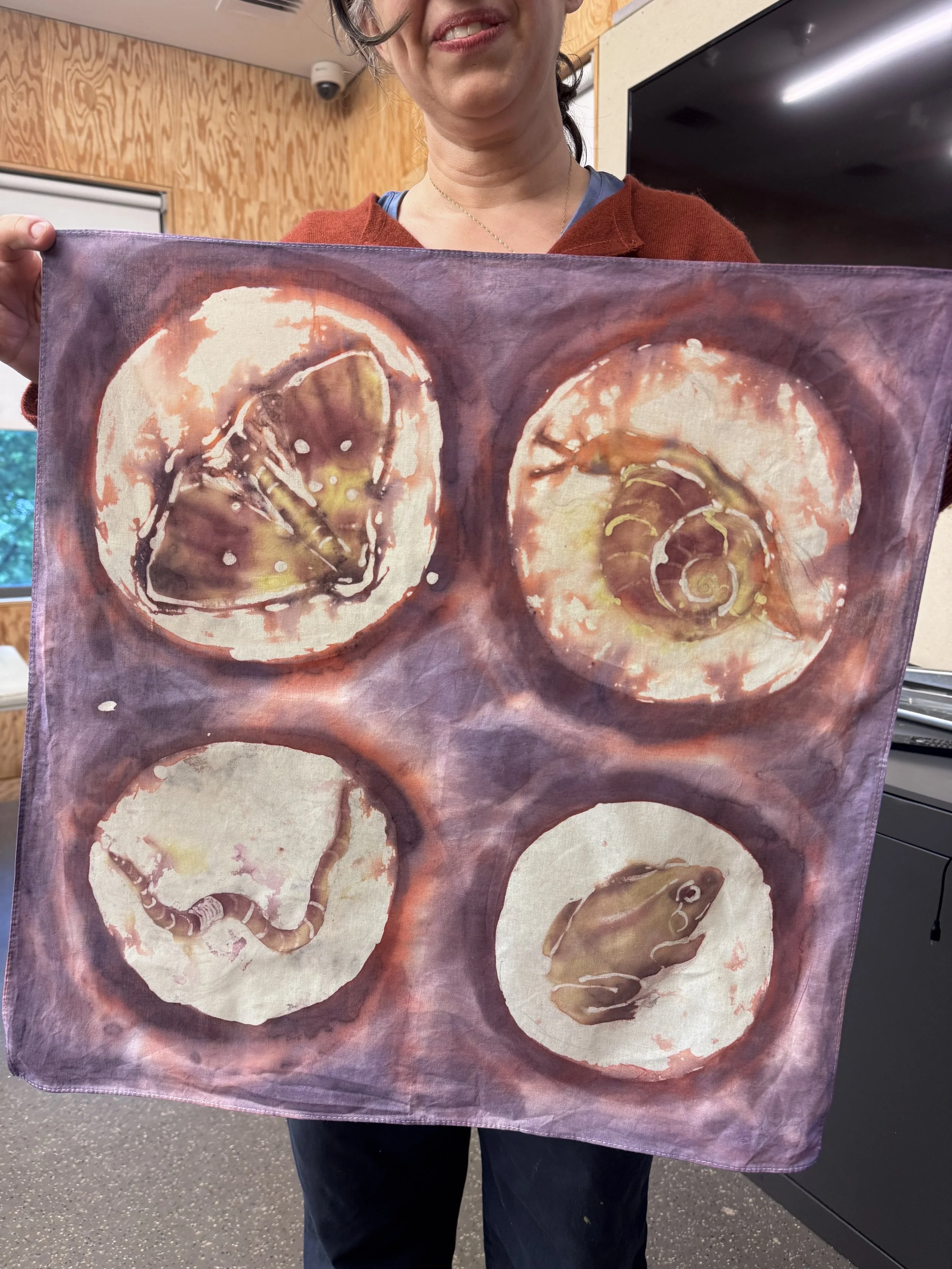
Drishti Jaggi is a New York–based textile artist and designer whose practice bridges sustainability with traditional craftsmanship. Her work explores the cultural significance of textiles through the use of natural fibers, natural dyes, and handcraft techniques. Alongside her studio practice, Drishti leads community workshops that promote creative reuse, textile education, and accessible making. She is dedicated to fostering inclusive and sustainable design practices that connect people through the shared language of textiles, craft, and community.
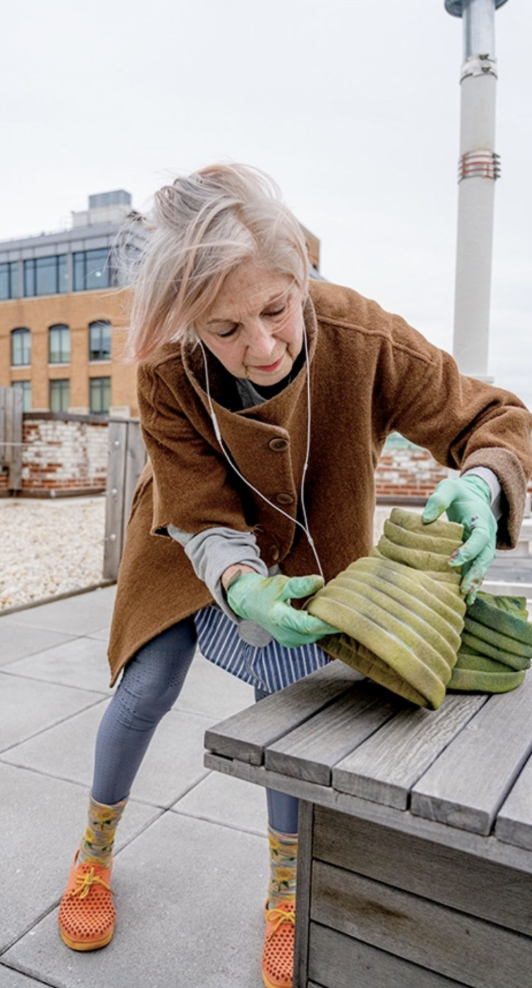
7 WORDS OF HOPE - Panel Discussion
In person / Talk / Multiple Techniques
7 WORDS OF HOPE: Love Joy Peace Courage Empathy Compassion Happiness
Panel Discussion: The Future of Handmade
Join us for an afternoon of conversation with cultural luminaries and artists as we discuss the relevance of handmade work, textiles, craft, couture and luxury, resilience, and the 7 Words of Hope in our modern world.
Moderated by Mary Jaeger, featuring special guest panelists:
Debra Rapoport @debrarapoport
Raylene Marasco - Dyenamix, Incdyenamix.com@dyenamixinc
Robert Danes - The Dane's New York @thedanesnyc
The program at Mary Jaeger Atelier:
Opening Reception: Sunday, September 6
12:00 PM - 5:00 PM Gallery Open
Artist Talks at 2:00 PM Learn more here
Panel Discussion: Sunday, September 13
12:00 PM - 5:00 PM Gallery Open
Panel Discussion at 2:00 PM - 3:30 PM
Closing Reception: Thursday, September 17
12:00 PM - 8:00 PM Gallery Open
5:00 PM - 8:00 PM Closing Reception
Artist Talks at 6:00 PM
Exhibition: Sunday, September 6 - Thursday, September 17
12:00 PM - 5:00 PM Daily, other times by appointment: email mary@maryjaeger.com
No registration required!
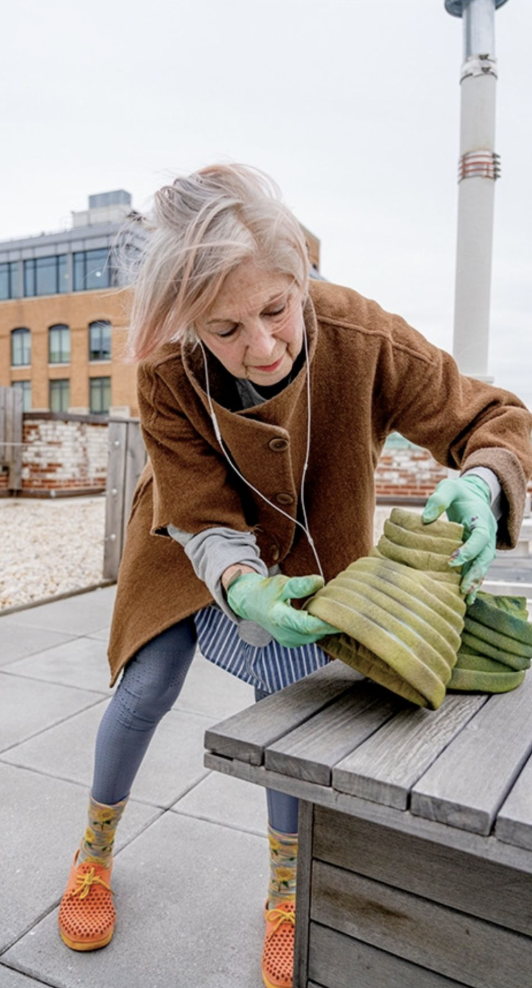
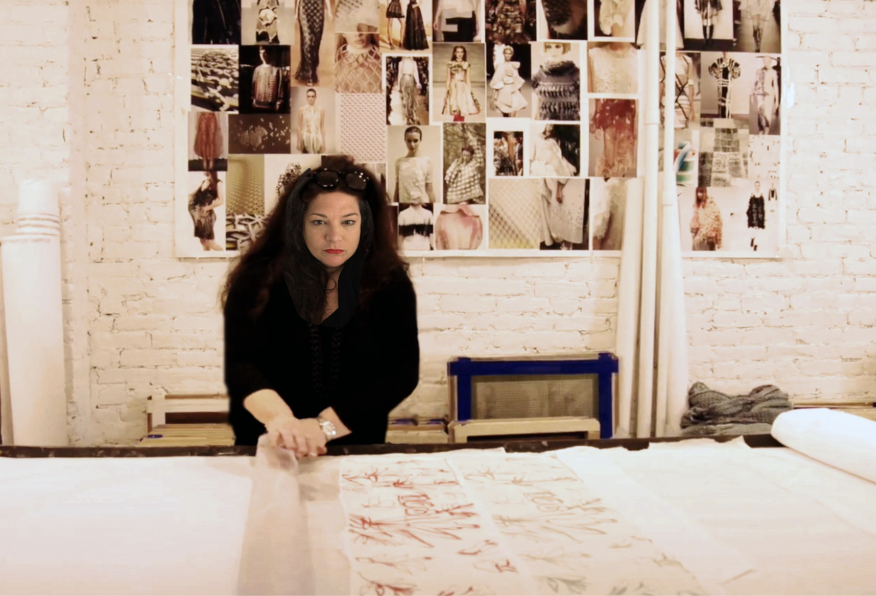
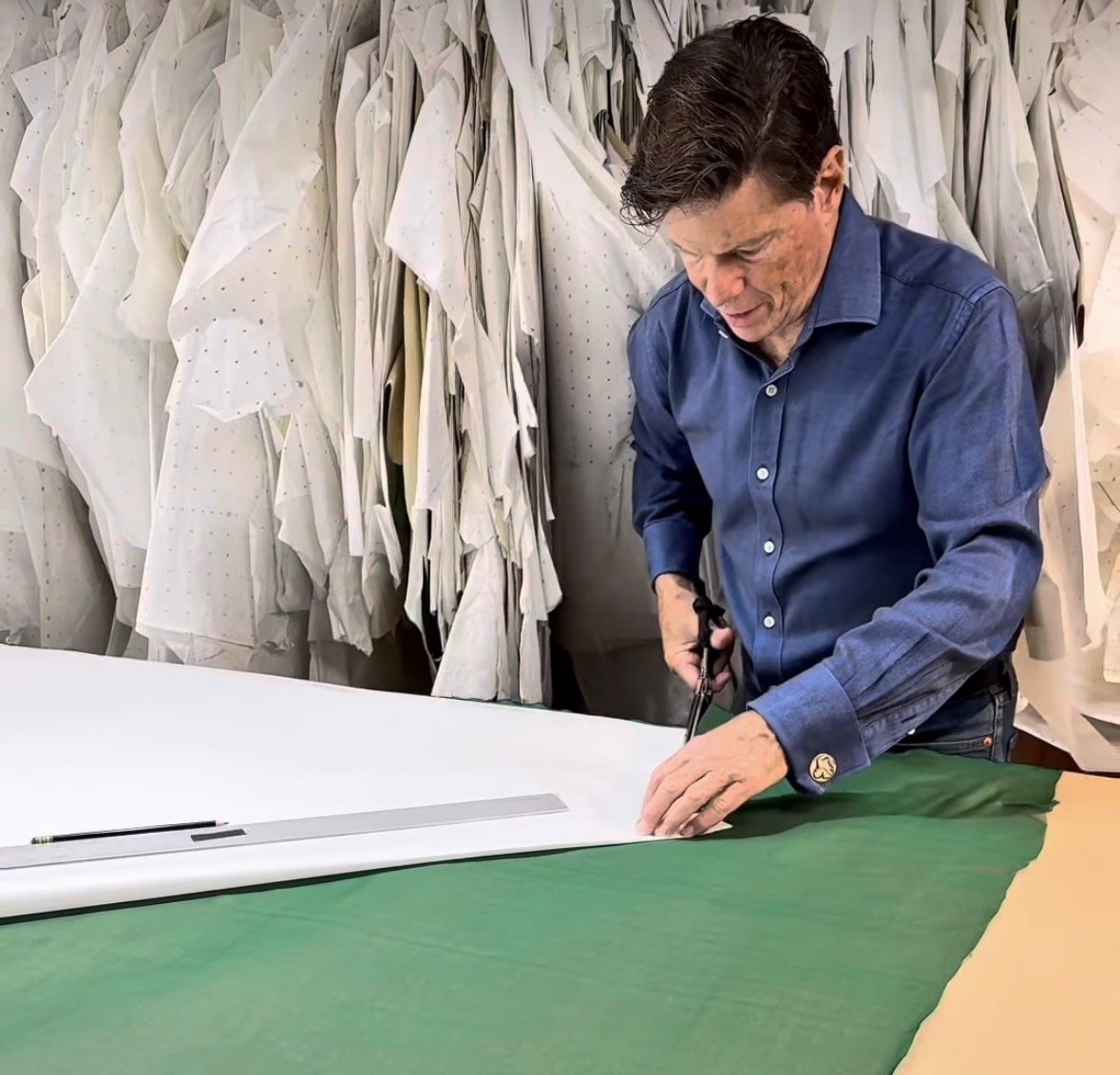
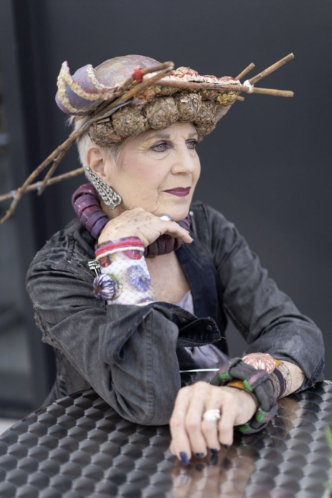
“Where there’s CREATIVITY there are no RULES; where thereare no RULES, there is NO FEAR.” - Debra Rapoport
NYC-based Textile Artist l Creative & Educator
Debra Rapoport is a mixed-media artist celebrating the transformative power of creativity. Utilizing found materials—fiber, cloth, paper, metal—she constructs intricate body embellishments and sculptural hat forms that promote "HATITUDE." A fixture in the Advanced Style movement, Rapoport’s work reflects her philosophy that "style is healing." Her acclaimed pieces have been exhibited internationally at institutions including the Met, the Hermitage, and the National Gallery of Victoria. An accomplished educator with degrees from Carnegie Mellon and UC Berkeley, she has taught at UC Davis and major NYC institutions like MoMA, dedicated to the belief that life is better with age.
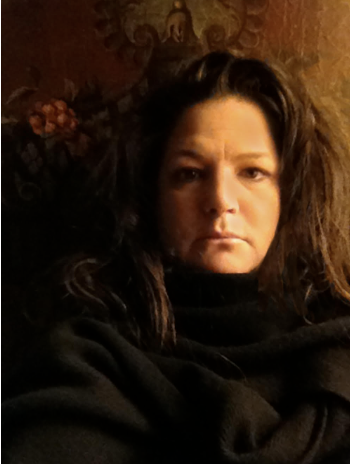
Raylene Marasco, Dyenamix, Inc
“I approach each project with creativity, passion, integrity and artistic sensibility.” - Raylene Marasco
Dyenamix Inc l Founder & Creative Director
Raylene Marasco founder of Dyenamix, Inc., is a sculptor turned surface designer known for experimental, high-profile textile projects. Since 1991, she has collaborated with top designers across fashion, film, theater, and fine art to create innovative, bespoke fabrics. Her work graces runways from Ralph Lauren to Oscar de la Renta, Broadway stages like The Lion King and Wicked, and collections at MoMA and the Met. Whether for film, costumes, or residential interiors, Raylene approaches every project with artistic sensibility and technical precision. Her innovative textile solutions help define the aesthetic of iconic projects worldwide.
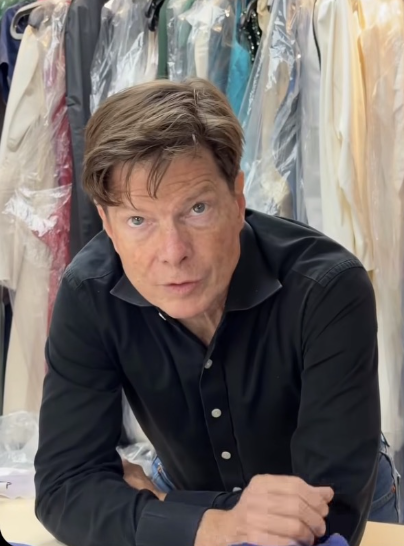
Robert Danes, The Dane’s New York
“There was no ignoring my passion for making clothes and designing, and I started a career that continues to this day.” - Robert Danes
The Dane's New York l Custom & Made-to-Measure Designer
Robert Danes has been making clothes since his grandmother taught him to sew in high school. After graduating from Yale with a degree in architecture and working on Wall Street, he pivoted to his true vocation, establishing himself as a fixture in the American retail landscape. Over a career spanning 30 years, most notably at Barney’s and now Bergdorf Goodman, Danes has evolved into a premier evening wear designer, celebrated for his intricate custom and made-to-measure collections that combine traditional rigor with modern, thoughtful elegance.
Mary Jaeger
“The core of my textile work is inspired by my passion for handmade and handcrafted details, twisting colors, textiles and patterns in unorthodox ways” – Mary Jaeger
NYC-based Contemporary Textile Accessory Designer I Artist & Innovator
Mary Jaeger’s work explores the intersection of modern elegance and rich tradition. Her aesthetic is defined by uncluttered textiles and accessories that seamlessly meld ancient Eastern sensibilities with contemporary Western design. Drawing on years of study and work across Japan and other areas of Asia, Southeast Asia, and Europe, Jaeger creates timeless collections for fashion and interiors that transition effortlessly between seasons, settings, and occasions. Her work is exhibited nationally and internationally, and can be experienced firsthand at her atelier in Brooklyn, NY.
Located in Williamsburg, Brooklyn, the Mary Jaeger Atelier is a creative studio and retail space where innovative textile designs move from conception to production. Focused on sustainability and circularity, the atelier produces one-of-a-kind and limited-edition clothing, accessories, and interior objects. Mary’s collections utilize natural fibers, shaped-resist dyeing (shibori), and three-dimensional fabric manipulation, often reimagining vintage and post-production materials. Beyond production, the atelier serves as a vibrant community hub for the textile arts, hosting hands-on workshops, international exhibitions, and panel discussions that teach new skills, explore the value of handmade work, and foster camaraderie among makers and clients.
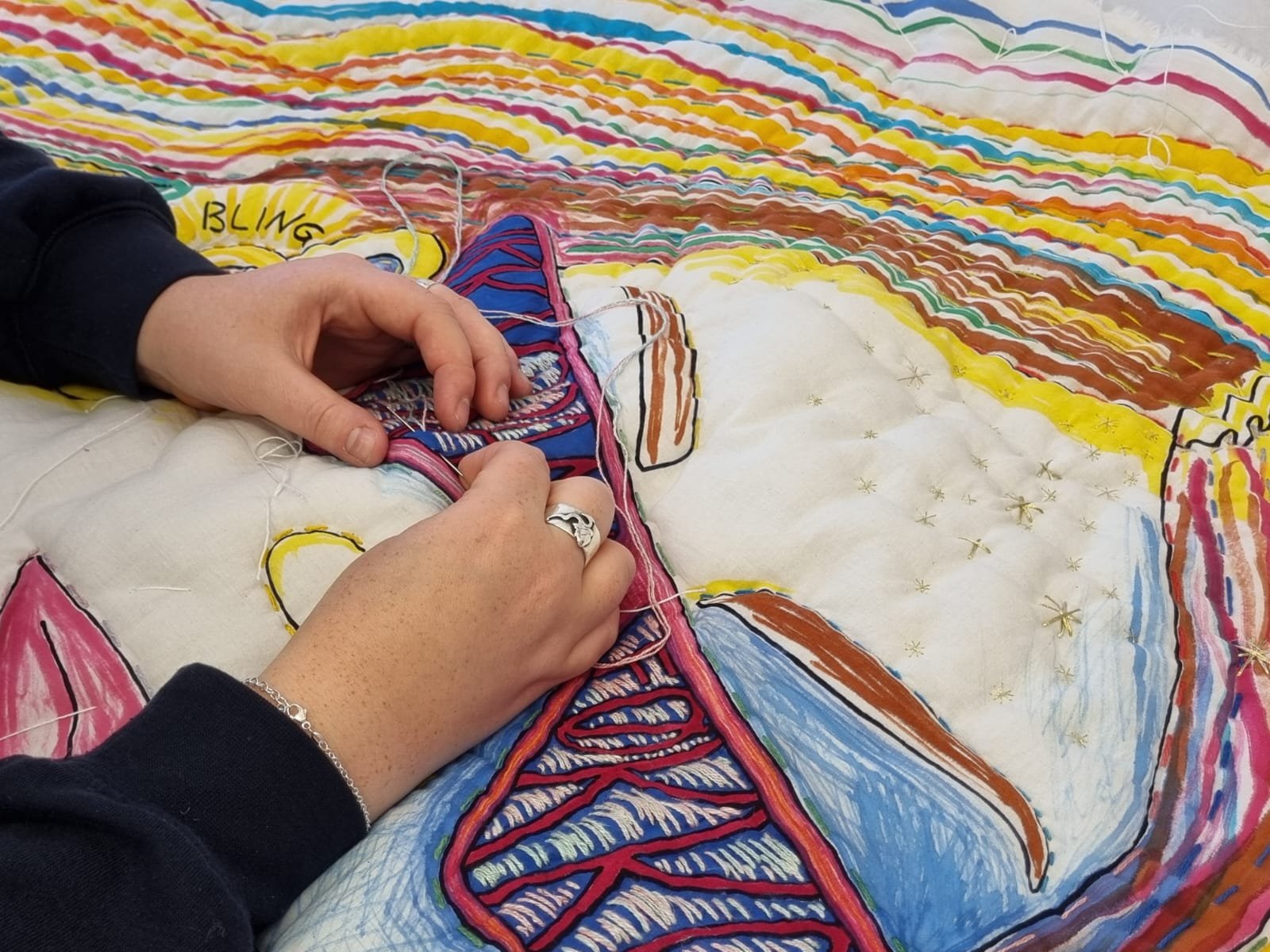
STITCHING CIRCLE
Spend an afternoon stitching alongside three Nordic textile artists — Thorunn Elisabet Sveinsdottir, Nora Martine Hjelle Strand, and Andrea Magdalena Jónsdóttir — as they share embroidery techniques and stories in this hands-on workshop. September 13, 12–4pm at Scandinavia House, part of the Nordic Textile Takeover.
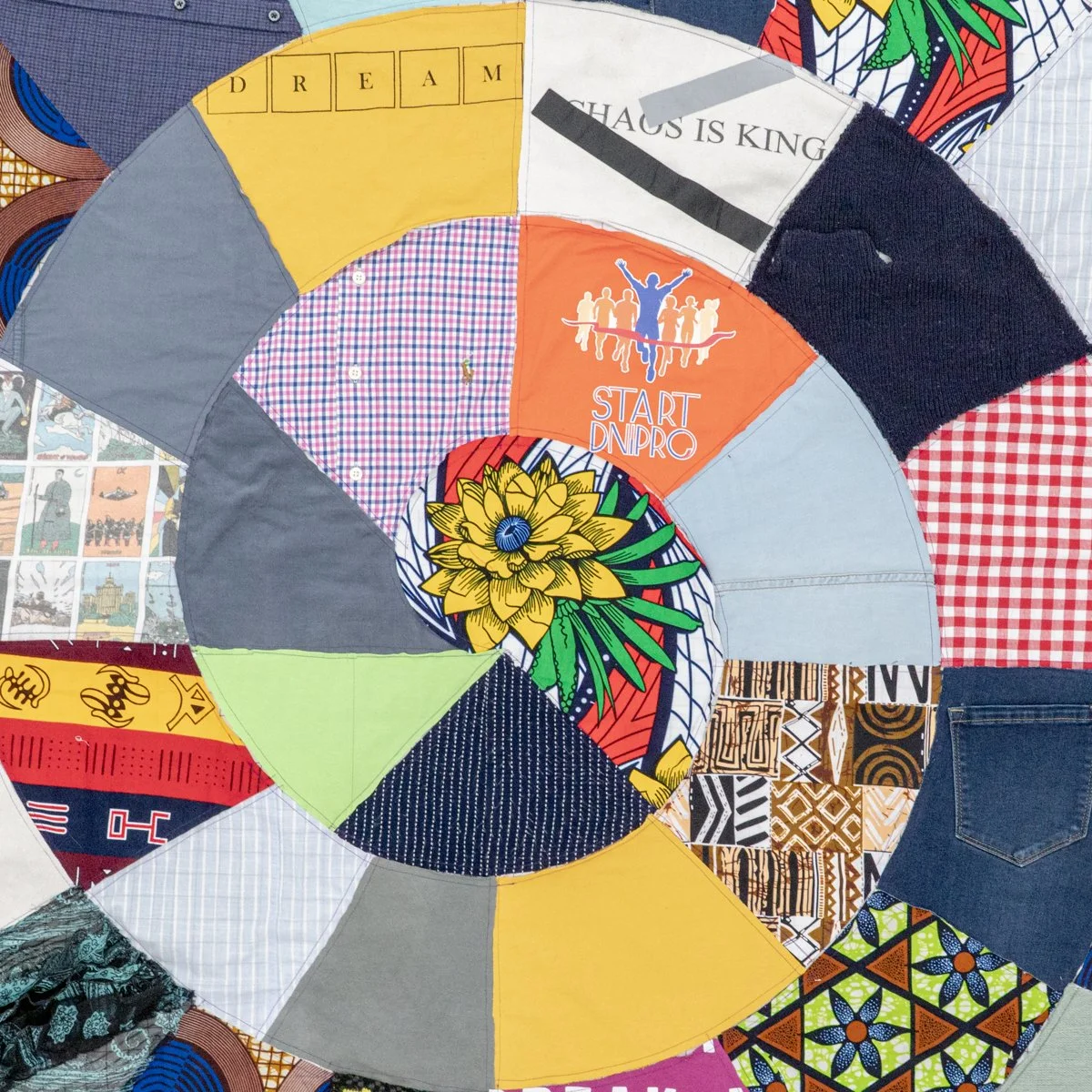
The Cold Stitch Artist Talks and Reception
In the Nordic countries, stitching has long transcended simple decoration or domestic craft. It has been a necessity, a means of storytelling, survival, memory, and care. Shaped by cold climates and long winters, textiles historically became vital vessels of warmth, protection, repair, and continuity, carrying the deep traces of everyday life and cultural identity across generations. The Cold Stitch brings together contemporary artists from across Scandinavia whose practices engage with textiles as both a tactile material and a profound language. The title refers not only to the geography of the North, but also to our relationship with textiles and the act of stitching itself. A stitch repairs, connects, layers, and transforms. It binds physical fragments together while allowing hidden histories, emotions, reflections on the political climate, and personal narratives to remain visible.eractive session for makers and thinkers to collaborate, connect, and spark new ideas.
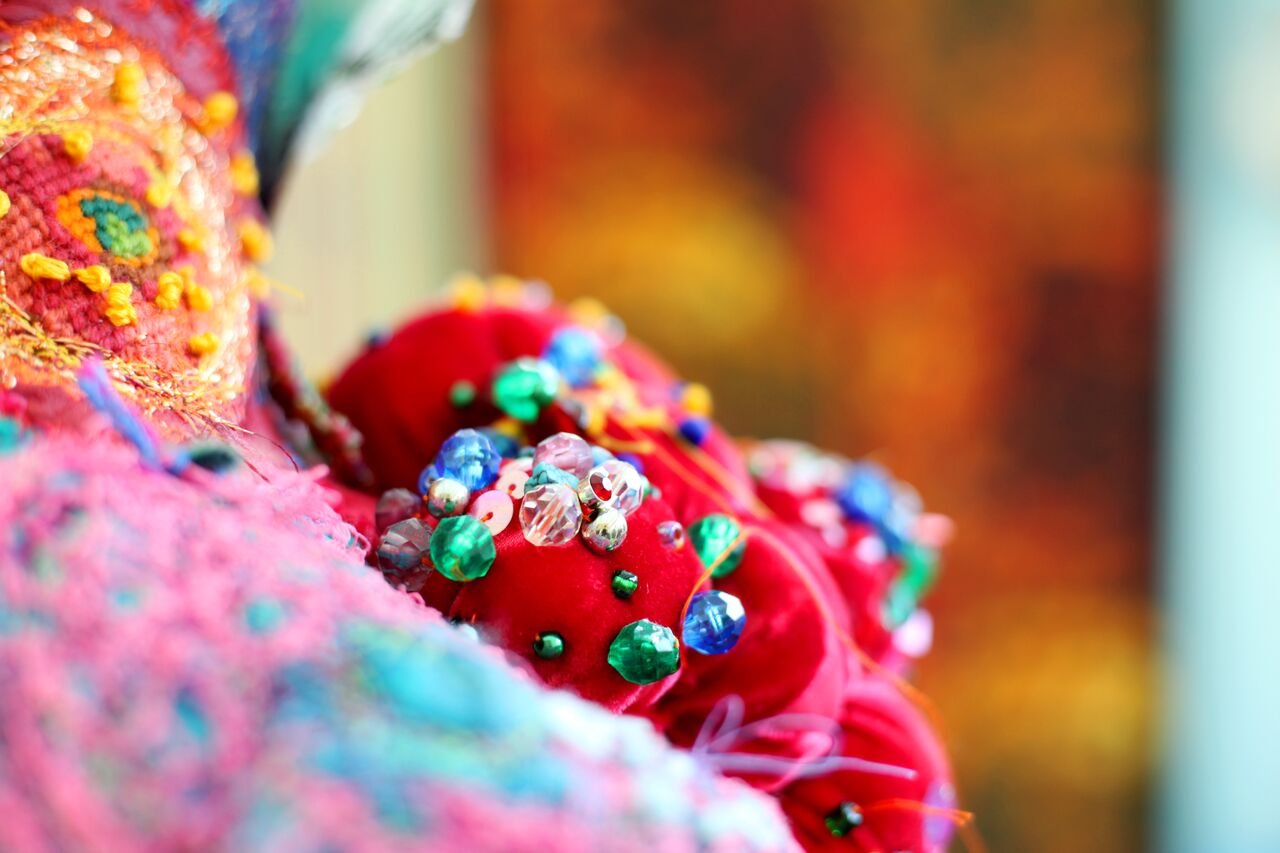
Textile Sculptures
In person / Workshop / Embroidery
The workshop will explore the possibilities of working 3-dimensionally to create textile sculptures, learning traditional hand-embroidery techniques alongside beading, couching and appliqué.
The workshop will cover the different stages of the design process from inspiration and idea development to final realisation.
Each participant will be provided with a recycled sketchbook for initial investigations and thought processes.
We will experiment with form, shape, pattern, colour, line, and stitch using recycled materials such as plastics, found objects and fabrics.
Jenni’s work will be exhibited during the workshop for participants to view and ask questions regarding her practice.
The workshop is free and available to the first twelve participants on the day.
No registration required!
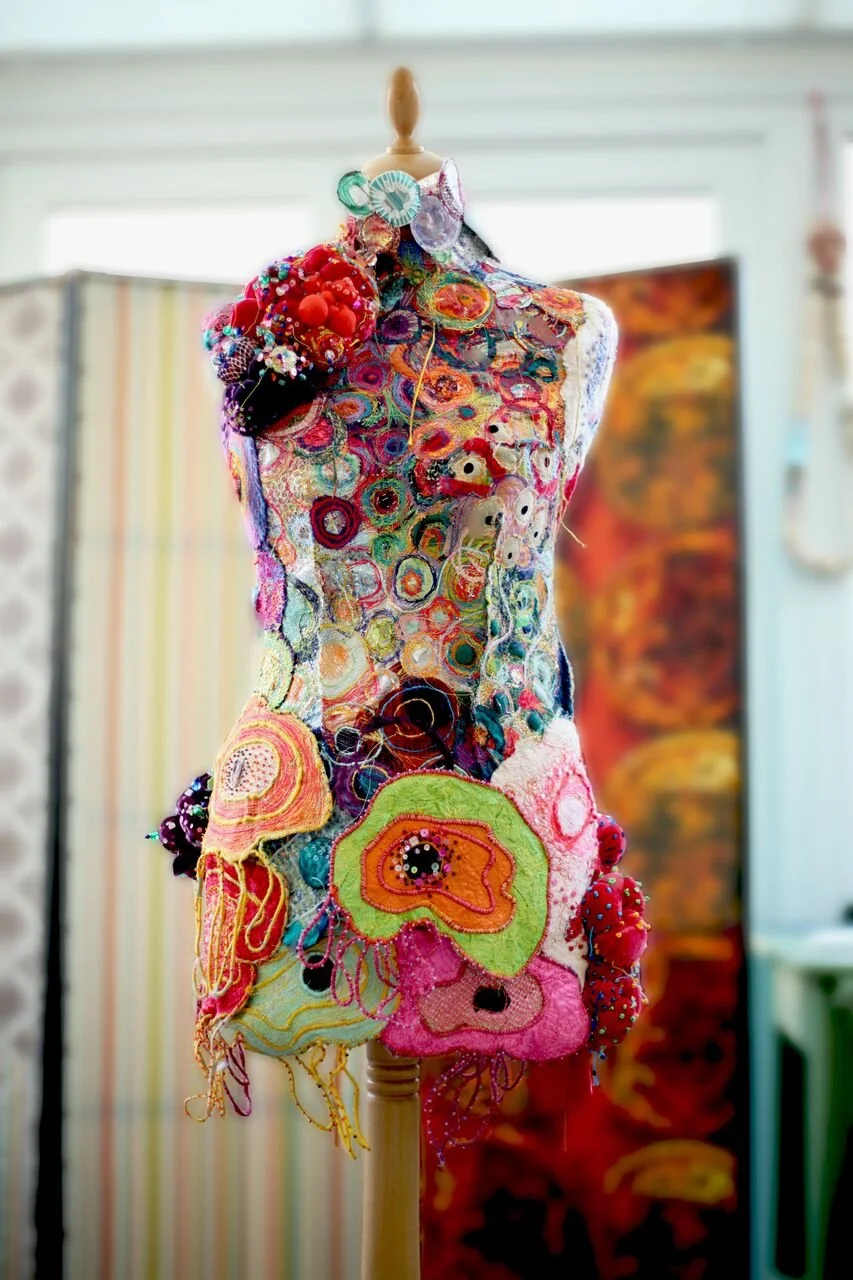
Jenni Horton (JenniBurrowsArt) is a textile artist using embroidery techniques to creatively express our interrelation with experiences and processes.
‘Embroidery is often associated with solely decoration. In my work, thread stitches together key themes within our lives’; care, value, memory and community.’
Jenni completed an MA in Contemporary Embroidery at The School of Art, Architecture and Design (London), which has enabled her to develop her practice and exhibit internationally. Her work has been funded by the British Arts Council, leading inter-generational workshops in rural communities in the UK.
Jenni’s art was featured in a short film, ‘You’ll be fine’ and was premiered in London by the British Craft Council in London and subsequently screened worldwide.
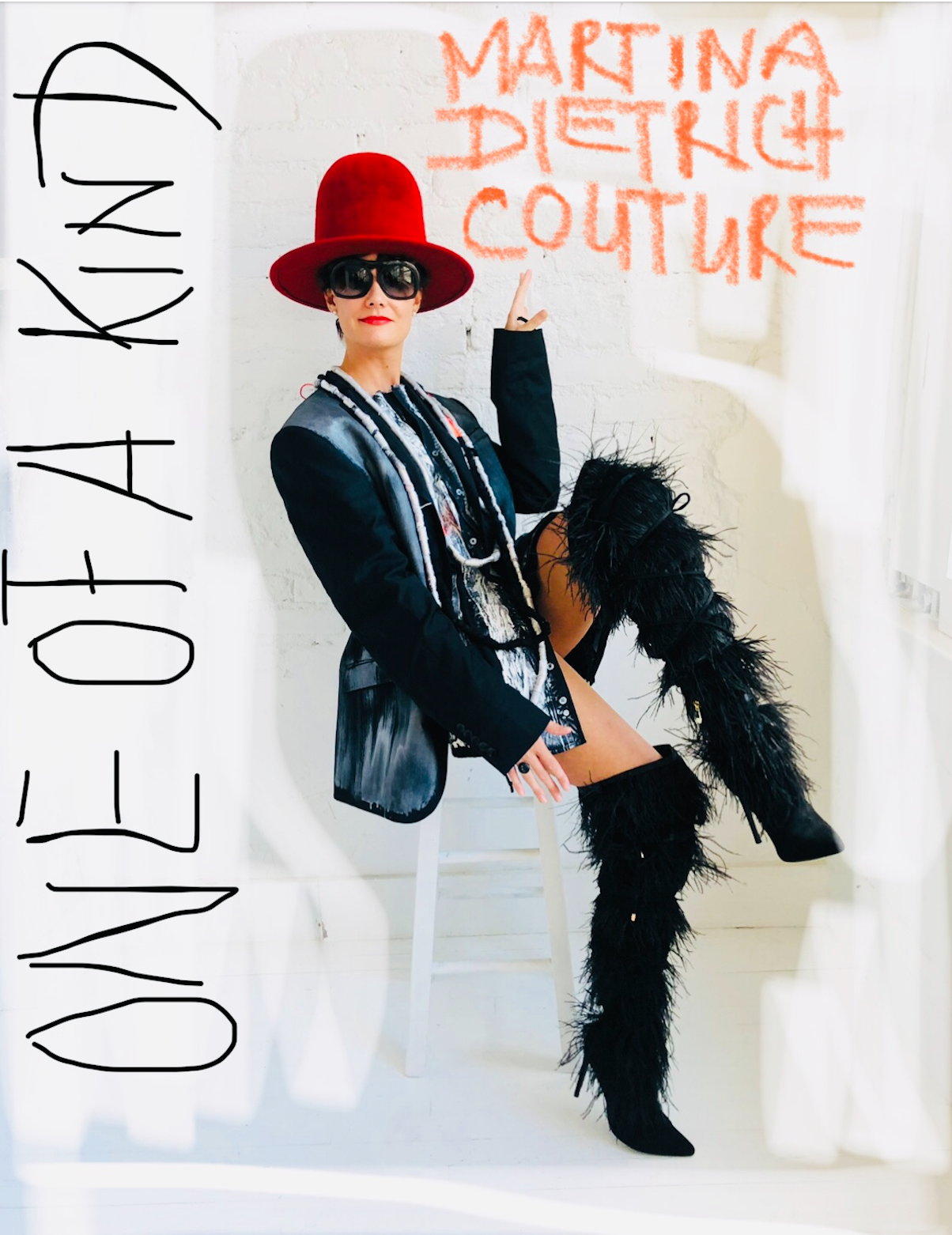
Fashion Boutique Pop - up at Lumas Gallery Soho
In Person/ Pop up / Hand painted
Lukas Gallery Soho is hosting a one-day Boutique Pop-up with Fashion Designer and Artist Martina Dietrich. A curated selection of MARTINA DIETRICH COUTURE ONE - OF - A - KIND hand painted couture styles are available to add to your personal collection. Each couture creation is expertly hand-crafted with stylish elegance to enhance the wearer's personality. Martina Dietrich has developed a signature visual presence that stands out within the fashion landscape.
Martina Dietrich will be at the gallery to personally present her collection and assist you in selecting the perfect piece to add to your wardrobe."


Martina Dietrich Couture Is An Assemblage Of One-Of-A-Kind Hand Crafted Pieces That Are Timeless, Seasonless, And Trend-Free, Designed To Create A Sustainable And Authentic Wardrobe. Each Statement Piece Supports Your Individuality, Allowing You To Shine With Your Unique Bauty.
Being Human, Being Unique, Being One-Of-A-Kind – Enjoy Wearing One-Of-A-Kind!
Being Conscious And Kind To Our Environment And To Ourseves Leads To A Redefinition Of Fashion. “More With Less” Describes It Perfectly. More Quality, More Sustainability With Less Waste, Less Pollution.
Wearing One-Of-A-Kind Mdc’S Is The Highest Level Of Being Sustainable In Fashion.
The Assemblage Enfolds:
Martina Dietrich Couture One-Of-A-Kind Pieces Are Made From Collected Fabrics Around The World. Martina Dietrich Couture Re•Creations Are One-Of-A-Kind Pieces Made From Existing/Vintage Garments Upcycled Through Different Hand Crafted Techniques Such As Tie Dye, Hand Painted, Embroidery, Appliqué And Print. Martina Dietrich Zero-Waste Accessories One-Of-A-Kind Pieces Are Made Out Of Fabric Scraps From Previous Creations.
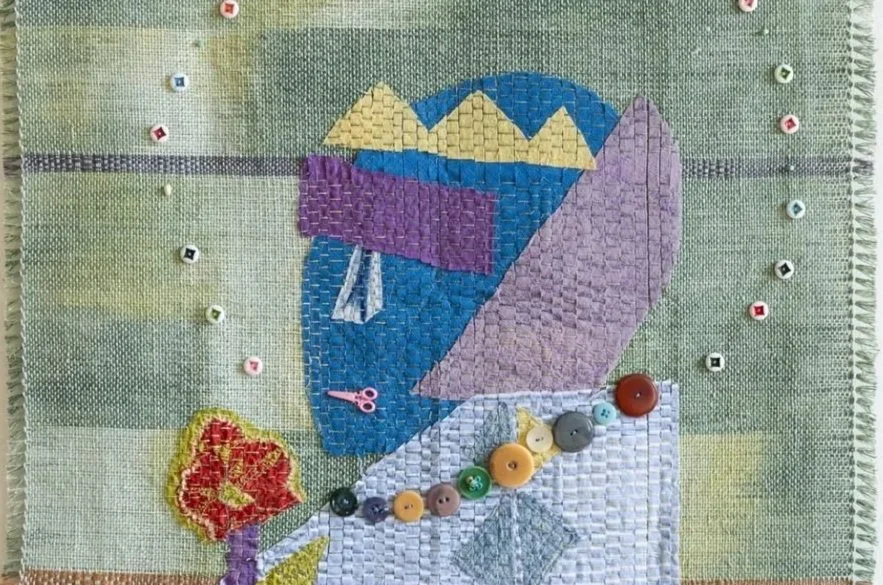
Fiber Thinks!
In person / Exhibition / Multiple Techniques
Fiber Thinks! is a fiber-focused group exhibition presented at Elsa Kayal Gallery in New York City. It brings together Frid Branham, Ragna Froda, Kathie Halfin, Lin Qiqing, Ollie Hongji Li, and Clayton Okaly. These artists use textile as a rigorous way of knowing an art form that builds culture and meaning through structure, repetition, tension, and touch.
Frïd Branham reads fiber through the built environment and daily ritual, making the everyday newly legible. Ragna Fróða explores how pattern, symbol, and material knowledge circulate across fiber cultures and through time. Kathie Halfin spins industrial paper into yarn to weave plant-like sculptures that follow cyclical time, treating textile as ecological code. Ollie Hongji Li works with knotting and natural dye to create biomorphic forms where technique becomes cosmology. Clayton Okaly draws on the quilt’s communal history, using repetition to hold continuity, belonging, and memory. Lin Qiqing turns weaving into a writing system where meaning accumulates through fragments, symbols, and touch.
Textile is one of art history's earliest languages. Cloth has long carried images, symbols, and social codes, marking belonging, recording ritual, and passing knowledge hand to hand. Yet fiber was often relegated to the categories of "decorative," "craft," and "female labor" through gendered and classed hierarchies. The artists in the exhibition challenge these distinctions through dialogue and cross-pollination among diverse identities, as well as through practices rooted in slow labor and sustained attention.
Fiber Thinks! pushes beyond the inclusion of fiber within contemporary art discourse. The exhibition asserts fiber not as a trend, but as a way of thinking. In an age shaped by shortened attention spans and by skimming in search of instant clarity and gratification, textile insists on closer looking and slower reading. Its truth is not immediate but cumulative. It lives in joins and edges, tension and gesture, repetition and repair. Together, these artists illuminate fiber as a contemporary language that remains deeply connected to historical traditions while generating new forms of knowledge, meaning, and relation in the present.
Opening reception Thursday Sept 12th 6 - 8pm
Exhibition is open during gallery hours Sept 12th - Oct 9th
No registration required!
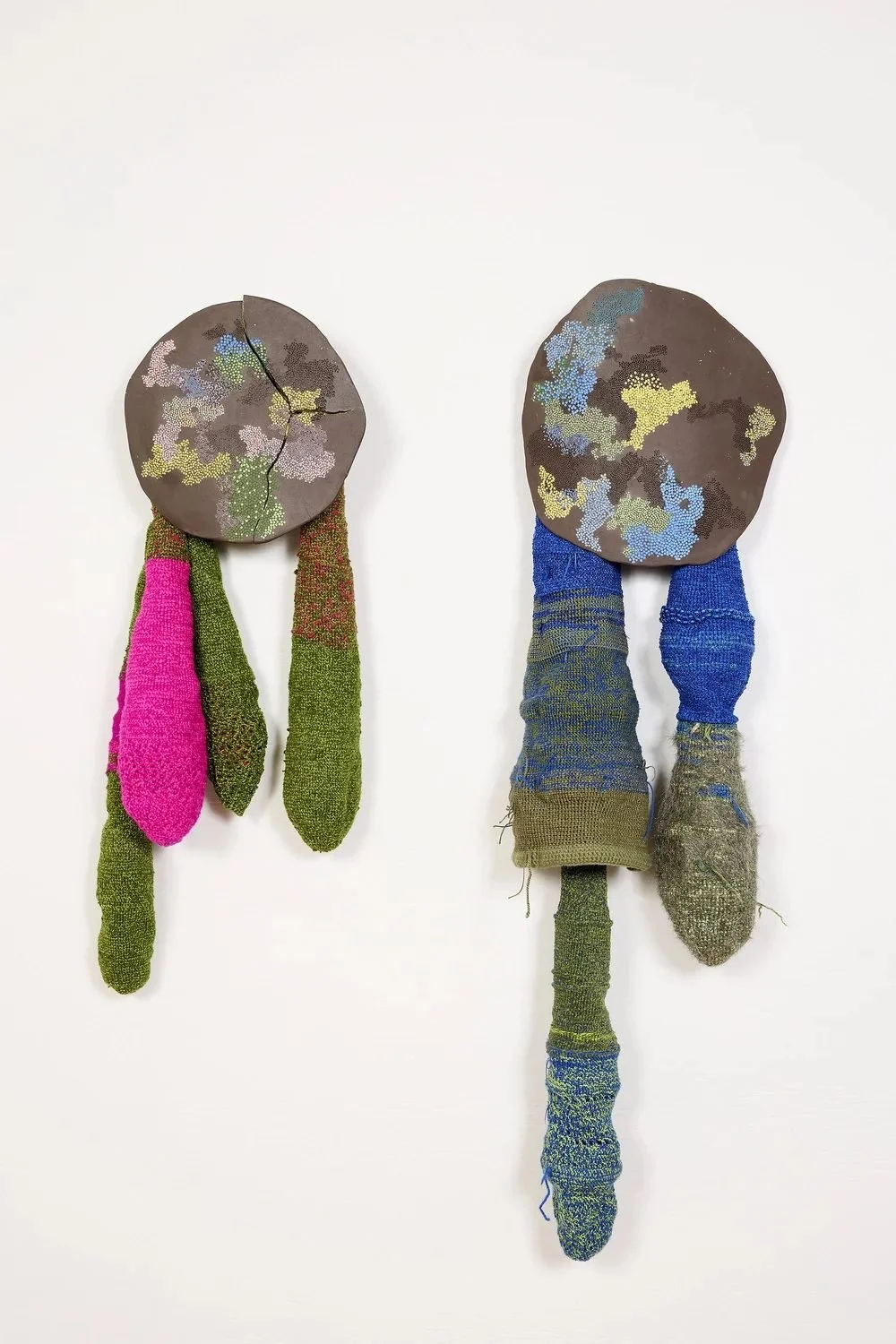
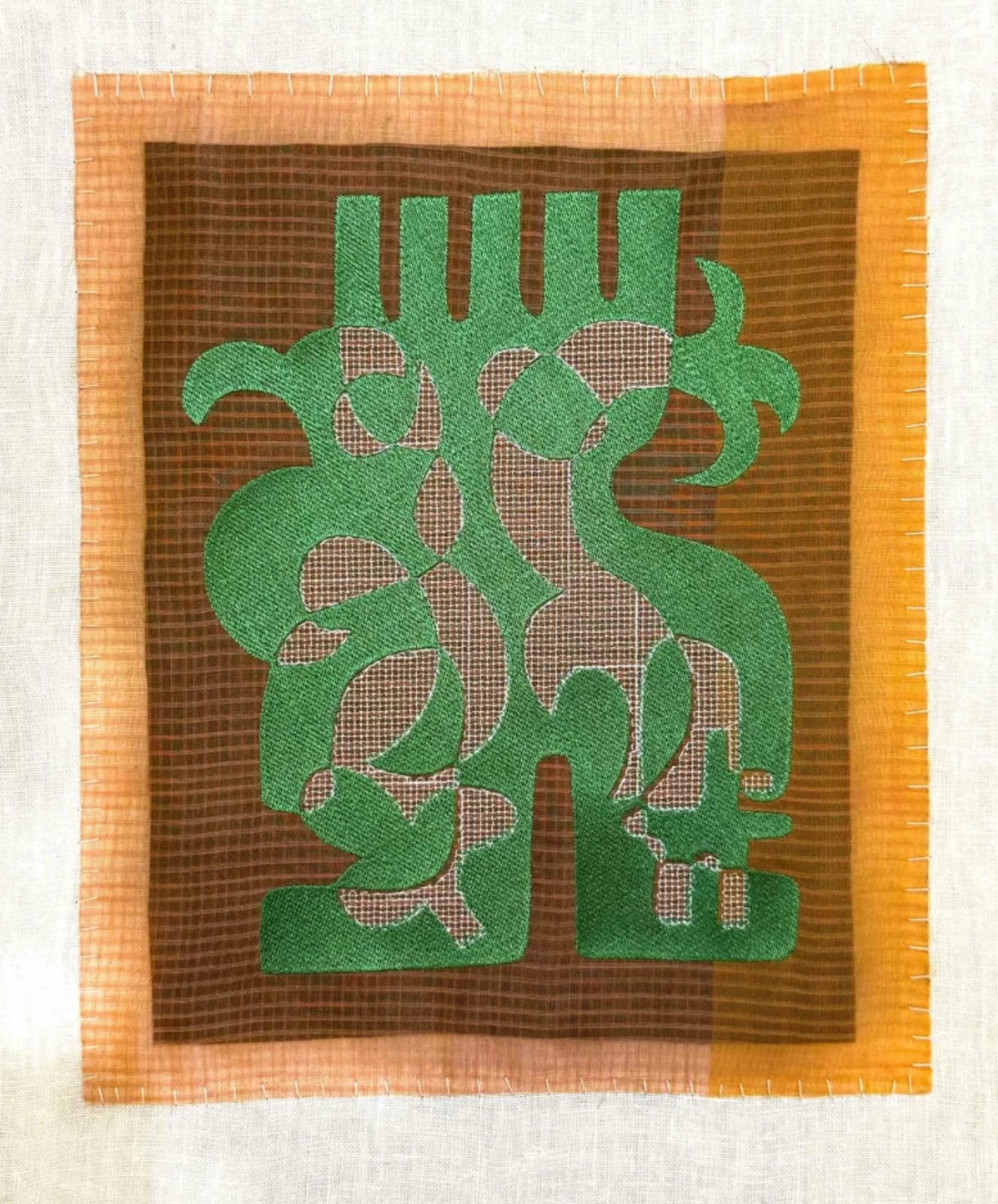
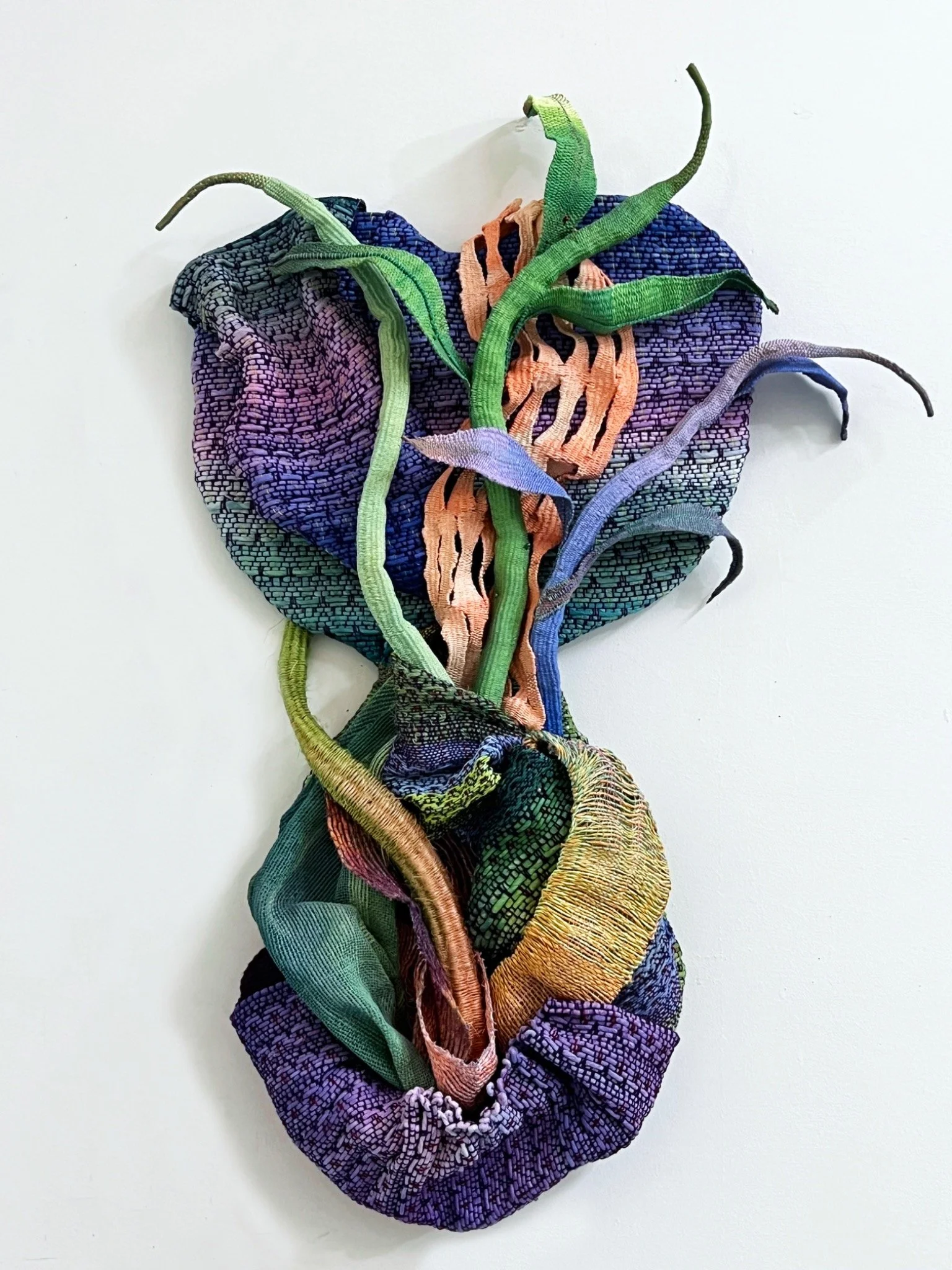
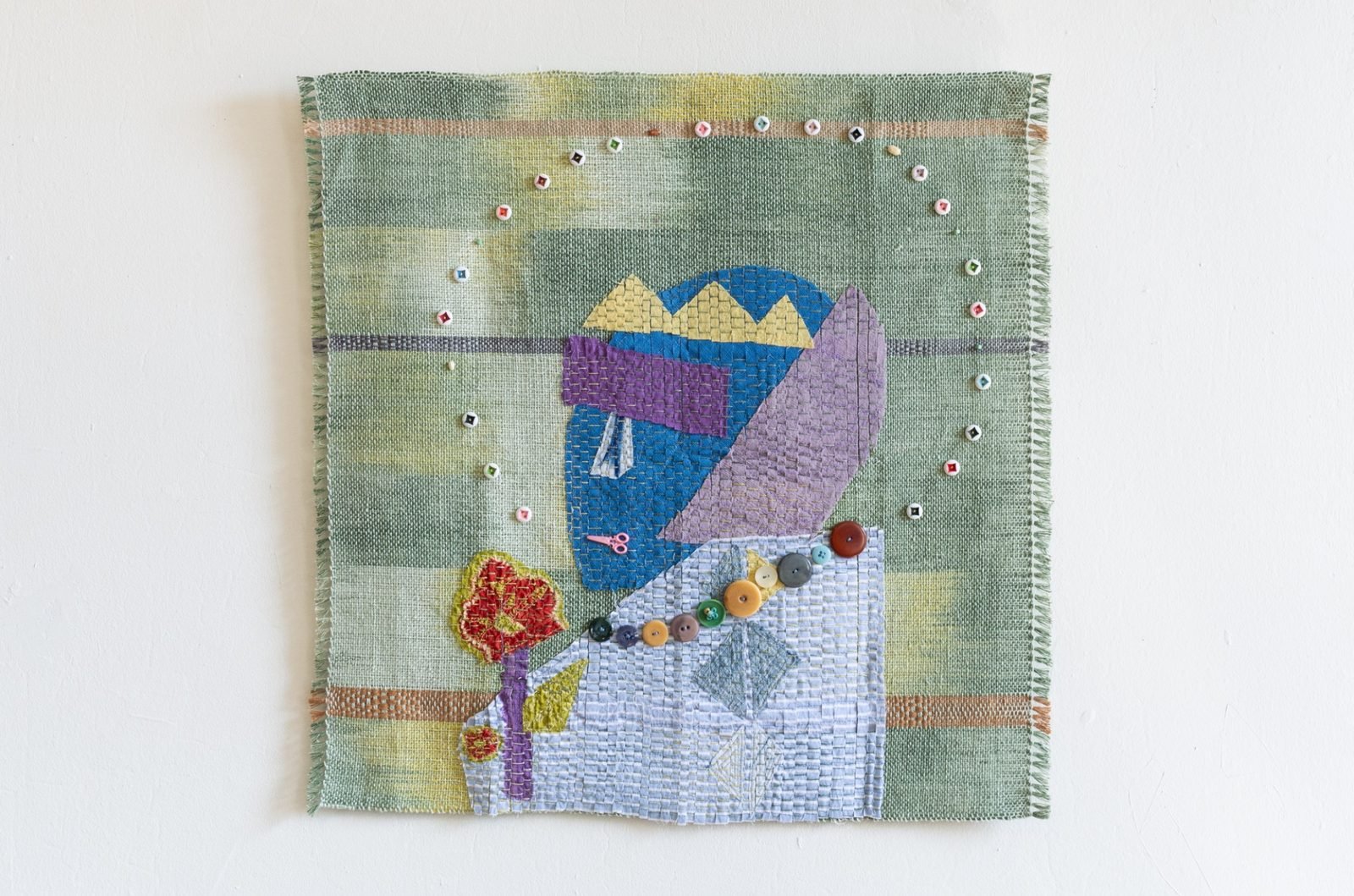
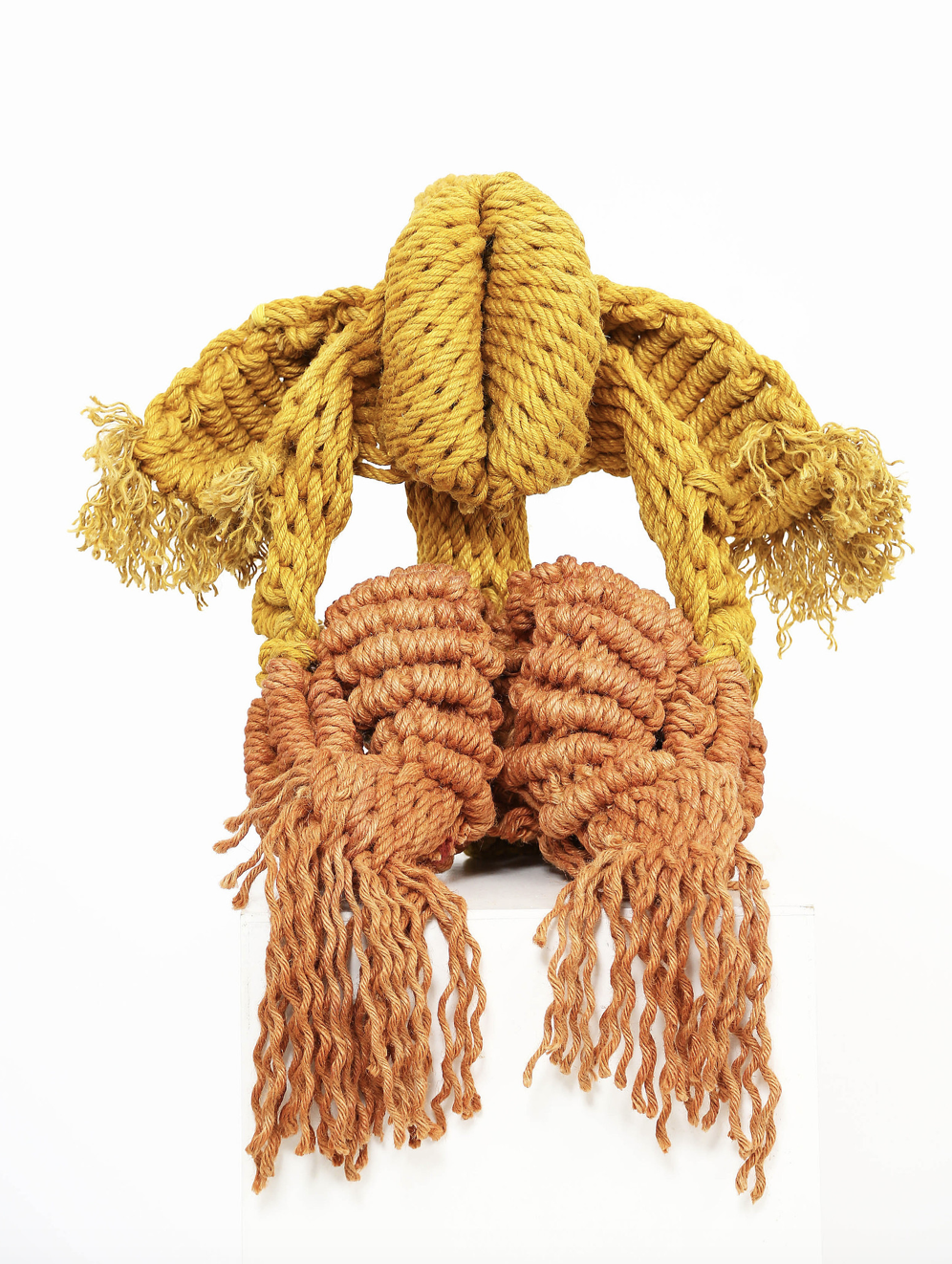
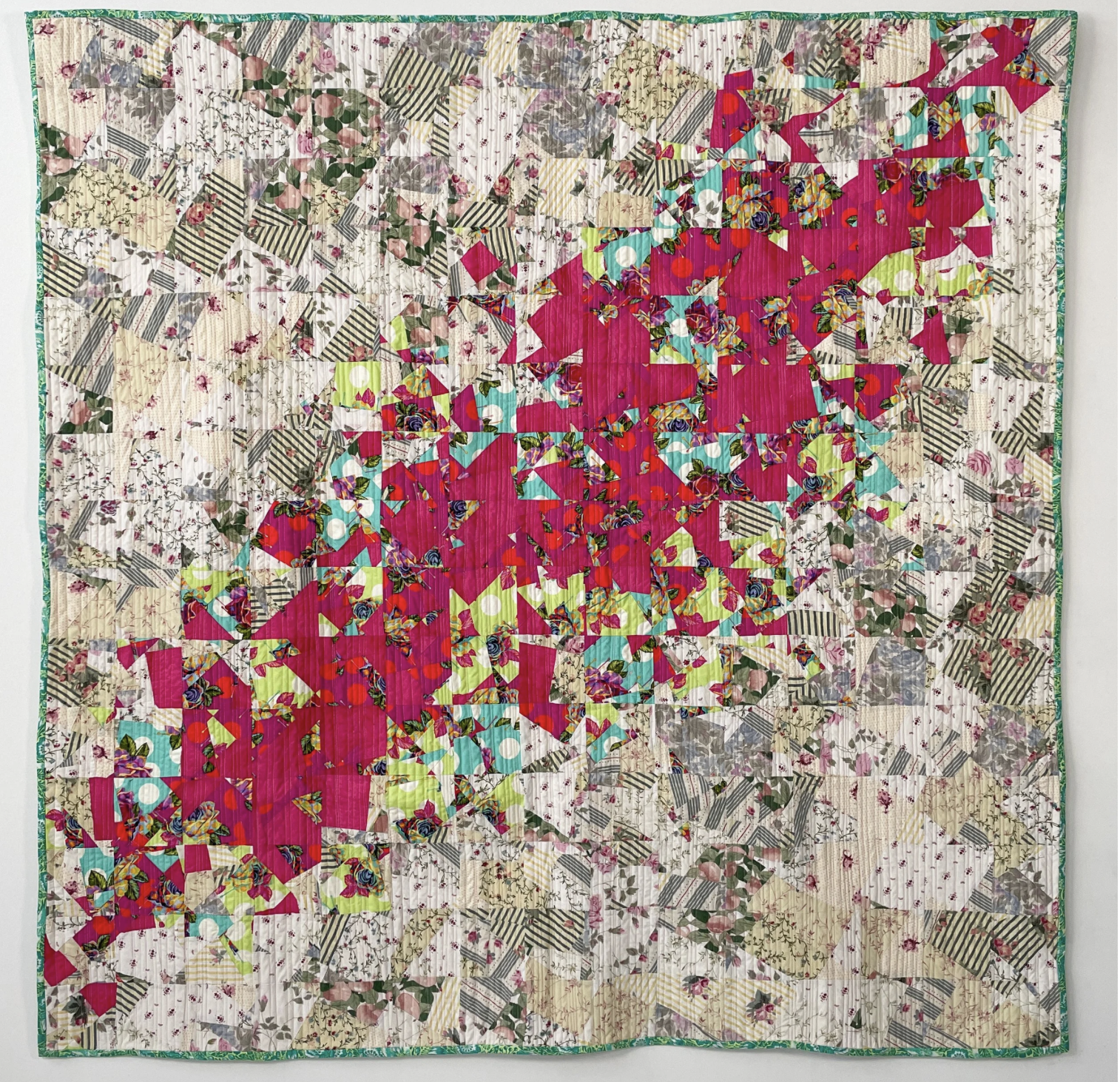
Clockwise: Frid Branham, Ragna Froda, Kathie Halfin, Lin Qiqing, Ollie Hongji Li, and Clayton Okaly
Elza Kayal Gallery is a contemporary art gallery located in Manhattan, New York City founded in 2023. The gallery is a small, 300 square-foot space situated on Broadway in one of Tribeca’s historic buildings. The building is seasoned with other contemporary art galleries and in the radius of major contemporary art players. The founder, Eniko Imre, actively seeks new forms of creative expressions and has been maintaining professional relationships with many of the collaborating artists for over 10 years in different capacities.
Elza Kayal Gallery is named after two women, mothers, in the far reaches of Hungary and India. Women of a prior generation, who in their quiet and persistent way blazed a subtle but sure path for themselves and their family. The gallery aspires to showcase art that demonstrates precision and skill while also eliciting a strong visceral response. We want to provide a platform to artists of diverse backgrounds that make NYC their home and also bring works from across the world to our metropolis. In addition, Elza Kayal Gallery strives to nurture and support women in the entire ecosystem of visual arts, including artists, gallerists, curators, advisors and collectors.
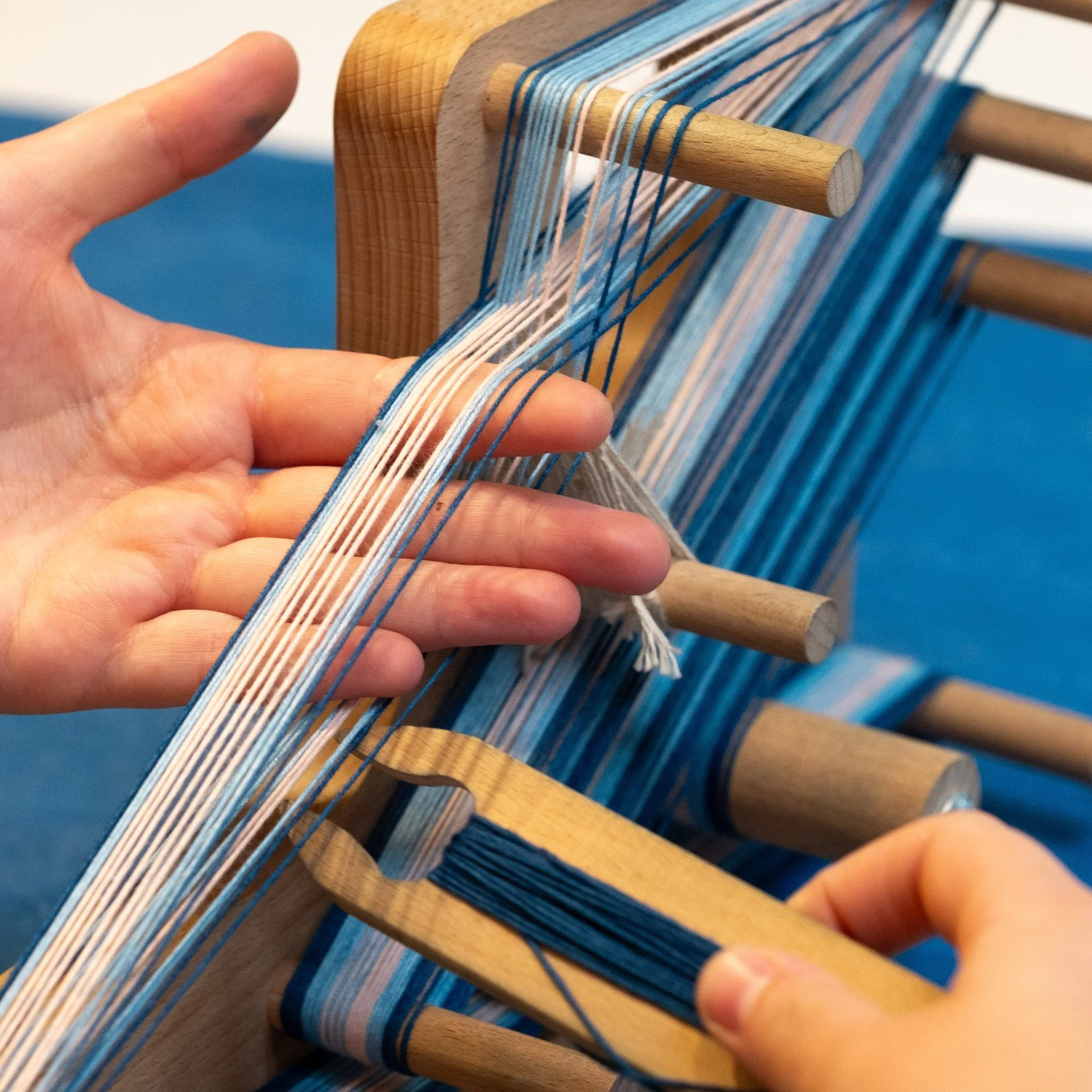
Pollack x Tatter Weaving Workshop
In person / Workshop / Weaving
Spend an evening with Pollack and Tatter exploring the world of weaving over wine and cheese. Try your hand at a variety of looms, experiment with different fibers and techniques, and discover the unique creative possibilities each loom offers.
More open studio than structured class, this evening is all about making, experimenting, and connecting with fellow fiber enthusiasts. Whether you're weaving for the first time or looking to explore something new, come by, get inspired, and weave at your own pace.
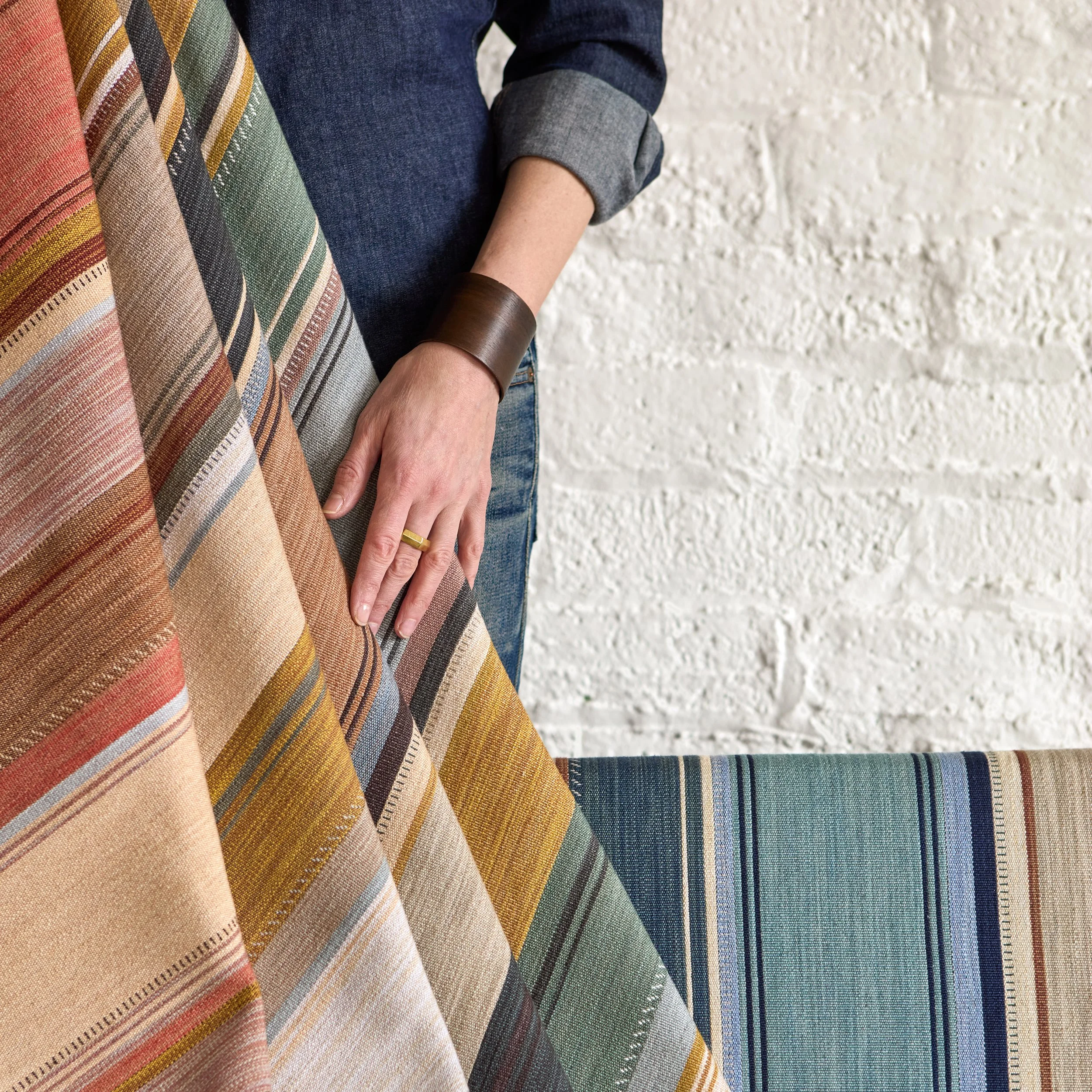
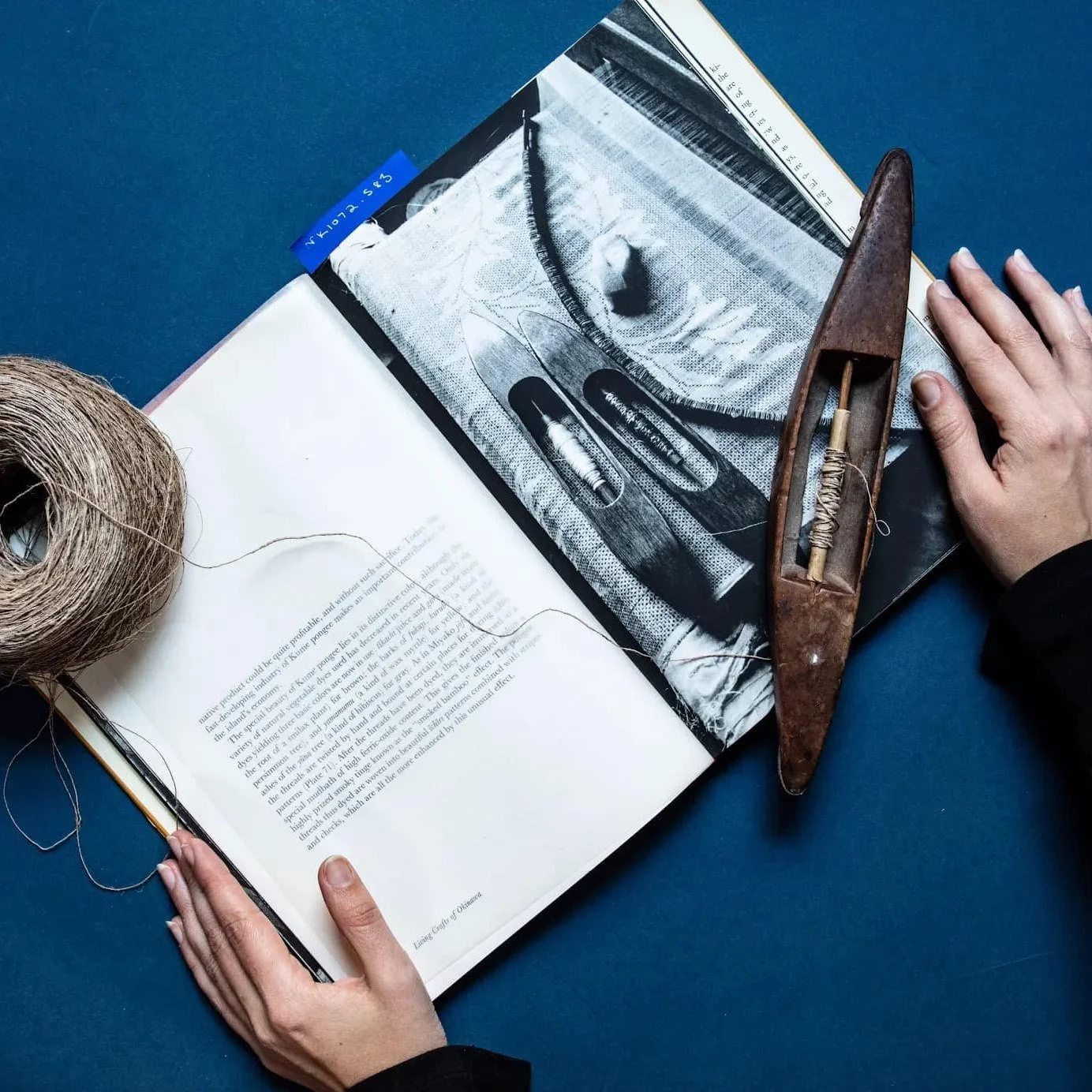
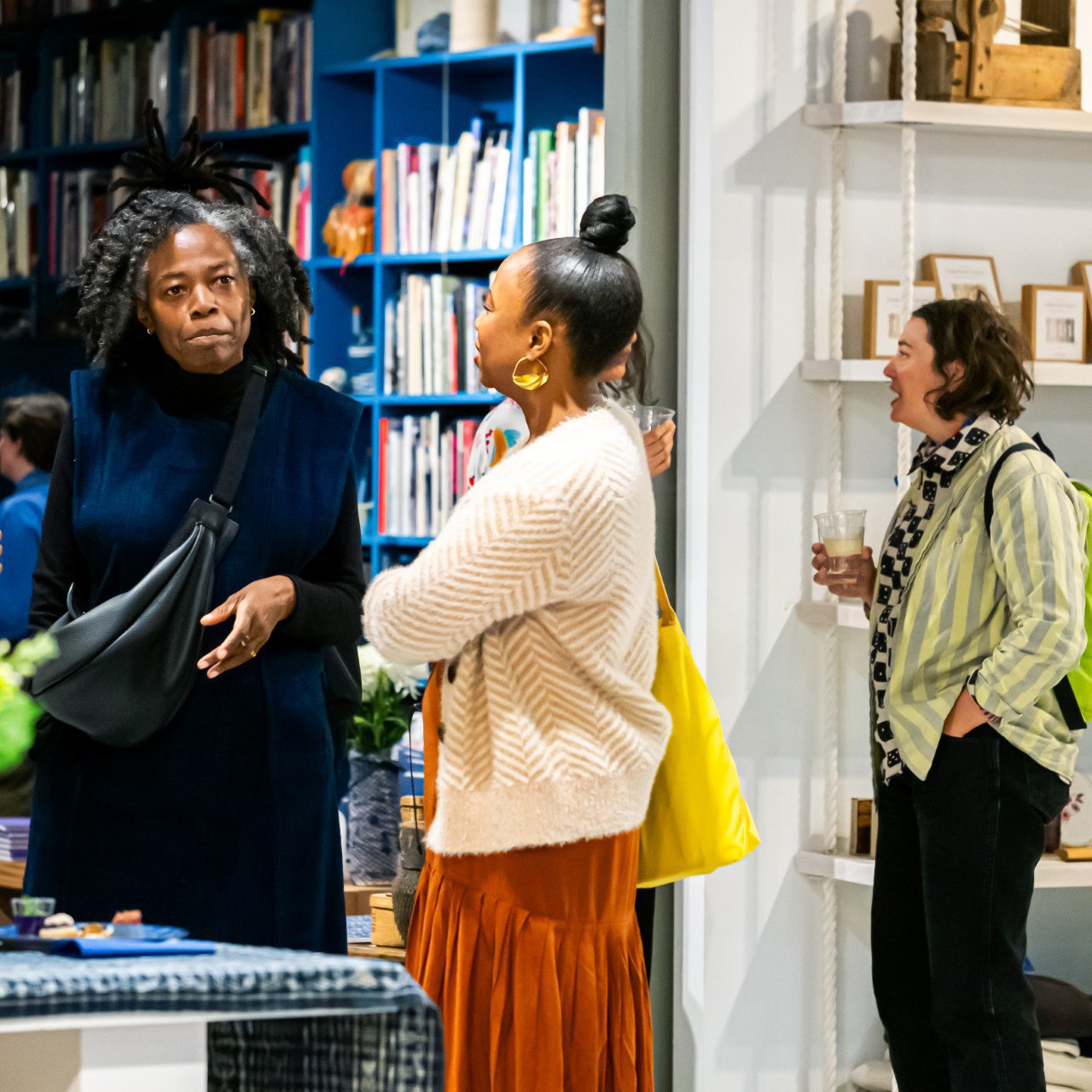
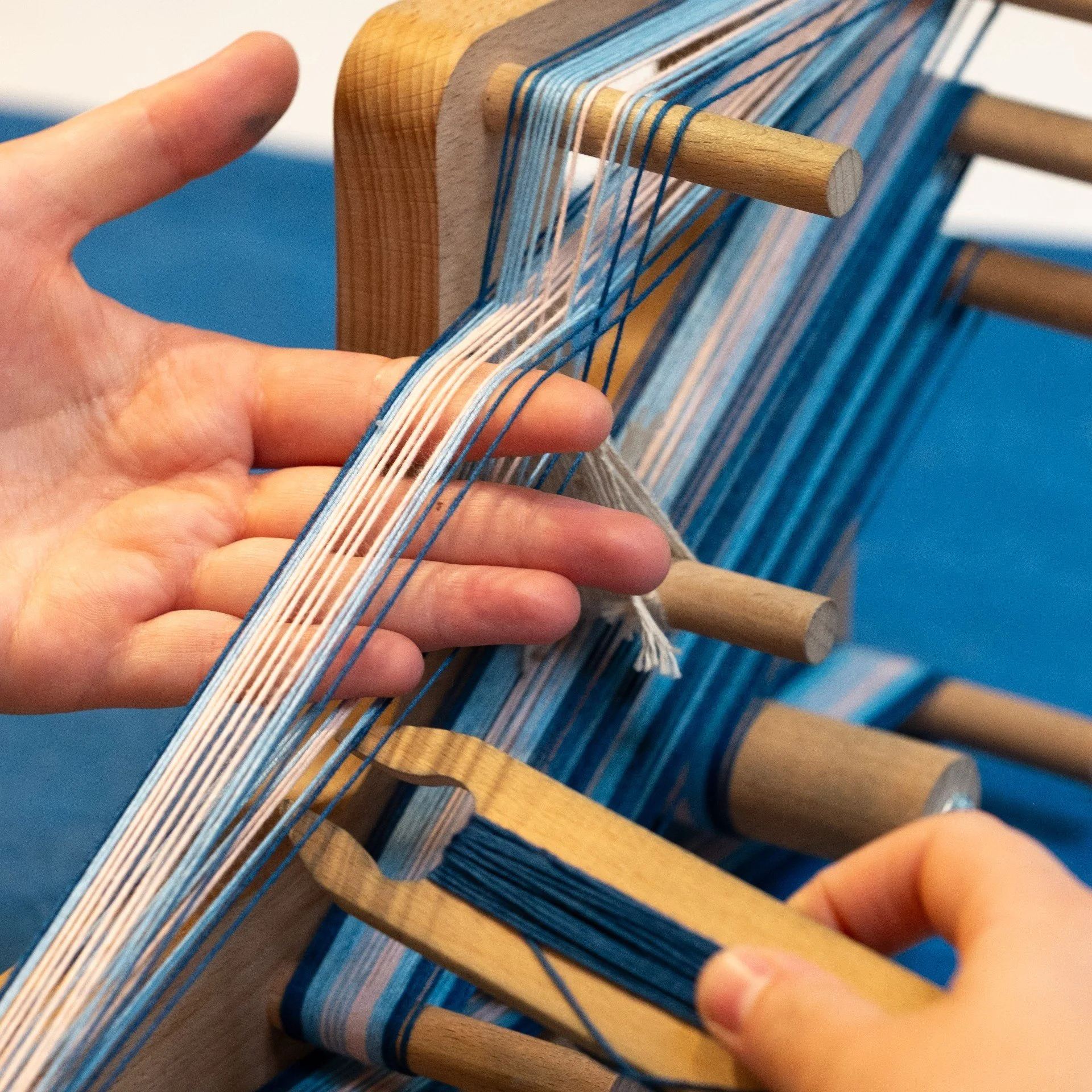
Pollack is a boutique design company that specializes in unique and innovative textiles by using a large, varied toolbox of artistry, fiber contents, yarns and weaving techniques.
Tatter is a library and arts nonprofit exploring cloth to tell human stories and cultivate cross cultural understanding.
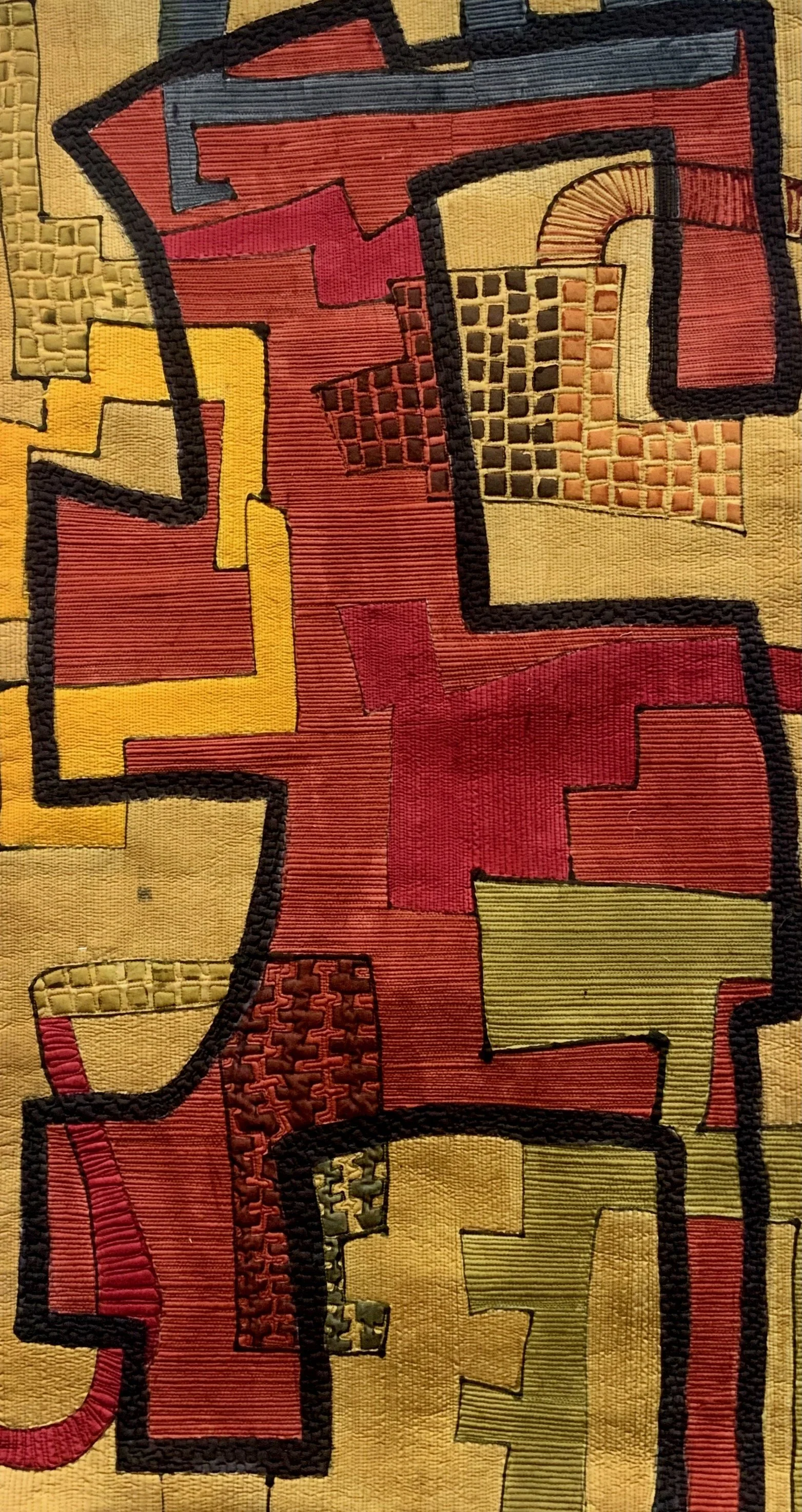
Untethered Works
In person/ Talk / Multiple Techniques
Artists Peggy Black, Julia Graziano, and Sarah Pavlik explore abstractions in fiber on Thursday September 10, 2026 from 1-3 PM, and author Nicole Nerhig discussing her book " With Her One Words: Women Weaving their Stories Thursday September 10th, 11:30- 12:30.
Gallery artists Peggy Black, Julia Graziano, and Sarah Pavlik exhibit their recent and evolving textile art, each artist holding a distinct and innovative voice. Working by instinct and intuition, all three are deeply inspired by abstraction as well as the element of surprise and the search for the unknown. Using fiber, these artists create works sensitive to line, shape, color, texture, and stitch, compiling a collection that speaks to their personal dialogue with the materials. From pieced fabrics to dyed, pigmented and painted cloth, this exhibit embodies bold experimentation in fiber. Together, the artists demonstrate the profound relevance of textiles in contemporary art. We encourage the audience to view the exhibition with their own untethered curiosity and imagination.
Special events September 10, 2026
11:30 am - 12:30 pm: Nicole Nehrig, author of With Her Own Hands: Women Weaving Their Stories, will discuss her exploration of the ways women have used textile work to create meaning and purpose in their lives throughout history and around the world. Nicole provides a model for how to create a meaningful life through textiles today that engages our minds and alters our relationship to time.
RSVP to Book Talk with Nicole Nehrig
1:00-3:00 pm: Artist Talks: Black, Graziano, and Pavlik will reflect on their artistic process and practice, including a discussion of specific art works, inspiration, outside influences, techniques, and experimentation, as well as their exploration of design.
3:30-6:00 pm: Opening Reception
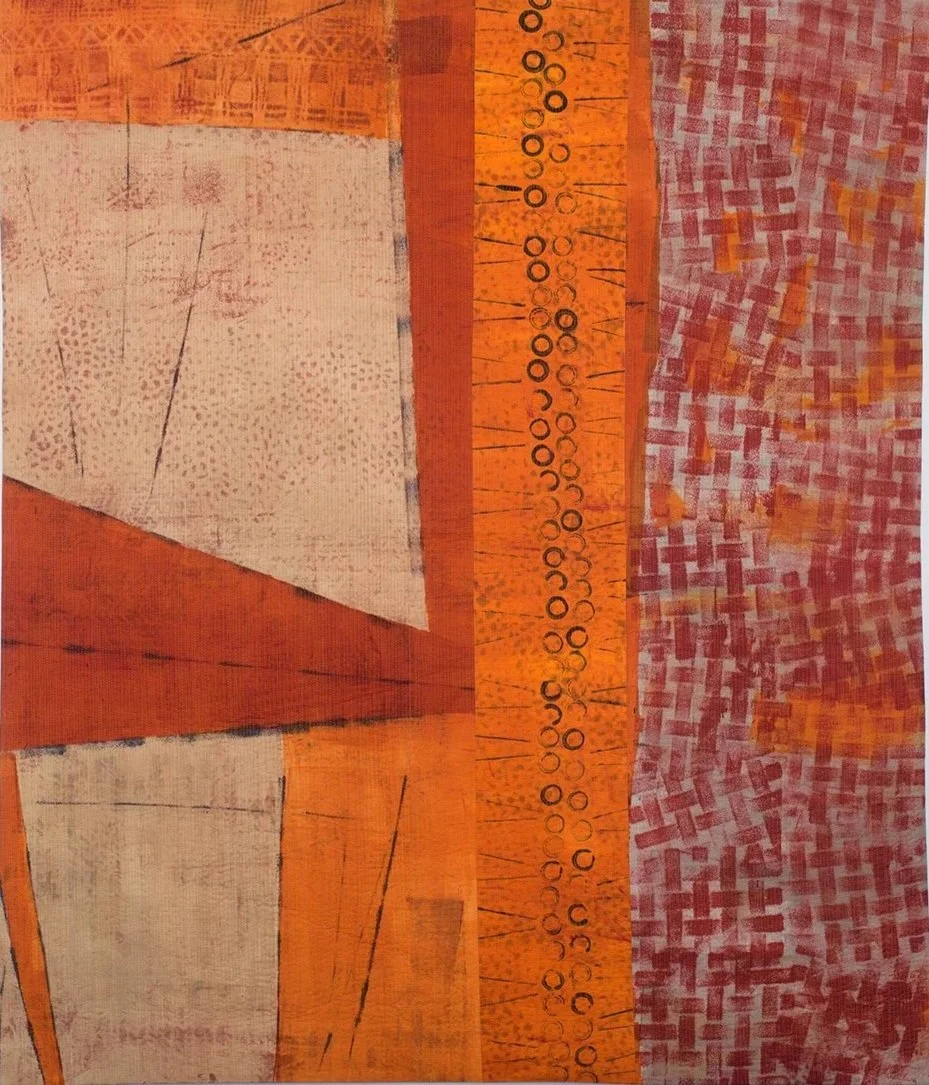
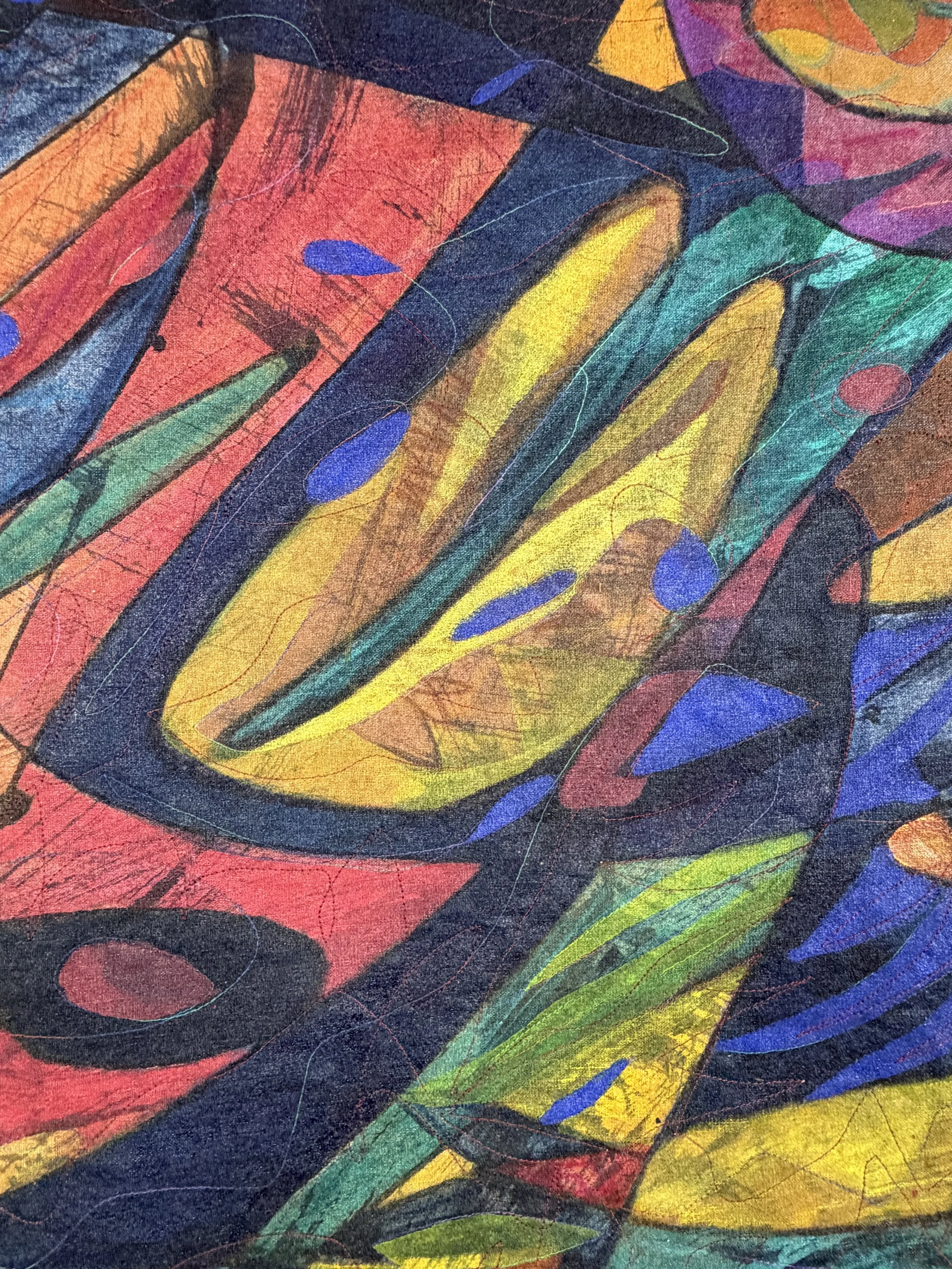
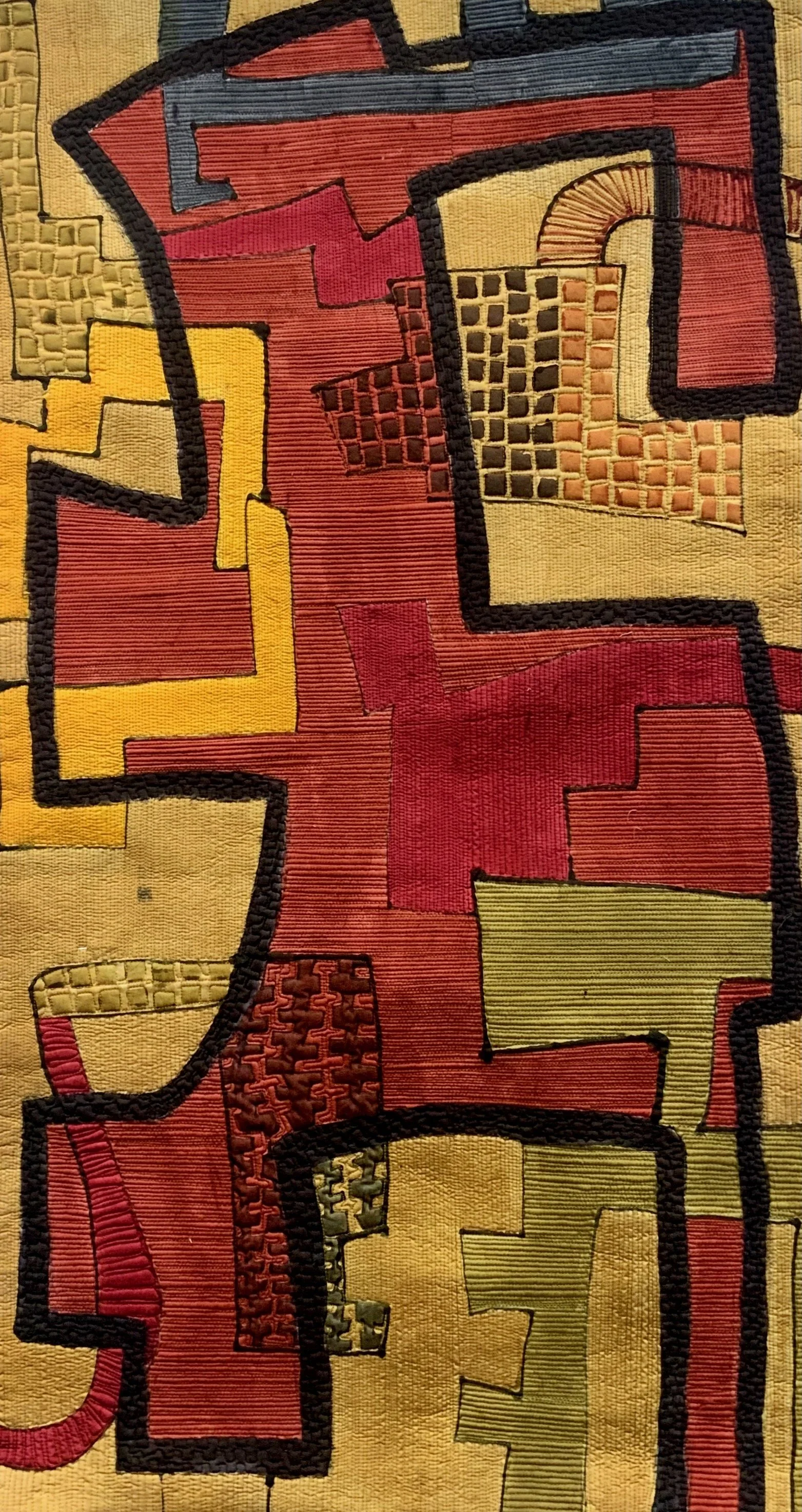
left photo: Chris Hay
Textile Art Gallery NYC is an artist run gallery In Chelsea, New York City's premier art district. We are dedicated to exhibiting and selling innovative textile art- abstract quilts, weavings, three dimensional fiber works and all forms of fiber art - that provoke thought, ignite dialogue, and express bold artistic vision.
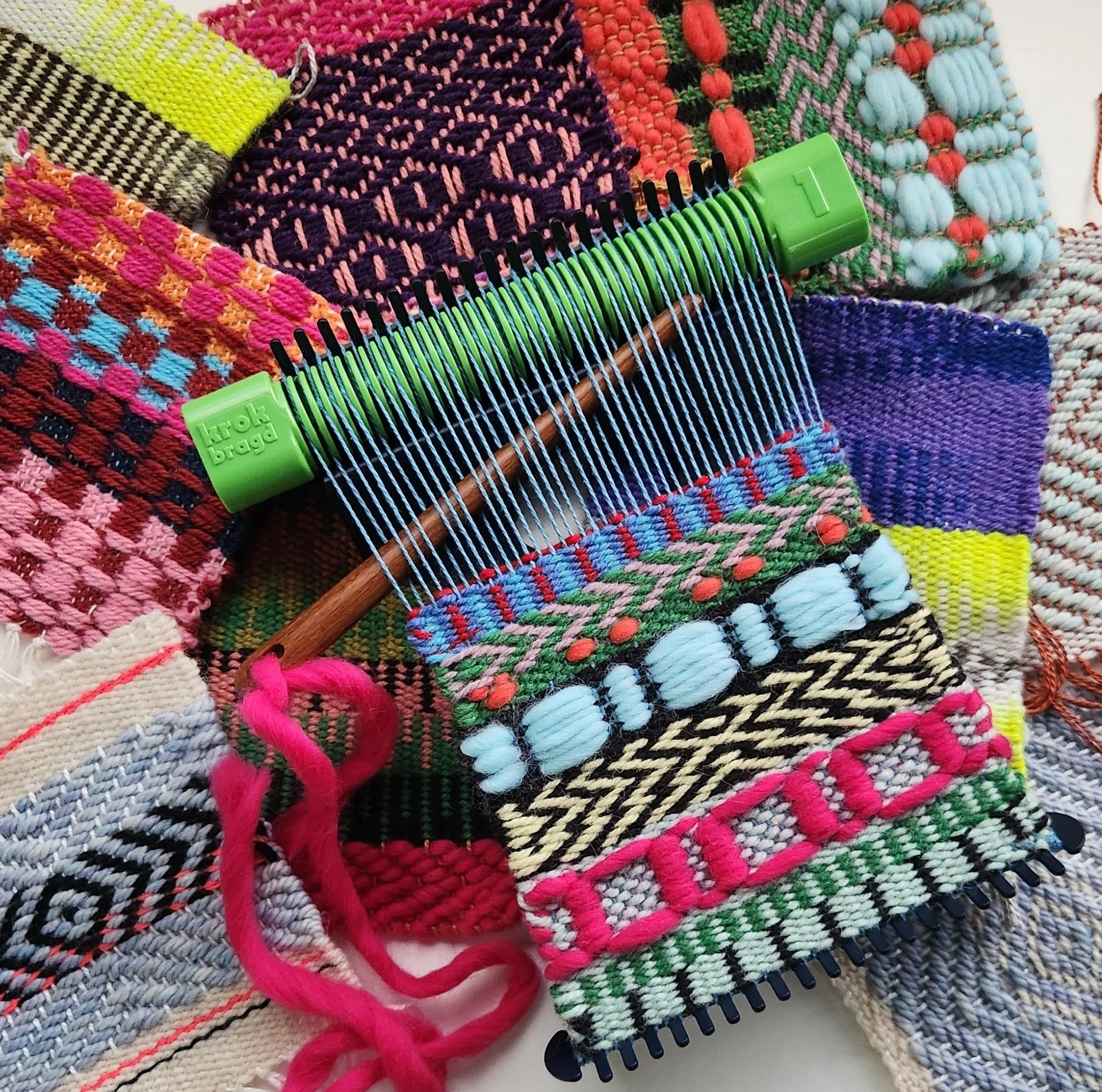
Endless Pattern
Online/ Talk / Weaving
Endless Pattern: Weaving, teaching, and design on the BoomLoom Boss
This session will explore the capabilities of the Boss, an award-winning handheld loom that creates complex weave structures and patterns like a multi-shaft loom but has just two pieces and sets up immediately. Traditional looms require that you configure structure first, discover woven patterns later. The Boss lets you explore pattern directly and intuitively without tie-ups, treadles or drafts. The small size and simple interface makes it a powerful, accessible learning tool for material exploration and creative practice, with a range from beginner to expert in one tool.
Designer and founder Lauren Puchowski will discuss the loom and related digital patternmaking tools as a way to expand access to the design language of weaving. We'll examine the creative possibilities in traditional structures such as twill, monk's belt, krokbragd, rosepath, waffle weave, and doubleweave. We'll also touch on applications in public art and personal practice, the loom's active online community, and uses in grade schools, universities and for artists with disabilities. The session will conclude with a Q&A, for a total length of no longer than 60 minutes.
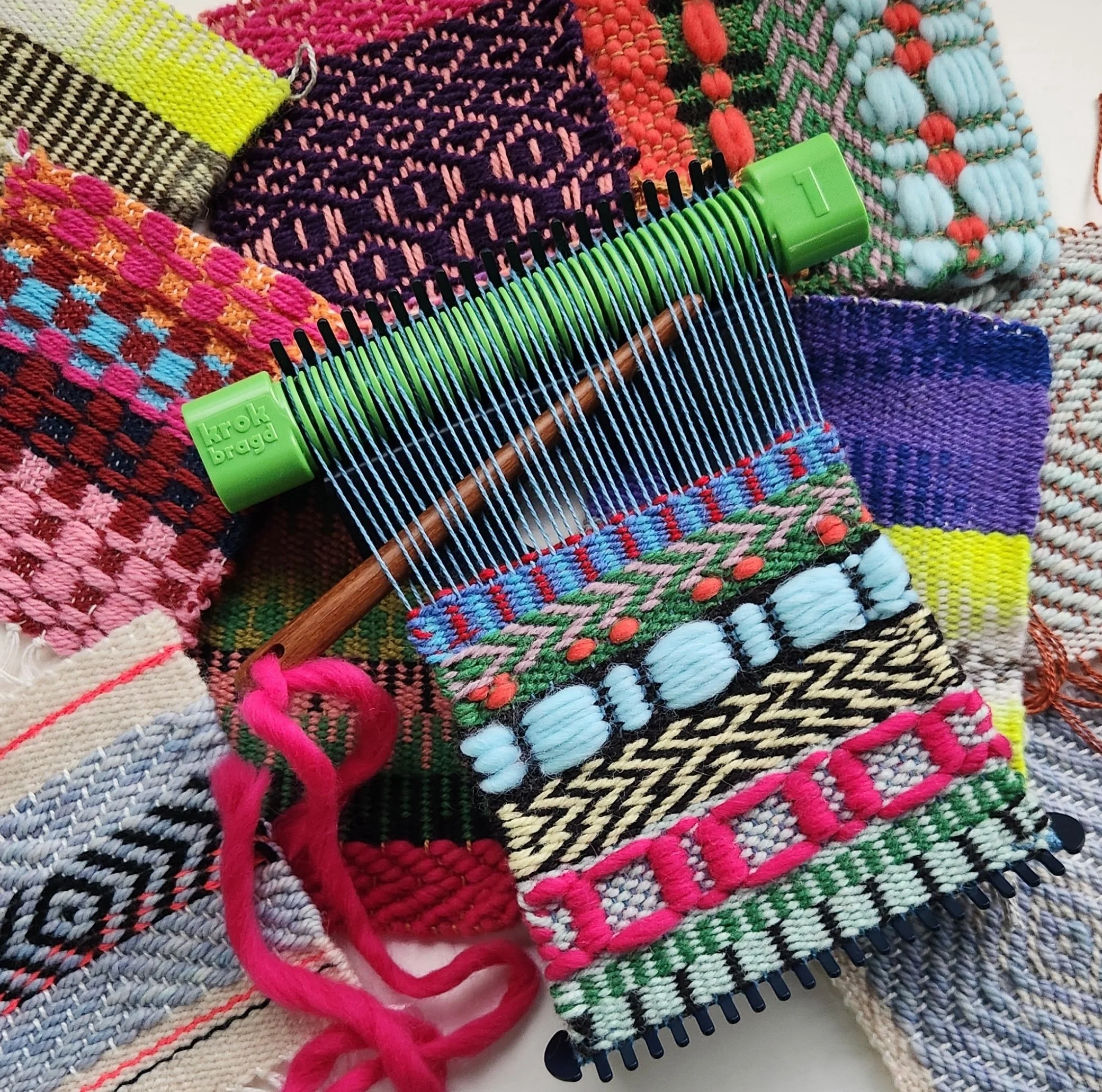
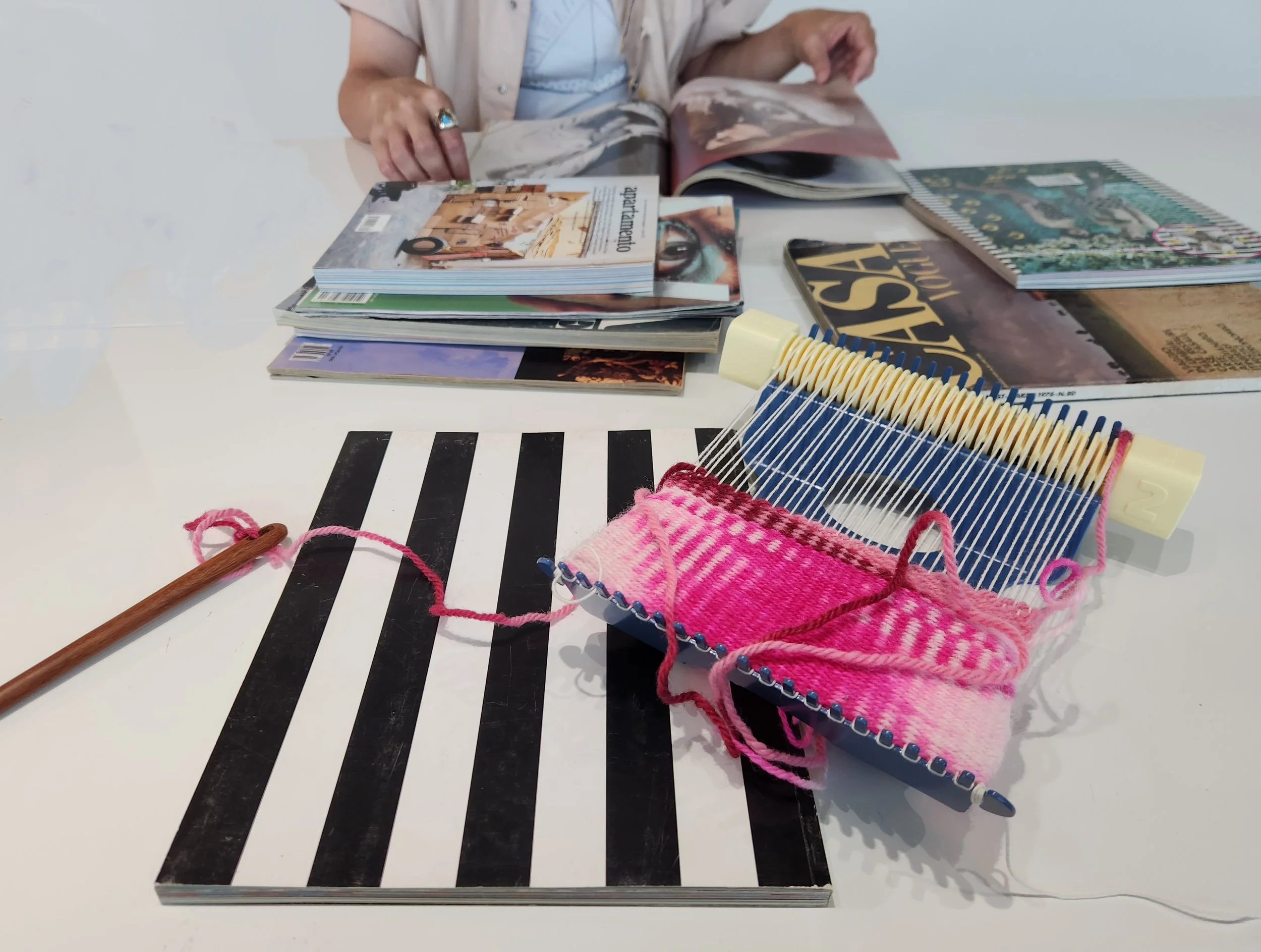
Lauren Puchowski is an artist and maker from North Carolina. Not a weaver, she began experimenting with shedding devices on tiny handheld looms as a way to make weaving an image closer to the gesture of line drawing. A prototype with a rotating heddle bar produced a diagonal rib; that became the basis for the Boss.
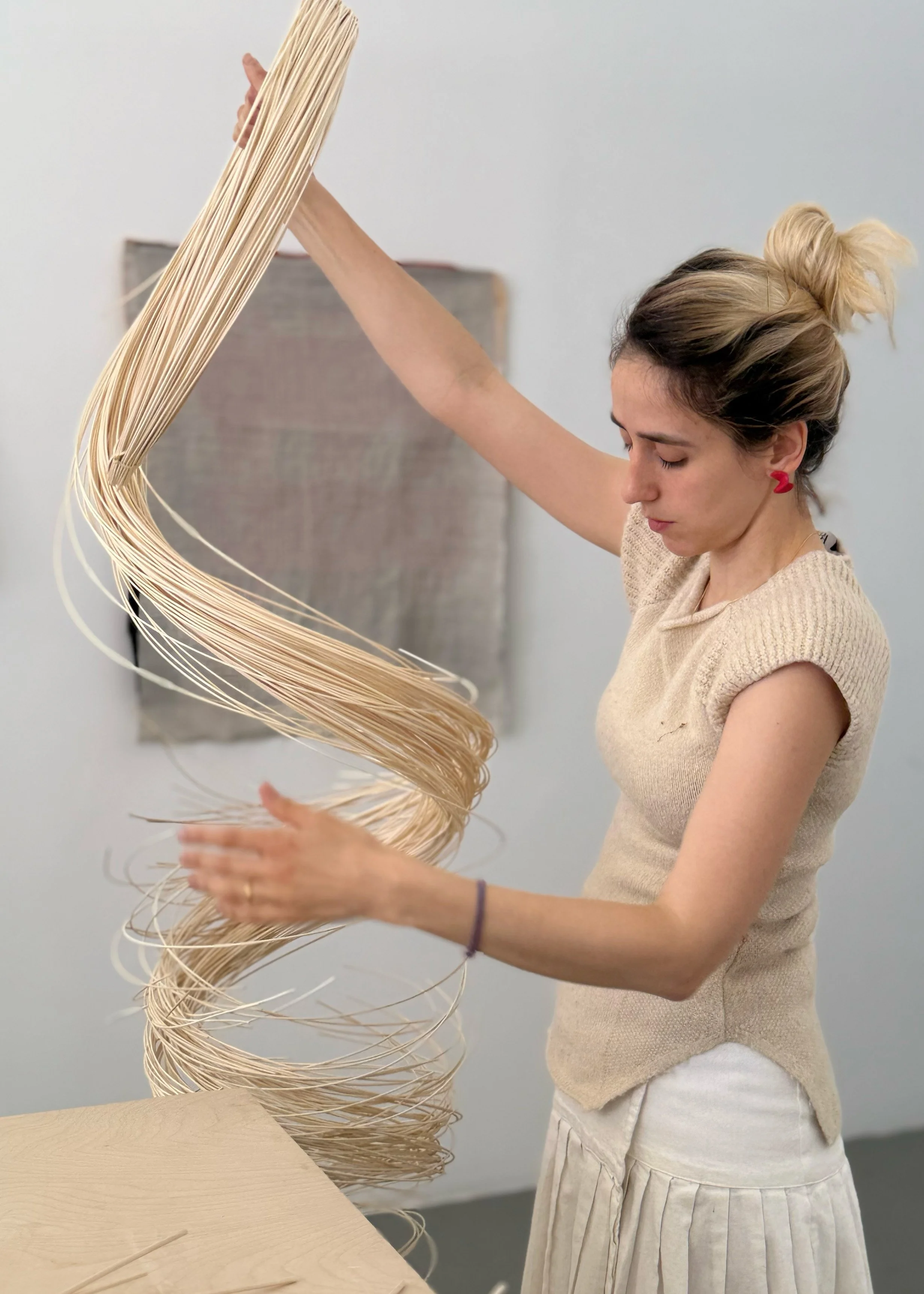
Scandinavia House - Workshop
Learn the meditative craft of basket weaving with natural, sustainable materials, guided step by step by artist Lelia Bacchi. No experience necessary — all tools and materials provided. September 8, 5:30–7:30pm at Scandinavia House, part of the Nordic Textile Takeover.
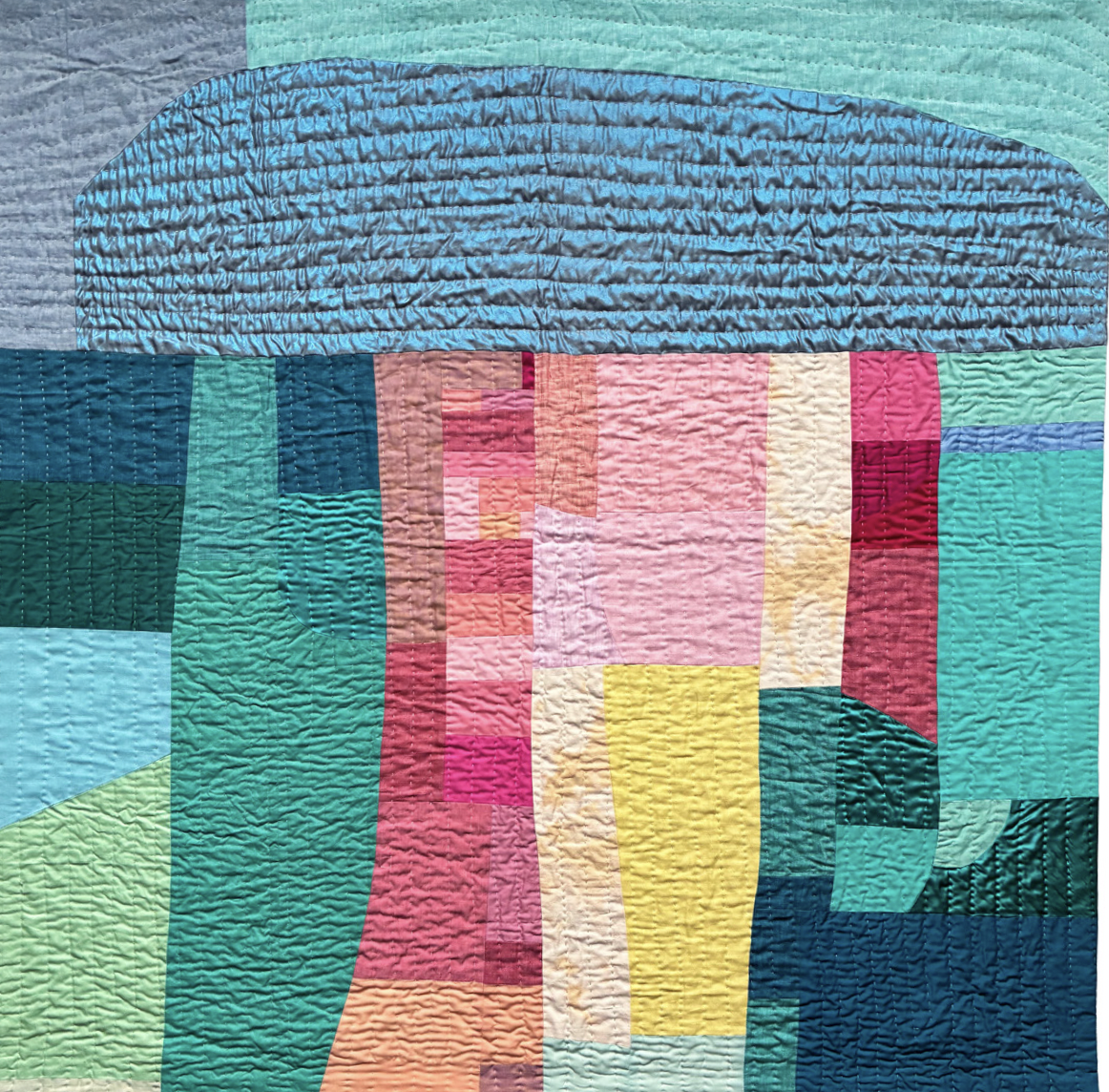
Scandinavia House - Walk & Talk with the curator
In the Nordic countries, stitching has long transcended simple decoration or domestic craft. It has been a necessity, a means of storytelling, survival, memory, and care. Shaped by cold climates and long winters, textiles historically became vital vessels of warmth, protection, repair, and continuity, carrying the deep traces of everyday life and cultural identity across generations. The Cold Stitch brings together contemporary artists from across Scandinavia whose practices engage with textiles as both a tactile material and a profound language. The title refers not only to the geography of the North, but also to our relationship with textiles and the act of stitching itself.A stitch repairs, connects, layers, and transforms. It binds physical fragments together while allowing hidden histories, emotions, reflections on the political climate, and personal narratives to remain visible.
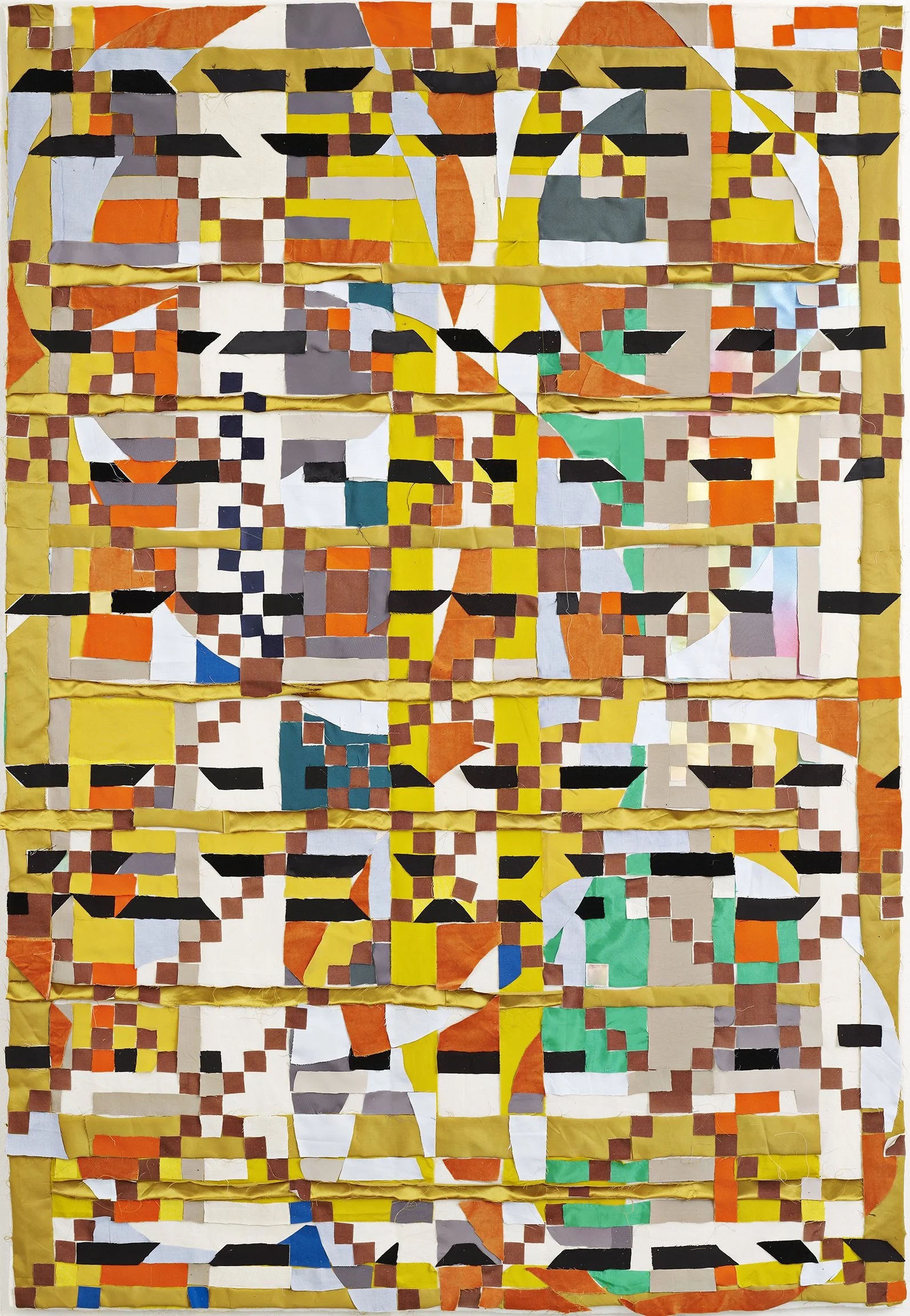
Textile Takeover @ Scandinavia House
In the Nordic countries, stitching has long transcended simple decoration or domestic craft. It has been a necessity, a means of storytelling, survival, memory, and care. Shaped by cold climates and long winters, textiles historically became vital vessels of warmth, protection, repair, and continuity, carrying the deep traces of everyday life and cultural identity across generations. The Cold Stitch curated by Ragna Froda brings together contemporary artists from across Scandinavia whose practices engage with textiles as both a tactile material and a profound language. The title refers not only to the geography of the North, but also to our relationship with textiles and the act of stitching itself. A stitch repairs, connects, layers, and transforms. It binds physical fragments together while allowing hidden histories, emotions, reflections on the political climate, and personal narratives to remain visible.
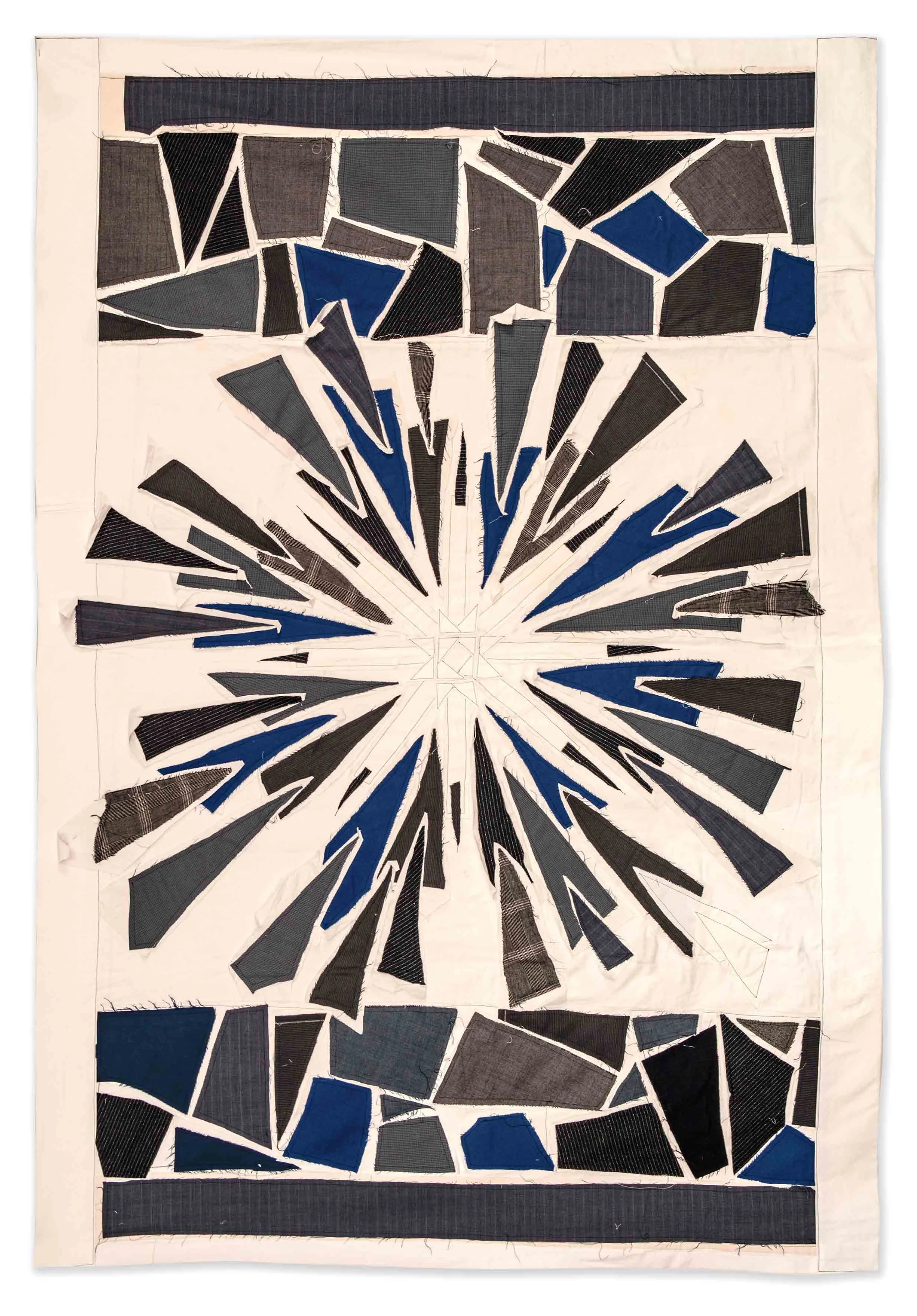
The Cold Stitch
In the Nordic countries, stitching has long transcended simple decoration or domestic craft. It has been a necessity, a means of storytelling, survival, memory, and care. Shaped by cold climates and long winters, textiles historically became vital vessels of warmth, protection, repair, and continuity, carrying the deep traces of everyday life and cultural identity across generations. The Cold Stitch curated by Ragna Froda brings together contemporary artists from across Scandinavia whose practices engage with textiles as both a tactile material and a profound language. The title refers not only to the geography of the North, but also to our relationship with textiles and the act of stitching itself. A stitch repairs, connects, layers, and transforms. It binds physical fragments together while allowing hidden histories, emotions, reflections on the political climate, and personal narratives to remain visible.
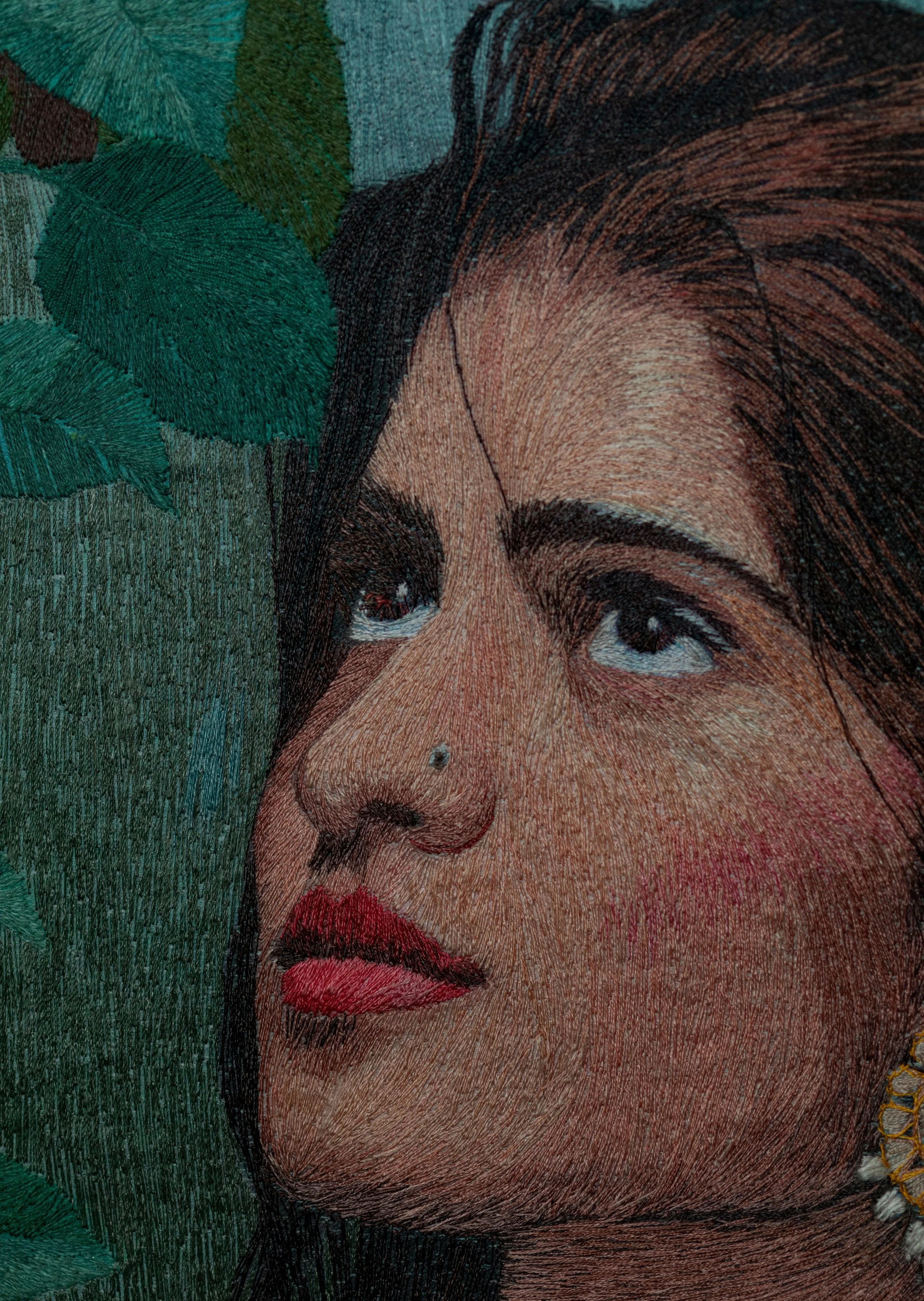
Silk & Stone
In person / Exhibition / Multiple Techniques
Silk & Stone brings together two material worlds from one hand: the whisper-fine language of silk thread and the raw, gilded weight of concrete and gold. Sooi Silk Works presents an exhibition of contrasts — soft and hard, luminous and matte — united by the patient, handmade accumulation of material into meaning.
The silk works are hyperrealistic portraits of actual human faces, made entirely of silk threads, using a method that is slow, exacting, and unforgiving of error. Each begins as a simple sketch, then grows by hand, one stitch at a time, until thousands of stitches come together. Worked in monochrome, stitched by hand over months, these are slow objects in a fast world — one-of-a-kind heirloom pieces, intended to be passed between generations.
The stone works answer in a bolder voice: large-format canvases of concrete, cement, and rope, topped with gold leaf, alongside stonework. Gilded relief surfaces catch and return light, while poured concrete and knotted rope set raw weight and texture against the warmth of gold — large pieces made for expansive spaces, from private collections to hospitality interiors.
At the opening reception, the artist speaks about her process; throughout the run, an audio-visual presentation traces one portrait's creation, sketch to stitch.
September 1 - 7
9:00 AM - 9:00 PM
Wednesday, September 2
8:00 PM - 10:00 PM Opening Night
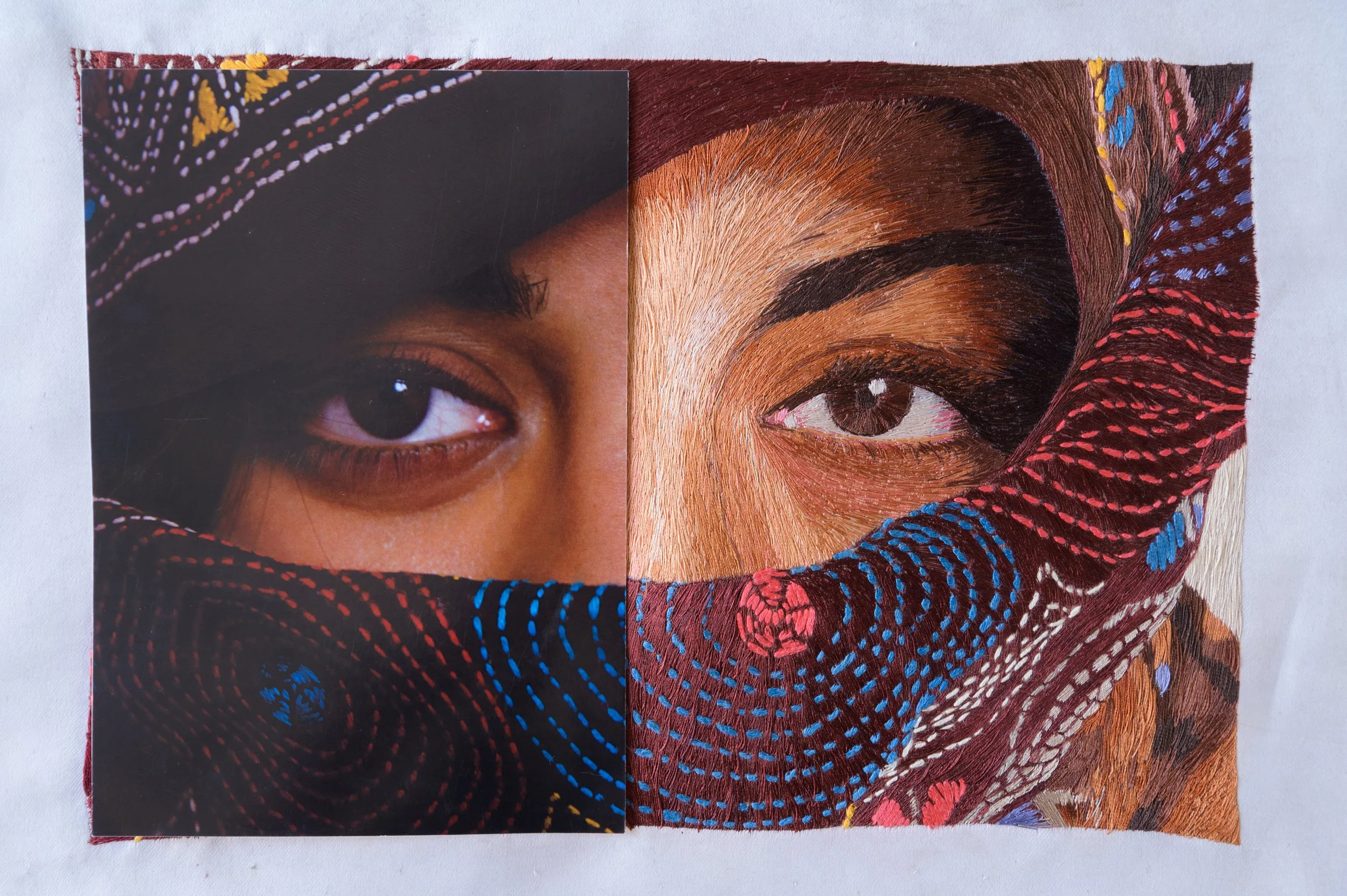
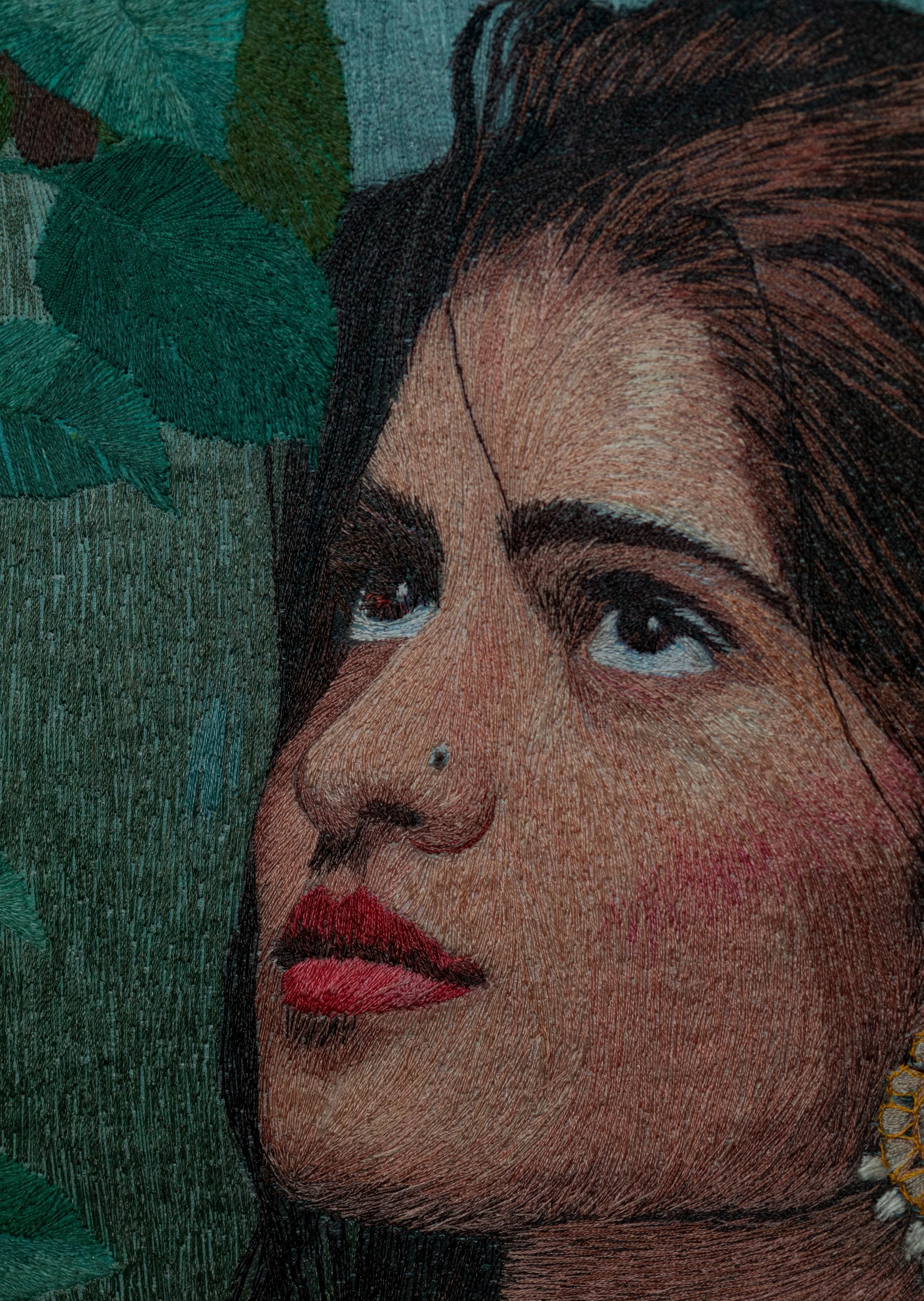
Sadhana is a textile artist specializing in silk thread portraiture, working under the name Sooi Silk Works. Her monochrome portraits, built stitch by stitch in silk, achieve a tonal depth and precision more often associated with painting than embroidery. Trained at the Apparel Training and Design Centre in New Delhi and formerly with the Indian couture house Shades of India, Sadhana ran a custom apparel studio for a decade before devoting her practice fully to threadwork in 2015. She has since completed more than twenty international commissions.